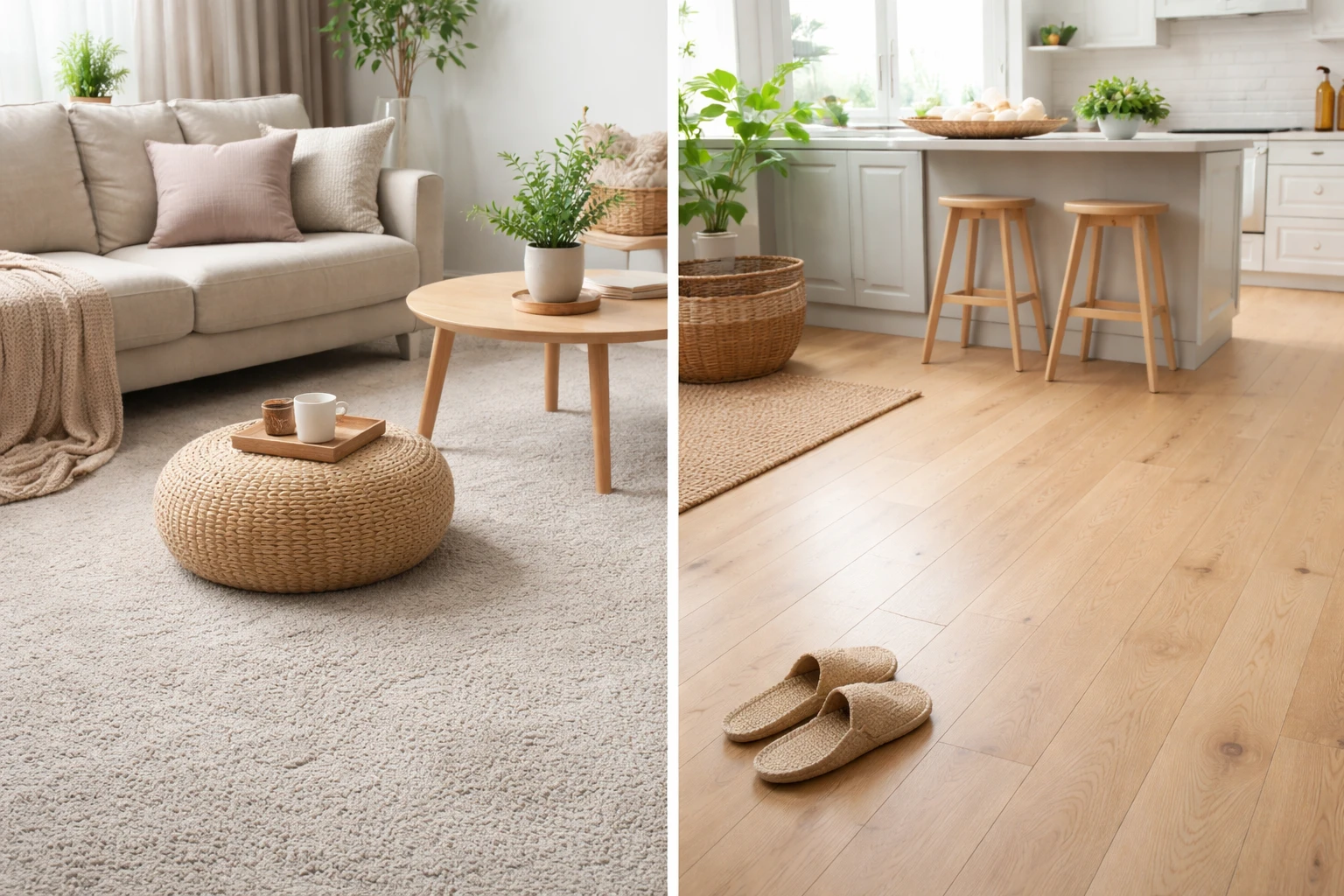
The most common types of flooring used in New Zealand homes, and in homes around the world, are carpet flooring and hard flooring, the latter of which include the likes of vinyl, tile, and engineered timber flooring. Both offer practical and aesthetic benefits, but when it comes to choosing flooring for a specific room, one option might be more suitable than the other. Understanding the factors that distinguish them makes it easier to decide which flooring suits your household’s needs.
This article offers a quick look at what sets each type apart, giving you a better idea of how these flooring options may influence the overall look and feel of your home.
Installation
The preparation required to install carpet and hard flooring may be similar, but the techniques for securing each type differ. Hard flooring often relies on adhesives, nails, or click-lock systems to hold material firmly in place. Carpet, on the other hand, is typically stretched, tucked, and glued to create an even surface. These methods influence the level of skill required and the time needed for installation. To ensure a professional finish, consider hiring experienced installers. Companies that offer professional hard flooring or carpet NZ-based installation services provide expert fitting and careful attention to detail, resulting in a neat and lasting result.
Appearance
Carpet and hard flooring create different visual impressions in a space. Carpet has a uniform, matte surface that softens the look of a room. Meanwhile, hard flooring provides a smooth, reflective surface that can make a room feel more open and bright. Knowing how the distinct visual qualities of each floor type influence a room can give you a better idea of how a finished space will look. It also shows how the flooring interacts with the overall layout, proportions, and aesthetic of the room.
Comfort and Feel
The sensation underfoot varies greatly between carpet and hard flooring. Carpet provides cushioning and a soft surface, making it warmer and more comfortable for standing, walking, or sitting. Hard flooring feels firmer and cooler, offering a solid, stable surface but less natural comfort. These differences can affect how inviting a room feels and how pleasant it is to spend time in.
Durability
Of the two types of flooring, hard surfaces generally withstand heavy use better than carpet. Their solid construction makes them less prone to damage, which means they’re better at resisting scratches, dents, and wear over time. Carpet’s soft fibres make it show signs of wear more quickly. Flattened fibres, fading, and matting become more apparent over time, especially in high-use areas.
Design Flexibility
Both carpet and hard flooring offer a variety of styles and finishes, but between the two, carpet provides more options for colour, pattern, and texture. Due to its construction and configurability, it can be manufactured in countless designs and tuft variations, allowing for a wider range of decorative possibilities. Hard flooring options, on the other hand, tend to be limited by the natural grains or the uniformity of the materials they are made from making them less adaptable for intricate designs. Nevertheless, they can be installed in creative ways, such as varying plan directions or combining materials, to achieve visually interesting layouts.
Maintenance and Cleaning
Different types of flooring demand different levels of attention, and this principle applies to carpet and hard floors. Using the correct care and cleaning methods ensures that the flooring will look its best and remain durable for years to come. Carpet benefits from regular vacuuming, as it removes dust and dirt trapped in the fibres. Having it professionally cleaned occasionally is also recommended to maintain its appearance and prolong its lifespan.
Hard flooring is easier to maintain. It stays in good condition with regular sweeping and mopping. Depending on the type of surface, polishing and refinishing might also be required to preserve its shine and durability. Understanding these requirements can help you choose flooring that fits your lifestyle and the level of upkeep you’re willing to provide.
Suitability by Room
Some rooms benefit more from certain flooring types than others. Carpet works well in areas where warmth and comfort are priorities. Its soft texture provides a cosy and inviting feel underfoot, perfect for rooms such as bedrooms and living spaces. Hard flooring is better suited to spaces that experience moisture, spills, or heavy foot traffic. Its durability and ease of cleaning make it highly practical for kitchens, bathrooms, and hallways. Choosing flooring based on how a room is used ensures both practicality and long-term satisfaction, while helping each space function as intended.
Cost
Carpet is often less expensive upfront. The materials are generally cheaper, which means you can find a carpet style that meets your needs, no matter your budget. Hard flooring usually comes with higher initial costs, particularly for materials such as timber and stone. These materials may also require more specialised installation, which can add to the overall expense. Considering the factors that affect the cost of these flooring options enables you to make a choice that balances budget with long-term value.
The right flooring affects both the feel and functionality of a home. It can shape comfort, practicality, and the atmosphere of each space. Keeping these factors in mind when choosing materials ensures you can select a flooring that meets both your everyday needs and long-term expectations, providing the best fit for your household.
FAQs
It depends on the room and lifestyle, as carpet offers comfort while hard flooring provides durability and easy maintenance.
Hard flooring often requires precise fitting systems, while carpet installation involves stretching and securing, both needing professional skill.
Hard flooring reflects light and creates a more open feel, making spaces appear larger than carpeted rooms.
Yes, carpet provides a softer, warmer surface, making it more comfortable for walking and sitting.
Hard flooring generally lasts longer because it resists scratches, dents, and heavy wear better than carpet.
Carpet typically offers more variety in colours, patterns, and textures, allowing for more customisation.
Hard flooring is easier to clean with simple sweeping and mopping, while carpet requires regular vacuuming and occasional deep cleaning.
Hard flooring is better suited for high-traffic areas due to its durability and resistance to wear.
Carpet is often preferred for bedrooms because it adds warmth, comfort, and a cosy atmosphere.
Carpet is usually cheaper upfront, while hard flooring tends to have higher initial costs but may offer better long-term value.