Fluorescent ceiling lights were once the default solution for lighting large spaces efficiently. Offices, schools, kitchens, basements, and commercial buildings adopted them because they were affordable, bright, and easy to install. But efficiency came at a cost. Many people now associate fluorescent lighting with harsh glare, buzzing sounds, visual fatigue, and an atmosphere that feels cold and uninviting. As lighting technology has evolved, so have expectations. Comfort, warmth, and visual quality matter just as much as brightness.
Warm light alternatives to fluorescent ceiling lights offer a way to transform a space without sacrificing functionality. These options provide softer illumination, better color quality, and a more natural feel, all while using less energy and lasting longer than traditional fluorescent fixtures. Whether you are upgrading a home office, modernizing a classroom, or rethinking a commercial interior, replacing fluorescent lighting with warm light solutions can dramatically improve how a space looks and feels.
Understanding What Warm Light Really Is
Warm light refers to light sources that emit a yellow or amber tone rather than a stark white or bluish glow. This warmth is measured using color temperature, expressed in Kelvin. Lower Kelvin values produce warmer light, while higher values produce cooler, bluer light. Most warm lighting falls between 2700K and 3000K. This range mimics the glow of traditional incandescent bulbs and natural light during sunrise or sunset. A deeper explanation of color temperature and how it affects perception.
Fluorescent ceiling lights, even those labeled as “soft white,” often emit uneven light with spikes in the blue spectrum. This imbalance contributes to eye strain and creates an environment that feels sterile rather than comfortable. Warm light alternatives focus on delivering a balanced spectrum that is easier on the eyes and more flattering to interiors, furnishings, and skin tones.
Why Fluorescent Ceiling Lights Are Falling Out of Favor
The drawbacks of fluorescent lighting go beyond aesthetics. Flicker is a common issue, even when it is not consciously noticeable. This subtle pulsing can cause headaches, eye fatigue, and difficulty concentrating over time. Many fluorescent fixtures also rely on ballasts that hum, buzz, or fail prematurely, leading to inconsistent performance and maintenance headaches.
Another concern is how fluorescent lighting interacts with daily rhythms. Blue-heavy light can interfere with circadian patterns, especially in spaces where people spend long hours. This is particularly problematic in home offices, schools, and healthcare environments. On top of that, fluorescent fixtures often look dated. Their flat panels and exposed tubes clash with modern interior design trends that prioritize warmth, texture, and visual interest.
Key Considerations When Replacing Fluorescent Ceiling Lights
Before choosing a warm light alternative, it’s important to assess the space and the existing setup. Ceiling type plays a major role. Drop ceilings commonly found in offices and basements offer different replacement options than drywall ceilings. Fixture size and wiring also matter, especially if you want a seamless retrofit without major electrical work.
Brightness should be evaluated using lumens rather than wattage. Fluorescent lights tend to be very bright, so replacement fixtures must provide sufficient output while maintaining a warm tone. Dimming capability is another factor. Many modern warm light solutions offer smooth dimming, something traditional fluorescent fixtures struggle to do well. Guidance on energy-efficient lighting performance and comparisons is available from the U.S. Department of Energy.
Room function should guide your choices. A kitchen or workspace may require brighter, more focused lighting than a bedroom or living area. Energy efficiency, lifespan, and long-term operating costs should also be part of the decision-making process.
Warm LED Panel Lights as Direct Replacements
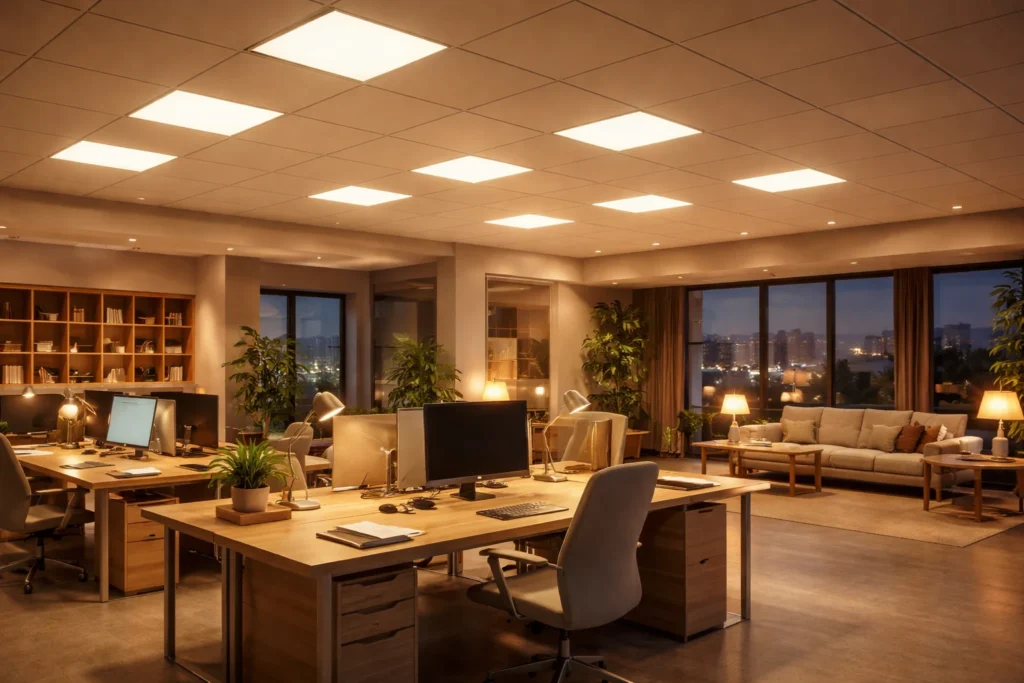
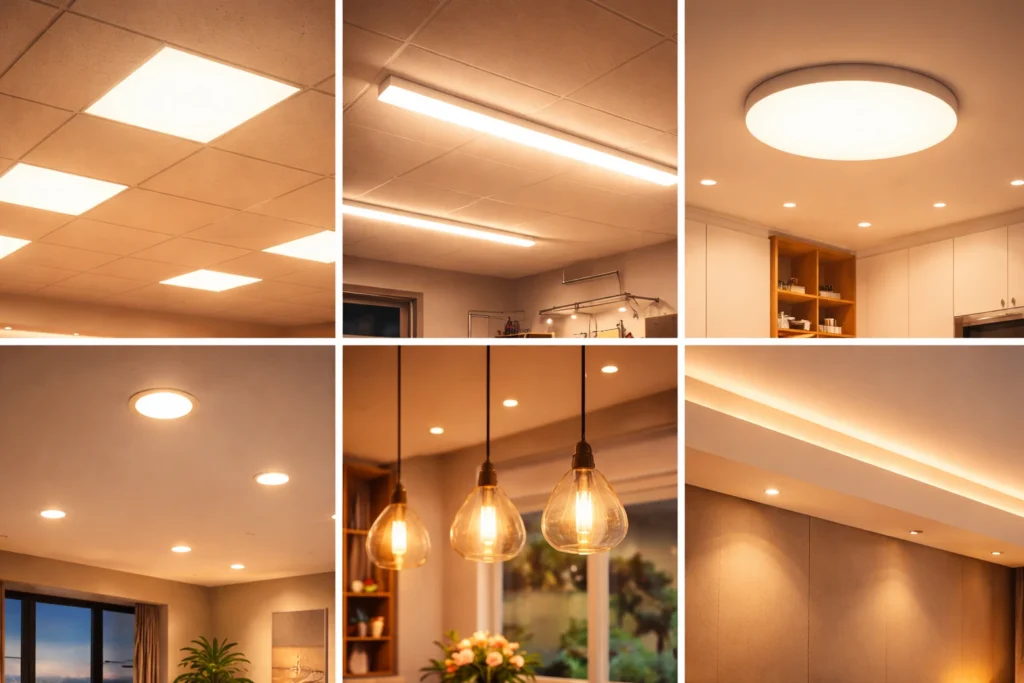
One of the simplest alternatives to fluorescent ceiling lights is warm LED panel lighting. These flat panels are designed to fit into the same ceiling grids as fluorescent troffers, making them ideal for drop ceilings. Unlike fluorescents, LED panels distribute light evenly across their surface, eliminating harsh hotspots and reducing glare.
Warm LED panels are available in color temperatures that closely resemble incandescent light while still delivering ample brightness. They are especially popular in offices, basements, schools, and commercial spaces where uniform ceiling lighting is still needed but comfort has become a priority. Many models offer high color rendering, meaning colors appear more accurate and natural. While LED panels maintain the clean, low-profile look of fluorescent fixtures, they feel far less clinical. The main drawback is that they still look utilitarian, which may not suit every interior style.
Warm LED Tube Replacements
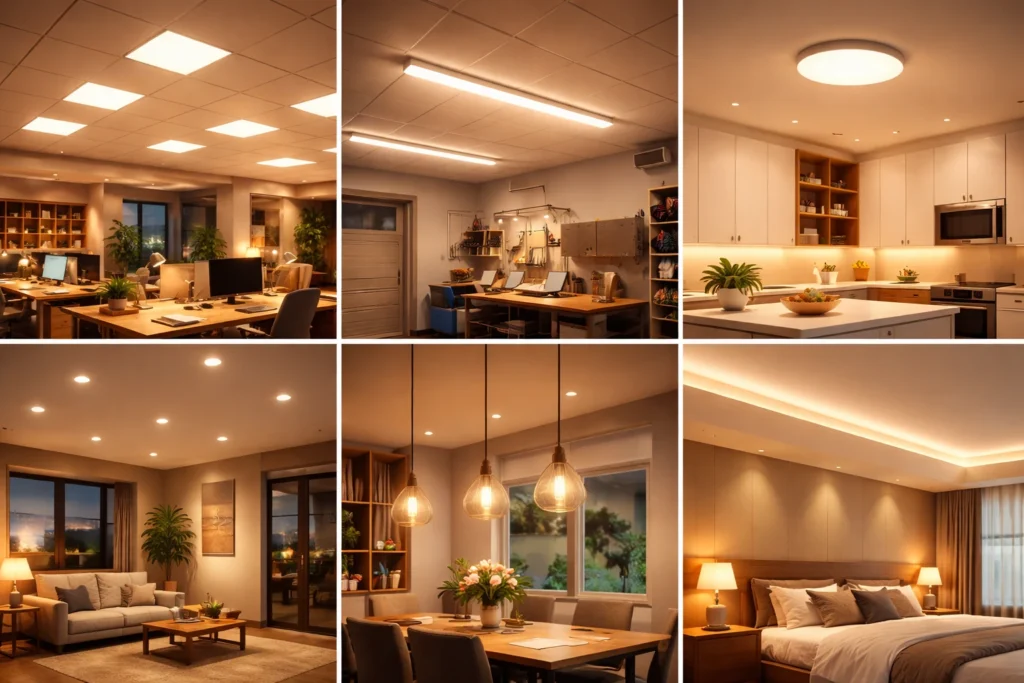
For those who want to retain existing fluorescent fixtures, warm LED tube replacements offer a practical solution. These tubes are designed to replace traditional fluorescent bulbs while providing warmer, more pleasant light. They come in two main types: plug-and-play models that work with existing ballasts, and ballast-bypass models that require minor rewiring.
High-quality warm LED tubes eliminate flicker and reduce energy consumption while delivering consistent light output. They are well-suited for garages, workshops, utility rooms, and commercial spaces where fixture replacement isn’t feasible. For many property owners comparing led replacement options for fluorescent tube lights, this approach offers the fastest upgrade path with minimal disruption. The downside is that older fixtures may still look dated, even with improved light quality. However, for budget-conscious upgrades, LED tubes offer an effective middle ground.
Surface-Mounted LED Ceiling Fixtures
Surface-mounted LED fixtures are an increasingly popular alternative for spaces transitioning away from recessed fluorescent panels. These fixtures attach directly to the ceiling and come in a wide range of designs, from slim discs to modern square or rectangular panels.
Warm surface-mounted fixtures provide flexibility in both style and light distribution. They work well in homes with drywall ceilings, apartments, and renovated offices. Many designs incorporate diffusers that soften the light and reduce glare, making them comfortable for everyday use. Because these fixtures are visible design elements, they offer an opportunity to enhance the overall aesthetic of a room. Installation is typically straightforward, though wiring adjustments may be needed when replacing larger fluorescent fixtures.
Recessed Can Lights for a Clean, Modern Look
Replacing fluorescent ceiling lights with recessed can lighting is a more transformative approach. Instead of a single large light source, recessed lights distribute illumination evenly across the ceiling. When paired with warm LED retrofit kits, they create a soft, inviting atmosphere without sacrificing brightness.
Recessed lighting works especially well in living rooms, kitchens, hallways, and home offices. Adjustable trims and color-selectable options allow you to fine-tune both direction and warmth. Proper spacing is essential to avoid dark spots or excessive brightness. While recessed lighting requires more planning and installation work, the visual payoff is significant. It removes the institutional feel of fluorescent panels and replaces it with a polished, residential-friendly look.
Pendant and Decorative Ceiling Lighting
In spaces where ambiance matters, decorative ceiling lighting offers an alternative that fluorescent fixtures simply can’t match. Pendants, chandeliers, and linear suspension lights bring warmth and personality to a room while still providing functional illumination.
Warm LED bulbs paired with decorative fixtures are ideal for kitchens, dining areas, conference rooms, and retail environments. These lights create focal points and help define zones within open spaces. Layering decorative lighting with accent and task lighting ensures adequate brightness without relying on harsh overhead fixtures.
The key is balance. Decorative fixtures alone may not provide enough light for large areas, so they often work best as part of a layered lighting plan.
Indirect and Cove Lighting Solutions
Indirect lighting is one of the most effective ways to achieve a warm, comfortable environment. Instead of shining light directly downward, indirect lighting reflects illumination off ceilings or walls. This approach reduces glare and creates a soft, even glow throughout the space.
LED strip lights and linear fixtures are commonly used for cove lighting, ceiling washes, and architectural accents. When set to warm color temperatures, they make rooms feel larger and more relaxed. Indirect lighting works particularly well in living rooms, bedrooms, hospitality spaces, and wellness environments.
While indirect lighting may not replace all functional ceiling lighting, it significantly improves comfort and visual appeal when combined with other warm light sources.
Choosing the Right Warm Color Temperature
Not all warm light is the same. A 2700K light offers a cozy, residential feel, similar to traditional incandescent bulbs. A 3000K light provides a slightly cleaner look while still maintaining warmth. Some spaces benefit from 3500K lighting, which bridges the gap between warm and neutral tones without feeling cold.
Room size, ceiling height, wall color, and furnishings all influence how warm light appears. Darker finishes absorb more light and may require brighter fixtures, while lighter spaces reflect light more efficiently. Testing samples before committing to a full installation can prevent disappointment.
Brightness, CRI, and Light Quality
Warm light does not have to mean dim light. Modern LED technology delivers high lumen output even at lower color temperatures. Understanding lumens helps ensure that replacement fixtures provide adequate brightness for the intended use.
Color rendering index is another crucial factor. High-CRI lighting makes colors appear vivid and accurate, which is especially important in kitchens, retail spaces, and work environments. Low-quality LEDs may emit warm light but distort colors, resulting in a dull or yellowish appearance.
Energy Efficiency and Long-Term Value
One of the biggest advantages of warm LED alternatives is energy efficiency. LEDs consume significantly less power than fluorescent lights while delivering comparable or superior brightness. They also generate less heat, reducing strain on cooling systems.
Maintenance costs drop dramatically as well. LEDs last far longer than fluorescent tubes, minimizing replacements and disruptions. Over time, the savings in energy and maintenance often offset the initial investment.
Installation and Upgrade Considerations
Some warm light alternatives are simple DIY projects, while others require professional installation. Replacing tubes or surface-mounted fixtures is generally straightforward. Recessed lighting, indirect lighting, and large-scale retrofits may involve electrical modifications and should be handled by licensed professionals.
Planning is essential. Mistakes such as mismatched color temperatures, insufficient brightness, or poor placement can undermine the benefits of upgrading. Taking the time to design a cohesive lighting plan ensures a successful transition away from fluorescent ceiling lights.
Creating Comfortable, Modern Lighting
Warm light alternatives to fluorescent ceiling lights represent more than a technical upgrade. They redefine how a space feels and functions. By prioritizing comfort, visual quality, and flexibility, these lighting solutions support productivity, relaxation, and well-being.
Whether you choose LED panels, recessed lights, decorative fixtures, or indirect lighting, moving away from fluorescent lighting opens the door to spaces that feel welcoming rather than institutional. With the right choices, warm light can transform everyday environments into places people genuinely enjoy spending time in.
FAQs
Fluorescent lights emit uneven, blue-heavy light that causes glare and eye strain, while warm lighting provides a softer, more balanced glow.
Warm light typically ranges from 2700K to 3000K, creating a cozy and comfortable atmosphere without sacrificing visibility.
Yes, modern warm LEDs deliver high lumen output and can match or exceed the brightness of fluorescent fixtures.
Warm LED panels are one of the easiest replacements, offering uniform light distribution, reduced glare, and better energy efficiency.
Yes, warm LED tube replacements allow you to upgrade lighting quality while keeping existing fixtures intact.
Warm light improves comfort and reduces eye fatigue, making it suitable for offices when paired with adequate brightness and high CRI.
CRI measures color accuracy, and high-CRI warm lights make colors appear more natural and visually pleasing.
Warm LED alternatives consume less energy, last longer, and reduce maintenance costs compared to fluorescent lighting.
Most LED warm light fixtures support smooth dimming, unlike many fluorescent systems that flicker or hum when dimmed.
Living rooms, bedrooms, kitchens, home offices, and classrooms all benefit from the improved comfort and ambiance of warm lighting.