In Australia, we have a collective hallucination about real estate. We convince ourselves that because a property is worth a million dollars on paper, we are effectively millionaires. We aren’t. And we are just custodians of a pile of bricks that costs a fortune to exit.
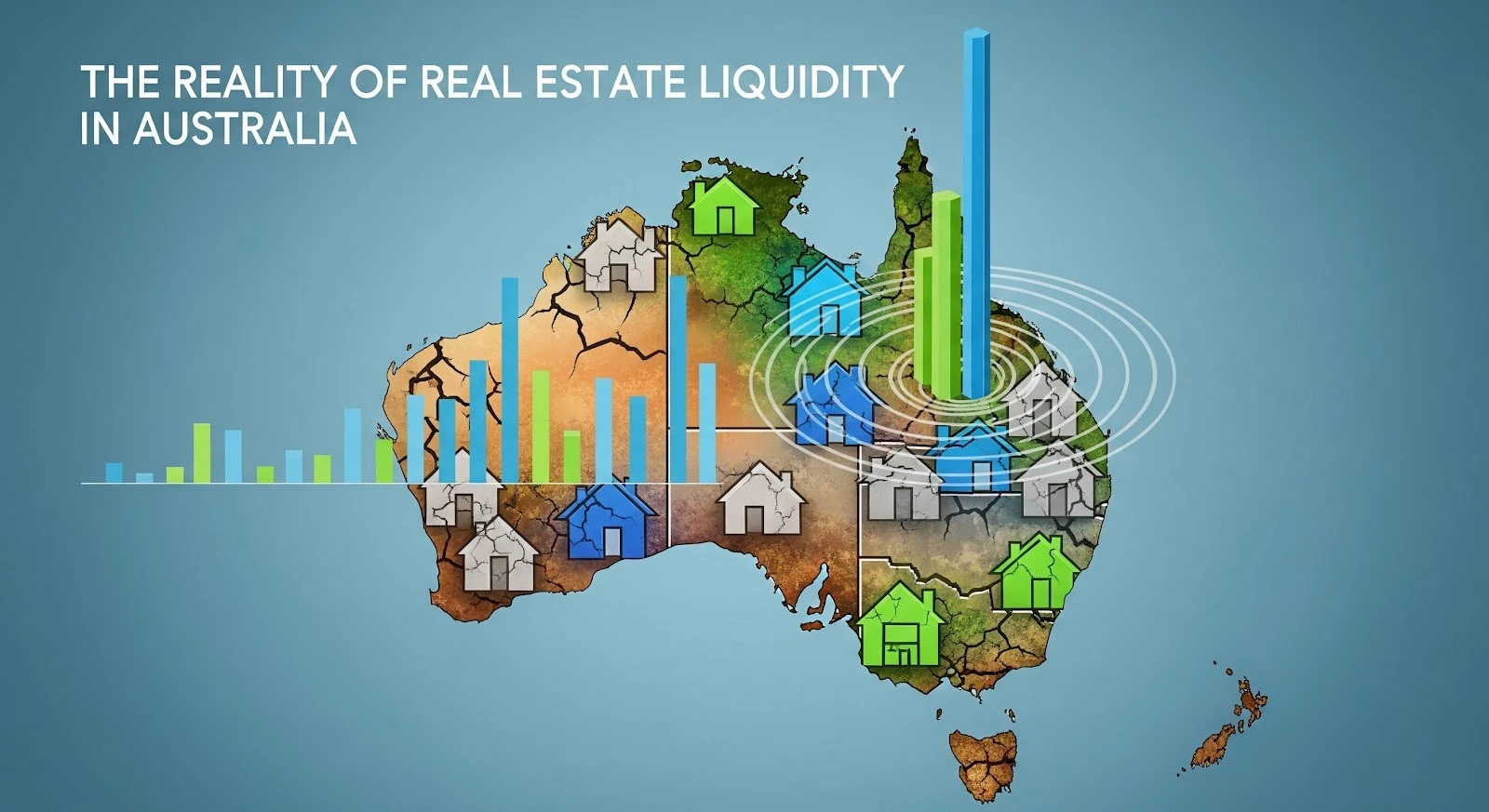
Liquidity is the ability to convert an asset into cash now without losing half its value. By that definition, Australian real estate is about as liquid as concrete.
I learned this the hard way. A few years back, I needed access to about $50,000 quickly for a business opportunity. I had plenty of equity in an investment property in Brisbane. Did that matter? Not a bit. To get that money, I had two choices: refinance (which took six weeks of paperwork, intrusive credit checks, and bank delays) or sell.
Selling is even worse. You don’t just “sell” a house. You clean it, stage it, evict the tenants, pay a marketing fee, wait for an open home, pray for an auction result, and then wait another 42 days for settlement.
In the current market, the average time to sell a property in Australia hovers around 30 to 60 days. Add a standard settlement period, and you are looking at three months before you see a single dollar.
That is not liquidity. That is a prison sentence.
Advantages of Selling Silver Bullion for Fast Cash
Now, compare that nightmare to silver bullion.
If you own 500 ounces of silver, you don’t have equity; you have money. It just happens to be made of metal.
The liquidity of silver is almost instant. There are no open homes. There are no building inspections. You don’t need a conveyancer to charge you $1,500 to read a contract. You pick up your metal, walk into a dealer, and walk out with funds transferred to your bank account.
This is where the difference becomes stark.
I’ve tested this myself. I walked into a dealer to offload a modest stack of 1kg bars. The entire process took less than twenty minutes. The dealer checked the weight, tested the purity, locked in the spot price, and shook my hand.
Try getting a real estate agent to return your call in twenty minutes.
Trading Silver Bullion Gold Coast: A Local Case Study
Geography matters here. If you are in a major hub, the market moves even faster. For example, if you are looking to trade silver bullion Gold coast, dealers are particularly active. The region has a high concentration of retirees and savvy investors who understand tangible assets, creating a robust secondary market.
I know a guy on the Gold Coast who wanted to liquidate a portion of his portfolio to buy a boat. He drove to a local bullion dealer in Southport, sold a monster box of silver coins, and had the cash for his deposit that afternoon.
That is the power of true liquidity. It gives you options. Real estate takes them away.
Comparing Friction Costs: Real Estate Stamp Duty vs. Silver Spreads
Real estate advocates will scream about leverage and capital gains. They aren’t wrong; you can’t live inside a silver bar. But they conveniently ignore the “friction costs” of property.
Let’s look at the numbers.
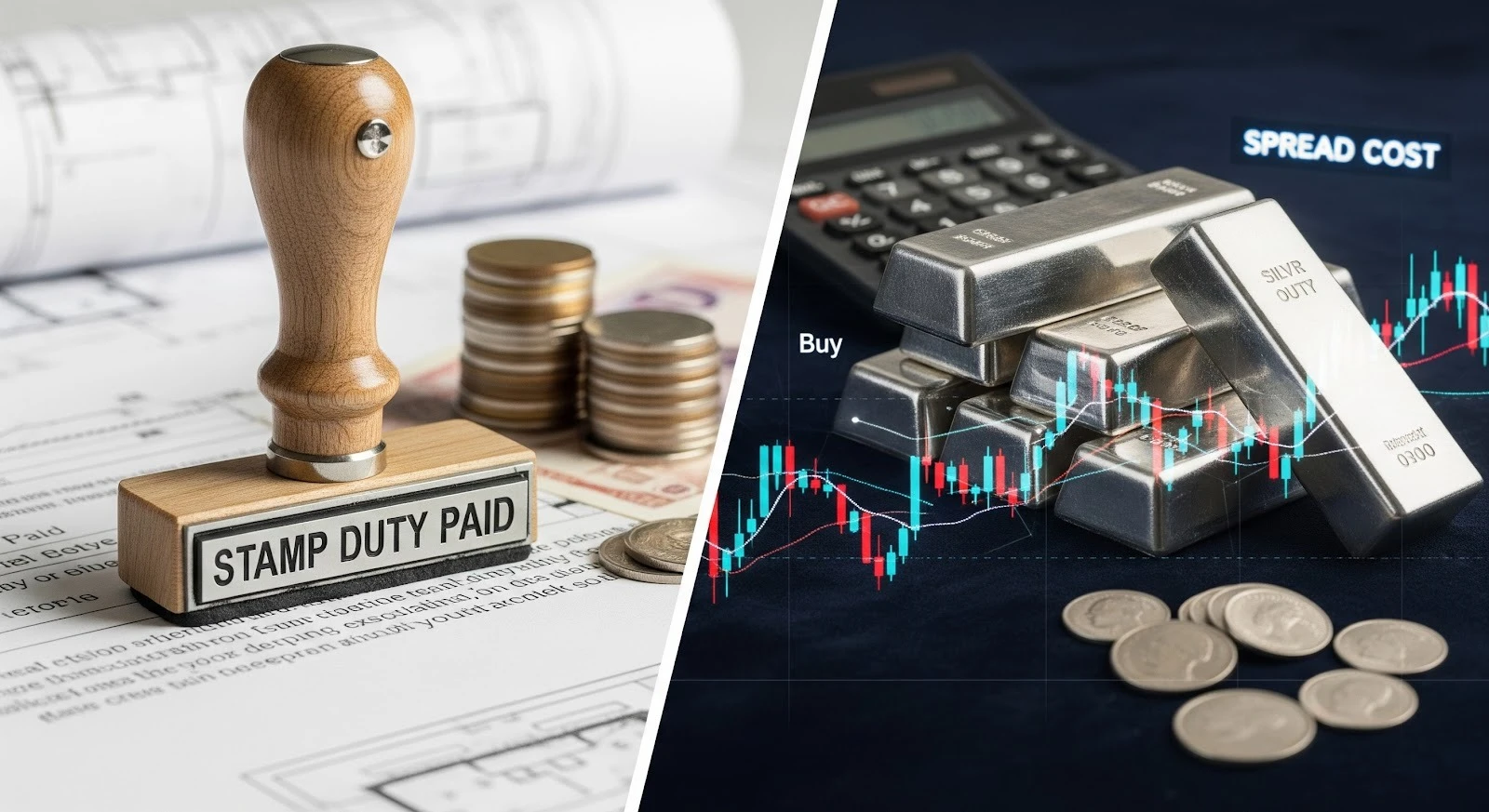
If you buy an investment property in Queensland for $750,000, you are instantly hit with roughly $26,000 in stamp duty. That is money set on fire. It is gone. To break even, your property needs to appreciate by nearly 4% immediately.
Then, when you sell, you lose another 2% to 3% in agent commissions and marketing fees. On that same $750,000 house, that’s roughly $20,000.
So, to get in and out of a property, you are burning nearly $50,000 in friction costs.
With silver, the friction is the “spread”—the difference between the buy and sell price. While premiums on silver can be higher than gold (often 10-15% over spot for coins, less for bars), you control the exit. You aren’t paying a state government tax just for the privilege of buying it. And importantly, you can sell part of it.
If you need $5,000, you sell $5,000 worth of silver. You can’t sell the bathroom of your investment property. You’re all in, or you’re all out.
Investment Strategy: Property Leverage vs. Silver Mobility
I’m not saying you shouldn’t own property. You need somewhere to live, and the leverage offered by Australian banks is a powerful wealth builder.
But don’t confuse “wealth” with “liquidity.”
If the economy turns sour, or you face a personal crisis, a house is a liability that eats cash (rates, insurance, maintenance). Silver is an asset that generates cash on demand.
If you want stability and a roof over your head, buy a house. But if you want the freedom to move, to pivot, and to access your wealth without asking a bank for permission? Stack silver.
In a crisis, the person with the keys to a house is stuck. The person with the metal is mobile. Choose accordingly.
FAQs
Liquidity is how quickly you can convert an asset into cash without taking a major loss on its value.
Selling or refinancing property takes weeks or months due to banks, inspections, marketing, and settlement delays.
Not really—accessing equity usually requires refinancing, which involves lengthy approval processes and strict lending criteria.
Between marketing, sale, and settlement, it often takes two to three months before funds are available.
Silver can be sold directly to dealers at market price, often with funds transferred the same day.
Agent commissions, marketing fees, and prior stamp duty can easily consume tens of thousands of dollars.
Friction costs are unavoidable expenses—like stamp duty or agent fees—that reduce returns when entering or exiting an investment.
Silver involves a buy–sell spread, but it avoids large government taxes and allows partial liquidation.
Partial liquidity lets you access only the cash you need instead of being forced to sell everything at once.
No—property builds long-term wealth through leverage, while silver provides mobility and fast access to cash when it matters.