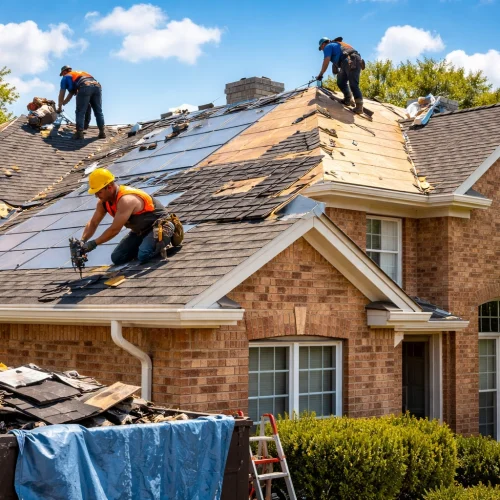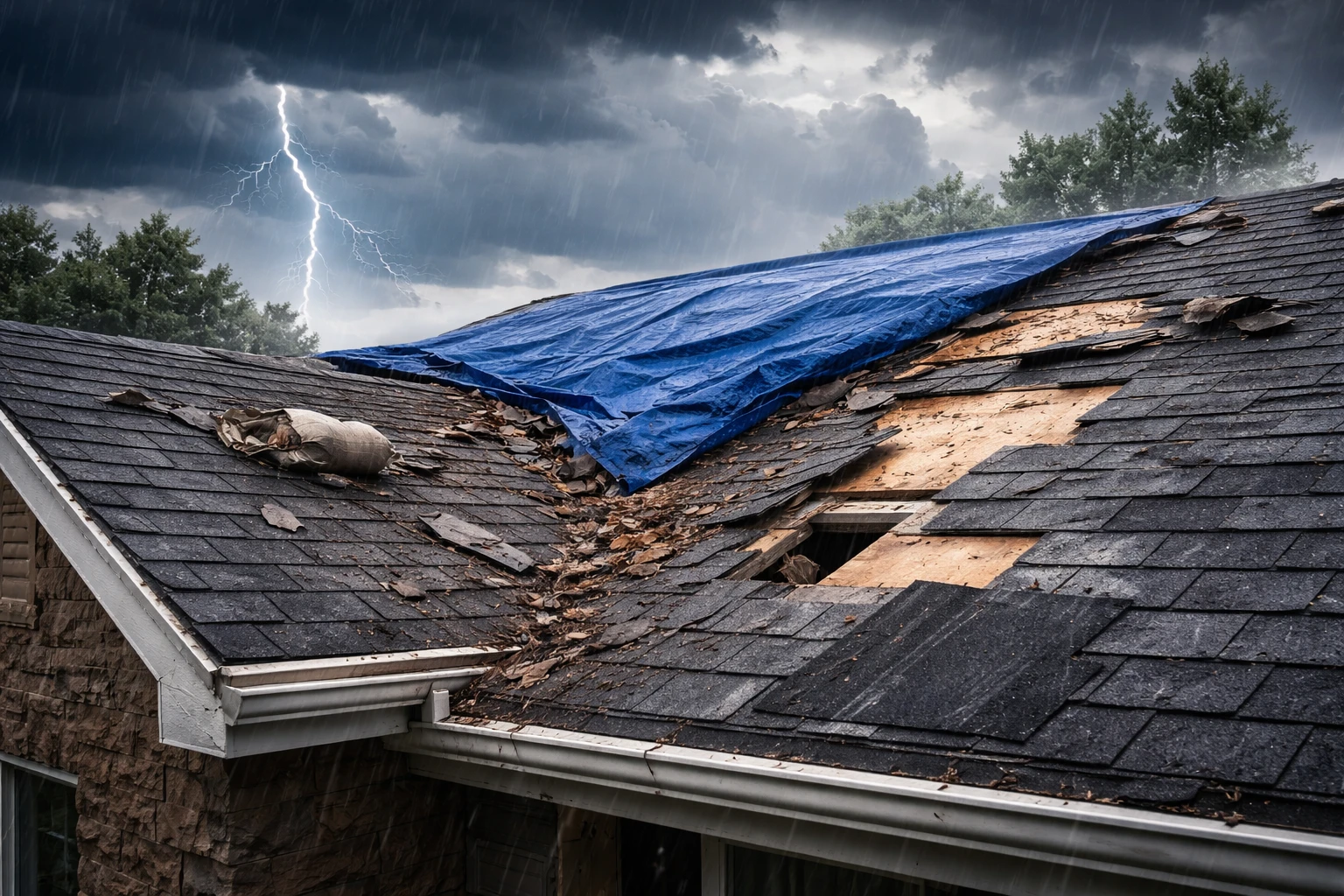
Storms can take a serious toll on both residential and commercial roofs, often causing damage that isn’t immediately visible but worsens over time. From strong winds to heavy rain and hail, your roof is the first line of defense, and also the most exposed; even minor storm damage should never be ignored. Water damage restoration could be the difference between a safe home and one facing structural damage.
Common Types of Storm Roof Damage
Different weather conditions affect roofing systems in different ways. Wind, hail, water, and even debris can wear down the materials that make up your roof, and without professional support, this can lead to serious long-term structural problems.
Wind Damage
High winds can loosen or completely remove shingles, leaving your roof exposed to the elements. You may also notice lifted or curled shingles, as well as damage to flashing and roof edges. These areas are especially vulnerable during storms.
Hail Damage
Hailstones can cause dents, cracks, and granule loss on shingles. While some damage is obvious, hail often creates subtle issues that weaken roofing materials over time. This can eventually lead to leaks and structural concerns.
Water and Rain Damage
Heavy rain can seep into small cracks and weak points. This is particularly common around vents, chimneys, skylights, and any other area particularly prone to water infiltration. However, this leads to leaks due to moisture buildup, and in some situations, can even cause mold.
Debris and Impact Damage
Storms often bring flying debris, like branches or loose objects that can strike your roof. These impacts can cause anything from minor surface damage to serious structural issues, depending on the force and size of the debris.
Signs Your Roof Needs Immediate Attention
After a storm, it’s important to assess your roof for any warning signs that indicate urgent repairs are needed. Some issues are visible from the outside, while others may show up inside your home or building. Watch out for:
- Missing, cracked, or curling shingles
- Water stains on ceilings or walls
- Sagging areas on the roof
- Mold or mildew growth indoors
- Debris accumulation or visible punctures
- Dripping water or unexplained moisture
Catching these signs early can save you from more extensive and expensive repairs down the line.
What to Do Right After a Storm
Taking the right steps immediately after a storm can minimize damage and keep you safe. You’ll want to:
- Ensure safety first; avoid climbing onto a potentially unstable roof
- Perform a visual inspection from the ground
- Document damage with photos for insurance purposes
- Cover exposed areas with tarps to prevent further water entry
- Contact a professional roofing contractor for a detailed inspection
Acting quickly helps prevent additional issues and sets the stage for smoother repairs and insurance claims.
Preventing Future Storm Damage
While you can’t control the weather, you can take steps to make your roof more resilient against future storms. Make sure that you:
- Schedule regular roof inspections and maintenance
- Clean gutters and remove debris buildup
- Reinforce flashing and seal vulnerable areas
- Upgrade to storm-resistant materials like metal roofing
- Trim nearby trees to reduce the risk of falling branches
Proactive care goes a long way in extending the life of your roof and reducing repair costs.
Choosing the Right Roofing Contractor
Not all roofing contractors are created equal, especially when it comes to storm damage repairs. Look for professionals who are licensed, insured, and experienced in handling storm-related issues. A reliable contractor will provide a thorough inspection, transparent estimates, and quality workmanship.
Don’t hesitate to ask for references or check reviews before making your decision. The right company will go above and beyond to make sure they’re using the right materials for the job. If needed, they’ll reach out to metal roofing suppliers, water damage repair experts, and any other company or contracting team that will help them restore your roof.
Conclusion
Storm damage can be overwhelming, but addressing it promptly makes all the difference. From identifying issues early to seeking professional help and investing in preventative measures, every step plays a role in protecting your property. Whether it’s minor repairs or full-scale water damage restoration, taking action now ensures your roof remains strong, secure, and ready to withstand the next storm.
FAQs
You should inspect your roof as soon as it’s safe, ideally within 24–48 hours, to catch damage early.
Minor fixes may be possible, but most storm damage repairs should be handled by professionals for safety and quality.
Wind damage is the most common, often causing missing or lifted shingles.
Most policies do cover storm-related damage, but coverage depends on your policy and the cause of damage.
Look for signs like water stains, leaks, or mold inside your home, which may indicate underlying issues.
No, hail damage can be subtle and often requires a professional inspection to identify.
Contain the leak if possible, cover exposed areas with a tarp, and call a roofing contractor immediately.
Repair timelines vary, but minor fixes may take a few hours while major repairs can take several days.
Yes, untreated damage can weaken the structure over time and lead to costly repairs.
Regular maintenance, using durable materials, and reinforcing vulnerable areas can significantly improve resilience.