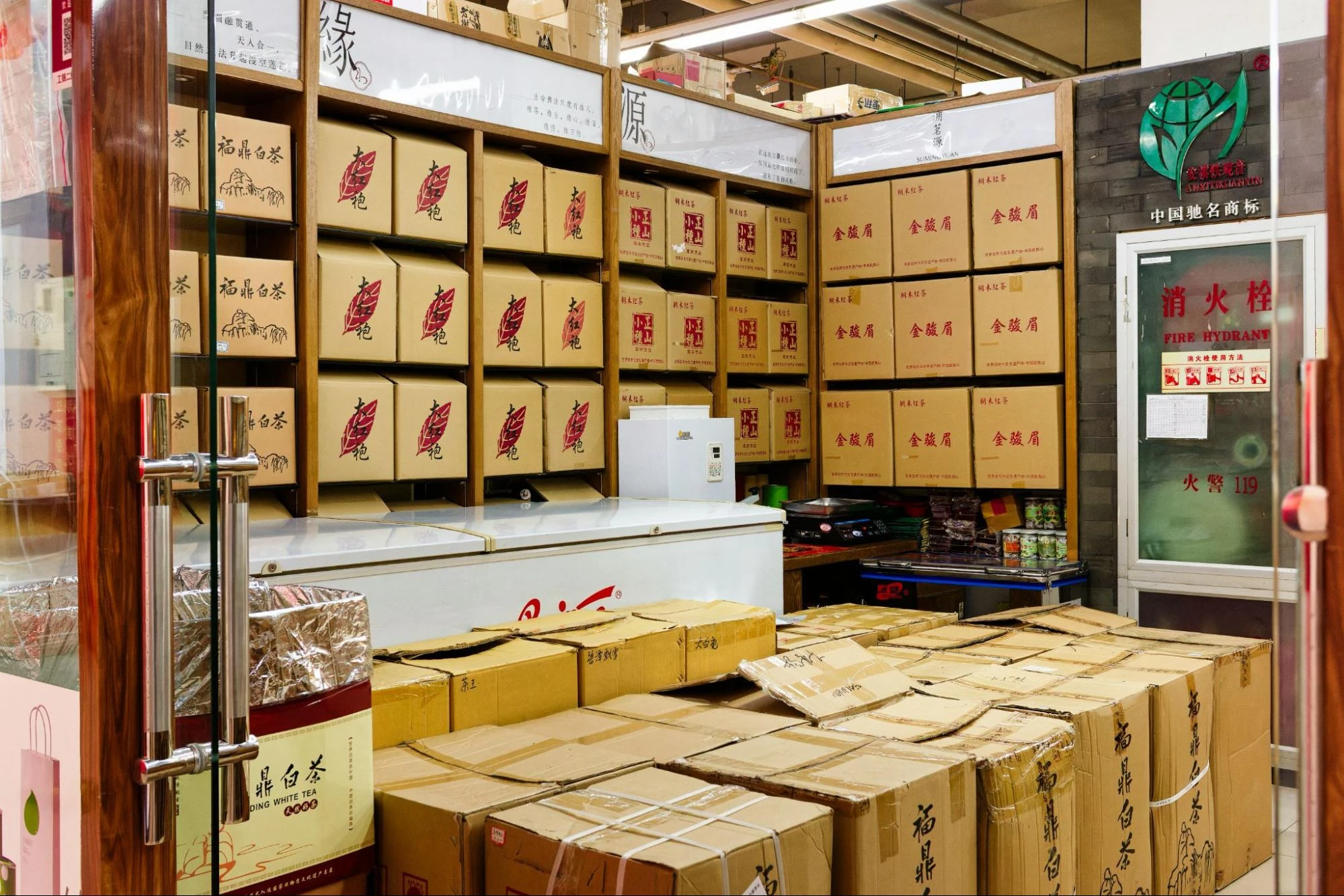
Every business reaches a tipping point where the stuff it owns starts working against it. Whether it’s a warehouse floor cluttered with unsorted inventory, a retail storeroom where nobody can find anything, or a workshop where tools disappear into piles of materials, poor storage is one of the most expensive operational problems that nobody puts a number on.
The cost doesn’t show up on a single invoice it hides inside wasted labour hours, damaged stock, missed orders, and the slow erosion of productivity that comes from people working around chaos instead of within a system.
Once you start calculating what disorganisation actually costs per week, the case for proper industrial shelving and racking stops being a nice-to-have and becomes one of the smartest operational investments a business can make.
The Invisible Tax of Wasted Time
When a warehouse worker spends five minutes looking for an item that should take thirty seconds to locate, that time multiplies across every pick, every shift, and every employee on the floor.
Across a team of even four or five workers, those lost minutes compound into hours of unproductive labour every single week.
The frustrating part is that this waste is almost entirely preventable. A clearly organised storage system with designated locations, logical product grouping, and accessible shelving transforms retrieval from a scavenger hunt into a predictable, repeatable process that saves time on every single transaction.
Why Floor Space Is More Valuable Than You Think
New Zealand commercial rents are not getting cheaper, and every square metre of floor space a business pays for should be earning its keep.
Yet one of the most common sights in warehouses, workshops, and storerooms across the country is usable space being surrendered to ground-level clutter that could easily be stored vertically.
The shift from horizontal chaos to vertical organisation is one of the most dramatic efficiency gains any facility can achieve.
Proper shelving and racking systems exploit the full height of a space, turning a single square metre of floor area into multiple tiers of accessible, organised storage that effectively multiplies the capacity of the room without expanding its footprint.
Pallet Racking: The Heavy Lifter
For businesses handling palletised goods, bulk materials, or heavy inventory, pallet racking is the foundation of an efficient storage operation.
These heavy-duty steel systems are engineered to bear substantial loads across multiple levels, with adjustable beam heights that allow the configuration to adapt as inventory profiles change over time.
The beauty of pallet racking lies in its modularity. Bays can be added, reconfigured, or repositioned as the business grows, which means the initial investment continues to serve the operation even as product lines expand, seasonal volumes fluctuate, or the facility layout evolves.
Long Span Shelving: The Versatile Middle Ground
Not everything a business stores comes on pallets, and not everything is light enough for standard shelving.
Long span shelving occupies the practical middle ground, strong enough to handle moderate industrial loads per level while offering the shelf-by-shelf accessibility that pallet racking doesn’t provide.
This makes long span systems particularly popular for operations that store a wide variety of items in different sizes and weights.
From automotive parts and building supplies to retail overstock and workshop materials, long span shelving handles the messy reality of mixed inventory better than almost any other system type.
Container Shelving: The Overlooked Opportunity
Shipping containers have become a fixture on New Zealand commercial properties, used as everything from overflow storage and seasonal stock rooms to mobile workshops and on-site archives.
Yet the vast majority of containers being used for storage have no internal shelving at all, which means their considerable cubic capacity is being wasted on ground-level stacking that makes items inaccessible and vulnerable to damage.
Purpose-built container shelving systems are designed to fit the exact internal dimensions of standard 20-foot and 40-foot containers, creating multiple tiers of organised, accessible storage within a space that was previously just a steel box with things piled inside it.
The transformation in usable capacity is remarkable. A properly shelved container can hold significantly more inventory than an unorganised one while making every item visible and retrievable without moving anything else.
Retail Shelving: Where Storage Meets Sales
In a retail environment, shelving isn’t just storage, it’s a sales tool that directly influences how customers interact with products and how much they ultimately spend.
The way products are displayed, the height at which they sit relative to eye level, and the flow of shelving through the store all shape purchasing behaviour in ways that many retailers underestimate.
Well-designed retail shelving creates clear product zones, encourages browsing, and makes inventory management simpler for staff working behind the scenes.
The difference between a store that feels cluttered and overwhelming and one that feels inviting and easy to navigate almost always comes down to the quality and configuration of the shelving on the floor.
The Workshop and Garage Problem
It’s not just warehouses and retail spaces that suffer from storage dysfunction workshops, garages, and trade businesses are some of the worst offenders.
Tools, materials, spare parts, and consumables accumulate over time, and without a structured storage system, they spread across every available surface until the workspace itself becomes the storage.
Heavy-duty shelving designed for workshop environments solves this by giving every category of item a designated home.
When tools are racked, materials are shelved by type, and consumables are stored in accessible bays, the workshop stops being a source of daily frustration and starts functioning the way it was designed to as a productive work environment.
Load Capacity: The Number That Actually Matters
One of the most common mistakes buyers make when choosing shelving is focusing on dimensions while overlooking load capacity.
A shelf that fits the space perfectly but can’t handle the weight placed on it is not just a poor investment, it’s a genuine safety hazard in any working environment.
Quality industrial shelving specifies load ratings per tier and per bay, and these numbers should be the starting point of any purchasing decision, not an afterthought.
Solid steel construction with powder-coated finishes and adjustable shelf heights provides both the strength to handle real working loads and the flexibility to reconfigure as storage needs change.
Adjustability: Planning for the Business You’ll Be Tomorrow
The businesses that get the most long-term value from their shelving are the ones that buy systems designed for adjustment and expansion rather than fixed-configuration units that only suit today’s requirements.
Adjustable shelf heights, modular bay systems that can be joined or separated, and compatibility between different product ranges within the same brand all contribute to a storage solution that evolves alongside the operation.
This forward-thinking approach costs no more up front but delivers dramatically better value over the life of the system.
A shelving setup that can be reconfigured in an afternoon is worth far more than one that needs to be replaced entirely when the business changes direction or takes on a new product line.
Assembly and Installation: Simpler Than You’d Expect
Many business owners delay investing in proper shelving because they assume installation will be complicated, disruptive, or require specialist contractors.
In reality, well-engineered shelving systems are designed for fast, straightforward assembly using basic tools, with clearly labelled components and bolt-together construction that doesn’t require welding or specialist skills.
Most single-bay units can be assembled in well under an hour, and even multi-bay configurations with several joined sections can be operational within a day.
For businesses that prefer professional installation, particularly for complex configurations or high-load systems, experienced teams can complete the job quickly with minimal disruption to daily operations.
The Safety Dimension
Beyond productivity and organisation, proper shelving and racking directly reduces workplace safety risks that many businesses don’t associate with storage.
Items stacked on floors create trip hazards, heavy goods stored at ground level require manual lifting that strains backs and shoulders, and unsecured piles of inventory can shift and fall without warning.
Structured shelving eliminates these risks by placing items at accessible heights, distributing weight across engineered frames, and keeping aisles and walkways clear.
In a regulatory environment where New Zealand’s Health and Safety at Work Act holds businesses accountable for managing workplace risks, proper storage infrastructure is as much a compliance investment as it is an operational one.
The Bottom Line on Getting Organised
The businesses that operate most efficiently and profitably are almost always the ones with the tidiest, most logically organised physical spaces.
It’s not a coincidence that an organisation creates speed, reduces errors, prevents damage, and frees people to do productive work instead of searching for things that should have been easy to find.
Investing in the right shelving and racking system is one of the lowest-risk, highest-return decisions any business can make, regardless of industry or scale.
The cost is modest, the assembly is fast, and the daily return in time saved, space reclaimed, and frustration eliminated begins from the moment the last shelf is bolted into place.