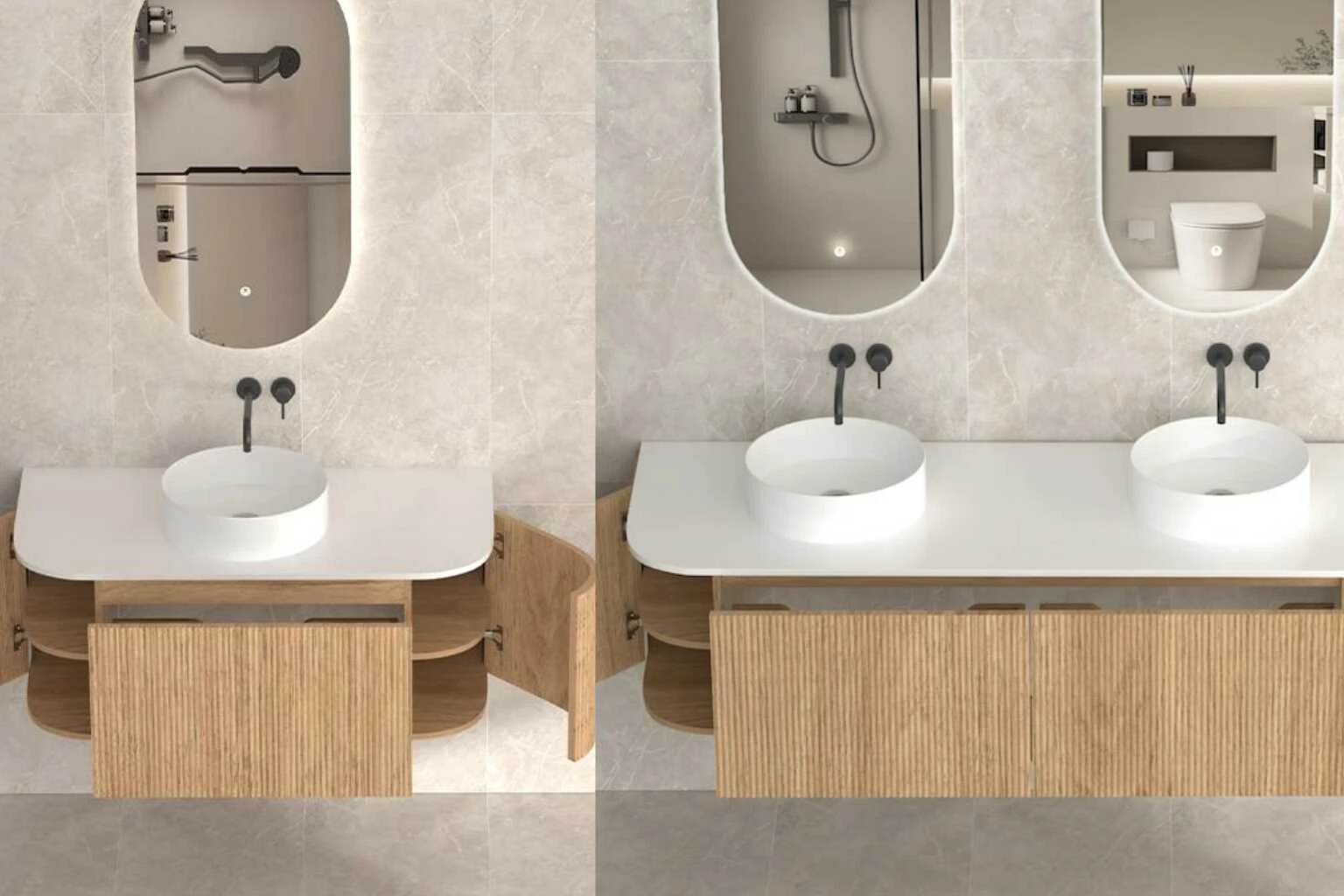
During bathroom renovations, every homeowner comes across this moment when they stare at the floor plan with their tape measure in hand, whether they should get a single or a double sink vanity unit.
Choosing a bathroom vanity unit may seem simple, but getting it wrong wastes floor space and creates a bottleneck that becomes frustrating every time you enter or exit the bathroom.
So what is the right answer? It depends on your budget, bathroom size, number of people sharing the space, your daily routine as well as the plumbing layout.
Let’s break it down for you so that you can trust on your renovation with confidence and walk out with a space you actually love.
What Is a Single Sink Vanity Unit
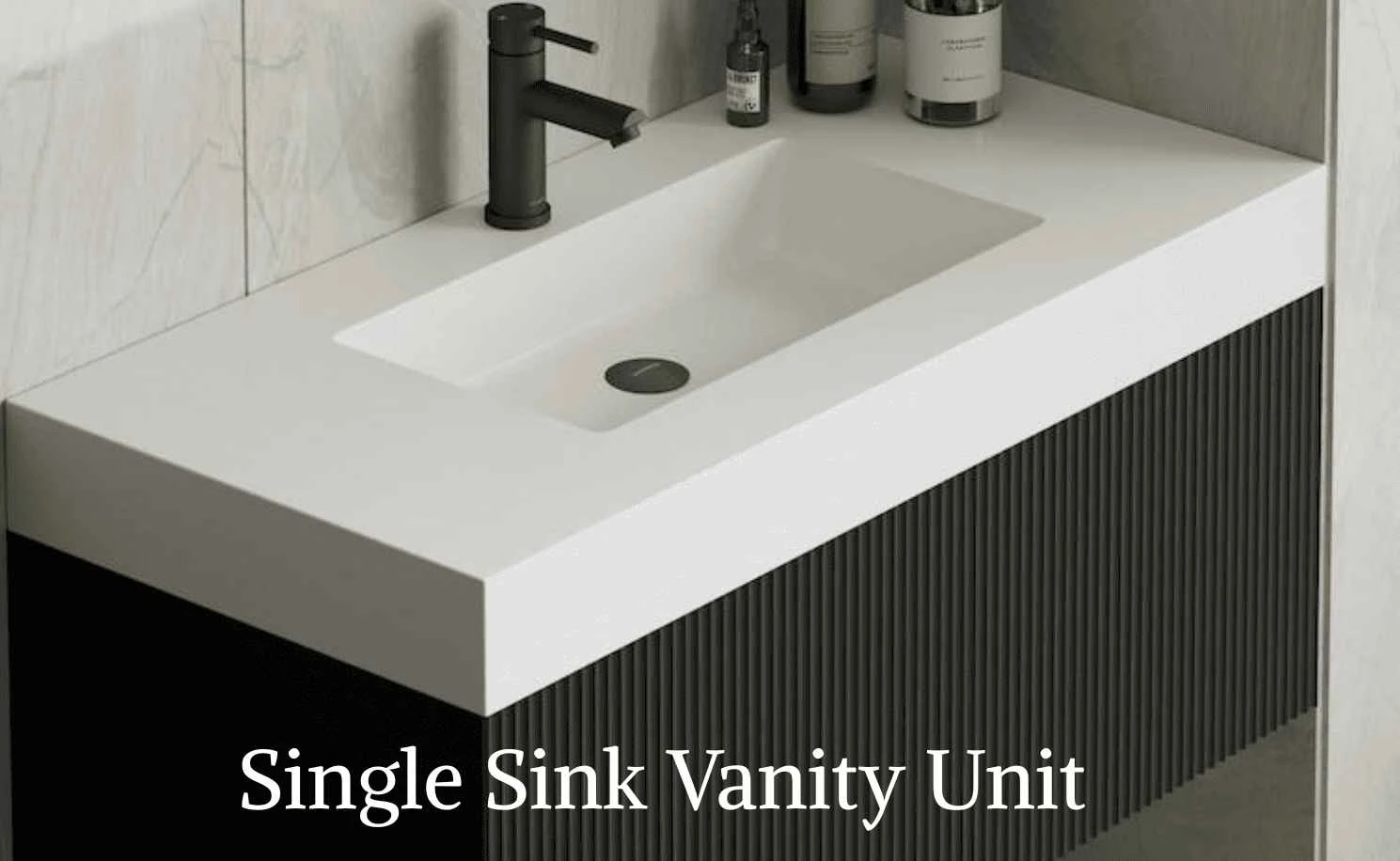
It is a bathroom cabinet with basin on top, designed to be a wash station as well as a storage space. It combines a countertop basin with a cabinetry underneath for toiletries, cleaning supplies, and towels.
Single vanity units come in a wide range of sizes from 450mm to 1000mm. The most popular formats are:
- Floor Standing Single Vanity Unit: Traditional, sturdy, great for older-style bathrooms
- Wall Hung Single Vanity Unit: Modern, keeps the floor visible to make rooms feel larger
- Single Vanity Unit with Basin: Basin pre-fitted into the countertop for a seamless look
- Single Vanity Unit 1200 Configurations: Pushing into wider territory, ideal for one person who wants generous counter space
Single vanity units are mostly used in small bathroom spaces, cloakrooms, en-suites, and a space where maximising room is a priority. They are also ideal for rental and small family homes.
| Pros of Single Sink Vanity Unit | Cons of Single Sink Vanity Unit |
| Adequate for one person | Not ideal for shared bathrooms |
| Best for a small bathroom space | Limited space for more than one person |
| Low unit and installation cost | |
| Easy to clean and maintain | |
| Huge variety of styles in wall-hung and floor-standing options |
What is a Double Sink Vanity Unit
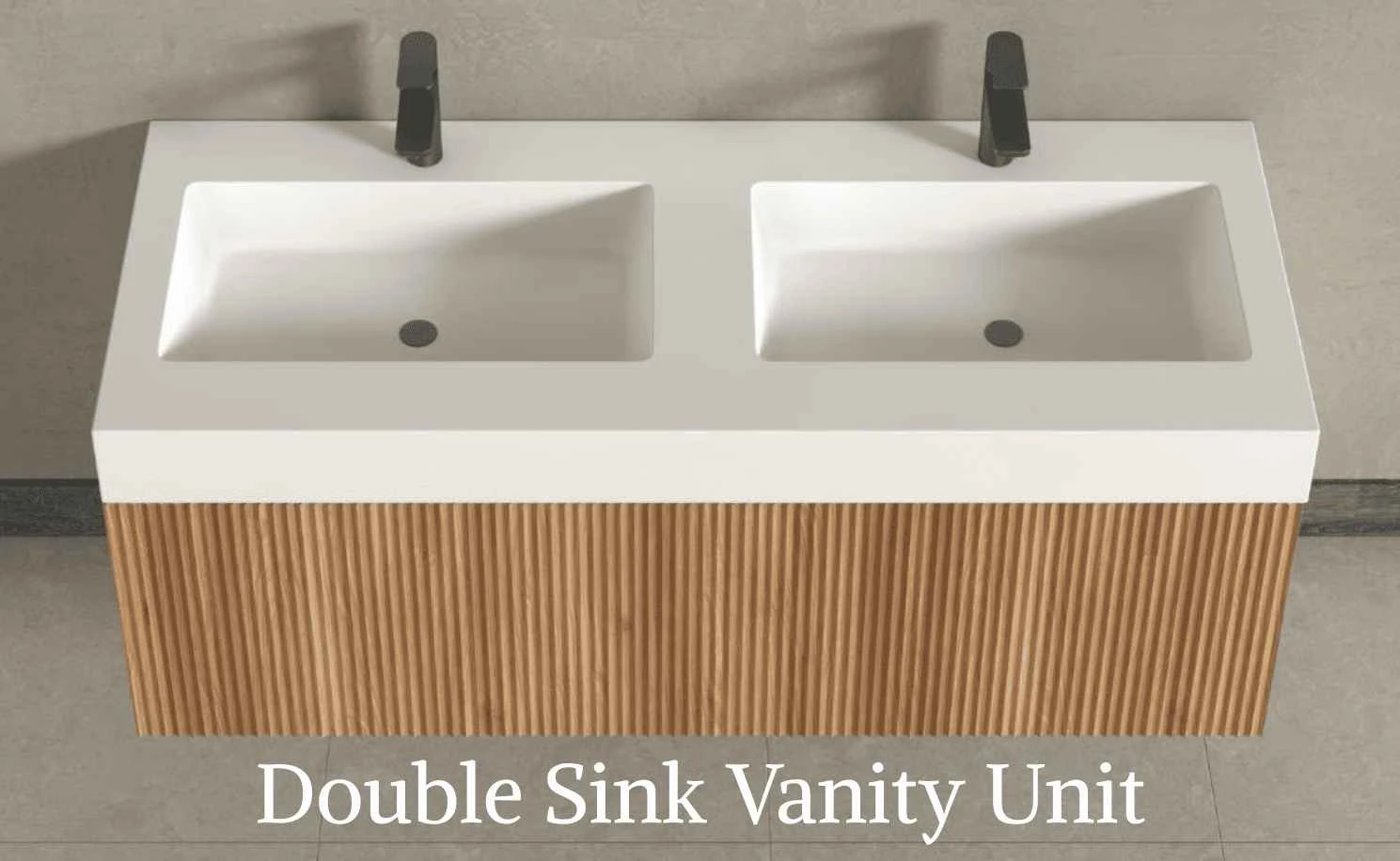
Double sink vanity unit is an integrated side-by-side basin, each having their own taps and storage zone below. They are designed for shared spaces, and more than one person uses.
Primarily, double-sink vanities are used in master bathrooms, family bathrooms, and hotel suites where two or more people need to use the sink simultaneously.
Double-sink vanity unit sizes range from 1200mm to 1800mm, or larger, in luxury and commercial settings.
Common double vanity unit formats include:
- Wall Hung Double Vanity Unit: Sleek and contemporary, ideal for modern bathrooms
- Floor Standing Double Vanity Unit: Sturdy and traditional, with substantial storage beneath
- Freestanding Double Vanity Unit: Versatile, not fixed to the wall, can be repositioned
- Oak Double Vanity Unit: Warm, natural timber finish for a boutique hotel feel
- Double Vanity Unit Wood: Various timber finishes for a natural, lived-in aesthetic
- Double Vanity Unit with Drawer Storage on Each Side: Keeps his-and-hers organisation effortlessly tidy
First, review the bathroom vanity unit options you have and compare styles, dimensions, and finishes before making any decision. This is the best place to start your hunt.
| Pros of Double Sink Vanity Unit | Cons of Double Sink Vanity Unit |
| Two people can use sinks at the same time | Requires more space |
| Personal counter space for each user | Higher cost of the unit, accessories, and installation |
| Looks premium and adds significant presence in large bathrooms | More surface area requires more time to clean and maintain |
| Excellent resale appeal | Complex installation requiring professional help. |
| Divided storage means less clutter |
Single vs Double Sink Vanity Units
Before committing to a single- or double-sink vanity unit, you need to consider certain factors. Be honest in researching the answers to save time and money in your bathroom redo.
1. Bathroom Size and Layout
It is one of the most important factors to consider. If you have a compact bathroom under 4 square meters, a single vanity unit is the best option.
Squeezing a double unit in tight spaces leaves no room for you to do even the basic tasks; like opening the drawers, moving, or placing any other furniture.
If you have ample space in your master bathroom, a freestanding double vanity unit complements it in the best way possible.
Protip: If your available wall space is under 1100mm, stick with a single sink unit. If you are working with 1200mm or more wall space with enough room depth, choose a double sink option. Account for door swings, radiator placement, and a clear space of minimum 600mm in front of the vanity.
2. Number of Users
It matters more than you might want to admit. As a person living alone, you do not have to pay extra for mere double vanity. But if a couple or a family shares a bathroom space, every one will feel the impact of a single sink every morning.
If two or more people share a bathroom daily, a double vanity unit with drawer storage makes morning routines smoother while reducing friction.
3. Daily Routine and Lifestyle
If you and your partner get ready in the morning together, a double sink is genuinely useful. If you have the space all to yourself, a single sink vanity unit with drawers will serve you well and at a fraction of the cost.
4. Storage and Counter Space
Here is the truth: a single basin vanity unit gives more usable counter space than a double unit provides per person.
In a double vanity unit, the counter space gets split between two sides. As a solo user, a generously wide single unit gives you enough space for your skincare products, toothbrushes, and a hair dryer.
For shared bathrooms, double units win on organisation. Each person has their own dedicated storage zones, which reduces everyday drama and disagreements about counter hogging.
5. Budget and Installation Costs
When you compare single vs double sink vanity units cost, the gap is more than you may expect. A double unit means two basins, two taps, an extended cabinet, and dual plumbing, which requires critical installation and waste connection.
A standard vanity installation might cost you from £150 and onwards for the unit and plumbing labour. The double unit installation runs from £500 to more once you figure out the factors like extended cabinetry and a second plumbing run.
Note: Always get a quote from a professional plumber before you finalise your choice.
Protip: if your budget is tight but you want a premium look, consider a wider single vanity unit, such as a single vanity unit 1200mm, with high quality hardware and a statement mirror. It gives the visual impact of a double unit for far less money.
When a Single Sink Vanity Is the Better Choice
You should put a single vanity unit as your priority in the following cases:
- You have a compact bathroom space
- It’s a guest bathroom, cloakroom, or secondary en-suite.
- One person uses the bathroom daily
- The renovation has limited plumbing flexibility
- You want to keep costs down without sacrificing style
- You prefer more counter space for one user
When you choose a single vanity unit with basin correctly and in the right finish, you ensure it is as striking as any double unit. It’s all about proportion and styling.
When a Double Sink Vanity Is Worth It
Invest in a high-quality double vanity unit when:
- You have a shared bathroom space with your partner or family.
- Your bathroom has a lot of wall space; ideally, 1200mm or more.
- You are renovating your bathroom for more property value.
- You want to create a luxury hotel inspired look in your bathroom.
Pair your double vanity unit with the right bathroom tiles from Royale Stones to make your bathroom feel cohesive rather than pieced together.
Space Requirements for Single vs Double Vanity Units
Understanding single vs double sink vanity units’ dimensions is crucial to plan your layout accurately.
Single Basin Vanity Unit
- Compact Bathroom Space: 450mm-600mm vanity unit
- Standard Bathroom: 600mm-900mm vanity unit
- Wide Single: 900mm-1200mm vanity unit with generous counter space
Double Basin Vanity Unit
- Minimum: 1200mm vanity unit
- Comfortable: 1500mm vanity unit
- Luxury: 1600–1800mm vanity unit
Protip: Consider clearance space. Leave at least 600mm of free space in front of the vanity unit. For double units in narrow bathrooms, consider wall-hung double vanity units. When you lift it off of the floor, it visually opens the space, making cleaning easy underneath.
Make the Right Choice for Your Bathroom
Choosing between a single and double sink vanity unit comes down to one single question: which one does your bathroom actually need? Get practical, measure your space, think honestly about your daily routine, and work with your budget rather than against.
If your bathroom is small or you are the only person using the bathroom, a beautifully styled single vanity unit will serve you perfectly with durable bathroom tiles, lighting, or hardware that lifts the whole look of your bathroom.
If you share the bathroom space or morning feels like a logistical puzzle in the morning with your significant other, a double unit is one of the best investments you can make in daily comfort and long-term home value.
No matter which direction you go, make sure that you choose a quality and material that complements your overall bathroom scheme. Whether you are into the warmth of oak double banty units, the clean lines of wall hung finish, or the practicality of freestanding double vanity units, the best vanity is the one that feels right in your space.
Now grab that tape measure, make your decision with confidence, and get ready to enjoy a bathroom that actually works for you.
Frequently Asked Questions
A single sink vanity unit is better for small bathrooms, guest bathrooms, and solo users. A double sink vanity is better for shared master bathrooms where two people get ready at the same time.
A double vanity unit allows two people to use the bathroom simultaneously. Each user gets their own sink, counter space, and storage zone. Double vanities also add a premium, hotel-style aesthetic and can increase resale value in larger homes.
Yes, but it requires careful planning. The wall must have enough space (at least 1200mm), and you’ll need additional plumbing for the second basin. The floor or wall structure must support the extended cabinet weight if you choose a floor-standing double vanity unit. Always consult a plumber and check your bathroom dimensions before committing.
Your bathroom dimensions (especially available wall width), the number of daily users, your storage needs, your preferred style (wall hung vs floor standing, wood vs ceramic finish), and your overall budget, including installation costs. Also, think about the basin type; an inset basin vanity unit looks different from an above-counter design, and how the unit integrates with your existing tiles, flooring, and lighting.