Your driveway does more than give you a place to park. It plays a major role in your home’s curb appeal, daily convenience, and even property value. Because it gets driven on, exposed to the weather, and absorbs years of wear and tear, a driveway will not last forever. At some point, repairs stop being the most practical option, and replacement becomes the smarter long-term investment.
Many homeowners put off replacing an aging driveway because the damage seems manageable at first. A small crack here or a rough patch there may not feel urgent. But over time, those issues tend to grow, and what started as minor wear can turn into a surface that looks bad, functions poorly, and may even create safety concerns.
So how do you know when it is time to stop patching and start planning for a new driveway? Here are the biggest signs to watch for.
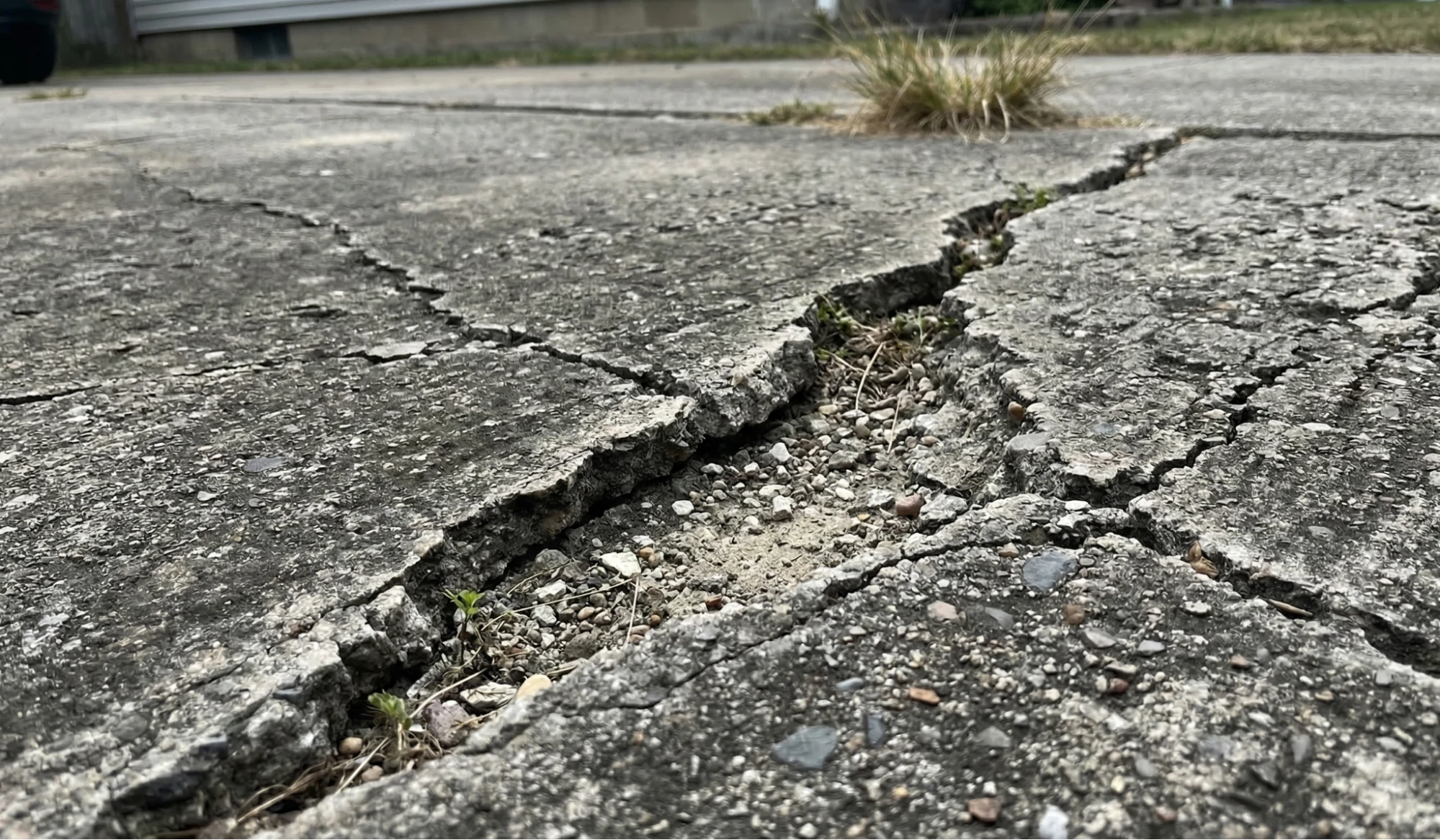
1. Large or Widespread Cracking
A few hairline cracks are common in older concrete and are not always a reason to replace the entire driveway. Concrete naturally expands and contracts with temperature changes, and minor cracking can happen over time. The bigger concern is when cracks become large, deep, or widespread across the slab.
If you are seeing long continuous cracks, multiple intersecting cracks, or sections that look like they are breaking apart into separate pieces, that usually points to more serious structural wear. In many cases, surface repairs will only provide a temporary cosmetic fix. If the base underneath is shifting or the slab has weakened significantly, the cracks will likely return.
When cracking is severe or spread throughout the driveway, replacement is often the best option because it addresses the problem at its source instead of repeatedly covering it up.
2. Uneven Sections or Sinking Concrete
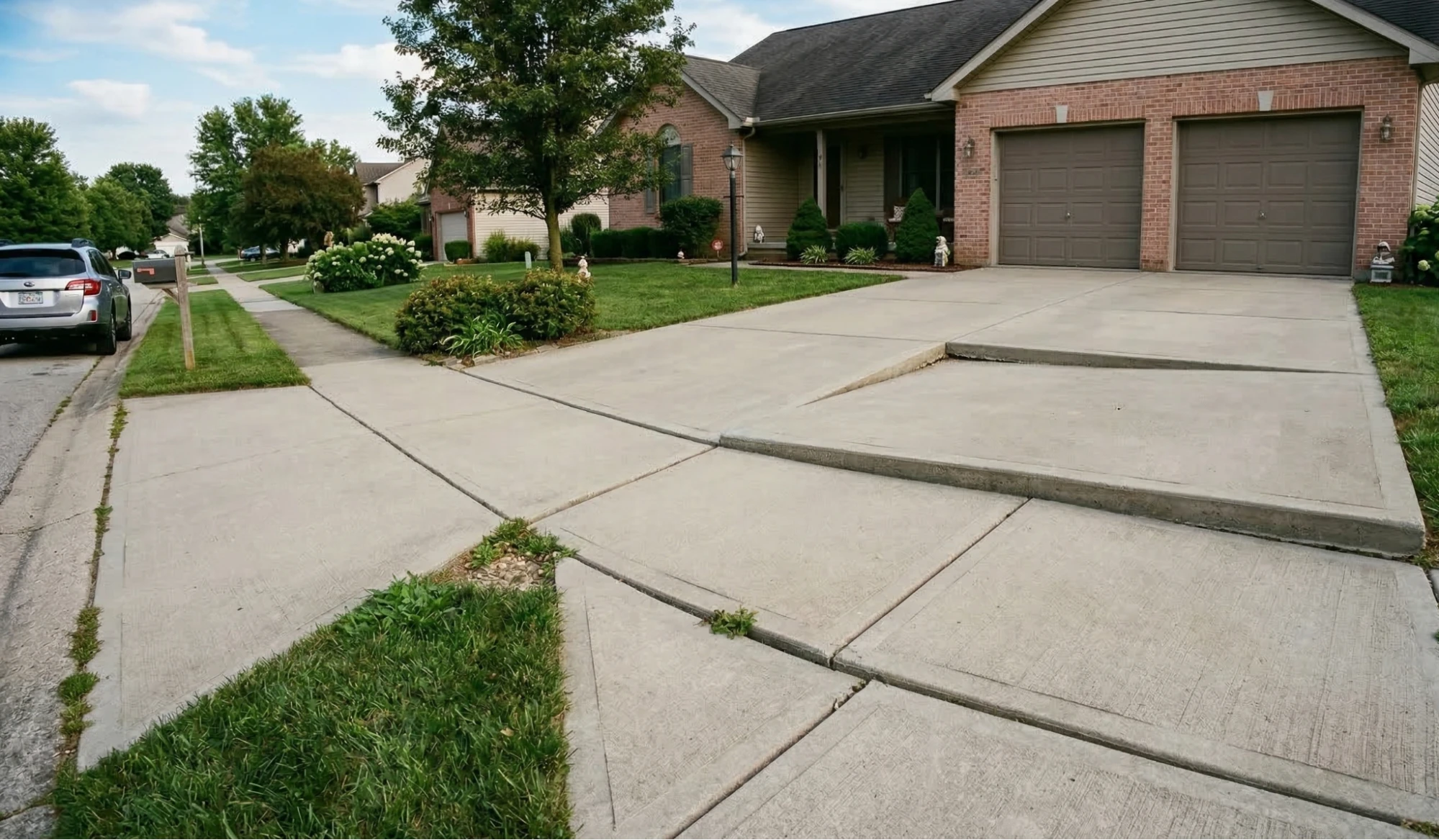
One of the clearest signs that a driveway may need replacement is unevenness. If one section has sunk lower than another, or if the surface has started to slope in a way it did not before, that can indicate issues with the subgrade beneath the concrete.
Driveways sink for several reasons, including poor soil compaction, erosion, drainage problems, or age-related settling. In some situations, lifting methods like mudjacking or polyjacking can help if the slab is otherwise in decent condition. But if the driveway also has major cracks, surface deterioration, or repeated movement, lifting alone may not be enough.
Uneven concrete is not just unattractive. It can also create a tripping hazard for family members and guests, and it can lead to water pooling in the wrong places. If your driveway is noticeably out of level, it is worth having it evaluated before the problem gets worse.
3. Frequent Pooling Water
Water is one of the biggest enemies of any driveway. A properly installed driveway should drain well and direct water away from the home and garage whenever possible. If you consistently notice puddles sitting on the surface after rain or snow, that may signal grading or drainage issues.
Standing water can speed up deterioration, especially in climates with freeze-thaw cycles. When water seeps into cracks and then freezes, it expands and can cause the concrete to break down faster. Over time, that repeated stress can turn a small issue into major damage.
Pooling water may also indicate that parts of the driveway have settled or that the original slope is no longer functioning as intended. If drainage problems are severe and tied to the overall condition of the slab, replacement may be the most effective way to restore both appearance and performance.
4. Surface Spalling or Flaking
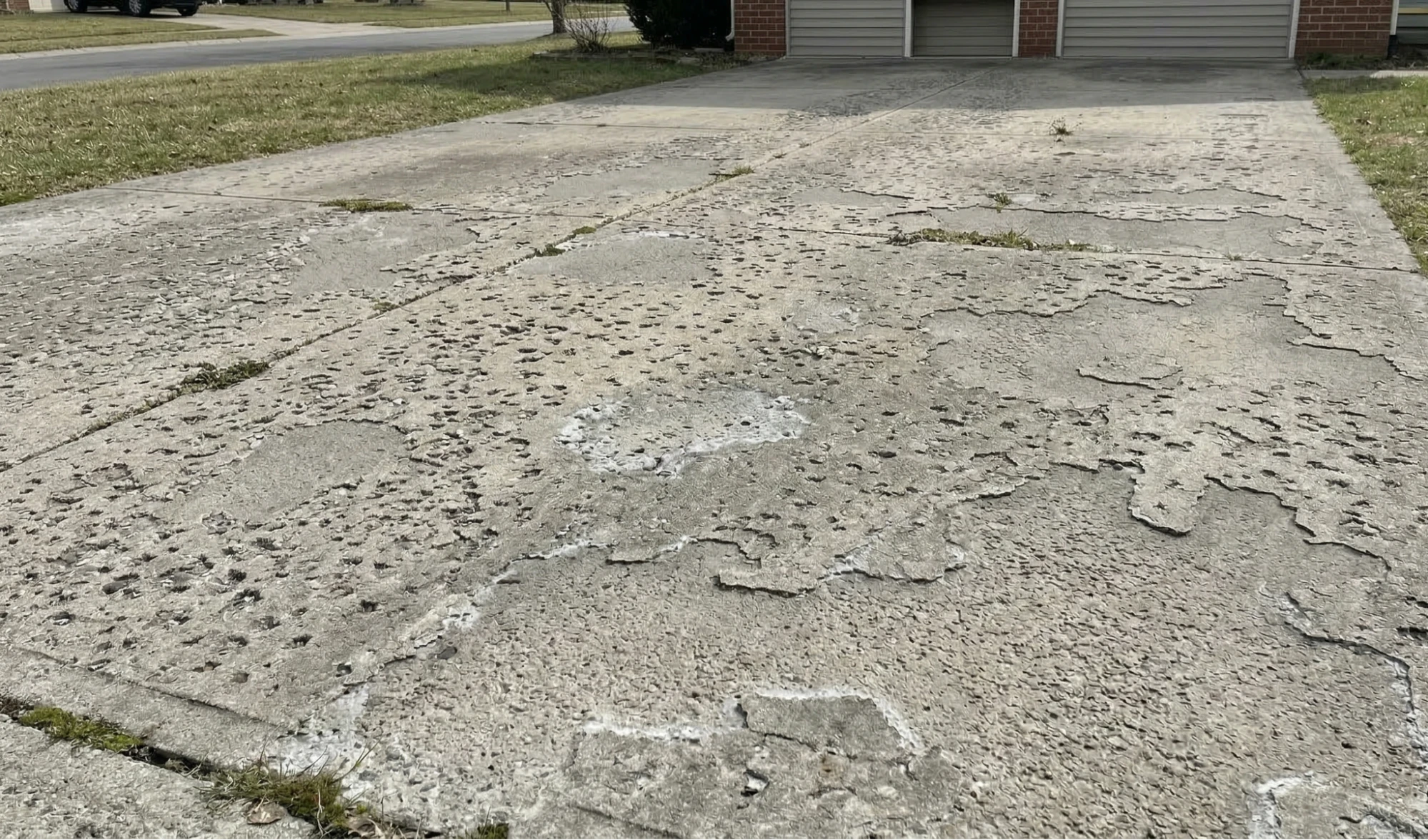
If the top layer of your driveway is flaking, chipping, or peeling away, that is often a sign of surface failure. This issue, commonly called spalling, can make the driveway look rough, worn out, and neglected.
Spalling may happen because of age, poor finishing, freeze-thaw damage, deicing chemicals, or a weak concrete mix. Sometimes small areas can be patched or resurfaced, but if the damage is extensive, those repairs may not last very long.
A driveway with widespread surface deterioration usually continues to degrade with time. Once the protective outer layer is compromised, the slab becomes more vulnerable to moisture intrusion and further breakdown. If large portions of the surface are coming apart, replacement is often a more durable and cost-effective solution than repeated patching.
5. Repairs Are Becoming Too Frequent
There comes a point where constant repairs stop making financial sense. If you have already patched cracks, filled joints, resurfaced sections, or addressed drainage issues multiple times, you may be spending money without getting a lasting result.
This is one of the most overlooked signs that it is time for a replacement. Homeowners often think they are saving money by continuing to repair an old driveway, but ongoing maintenance costs can add up quickly. If the slab is near the end of its useful life, each repair becomes less of a solution and more of a temporary delay.
A new driveway often provides better value in the long run because it gives you a fresh start, improves curb appeal, and reduces the need for constant upkeep.
6. The Driveway Is Simply Very Old
Age matters. Even a driveway that is still technically usable may be nearing the point where replacement should be considered. Concrete driveways can last for decades, but their lifespan depends heavily on installation quality, climate, soil conditions, maintenance, and traffic load.
If your driveway is several decades old and beginning to show multiple signs of wear, replacement may be the more practical decision. Older slabs are more likely to have hidden weaknesses beneath the surface, and visible damage often increases quickly once deterioration begins.
A driveway does not have to be completely falling apart before replacement makes sense. Sometimes replacing it at the right time helps prevent larger problems and gives your home a cleaner, more updated appearance.
7. It Is Hurting Your Home’s Appearance
Your driveway is one of the first things people notice when they arrive at your home. A stained, cracked, uneven, or crumbling driveway can take away from an otherwise well-kept property. If you are thinking about selling your home, improving its exterior, or simply taking more pride in its appearance, a new driveway can make a major difference.
Curb appeal is not only about looks. It also shapes how people perceive the condition of the home overall. A clean, well-installed driveway helps create the impression that the property has been maintained properly.
That is one reason many homeowners turn to experienced concrete contractors like CrestStone Concrete when it is time to upgrade an aging driveway and invest in a more durable, attractive surface.
Final Thoughts
An old driveway usually gives warning signs before it fully fails. Large cracks, sinking sections, drainage problems, surface breakdown, and repeated repairs all point to a surface that may be nearing the end of its life. While some issues can be fixed temporarily, there is a point where replacement becomes the smarter and more economical choice.
If your driveway is showing several of these signs, it may be time to stop spending money on short-term fixes and start considering a long-term solution. A new driveway can improve safety, appearance, function, and value, all while giving you peace of mind for years to come.