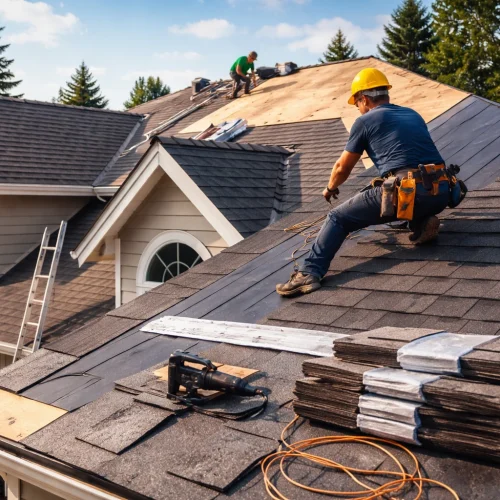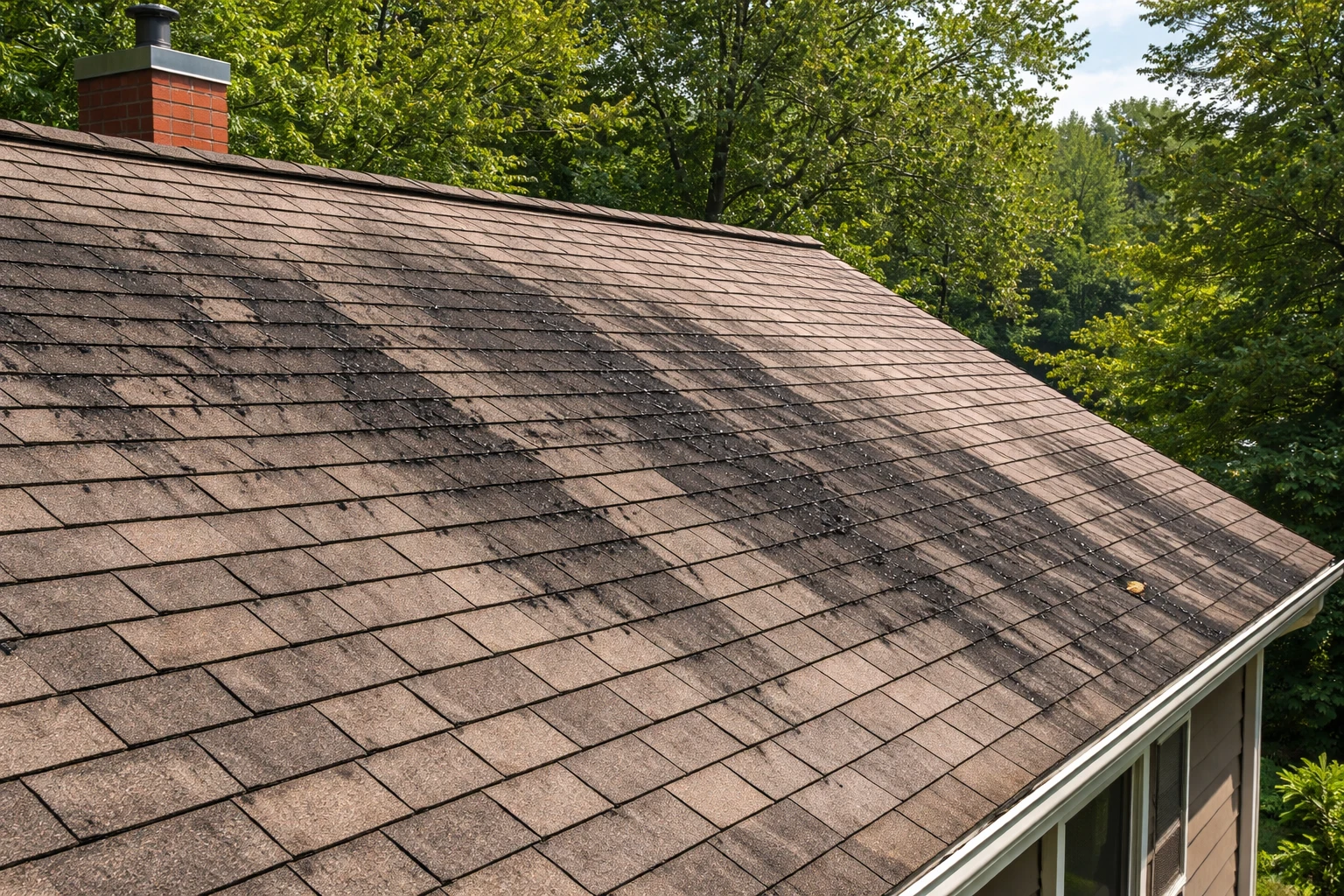
You look up one afternoon and pause. The roof doesn’t look the way it used to. The once-uniform color now appears streaked, blotchy, or uneven. Suddenly you’re wondering why your shingles are turning dark — and whether it means something expensive is coming.
Take a breath.
When shingles are turning dark, it doesn’t automatically mean your roof is failing. But it does mean something is happening. And your roof is communicating in the only way it can: through visible change.
I’ve seen homeowners ignore it for years, assuming it’s just “aging.” Others panic and think they need a full replacement tomorrow. The truth sits somewhere in between. Sometimes it’s cosmetic. Sometimes it’s structural. The key is knowing which is which — and acting accordingly.
If you live in humid regions or heavily wooded neighborhoods, you’ve probably even seen crews like residential roof cleaners in Olympia addressing dark streaks caused by algae and moisture buildup. That alone tells you something important: discoloration is common. But common doesn’t mean harmless.
Let’s break it down properly.
Understanding What Your Shingles Are Made Of
Before diagnosing why shingles are turning dark, you need to understand what you’re looking at.
Most homes use asphalt shingles. They’re built in layers:
- A fiberglass base mat
- A waterproof asphalt coating
- A layer of mineral granules on top
Those granules matter. A lot.
They protect the asphalt from ultraviolet radiation, add fire resistance, and determine the visible color of your roof. When those granules shift, wear down, grow organisms, or trap debris, the appearance changes.
And when the appearance changes, homeowners notice.
Other materials — architectural shingles, wood shakes, composites — can also darken, but asphalt roofs show it most visibly.
The 7 Most Common Reasons Shingles Are Turning Dark
Let’s get practical. Here are the real causes.
1. Algae Growth (The Most Common Culprit)
This is usually the answer.
A blue-green algae called Gloeocapsa magma feeds on the limestone filler inside asphalt shingles. It spreads through airborne spores and thrives in humid climates.
You’ll notice:
- Black streaks
- Dark vertical lines
- More discoloration on north-facing slopes
If shingles are turning dark in streaks, algae is the likely cause.
Good news? It’s usually cosmetic.
Bad news? Left untreated, it retains moisture, which can accelerate wear.
2. Mold or Mildew
Algae grows on the surface. Mold can grow deeper.
If your attic ventilation is poor, or moisture is trapped beneath the decking, darker areas may signal a ventilation issue rather than surface staining.
Check for:
- Musty attic odor
- Condensation on rafters
- Insulation dampness
When shingles are turning dark alongside interior moisture signs, it’s time to investigate more seriously.
3. Dirt, Pollution, and Organic Debris
Sometimes the explanation is simple.
Over time, roofs collect:
- Airborne dust
- Pollen
- Tree sap
- Leaves and decomposing organic matter
If you have overhanging trees, debris buildup can hold moisture against shingles. That constant dampness darkens their appearance.
This is cosmetic at first. It doesn’t stay that way forever.
4. Granule Loss
This one matters.
If shingles are turning dark because granules are wearing off, you’re seeing exposed asphalt. That means UV protection is compromised.
Check your gutters. Do you see sand-like particles collecting there?
That’s granule loss.
Once protective granules thin out, shingles age faster. They become brittle. They crack. And they curl.
That’s structural territory.
5. Water Staining from Drainage Issues
Dark patches can form where water consistently pools or drains slowly.
Common causes:
- Clogged gutters
- Improper roof slope
- Ice damming in colder climates
Standing water degrades shingles faster than rainwater runoff.
If shingles are turning dark in concentrated low spots, inspect drainage first.
6. Heat and UV Exposure
Over time, thermal cycling changes shingle color.
Sun heats the surface during the day. It cools at night. Repeat this cycle for years and you’ll see subtle darkening.
This is aging. Not necessarily failure.
But aging matters.
7. Structural Shadowing or Sagging
Sometimes what looks like discoloration is actually uneven decking beneath the shingles.
If sections appear darker due to dips or sags, the issue may be structural.
Signs include:
- Wavy rooflines
- Soft spots underfoot
- Interior ceiling cracks
That’s no longer cosmetic.
Cosmetic vs. Structural: Know the Difference
Here’s a simplified breakdown:
| Symptom | Likely Cosmetic | Likely Structural |
| Even black streaks | ✔ | |
| Granules in gutters | ✔ | |
| Curling edges | ✔ | |
| No attic moisture | ✔ | |
| Soft decking | ✔ | |
| Tree debris staining | ✔ |
If shingles are turning dark evenly and the roof is otherwise intact, it’s often surface-related. If discoloration comes with material breakdown, that’s a warning.
What It Means for Your Roof’s Lifespan
Here’s the honest truth.
When shingles are turning dark due to algae alone, lifespan impact is minimal if addressed early.
But when discoloration signals granule loss or moisture retention, lifespan can drop dramatically.
UV exposure accelerates asphalt deterioration. Heat absorption increases attic temperature. Higher attic heat increases cooling costs and stresses ventilation systems.
Small visual changes can trigger bigger performance shifts.
And performance matters.
Can Dark Shingles Lead to Interior Damage?
Yes — if moisture is involved.
Algae alone doesn’t usually cause leaks. But moisture trapped by debris or structural issues can migrate inward.
Watch for:
- Ceiling stains
- Peeling paint
- Mold growth in attic corners
- Rising energy bills
If shingles are turning dark and your attic feels humid, inspect ventilation immediately.
How to Diagnose the Problem Yourself
Before calling a contractor, you can do a smart preliminary check.
Step 1: Ground-Level Inspection
Use binoculars. Look for patterns.
Are the streaks vertical? Likely algae.
Are they patchy in low spots? Possibly drainage.
Step 2: Check Gutters
Look for:
- Excess granules
- Organic buildup
- Clogged downspouts
Step 3: Inspect the Attic
This step is crucial.
Check for:
- Daylight peeking through decking
- Moisture stains
- Insulation clumping
If shingles are turning dark and attic humidity is high, you may need improved ventilation.
Should You Clean Dark Shingles?
Careful here.
Pressure washing strips granules. Once those are gone, they don’t grow back.
If cleaning is appropriate, it should involve:
- Low-pressure soft washing
- Algae treatment solutions
- Preventative zinc or copper strips near the ridge
In many cases, professional cleaning is the safest route. Not because it’s complicated — but because improper cleaning shortens roof life.
How to Prevent Shingles From Turning Dark Again
Prevention beats correction.
Here’s what works:
- Improve attic ventilation
- Trim overhanging tree branches
- Install algae-resistant shingles when replacing
- Clean gutters twice annually
- Schedule annual roof inspections
Algae-resistant shingles contain copper granules that inhibit growth. They cost slightly more. They last significantly longer in humid climates.
Smart investment.
Insurance Considerations
Here’s where homeowners get confused.
Insurance policies typically cover sudden damage — not gradual discoloration from algae.
Granule loss caused by hail? Covered.
Natural aging? Not covered.
If shingles are turning dark due to storm-related damage, document it immediately. Photos matter. Inspection reports matter more.
Repair or Replace?
This is the big question.
Repair Makes Sense If:
- Roof is under 15 years old
- Granule loss is minimal
- Discoloration is algae-based
Replacement Makes Sense If:
- Roof is 20+ years old
- Widespread granule loss
- Structural sagging present
- Repeated moisture issues
Cost comparison:
| Option | Typical Cost Range |
| Professional Cleaning | $300–$1,000 |
| Minor Repair | $500–$2,500 |
| Full Replacement | $8,000–$20,000+ |
The right decision depends on condition, not just color.
The Bigger Picture: Your Roof Is Talking to You
Roofs don’t fail overnight.
They whisper first.
When shingles are turning dark, that whisper could mean:
- Clean me.
- Ventilate better.
- Drain water properly.
- I’m aging.
Or it could mean something deeper.
Ignoring it doesn’t make it disappear. It just narrows your options later.
Final Thoughts: Don’t Panic — But Don’t Ignore It
If shingles are turning dark, don’t jump straight to worst-case scenarios. But don’t dismiss it either.
Start with observation.
Move to inspection.
Make a measured decision.
A roof is one of the most expensive components of your home. It protects everything underneath it — your belongings, your insulation, your structural frame, your family.
When it changes, it deserves attention.
And sometimes, that small visual shift is the early warning that saves you thousands.
Look up today.
If your shingles are turning dark, now you know what it means — and what to do next.
FAQs
Shingles are turning dark most commonly due to algae growth, debris buildup, or moisture retention on the roof surface.
Not necessarily. It can be cosmetic, but if it’s paired with granule loss or leaks, it may signal deeper issues.
Algae alone typically doesn’t cause leaks, but moisture buildup or damaged shingles can eventually lead to water intrusion.
No. Pressure washing can strip protective granules and shorten your roof’s lifespan.
Even streaks usually point to algae, while curling, soft spots, or granule loss suggest structural concerns.
Insurance usually does not cover cosmetic discoloration, but storm-related damage may qualify for coverage.
Yes. Poor ventilation traps moisture and heat, which can accelerate shingle darkening and deterioration.
Improve ventilation, clean gutters regularly, trim overhanging branches, and consider algae-resistant shingles.
If the roof is over 20 years old or has widespread granule loss, replacement may be more cost-effective long term.
If you notice granule loss, sagging, or interior moisture, a professional inspection is strongly recommended.