Choosing between a roof overlay and a full replacement is a strategic decision that directly affects building performance, long-term costs, and risk exposure. For property owners and facility managers across Arkansas and Texas, the choice is rarely about speed alone. It is about whether the solution addresses underlying conditions or simply delays larger problems. While overlays can appear attractive due to lower upfront pricing, full replacement often delivers stronger long-term value, compliance, and protection.
Understanding how each option performs under real-world conditions is essential before committing capital.
Assessing Roof Condition and Age
The current condition and age of the roof system should guide the decision process. Most asphalt-based systems are designed for a limited service life, typically between 15 and 25 years, depending on climate and maintenance history. Once a roof approaches the latter half of that range, underlying deterioration becomes more likely.
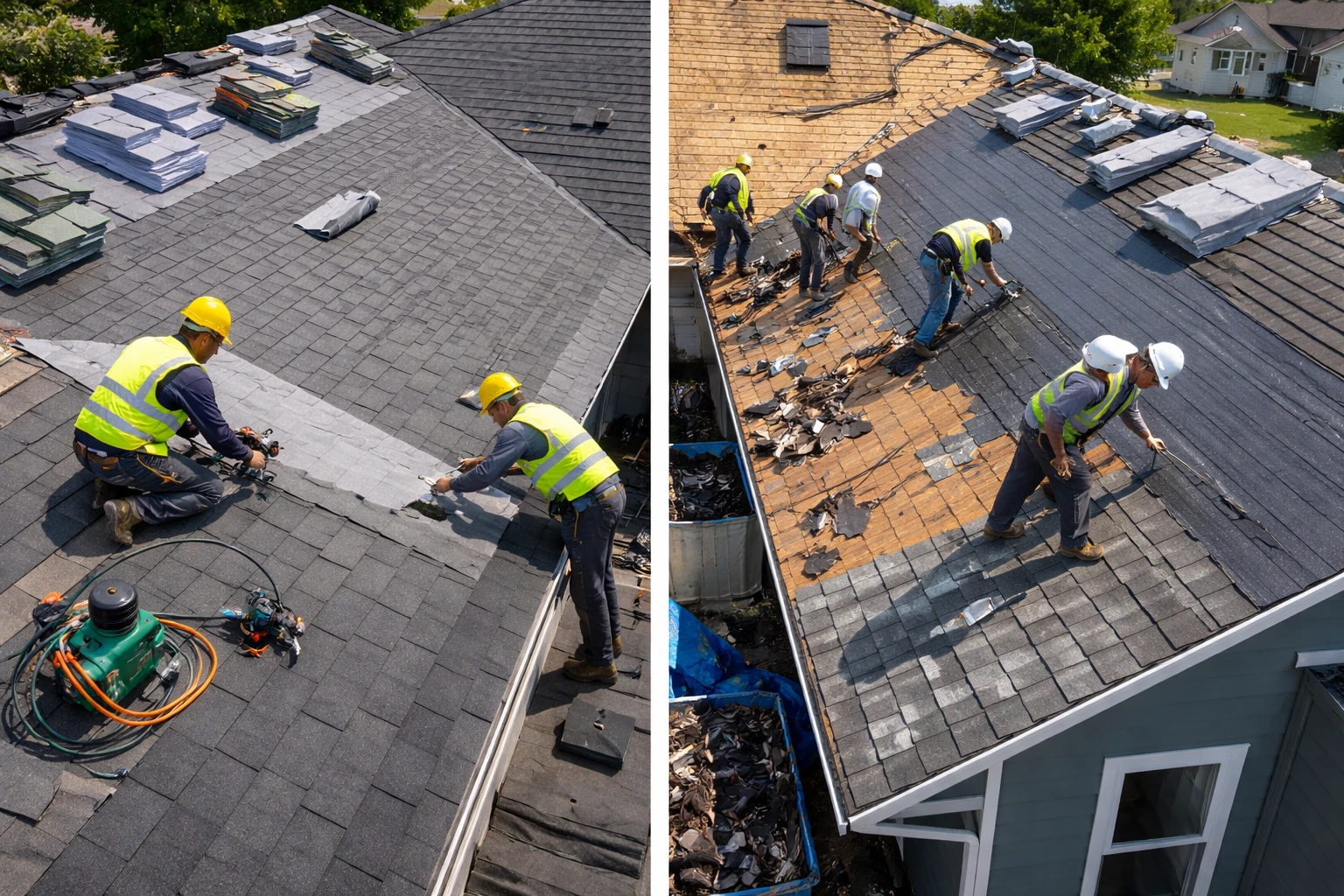
Overlays install a new layer directly over existing materials, which means damaged decking, trapped moisture, or compromised insulation remain hidden. This prevents proper evaluation of the roof assembly. In contrast, a full replacement allows complete inspection and correction of structural issues before new materials are installed. For aging roofs or those with a history of leaks, replacement provides a cleaner reset and eliminates uncertainty.
Evaluating Material Costs and Durability
Cost differences between overlays and replacements are often the main driver in early discussions. Overlays typically reduce initial project costs by eliminating tear-off and disposal expenses. However, these short-term savings must be weighed against durability and lifecycle value.
Key considerations include:
- Upfront Savings: Overlays may reduce initial costs by approximately 20% to 40%, depending on roof size and material.
- Shorter Service Life: Overlaid systems generally last significantly fewer years than a properly installed new roof.
- Higher Maintenance Risk: Moisture trapped between layers can accelerate deterioration and lead to recurring repairs.
- Limited Warranty Coverage: Many manufacturers restrict or shorten warranties on overlaid systems.
For owners seeking affordable roof replacement in Austin, understanding lifecycle cost is critical. Lower upfront pricing does not always translate to lower total cost of ownership.
Considering Installation Time and Operational Impact
Overlay projects are typically faster, often completed in one to two days, because existing materials remain in place. This can reduce short-term disruption, noise, and debris. For occupied facilities, this speed may be appealing.
However, faster installation does not mean fewer risks. Overlays rely on the existing roof performing adequately as a base. Ventilation deficiencies, drainage issues, or flashing failures remain unless specifically corrected. Full replacement projects take longer, often several days, but allow crews to resolve these issues properly and restore the roof system to current standards.
Code Compliance and Structural Considerations
Building codes in many Texas and Arkansas jurisdictions limit the number of roofing layers permitted. Exceeding these limits requires full removal before any new installation. Structural load is also a concern, especially for older buildings not designed to carry additional weight.
A complete replacement ensures compliance with current codes, wind uplift requirements, and fire ratings. It also reduces the risk of inspection failures during future transactions or insurance reviews.
Long-Term Value and Risk Management
While overlays may delay capital spending, they often increase long-term risk. Hidden deterioration can continue unchecked, leading to emergency repairs or premature replacement. Full replacement provides a predictable service life, clearer maintenance planning, and stronger warranty protection.
For commercial owners evaluating roof replacement in Austin, TX, replacement is often the more stable solution when asset protection, insurance alignment, and resale value are considered.
Making the Right Choice
The best solution depends on roof age, condition, budget tolerance, and long-term plans for the property. Overlays may work for newer roofs with no history of moisture intrusion. Full replacement is typically the safer choice for older systems or facilities where risk exposure must be minimized.
Platinum Roofing helps property owners across Arkansas and major Texas cities evaluate both options through detailed inspections and clear recommendations. By addressing system condition first, owners can choose a solution that aligns with performance goals rather than short-term convenience.
To explore replacement options and understand real project costs, visit: https://platinumroofllc.com/texas/roof-replacement-austin-tx/
FAQs
A roof overlay installs a new roofing layer directly over the existing one without removing the old materials.
A full replacement removes all existing roofing materials, allowing inspection and repair of decking before installing a new system.
Overlays may work for relatively new roofs with no moisture issues, structural damage, or code restrictions.
Older roofs are more likely to have hidden deterioration that overlays cannot address, making replacement the safer choice.
Overlays usually cost less upfront, but they often have shorter lifespans and higher long-term maintenance costs.
No, overlaid roofs typically have a significantly shorter service life than fully replaced roofing systems.
Yes, overlays can trap moisture and conceal damaged decking or insulation, allowing issues to worsen over time.
Many jurisdictions limit the number of roofing layers allowed, which may require a full replacement to stay compliant.
Yes, manufacturers often offer stronger and longer warranties for complete replacements than for overlay systems.
A full replacement usually provides better long-term value by reducing risk, improving durability, and ensuring code compliance.