In the vibrant yet harsh desert environment of Tucson, Arizona, outdoor spaces are a key part of home living. Homeowners love adding paver patios, driveways, and walkways to boost their property’s appeal. But the relentless sun can fade these features fast, turning them dull and worn. Fading colors, stains, and weather damage not only hurt the look but also shorten the life of your hardscaping.
This home improvement guide dives into professional paver sealing and restoration. We’ll cover UV exposure’s tough effects, why surface prep matters, and how sealing amps up curb appeal. Based on best practices for dry climates like ours, these tips help protect and refresh your pavers long-term.
If your patio faces the Catalina Mountains or your driveway battles dust, knowing paver care is vital for lasting, beautiful outdoor areas.
Understanding UV Damage: Why the Tucson Sun Fades Pavers Quickly
Tucson’s sunshine is great for outdoor fun but tough on surfaces. UV rays trigger chemical changes in paver materials, breaking down colors like reds, browns, and grays. This leads to oxidation, making surfaces chalky and faded over time.
Research shows UV exposure wears down paver binders, creating dull spots in high-sun zones. Concrete, brick, and stone pavers suffer most. Bright concrete fades quicker due to pigment vulnerability.
In Arizona, with about 3,800 annual sunshine hours, fading goes beyond looks it weakens structures, causing cracks from monsoons or wind. Tucson folks often see uneven color loss on exposed driveways or pool areas.
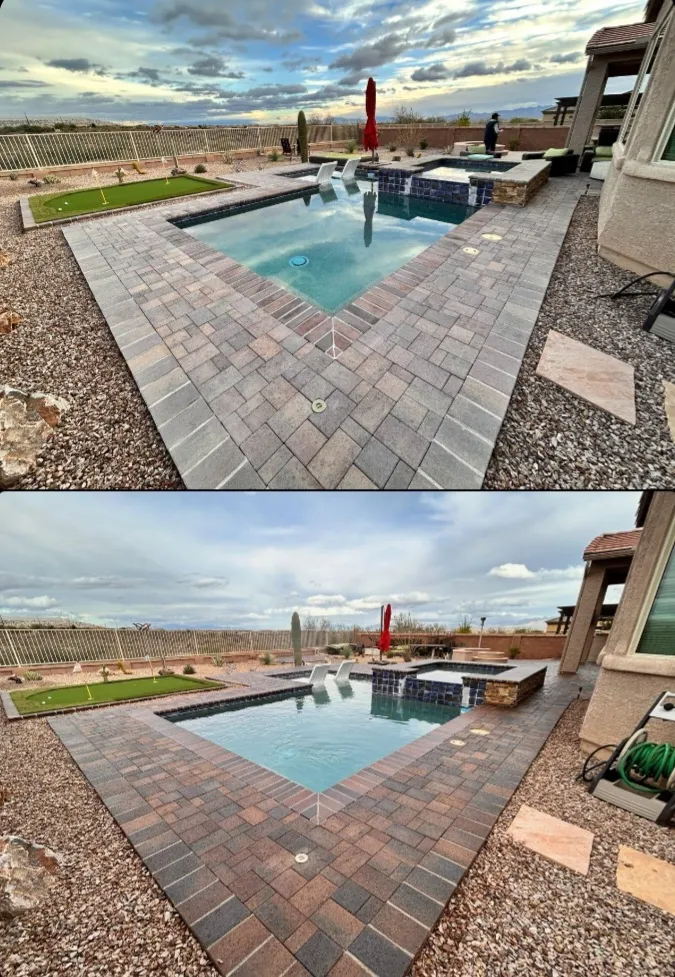
Picture this: A brown-toned patio turns gray from sun. After cleaning and sealing, colors revive with depth.
Prevention begins with checks for dullness. For eco-friendly setups, pick resistant pavers like granite, but sealing still helps.
The Key Prep Step: Neutralizing Pavers Before Sealing
Good prep ensures sealing lasts. Clean and neutralize surfaces for better stick and durability. In dusty Tucson, pavers collect dirt, mold, grease, oils, and efflorescence that white powdery buildup from minerals.
Start with power washing to clear debris safely. For tough efflorescence, use acid cleaners, then neutralize. Leftover acid can cause peeling. Use baking soda or store-bought neutralizers to hit pH 7.
Skipping this traps dirt or moisture, leading to haze. Wait for efflorescence to clear naturally often 6-18 months for new pavers before sealing. For older ones, deep prep revives them. Steps: Wet area, clean, rinse, neutralize, dry 24-48 hours in low humidity.
This boosts sealant’s protection against UV and stains. In monsoon-prone Tucson, it’s essential for alkaline soil issues.
Boosting Curb Appeal: Sealing’s Impact on Tucson Properties
Curb appeal builds value and warmth. In Tucson’s market, spots like the Foothills or Oro Valley shine with maintained outdoors. Sealing enhances color, shine, and wear resistance, making paths and patios inviting.
Sealed pavers fight oil, grease, or drink stains in busy spots. They lock sand to stop weeds, cutting upkeep. It extends life, saving resources sustainably.
Looks-wise, sealants offer matte or glossy finishes, deepening tones for a “wet look.” This revives fading and matches desert plants and rocks.
https://tucsonlocalpressurewashing.com/service/paver-pressure-washing-and-sealing/
Eco options like low-VOC sealants resist UV without harm, fitting Tucson’s water-wise trends. Sealing turns basics into yard stars.
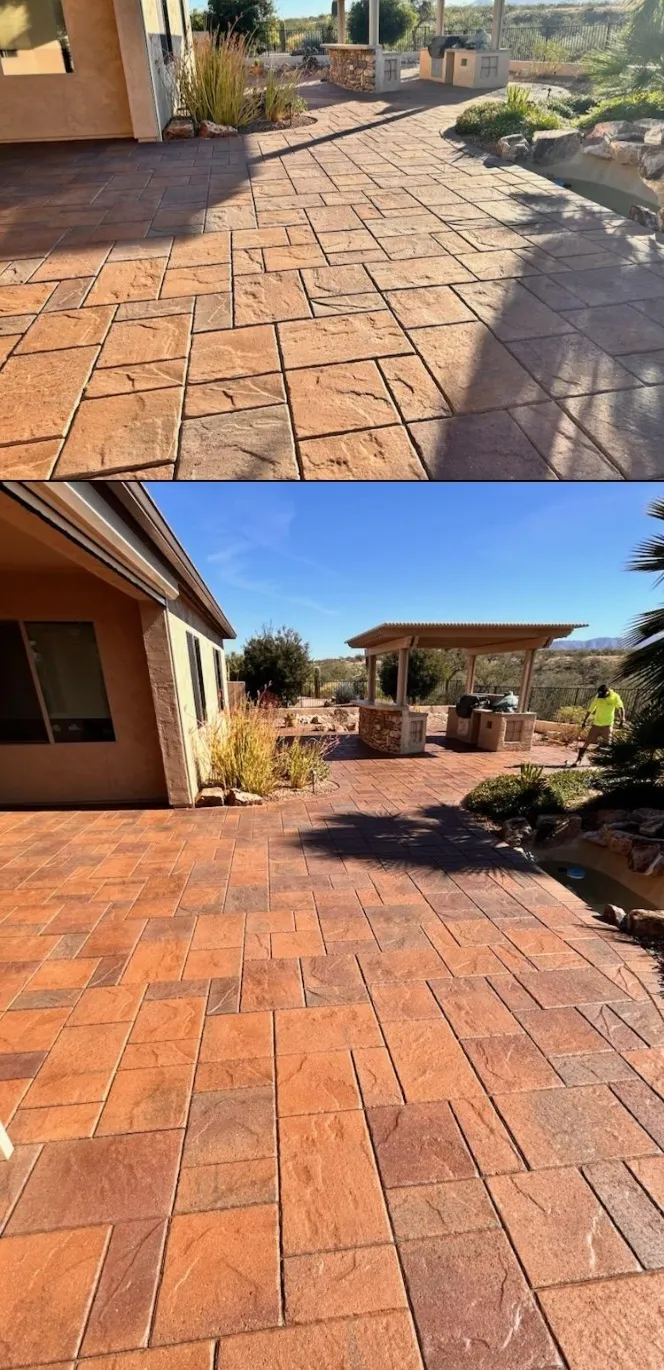
Step-by-Step Paver Sealing Guide for Tucson’s Dry Climate
Get pro results with this arid-adapted process:
- Assess and Clean: Check damage, power wash debris. Handle efflorescence with acid, then neutralize.
- Replace Joint Sand: Use polymeric sand for stability and weed block.
- Dry Fully: Crucial to avoid moisture traps and whitening.
- Apply Sealant: Pick UV-strong penetrating or topical types. Spray or roll evenly, section by section.
- Cure: Wait 24-72 hours, no traffic
Choose UV-inhibitor sealants in Tucson. Re-seal every 2-3 years based on sun.
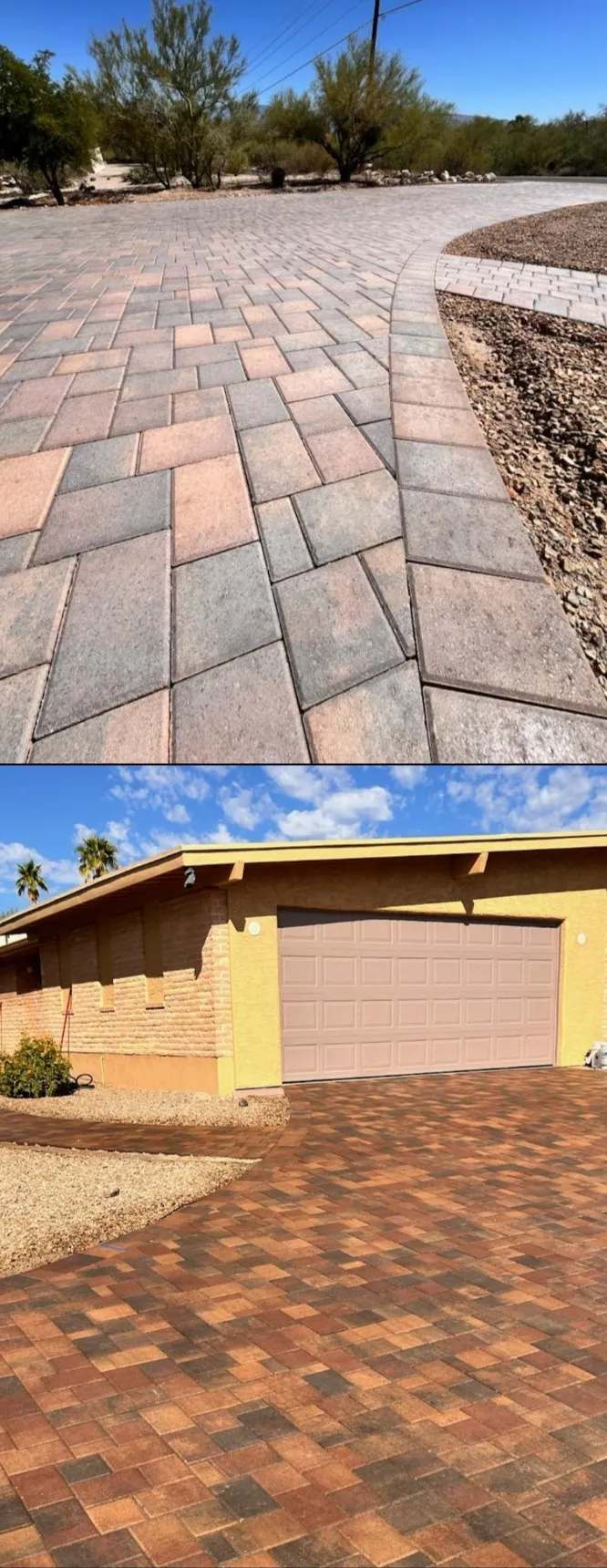
Sustainable Paver Maintenance Tips
For lasting appeal:
- Add pergolas for UV shade.
- Clean yearly to spot problems.
- Plant low-water natives around pavers.
- Use pH-balanced cleaners, skip harsh ones.
These keep spaces vibrant and easy-care against Tucson’s weather.
Conclusion: Protect Your Tucson Outdoor Space Now
Sealing is an investment in home durability and beauty. Fight UV fade, prep properly, and lift curb appeal for functional, stunning areas. Tucson’s sun and rains test hardscaping, but these methods work.
Ready to refresh? Reach out to Tucson Local Pressure Washing for pressure washing, sealing, and restoration. Check https://tucsonlocalpressurewashing.com/service/driveway-and-garage-power-washing/ for details. Proper care lets your yard glow like the Arizona sun safely.
Author Bio: The Tucson Local Pressure Washing team specializes in pressure washing and sealing to safeguard and enhance outdoor spaces. Visit https://tucsonlocalpressurewashing.com/ for more.
FAQs
Tucson’s intense UV exposure breaks down pigments in pavers, causing rapid fading and surface wear.
Yes, quality sealers can deepen and revive faded colors while adding UV protection.
Most pavers should be resealed every 2–3 years due to constant sun exposure.
Poor prep can trap moisture or residue, leading to haze, peeling, or uneven finishes.
Efflorescence is a white mineral residue that must be removed and neutralized for proper sealer adhesion.
Yes, sealed pavers resist stains, reduce weed growth, and are easier to clean.
UV-inhibiting penetrating or breathable topical sealers perform best in Tucson’s heat.
Sealing helps reduce water absorption, lowering the risk of cracks from moisture expansion.
Low-VOC and water-based sealers are available and work well for sustainable landscaping.
Professional sealing ensures proper prep, even application, and longer-lasting results.