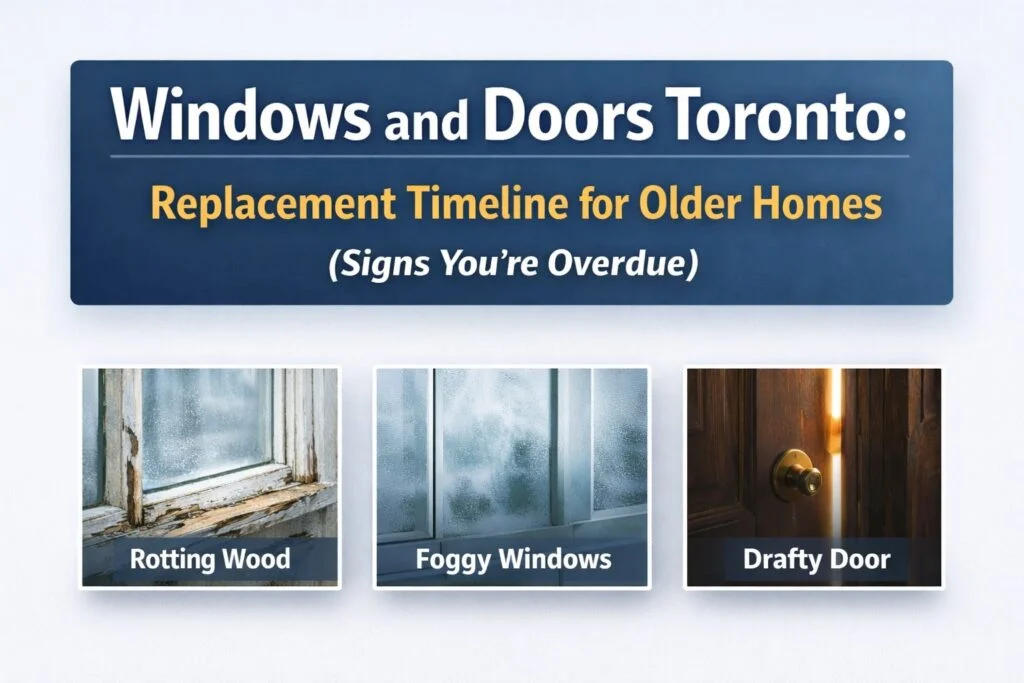
If you own an older home, knowing when to replace windows and doors in Toronto can save you from drafts, rising heating bills, and hidden water damage. Toronto’s freeze-thaw cycles, wind-driven rain, and humidity swings put extra stress on frames, seals, and hardware, especially in homes that have settled over decades.
In this guide, you’ll get a clear replacement timeline for older Toronto homes, the warning signs that usually show up first, and a simple repair vs replace checklist to help you decide what makes sense.
Why Toronto’s climate wears out windows and doors faster
Toronto weather is tough on building openings. Winter cold and summer humidity constantly expand and contract materials. Older frames, caulking, and weatherstripping struggle to keep up with that movement.
Common Toronto-related stressors include:
- Freeze-thaw cycles that crack old seals and caulking over time
- Wind-driven rain that finds tiny gaps around sills and trim
- Humidity swings that swell wood frames and affect door alignment
- Salt and pollution that speed up corrosion on hardware, hinges, and tracks
- Home settling especially in older brick homes, which can shift openings out of square
Even high-quality windows and doors eventually hit a point where repairs become temporary and inefficient.
Replacement timeline for older homes in Toronto (realistic expectations)
There’s no perfect “expiry date,” but in Toronto, windows and doors tend to show predictable performance decline by age range. The big variable is always installation quality. A great product installed poorly can fail early. A mid-range product installed properly can perform very well.
0–10 years: Usually fine, unless install issues exist
At this stage, full replacement is rarely needed unless there’s an installation problem or a manufacturing defect.
What you might notice:
- Minor caulking shrinkage at exterior trim
- A sticky window or door that needs adjustment
- Weatherstripping that starts to flatten
What to do:
- Re-caulk small areas if needed
- Adjust hardware and alignment
- Replace weatherstripping if it’s compressed
10–20 years: Performance starts to drop
This is the “warning stage” where sealing systems and moving parts begin to wear out.
Common issues:
- Drafts appearing during wind or cold snaps
- Locks and cranks feeling looser
- Sliding patio doors getting harder to glide
- More noticeable condensation on colder days
What to do:
- Replace worn hardware and seals if frames are still solid
- Consider replacing the worst performers first (usually north-facing, wind-exposed sides)
20–30 years: Replacement becomes likely in many homes
For many Toronto homes, this range is where comfort issues become persistent and repairs stop feeling “worth it.”
Common issues:
- Seal failure in double-pane glass (fogging between panes)
- Warping or frame movement that prevents a proper seal
- Door sagging, latch misalignment, or visible gaps
- Chronic drafts even after weatherstripping replacement
What to do:
- If multiple windows or doors are showing these symptoms, start planning phased replacement
30+ years: High odds you’re overdue
If your home still has original windows/doors from 30+ years ago, you’re often dealing with outdated glazing, weak sealing, and frames that don’t match modern efficiency standards.
Common issues:
- Single-pane glass or early-generation double-pane units
- Rot, soft wood, or swelling near sills
- Frequent condensation, frost buildup, or water staining
- Noticeable temperature swings near windows and doors
- Noise infiltration that feels worse than it used to
What to do:
- Replacement is usually the most cost-effective solution long-term, especially if comfort and energy loss are noticeable
12 signs you’re overdue (Toronto homeowner checklist)
If you recognize multiple signs below, it’s a strong signal that your home is ready for window and/or door replacement rather than ongoing patchwork repairs.
1) Drafts you can feel near the frame
If you feel cold air even when the unit is locked, the sealing system is likely compromised or the frame has shifted.
2) Condensation between panes
Fogging or moisture trapped between glass layers usually indicates a failed seal. This can’t be fixed with caulk.
3) Frost or ice buildup inside edges in winter
A sign of significant heat loss and air leakage, especially in older units.
4) Windows stick, jam, or won’t stay open
This can happen from swelling, frame distortion, or hardware wear.
5) Doors don’t latch smoothly or need force to close
Often caused by settling, hinge wear, or a frame that’s no longer square.
6) Daylight visible around a door edge
If you can see light, air is moving. That usually means the unit isn’t sealing properly.
7) Water stains, bubbling paint, or peeling trim near openings
These are red flags for moisture intrusion, not just cosmetic wear.
8) Mold or mildew around window trim
Sometimes it’s indoor humidity, but persistent growth often indicates cold surface temperatures and poor sealing.
9) Increased outside noise
If the home feels louder than it used to, the glass package and air seal may be underperforming.
10) Higher heating bills without a clear reason
If usage hasn’t changed, aging openings can be a major contributor.
11) Repeated caulking failures
If you’ve re-caulked multiple times and problems keep returning, the issue is bigger than caulk.
12) Rot or soft wood around sills and frames
This is one of the clearest signs replacement should be prioritized.
Repair vs replace: the quick decision guide
Here’s a practical rule: repair works when the structure is sound. Replacement is smarter when the structure is failing or the glass seal is compromised.
Repairs can make sense when:
- Weatherstripping is worn or flattened
- Hardware is loose or needs adjustment
- Caulking gaps are minor and localized
- There’s no frame warping, rot, or water damage
- The window/door still seals properly when closed and locked
Replacement is usually the better choice when:
- There’s condensation between panes (failed seal)
- Frames are warped, cracked, or shifting
- Rot is present or spreading
- Water intrusion is recurring
- Drafts persist even after multiple fixes
- Several units are failing at once (whole-home performance drop)
What makes replacement urgent in older Toronto homes
Older Toronto homes often have conditions that accelerate failure or make certain fixes ineffective.
Brick settlement and shifting openings
Older brick homes can settle over decades. Even a small change can throw windows and doors out of square, causing sealing and locking problems.
“Insert” installs done without proper integration
Some older replacements were done by inserting new units into old frames without addressing drainage or air sealing properly. That can lead to hidden water issues and premature failure.
Missing or incorrect flashing and water management
When water isn’t directed properly away from the opening, damage can show up years later as stains, soft wood, or mold.
If you see water staining around trim or recurring leaks, it’s worth treating the issue as urgent.
How to plan a staged replacement if you’re not doing everything at once
Not everyone replaces every window and door in one shot. A staged approach can still be smart if it’s planned properly.
Step 1: Prioritize comfort and exposure
Start with the openings that:
- Face prevailing winds
- Show visible water staining or draft issues
- Are in bedrooms or main living areas where comfort matters most
Step 2: Replace by elevation (best value)
Replacing a full wall or elevation at once often improves consistency and reduces repeated labor costs.
Step 3: Do doors strategically
In Toronto homes, doors can be major draft points. Many homeowners see a big comfort improvement from upgrading:
- The primary entry door
- A leaky patio door
- Any door with visible light gaps
Frequently Asked Questions
If budget allows, yes, because it improves the overall building envelope performance and can simplify scheduling. If not, prioritize the biggest comfort and leakage issues first.
Yes, it can be done. Installation teams typically work efficiently to minimize exposure time. The more important factor is choosing a contractor who seals and insulates properly during the install.
Focusing only on the product and ignoring the installation method. In older Toronto homes, proper measurement, alignment, sealing, and water management matter as much as the window or door itself.
Final takeaway: when multiple signs appear, replacement becomes the smarter move
If your home is 20–30+ years old and you’re seeing repeated drafts, condensation between panes, sticking operation, or water staining around openings, it’s usually a signal that repairs will be temporary and replacement planning should start.
A good next step is a room-by-room assessment so you can decide whether a phased replacement makes sense or whether the home is ready for a full upgrade.