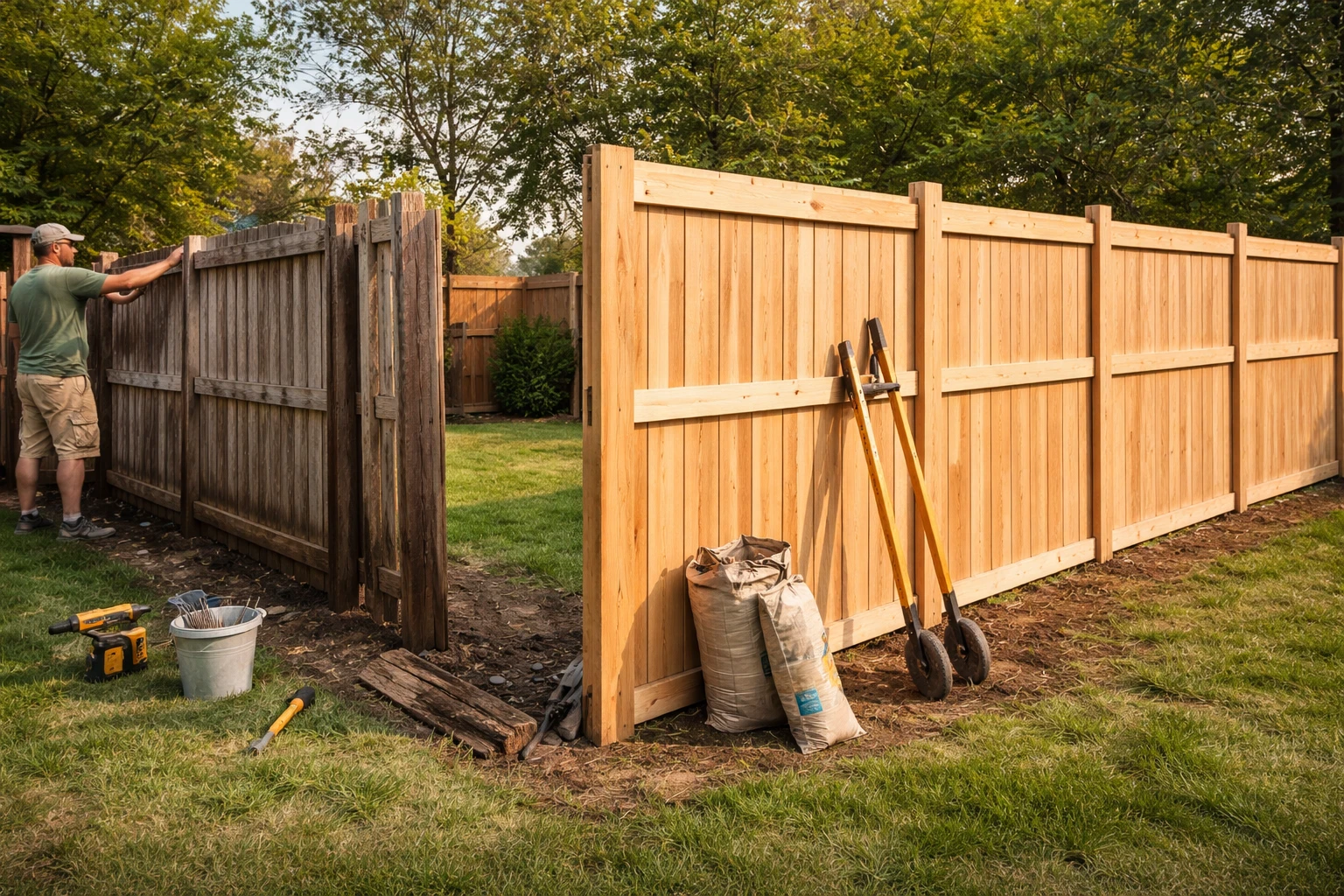
When facing a damaged or deteriorating fence, the decision between patching up problem areas and starting fresh can have a significant impact on your wallet. Making the wrong choice could mean throwing money at temporary fixes or overspending on unnecessary replacements. Is it more cost-effective to repair existing sections of an older fence or proceed with a complete new fence installation?
Repairing is typically more cost-effective when damage affects less than 20-30% of the fence. At the same time, full replacement makes financial sense when extensive deterioration, structural issues, or damage exceeding 40% of the fence is present.
However, this straightforward percentage rule doesn’t tell the whole story, because the age of your fence, the type of material, and how long you plan to stay in your home can completely flip the cost-effectiveness equation in ways that might surprise you.
When Repairs Make Financial Sense
Spot repairs shine when the damage is isolated and the overall structure remains sound. A few rotted posts, several broken boards, or a leaning section can usually be addressed for a fraction of the replacement costs—typically ranging from $200 to $600, depending on the extent of the work needed.
The key is that the surrounding fence still has years of life left. If the fence is less than halfway through its expected lifespan and the foundation, posts, and rails are structurally sound, repairs offer excellent value.
When Replacement Becomes The Better Investment
Once repair costs creep above 50% of what a new fence would cost, replacement becomes the smarter financial move. This threshold usually happens when multiple sections show deterioration, posts are compromised, or the fence has reached 75% or more of its expected lifespan.
A new fence installation eliminates the cycle of ongoing repairs and comes with warranty protection that older fences lack, while also providing opportunities to upgrade to more durable materials, improve property line accuracy, and address drainage or foundation issues that may have contributed to the original fence’s deterioration. Over a 5-10 year period, the cumulative cost of repeated repairs often exceeds the upfront investment in replacement.
Material Matters In The Cost Equation
Wood fences present the trickiest repair-versus-replace decisions because deterioration often happens unevenly. Cedar and redwood fences lasting 15-20 years might justify repairs at year 10, while pressure-treated pine showing significant rot at year 8 probably warrants replacement.
Vinyl and metal fences rarely benefit from partial repairs. Vinyl’s color fading affects the entire structure, making patched sections visually obvious, while metal fencing issues usually stem from rust or structural failure that indicates widespread problems.
Hidden Costs That Change The Calculation
Matching materials for older fences can dramatically inflate repair costs. Discontinued styles, weathered wood that won’t match new boards, or specialized components can add 30-50% to standard repair estimates.
Permit requirements also factor in differently. Minor repairs typically avoid permitting, while extensive repairs might trigger the same permit costs and inspections as full replacement—eliminating one of repair’s key cost advantages.
The Timeline Factor
How long you plan to remain in your property fundamentally shifts the cost-benefit analysis. If you’re selling within 2-3 years, strategic repairs that improve curb appeal offer the best return without over-investing.
For long-term homeowners, replacement provides better value through decades of maintenance-free service. The annual cost amortized over a new fence’s lifespan often beats the ongoing expense of maintaining an aging structure.
What To Look For In Professional Assessments
A thorough professional assessment goes beyond a simple visual inspection. Qualified contractors should check post stability by physically testing for movement, examine the soil around fence foundations for drainage issues, and use levels to identify structural misalignment that might indicate deeper problems.
Ask contractors to document their findings with photos and provide a written breakdown of which components are failing versus which remain serviceable. The best assessments include lifespan projections for repaired sections—a contractor should estimate how many additional years you’ll get from repairs based on material condition, local climate factors, and maintenance history.
Don’t hesitate to get second opinions if quotes vary wildly or if a contractor immediately pushes for full replacement without explaining why repairs won’t work. Reputable professionals provide clear reasoning behind their recommendations rather than pressure tactics.
Extending Fence Life To Delay Replacement
Regular maintenance dramatically extends fence lifespan regardless of material type. Wood fences benefit from cleaning, sealing, and staining every 2-3 years, which can add 5-7 years to their functional life. This preventive investment of $300-600 per treatment is far less than premature replacement costs.
Addressing minor issues immediately prevents them from becoming major problems. A loose board that costs $15 to secure today becomes a gateway for moisture intrusion that rots surrounding boards tomorrow. Similarly, trimming vegetation that contacts the fence prevents moisture retention and pest damage.
Foundation and drainage improvements protect the most critical fence components. Posts fail primarily due to ground-level rot caused by poor drainage, so installing gravel around post bases or improving yard grading can extend post life by years.
Hybrid Approaches That Balance Cost And Longevity
Partial replacement offers a middle ground that many homeowners overlook. Replacing only the most damaged sections—typically 30-50% of the fence—with new materials while maintaining serviceable sections can cut costs by 40-60% compared to full replacement while still providing years of reliable service.
The key to successful partial replacement is creating logical break points. Replace complete fence runs between gates or property corners rather than patching random sections, which creates a more cohesive appearance and avoids the patchwork look that hurts property value.
Upgrading critical components while keeping others extends overall fence life strategically. For instance, replacing all posts with longer-lasting materials while reusing rails and panels in good condition addresses the most common failure point at 30-50% less than full replacement.
Property Value’s Role In The Decision
The relationship between fence investment and home value varies significantly by neighborhood and market conditions. In upscale areas where curb appeal directly impacts sale prices, a new fence can return 50-75% of its cost at resale, making replacement worthwhile even when repairs might technically suffice.
In modest neighborhoods where comparable homes have basic fencing, over-investing in premium replacement creates minimal return. Strategic repairs that maintain a clean, functional appearance often deliver better value by preserving equity without exceeding neighborhood standards.
Real estate agents consistently note that fence condition influences buyer perception during showings. A patched, mismatched fence signals deferred maintenance and raises concerns about what else might be wrong with the property. If selling within 18-24 months, this perception factor often justifies replacement costs that pure functionality wouldn’t support.
Climate And Environmental Factors
Climate dramatically influences both fence lifespan and the wisdom of investing in repairs. Regions with high humidity, frequent freeze-thaw cycles, or intense UV exposure accelerate deterioration, meaning a 12-year-old fence in coastal Florida has aged equivalently to a 20-year-old fence in Arizona’s dry climate.
In harsh climates, older fences approaching their expected lifespan rarely justify significant repair investment. The same environmental factors causing current damage will quickly compromise repaired sections. Replacement with climate-appropriate materials designed for local conditions provides better long-term value.
Pest pressure changes the equation in areas with termites or wood-boring beetles. Once these pests establish themselves in fence structures, repairs become futile without comprehensive treatment. The combined cost of pest remediation plus repairs often exceeds replacement with pest-resistant materials.
Your Next Step: Get The Numbers That Matter
Stop guessing and start with concrete data—schedule assessments with at least two licensed fence contractors who can evaluate your fence’s actual condition and provide side-by-side quotes for both repair and replacement options, complete with realistic lifespan projections. These competing quotes reveal not just the upfront cost difference, but the long-term value equation based on your specific fence material, damage extent, and local climate factors. With real numbers in hand rather than rough percentages, you’ll know whether patching your fence buys you meaningful time or just delays an inevitable replacement, allowing you to make a decision that genuinely serves your budget and timeline instead of leaving money on the table.