Quartzite countertops have become a popular choice in Dallas homes because they offer natural beauty, strength, and a high end look. When cracks appear after installation, homeowners often feel shocked and frustrated. Many assume the stone itself was defective or too fragile for daily use. In reality, cracking rarely comes from the quartzite being weak. Most cracks happen because of planning, handling, or environmental factors that were overlooked long before the countertop ever reached the kitchen.
Understanding the real reasons quartzite countertops crack helps homeowners avoid costly mistakes and make better decisions during selection and installation. This guide explains what truly causes cracking and why Dallas homes experience these issues more often than people expect.
Quartzite Is Strong, But It Is Still Natural Stone
Quartzite forms under extreme heat and pressure deep in the earth. This process creates a dense and durable stone, but it does not make quartzite indestructible. Natural stone contains internal structures, mineral lines, and natural movement that influence how it behaves once cut and installed.
Every quartzite slab has:
- Natural veins
- Mineral variations
- Areas of differing density
These features give quartzite its character, but they also create stress points. When stress increases in the wrong way, cracking can happen. The stone did not fail. The conditions around it did.
Improper Support Is One of the Biggest Causes
One of the most common reasons quartzite countertops crack is poor support underneath the stone. Quartzite needs consistent, level support across its entire surface.
In Dallas homes, cracking often happens because:
- Cabinets are not perfectly level
- Gaps exist under the stone
- Long spans lack proper reinforcement
- Overhangs extend too far without support
Even small dips or twists in cabinetry create pressure points. Over time, the stone absorbs this stress. Eventually, the pressure releases as a crack.
This issue often shows up months after installation, which makes it confusing for homeowners. The stone did not crack immediately. It cracked after stress built up slowly.
Large Islands Increase Risk Without Proper Planning
Dallas kitchens frequently include oversized islands. These islands look great, but they also increase risk if not planned carefully.
Large islands:
- Require longer slab sections
- Create wider unsupported spans
- Increase weight load
- Add stress at cutouts and seams
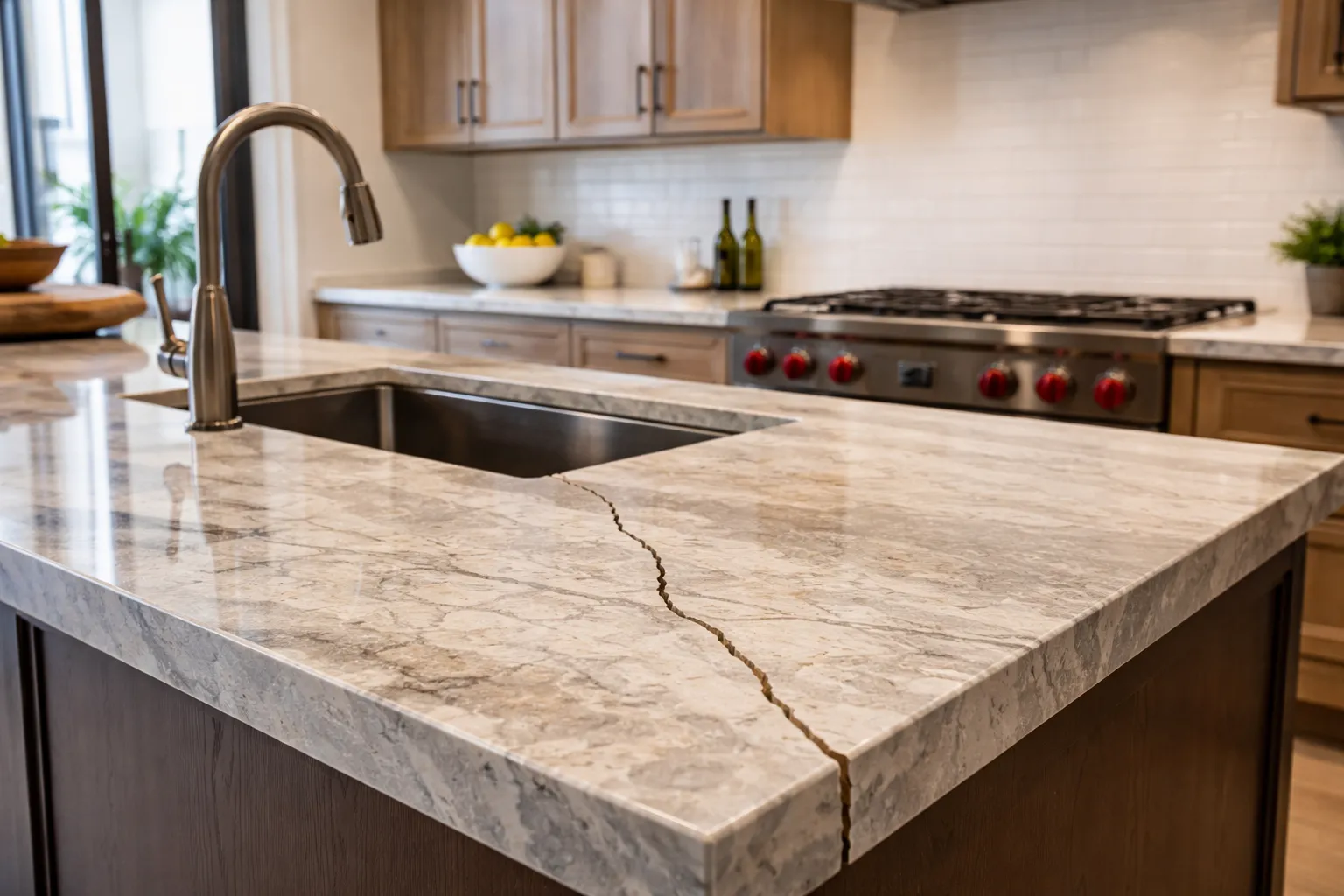
If the island includes a sink, cooktop, or waterfall edge, stress concentrates around those areas. Without proper reinforcement, cracks can form near cutouts or along the length of the slab.
Islands demand careful layout, correct slab orientation, and proper support. Skipping any of these steps increases the chance of cracking.
Natural Movement Inside the Stone Matters
Quartzite contains natural movement lines that form during its creation. These lines often look like veins, but they also represent changes in mineral structure.
When slabs get cut:
- Stress changes within the stone
- Weak points become exposed
- Certain orientations become more vulnerable
If a slab gets cut against its natural grain, stress increases. Fabricators plan cuts carefully to reduce this risk, but layout limitations in Dallas homes sometimes force difficult decisions.
Cracks often follow these natural movement lines. They do not appear randomly.
Dallas Home Conditions Create Additional Stress
Dallas homes experience temperature swings throughout the year. While interiors stay climate controlled, stone still reacts to changes in temperature and humidity.
Common stress factors include:
- Strong sunlight through windows
- Heat from cooktops and ovens
- Temperature changes between seasons
- Heavy appliances placed in the same spot
Quartzite expands and contracts slightly with temperature changes. When movement cannot happen evenly due to tight installations or poor support, cracking can occur.
This is why placement near windows, ovens, or heat sources requires extra planning.
Improper Handling During Transport Can Create Hidden Damage
Quartzite slabs weigh thousands of pounds. Moving them requires careful handling. Damage during transport does not always show immediately.
Hidden stress can come from:
- Slabs flexing during transport
- Improper lifting points
- Uneven support during storage
- Minor impacts during loading
A slab may arrive looking fine, then crack later once installed and stressed. This makes it difficult for homeowners to trace the cause.
Proper handling reduces this risk, but hidden stress remains one of the reasons cracks appear after installation.
Cutouts Create Weak Points If Not Reinforced
Sinks, cooktops, and faucet holes all require cutouts. These cutouts interrupt the stone’s natural strength.
Without proper reinforcement:
- Stress concentrates around corners
- Small cracks form near openings
- Over time, cracks spread
Dallas kitchens often include large undermount sinks and oversized cooktops. These features increase the importance of proper support and reinforcement.
Cracks near sinks usually indicate stress buildup rather than poor stone quality.
Seams and Transitions Need Careful Planning
Quartzite countertops rarely come from a single slab. Seams join multiple pieces together. These joints must align correctly and allow slight movement.
If seams:
- Sit on uneven cabinets
- Experience shifting support
- Get placed near stress points
Cracks may form at or near the seam. Good planning minimizes this risk by placing seams in low stress areas.
Why Cracks Often Appear After Installation
Many homeowners ask why cracks did not appear immediately. The reason is simple. Stress builds over time.
Quartzite absorbs:
- Structural movement
- Daily use pressure
- Temperature changes
Eventually, the stress reaches a breaking point. The crack releases that pressure. This delayed reaction makes cracking feel sudden, even though the cause existed from day one.
How Homeowners Can Reduce the Risk of Cracking
While homeowners do not control every part of the process, they can reduce risk by staying informed.
Helpful steps include:
- Understanding the size and layout of countertops
- Asking how support will be handled
- Knowing where seams and cutouts will go
- Avoiding heavy impact on unsupported areas
- Using heat protection near cooktops
Education helps homeowners ask the right questions and set realistic expectations.
Why Cracking Does Not Mean Quartzite Is a Bad Choice
Cracking does not mean quartzite is unreliable. It means the stone requires proper planning and support, especially in large Dallas kitchens.
When installed correctly:
- Quartzite performs well
- Cracks remain rare
- Longevity improves
- The stone ages gracefully
Most cracked countertops result from overlooked details, not weak material.
What Matters Most in Preventing Cracks
The most important factors include:
- Proper cabinet leveling
- Consistent support
- Thoughtful slab orientation
- Reinforcement around cutouts
- Respect for natural movement
When these factors align, quartzite performs as expected and remains a beautiful part of the home.
Understanding the Real Cause Brings Peace of Mind
Cracks in quartzite countertops feel alarming, but they usually have a clear explanation. Dallas homes present unique challenges with layout, sunlight, and large kitchen designs. When those challenges meet natural stone without enough planning, cracking can happen.
Understanding the real reasons behind cracks helps homeowners make informed decisions and avoid unnecessary blame. Quartzite remains a strong and stunning choice when treated with the care natural stone deserves.
If you want help creating additional quartzite education content, internal linking strategies, or homeowner focused guides, just let me know.
FAQs
Most cracks occur due to poor support, cabinet leveling issues, or built-up stress rather than defects in the quartzite itself.
No, quartzite is very strong, and cracking usually points to installation or environmental factors, not weak material.
Yes, even small dips or twists in cabinetry can create pressure points that slowly lead to cracking over time.
Stress builds gradually from daily use, temperature changes, and structural movement until the stone eventually releases that pressure.
Oversized islands increase risk because they involve longer spans, heavier weight, and more stress around seams and cutouts.
Yes, cutouts interrupt the stone’s strength and require proper reinforcement to prevent stress-related cracks.
Temperature swings, direct sunlight, and nearby heat sources cause subtle expansion and contraction that can contribute to cracking if movement is restricted.
Yes, hidden stress from improper handling or flexing during transport may not show until the slab is installed and under load.
Often they do, because veins and mineral changes represent natural movement lines where stress is more likely to release.
Ensuring proper cabinet leveling, adequate support, smart seam placement, and reinforcement around cutouts greatly reduces the chance of cracking.