Winter has a way of exposing every weakness in your home’s exterior, so preparing your siding before the cold settles in makes a real difference. A little attention now helps you avoid bigger repairs later, especially when freezing temperatures start working against you. With a few practical steps, you can keep your siding strong, dry, and ready for whatever winter brings.
Inspect siding for early warning signs
Small cracks or chips might seem harmless at first, but they usually tell you that the siding has already started to feel the stress of dropping temperatures. When you catch these flaws early, you stop moisture from slipping behind the panels and creating a bigger mess later. Winter has a way of magnifying every tiny issue, so spotting these details now saves you time and money when the cold really sets in.
According to trusted James Hardie Siding, Minneapolis suppliers, loose or warped panels work the same way they show you something beneath the surface isn’t sitting right anymore. Maybe a nail pulled out, maybe the material expanded in the heat and never settled back, or maybe last year’s storms nudged things out of place. Whatever the reason, panels that don’t sit flush let wind and moisture slip through, which creates even bigger problems once freezing temperatures harden everything.
Moisture around seams can be even trickier because it doesn’t always show up as a dramatic issue. Sometimes it’s just a slightly darker patch of paint or a slight ripple you almost miss unless you look closely. Still, this kind of staining usually tells you moisture has already found a weak point. If you deal with it now, you keep mold, rot, and deeper structural issues at bay as winter humidity creeps in.
Bubbling paint is another sign many people overlook, even though it’s one of the most explicit warnings that moisture has already settled under the surface. When the paint lifts, it means water trapped underneath started pushing outward. If that remains unaddressed through winter, the freeze-thaw cycle will force the siding to expand and contract, creating larger cracks. Catching it early makes a huge difference in preventing long-term damage.
Clean siding before temperatures drop
Dirt and mildew cling to siding far more than most people expect, and once winter settles in, everything sticks even tighter. Cleaning it early gives you a fresh surface that handles moisture better and doesn’t trap grime under layers of frost. It also helps you see what’s going on beneath the dirt, making it much easier to spot real issues before freezing weather locks everything in place.
Clearing debris from gaps and corners matters just as much, because those tight spaces tend to gather leaves, twigs, and anything else the wind pushes around. When that debris soaks up melting snow, it keeps moisture pressed against your siding for weeks. That kind of constant dampness never ends well. Removing it now keeps things dry and reduces the chance of mold forming as temperatures bounce between freezing and above freezing.
A gentle cleaning solution always works better than harsh chemicals, especially if your siding material reacts poorly to abrasive sprays or strong detergents. You want something that removes buildup without stripping protective layers or roughing the surface. Taking that softer approach helps your siding last longer, and it keeps winter weather from turning minor wear into something more serious.
Rinsing everything thoroughly at the end makes a bigger difference than most people think. Any leftover residue eventually hardens as temperatures drop, leaving behind streaks or sticky patches that trap even more grime. A clean rinse gives you a smooth, transparent surface ready to face freezing nights, melting afternoons, and everything in between without unnecessary damage.
Seal gaps and reinforce weak spots
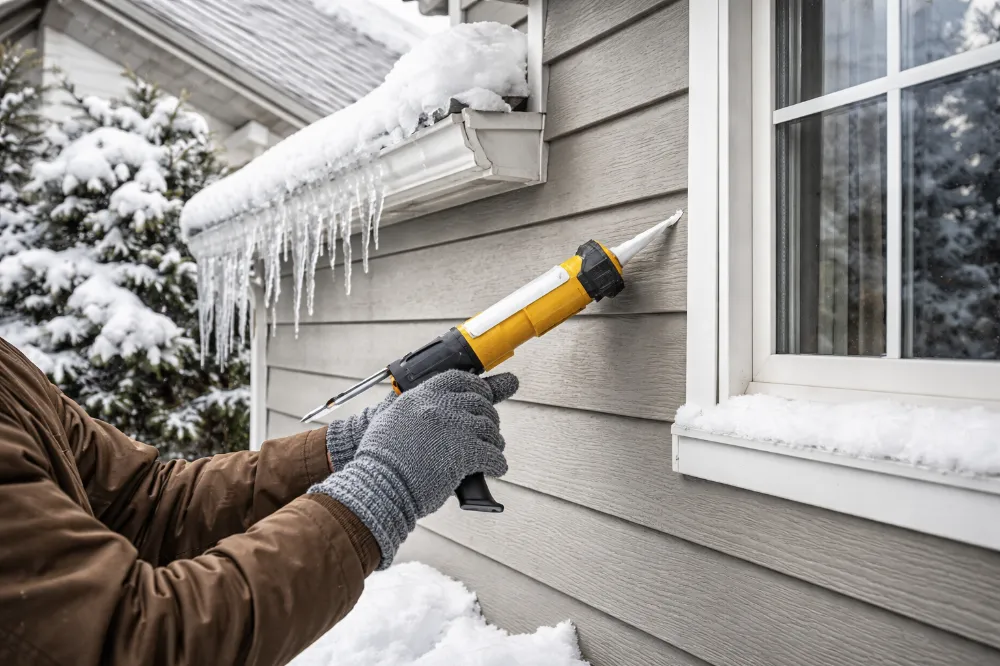
Re-caulking exposed seams gives your siding a fresh layer of defense right when it needs it most. Old caulk dries out, cracks, and stops doing its job long before you realize it. Once temperatures drop, gaps become an open invitation for wind, moisture, and cold air to creep in, so sealing them now keeps the interior warmer and the exterior protected.
Replacing or tightening loose fasteners also makes a noticeable difference. When a panel wiggles even slightly, it shifts under the pressure of winter winds, and that constant movement weakens the material over time. Securing everything before storms roll in helps each panel stay aligned and sturdy, preventing bigger repairs you would definitely prefer to avoid when everything outside is frozen.
Sealing areas around windows and doors adds another critical layer of protection to your home. These edges usually shift the most as temperatures change, and that movement creates tiny openings that moisture loves to find. A fresh seal keeps cold drafts out, keeps melted snow from sliding behind the siding, and reduces the overall strain on those vulnerable transition points.
Adding weatherproofing where you notice weakness brings the whole structure together. Maybe it’s an older spot that always seems to get icy first, or a section of siding that catches more wind than the rest. Strengthening it now helps the exterior handle sudden cold snaps without cracking or bowing. Small reinforcements like that save you from dealing with bigger surprises later in the season.
Protect siding from ice and snow buildup
Keeping gutters and downspouts clear helps your siding more than most people realize. If water can freely move away from the house, it won’t spill over and soak the panels every time the snow melts and refreezes. Clean gutters give melted snow a place to go, instead of letting it drip down the siding and freeze into heavy icicles that slowly pull at the edges.
A well-functioning roof drainage system also prevents winter runoff from hitting your siding directly. When drainage stalls, all that melting snow flows wherever gravity pulls it, and the siding is usually the first to take the hit. Guiding that water away helps you avoid the constant freeze-thaw cycle that slowly weakens the material and leads to cracks or warping in the middle of winter.
Preventing ice dams before they form is significant for protecting the exterior, too. When warm air inside the home melts snow unevenly on the roof, the water slides down and freezes at the edges. That buildup traps more water behind it, and eventually it seeps down the siding. Preventing this early saves you from heavy moisture damage that often goes unnoticed until spring.
Directing melting snow away from the siding provides an extra layer of protection. Piles of snow sitting right up against the house take forever to melt, especially in shaded areas. When that snow repeatedly freezes and thaws, it sends moisture directly into weak points. Creating a bit of space helps the exterior dry faster and handle winter conditions more comfortably.
Wrap up
Taking care of your siding before winter isn’t complicated, but it does pay off quickly. A bit of maintenance now helps prevent cracks, moisture damage, and expensive repairs later. When you stay ahead of the cold, your siding stays stronger, your home feels warmer, and winter becomes much easier to handle.
FAQs
Freezing temperatures, moisture, and freeze-thaw cycles force siding to expand and contract, exposing weak spots quickly.
Watch for cracks, loose panels, bubbling paint, discoloration, or moisture stains around seams.
Yes, cleaning removes dirt and mildew that trap moisture and make siding more vulnerable to freezing damage.
Use a gentle cleaning solution and low-pressure rinsing to avoid stripping protective finishes.
Open gaps allow cold air and moisture inside, which leads to rot, mold, and structural damage.
Loose panels move in strong winds, weakening the material and increasing the risk of cracks or warping.
Yes, blocked gutters cause water to overflow and freeze on siding, leading to ice buildup and moisture damage.
Ice dams trap melting snow, forcing water down and behind siding where it can freeze and cause hidden damage.
Yes, snow piled against siding melts slowly and repeatedly soaks the material, increasing freeze-thaw stress.
Always repair before winter, since cold weather makes damage worse and repairs harder and more expensive.