Choosing the right flooring often involves balancing appearance, durability, and maintenance. Two popular options, polished concrete and hardwood flooring, each offer distinct benefits and lifespans. Understanding how these materials perform over time helps homeowners and facility managers make informed decisions.
Understanding Polished Concrete Flooring
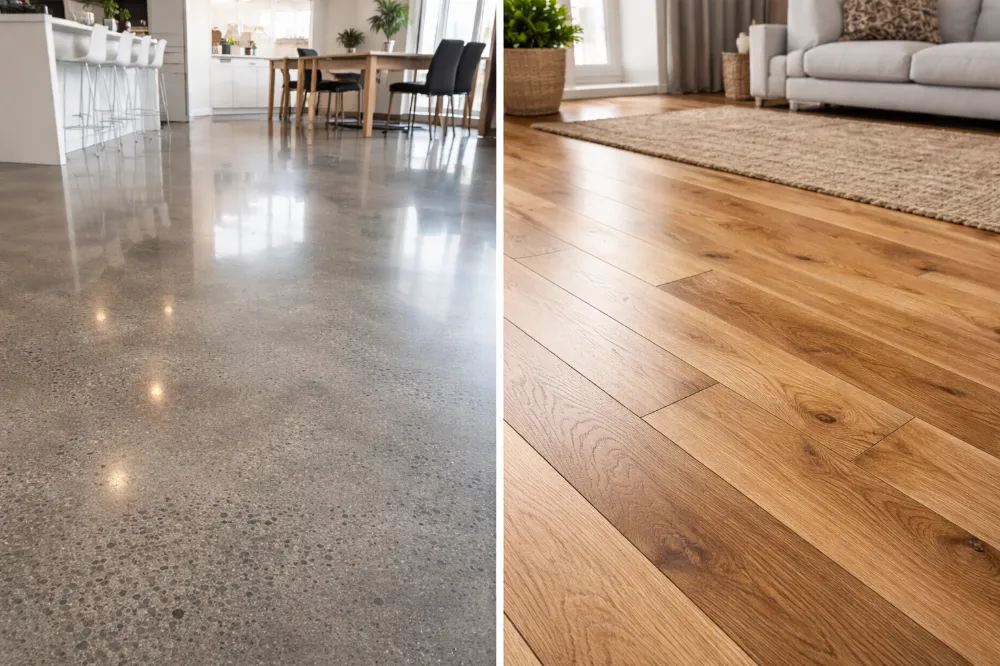
Polished concrete is created by mechanically grinding and sealing a concrete surface to achieve a smooth, reflective finish. The result is a sleek, modern look that fits well in both residential and commercial spaces. It is known for its strength and resistance to wear.
Among the main advantages of polished concrete solutions is their longevity. Properly installed and maintained, these floors can last for decades without needing replacement. Their durability comes from the inherent strength of concrete and the protective polishing process that minimizes surface damage.
Characteristics of Hardwood Flooring
Hardwood floors have long been valued for their natural warmth and timeless appeal. They can be refinished multiple times, restoring their beauty after years of use. However, their durability depends heavily on the type of wood, finish quality, and environmental conditions.
Unlike concrete, wood is sensitive to moisture and temperature changes. Over time, expansion, contraction, or warping can occur, which may require repair or replacement. Even with proper care, hardwood floors generally have a shorter overall lifespan compared to polished concrete.
Comparing Longevity and Maintenance
When comparing lifespan, polished concrete often outperforms hardwood flooring. Concrete’s dense surface resists scratches, stains, and heavy impacts better than wood. Regular cleaning with a neutral cleaner and occasional resealing are usually sufficient to maintain its appearance.
Hardwood flooring demands more attention. It benefits from regular sweeping, careful moisture control, and periodic refinishing. While refinishing extends its life, deep damage or water exposure can lead to costly repairs. In high-traffic areas, hardwood may lose its finish faster than concrete loses its shine.
Environmental and Cost Considerations
From an environmental perspective, both materials can be sustainable when sourced or produced responsibly. Concrete uses existing structural slabs, reducing waste, while hardwood sourced from managed forests supports renewable practices. However, the long lifespan of concrete often translates into fewer replacements, reducing resource use over time.
Cost is another factor. Although polished concrete may have a higher initial installation cost, its minimal maintenance and long life make it cost-effective in the long term. Hardwood’s refinishing and potential replacement costs can add up over decades of use.
Applications for Each Material
Polished concrete suits modern interiors, retail environments, and spaces that experience high foot traffic. Its seamless surface is easy to clean and resists allergens, making it ideal for both functional and aesthetic purposes. Hardwood flooring, on the other hand, brings warmth and character to living areas or offices where comfort and style take priority.
In commercial or industrial settings, concrete floor solutions provide unmatched durability. In residential spaces, hardwood remains a classic choice for areas where softness underfoot and natural aesthetics are valued.
Making the Right Choice
When longevity is the main concern, polished concrete offers superior resilience and lower lifetime maintenance. Hardwood flooring provides a distinct charm and can last for many years with diligent care, but it is more susceptible to wear and environmental factors. Evaluating the intended use, maintenance expectations, and desired style will guide the best flooring decision for any space.
FAQs
Polished concrete generally lasts longer than hardwood, often enduring for decades with minimal maintenance.
Hairline cracks can occur due to structural movement, but they rarely affect durability or performance.
With proper care and refinishing, hardwood floors can last 20–40 years, depending on use and conditions.
Yes, polished concrete works well in homes, especially in modern designs and high-traffic areas.
Yes, hardwood needs regular care, moisture control, and periodic refinishing, while concrete needs less upkeep.
Polished concrete is more resistant to moisture, while hardwood can warp or swell if exposed to water.
They can feel hard and cool, but area rugs and radiant heating can improve comfort.
Minor damage can be sanded and refinished, but deep water or structural damage may require replacement.
Polished concrete performs better in high-traffic environments due to its resistance to wear.
Yes, its long lifespan and low maintenance often make it more economical over time than hardwood.