If you’re looking for a craft material that’s equal parts forgiving and versatile, it might be time to give plastic canvas a serious look. This lightweight grid material has been quietly earning its spot in creative spaces for good reason. It’s sturdy enough to hold three-dimensional shapes without buckling, affordable enough to experiment with freely, and surprisingly simple to work with once you get the hang of basic stitches.

What makes plastic canvas particularly useful for home projects is its structural integrity. Unlike fabric that needs backing or wire frames to maintain shape, this material stands on its own. That means you can create functional items like storage organizers, decorative baskets, or even custom coasters without wrestling with armatures or support structures. The regular grid of holes gives you built-in guidelines for stitching, which takes a lot of the guesswork out of the process.
A Fresh Take on Home Crafting
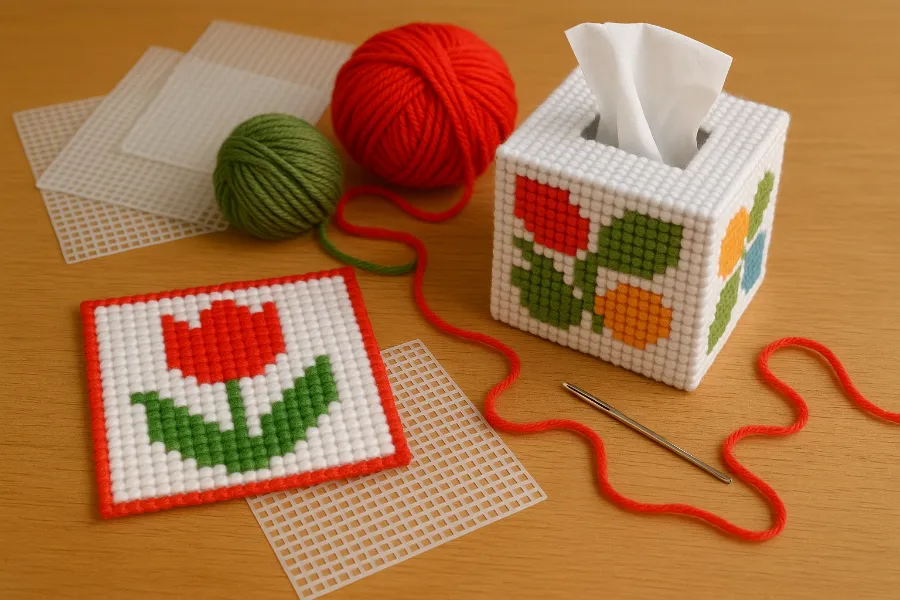
The current wave of interest in handmade home decor has brought renewed attention to accessible crafts that don’t require years of practice or expensive equipment. You need just three things to get started: the canvas itself, some yarn, and a tapestry needle. No special machines, no complicated setup. There’s something quietly grounding about working with your hands. Each stitch becomes a small act of care for your home. Projects can be as simple or complex as you want them to be, which makes this an ideal entry point for anyone who’s been wanting to try needlework but felt intimidated by traditional embroidery or cross-stitch.
Research published in Frontiers in Public Health, which surveyed more than 7,000 people, found that creative activities like DIY crafting were strongly linked with greater life satisfaction, comparable to the boost people feel from meaningful work. The study revealed that participants who engaged in arts and crafts reported higher levels of happiness and a stronger sense that life is worthwhile, suggesting that making things with our hands offers benefits that extend well beyond the finished product.
Practical Applications for Every Room
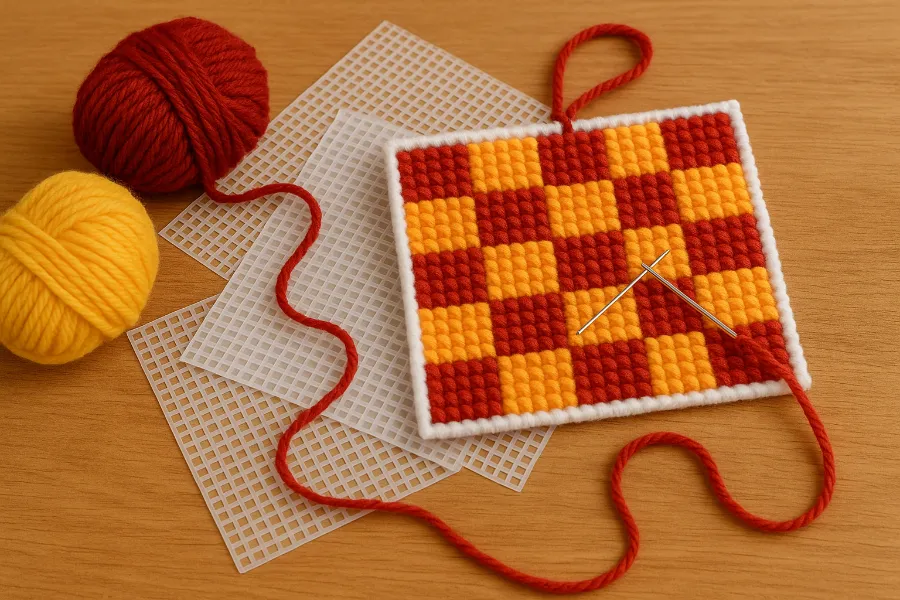
One of the best things about working with this material is how well it translates to functional home items. Kitchen organization becomes more pleasant when you have custom-sized containers that actually fit your drawer dimensions. Bathroom counters look more pulled together with coordinating tissue box covers. Seasonal decorations get stored properly when you make dedicated organizers that protect delicate items.
The trick is thinking beyond traditional craft patterns. Sure, you can make holiday ornaments and gift tags, but you can also create drawer dividers, planter covers, or wall pockets for mail sorting. The material comes in different mesh counts (typically 5, 7, 10, or 14 holes per inch) and various colors, so you can match projects to existing decor without always relying on yarn to provide the color scheme.
Getting Started Without Overwhelm
If you’re new to this type of needlework, start with something flat and functional. A set of coasters gives you practice with basic stitches without requiring much material investment. The repetitive motion of stitching has a meditative quality that many people find calming, especially when working on straightforward patterns that don’t demand intense concentration.
As your comfort level grows, you can move into three-dimensional projects. The beauty of plastic canvas is that mistakes are relatively easy to fix. Unlike knitting, where you might need to unravel rows of work, here you can simply snip a few stitches and redo that section. The canvas itself is inexpensive enough that even if a project goes sideways, you’re not out much money.
Why This Material Keeps Coming Back
Every few years, certain craft materials experience a resurgence as new makers discover their potential. What’s driving current interest isn’t nostalgia for the 1980s (though that’s part of it). It’s the realization that sometimes the most practical solution is also the most straightforward one. When you want something specific for your home and can’t find it at stores, being able to make it yourself in an afternoon has real appeal.
The skills you develop transfer to other needlework techniques too. Understanding how to count stitches, work with yarn tension, and create clean edges will serve you well if you decide to explore embroidery, needlepoint, or tapestry work later. Think of it as building a foundation in fiber arts while creating useful items for your space.
For anyone feeling stuck in a decorating rut or looking for a hands-on hobby that produces tangible results, this might be exactly what your creative practice needs. The combination of accessibility, affordability, and versatility makes it worth exploring, whether you’re furnishing your first apartment or adding handmade touches to a well-established home. In a world that often feels too fast, the simple rhythm of stitching can help you slow down and reconnect with your space and yourself.
FAQs
Plastic canvas is used for crafting structured items like coasters, organizers, decorative boxes, and home décor because it holds its shape without additional support.
Yes—its grid layout makes stitching easy to learn, and the material is forgiving, making it ideal for beginners who want to practice needlework skills.
You only need plastic canvas sheets, yarn, and a tapestry needle to begin crafting.
Lower mesh counts like 5 or 7 are good for larger, sturdier designs, while higher counts like 10 or 14 work best for detailed or more delicate stitching.
Absolutely—many people create drawer dividers, storage bins, tissue box covers, and other practical household items with it.
Yes, it’s sturdy enough to support 3D shapes and holds up well for long-term use, especially for storage or organizational items.
Very—just snip the yarn in the incorrect section and redo the stitches without damaging the canvas.
Yes, because the material is safe, stable, and easy to stitch through, making it a great choice for supervised children’s crafting projects.
Yes—you can cut the canvas to any shape or dimension, allowing you to make perfectly sized organizers, covers, or décor pieces.
Crafting with plastic canvas, like other creative activities, can reduce stress and promote well-being due to its calming, repetitive stitching process.