Scooters are fantastic. They’re fast, convenient, and easy to use. But once the ride is over, many owners face the same issue: where to put them. Garages fill up quickly with cars, tools, sports gear, and seasonal items. Scooters often end up leaning against walls, blocking walkways, or sitting on the floor where they’re easy to trip over.
That’s where overhead garage storage for scooters comes in. Instead of fighting for floor space, you use the unused area above your head. With the right setup, overhead storage keeps scooters protected, organized, and out of the way while making your garage safer and easier to use.
This guide walks through everything you need to know about overhead garage storage for scooters, from understanding the systems to choosing the right option and installing it safely.
Why Overhead Garage Storage Makes Sense for Scooters
Most garages have plenty of vertical space that goes completely unused. The ceiling area above vehicles and walkways is often empty, yet it can support significant weight when used properly. Scooters are ideal candidates for overhead storage because they are relatively lightweight compared to other garage items. Even electric scooters with larger batteries usually fall well within the weight limits of ceiling-mounted racks or pulley systems.
Overhead storage also protects scooters from moisture, dirt, and accidental impacts. According to the U.S. Consumer Product Safety Commission, proper storage of recreational equipment reduces the risk of household injuries caused by tripping hazards and falling objects, especially in garages and storage areas. Another major benefit is organization. When scooters have a dedicated storage location, the garage feels less cluttered. It becomes easier to clean the floor, park cars, and access tools without moving scooters out of the way.
Understanding Overhead Garage Storage Systems
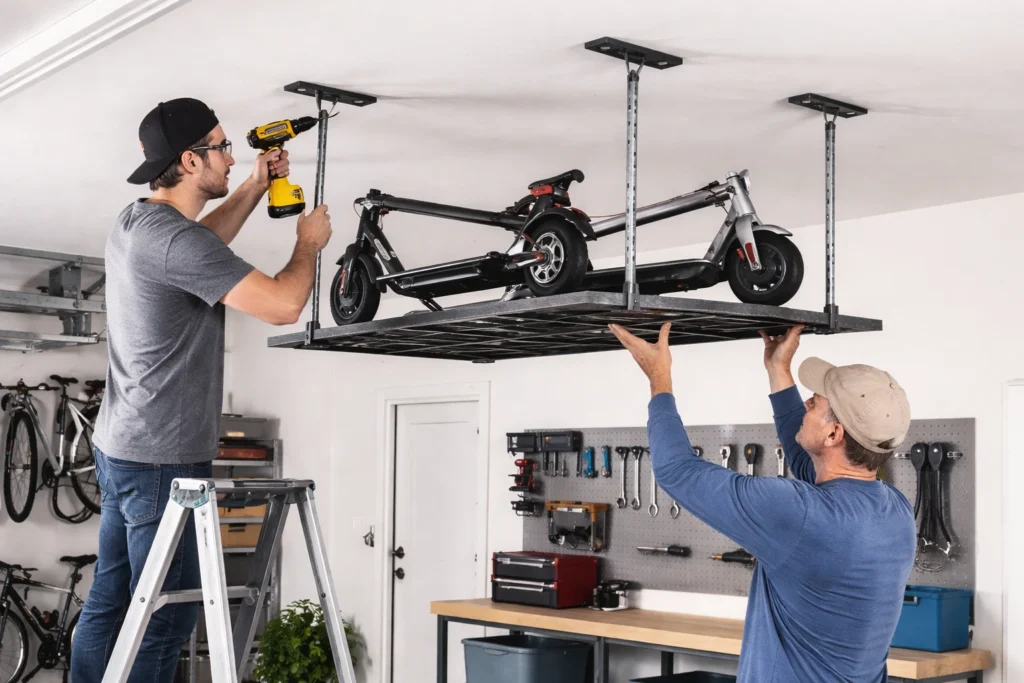
Overhead garage storage refers to systems mounted to the ceiling that hold items above head height. These systems attach directly to ceiling joists or beams and are designed to distribute weight evenly. Unlike wall-mounted hooks or shelves, overhead systems don’t consume wall space. This distinction becomes especially clear in a garage scooter rack vs wall hooks comparison, where ceiling-mounted racks free both floor and wall areas while wall hooks often compete with cabinets, shelving, and workbenches.
Most overhead storage systems fall into three main categories: ceiling-mounted racks, pulley hoist systems, and overhead rail or track systems. Each has different advantages depending on scooter weight, ceiling height, and how often the scooter is used. Before choosing a system, it’s important to understand your garage structure, including ceiling height, joist spacing, and the location of garage door tracks and openers.
Scooters That Work Best with Overhead Storage
Not every scooter is the same, and some are better suited for overhead storage than others.
Electric scooters are the most common candidates. Folding electric scooters are especially easy to store overhead because they take up less space and are easier to secure. Non-folding electric scooters can still work but may require wider racks or stronger pulley systems. Kids’ scooters are perfect for overhead storage. They’re lightweight, compact, and often used seasonally. Storing them overhead keeps them out of the way when not in use.
Adult kick scooters and commuting scooters also work well overhead, particularly if they have folding handlebars or removable components. For background context, scooters as personal transportation devices are generally lightweight by design, which is one reason they adapt well to ceiling storage systems. Overhead storage may not be ideal for extremely heavy scooters or mobility devices unless the system is specifically rated for higher loads. In those cases, professional installation or reinforced mounting is strongly recommended.
Benefits of Overhead Garage Storage for Scooters
One of the biggest benefits is space efficiency. Overhead storage frees up floor space immediately, making even small garages feel larger. Safety improves as well. Scooters left on the floor create trip hazards, especially in tight garages. Overhead storage removes that risk entirely.
Protection is another major advantage. Scooters stored overhead are less exposed to moisture from the floor, oil spills, and accidental impacts from cars or equipment. There’s also a visual benefit. A garage with clear floors and organized overhead storage looks cleaner and more intentional. It’s easier to maintain and far less stressful to use daily.
Overhead Storage Options for Scooters
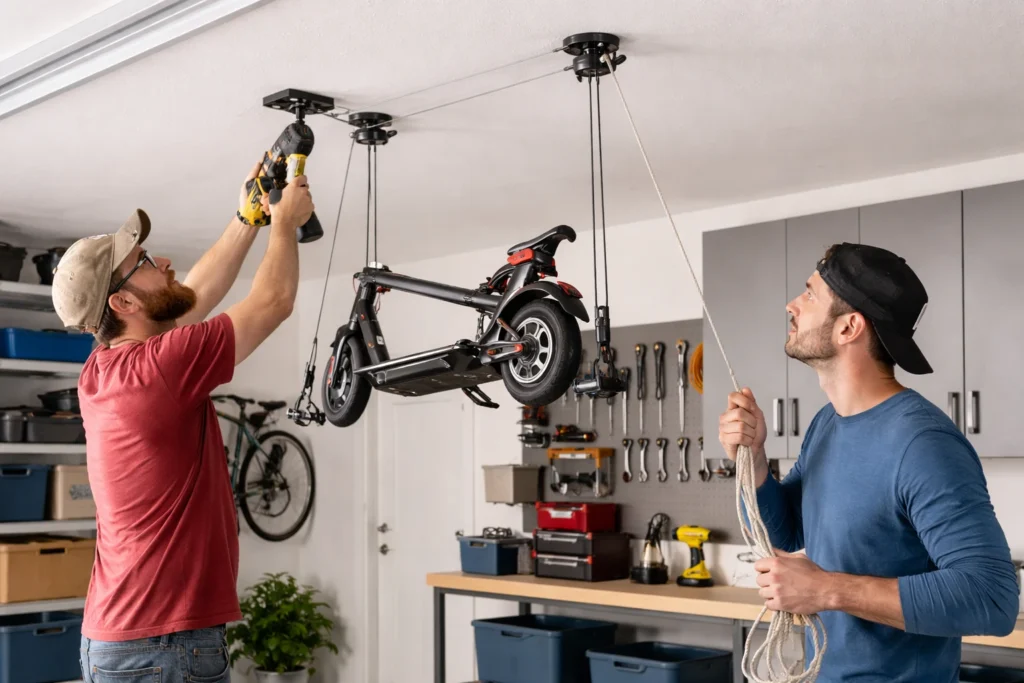
Ceiling-mounted racks are one of the most popular options. These are flat or basket-style platforms mounted to the ceiling. Scooters can be placed directly on the rack or secured using straps. Adjustable racks allow you to fine-tune the height, which is useful if you need clearance for vehicles below. Pulley hoist systems are another excellent option, especially for heavier electric scooters. These systems use ropes and pulleys to lift the scooter up to the ceiling and lower it down when needed. They require less lifting effort and are ideal if you use your scooter frequently.
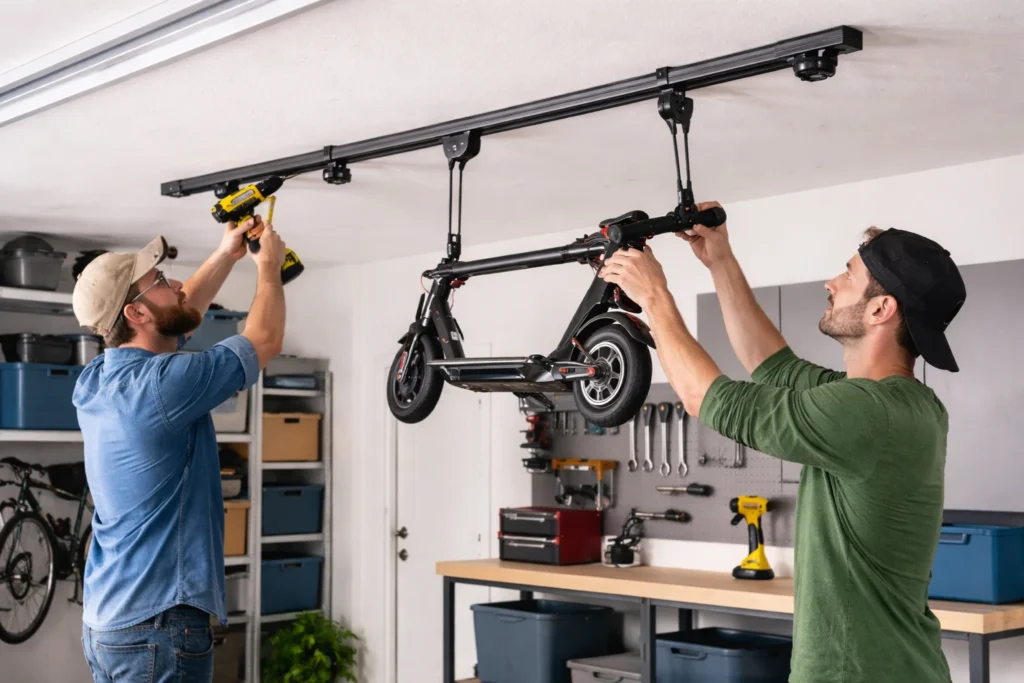
Overhead rail or track systems are more modular. They allow scooters to be suspended from hooks or cradles that slide along rails. This makes it easier to reposition scooters or share space with bikes and other gear. Choosing the right system depends on your scooter’s weight, how often you use it, and how much ceiling clearance you have.
Key Factors to Consider Before Installing Overhead Storage
Scooter weight is the first thing to check. Always choose a system rated well above the actual weight of your scooter. This provides a safety margin and reduces stress on mounting hardware. Ceiling height matters more than many people expect. You need enough clearance to lift the scooter overhead while still leaving room for vehicles, garage doors, and lights.
Joist spacing is critical for secure mounting. Most overhead systems must be attached directly to ceiling joists, not drywall. Knowing where those joists are and how they’re spaced will determine what systems you can use. Ease of access is another important factor. If you use your scooter daily, a pulley system or low-clearance rack may be better than a fixed high rack that’s difficult to reach.
Safety Considerations You Shouldn’t Ignore
Safety is non-negotiable with overhead storage. Every system has a weight limit, and exceeding it is a recipe for failure. Mounting must always be done into structural supports. Drywall anchors are not sufficient for overhead loads. Lag bolts or structural screws rated for overhead use are essential.
Scooters should be secured so they cannot shift or slide. Straps, locking hooks, or cradle supports help prevent accidental drops. If children use the garage, consider systems that can be locked or placed out of reach to prevent tampering.
Measuring Your Garage for Overhead Scooter Storage
Start by measuring ceiling height from the floor to the lowest obstruction, which could be a garage door track or opener. Measure the width and length of the available ceiling area where you plan to install storage. Make sure scooters won’t interfere with doors, lights, or ventilation. If using a pulley system, factor in the vertical travel distance needed to lift and lower the scooter comfortably. Accurate measurements prevent costly mistakes and make installation smoother.
DIY vs Professional Installation
Many overhead scooter storage systems are designed for DIY installation. If you’re comfortable using a drill, locating joists, and following instructions carefully, DIY can save money.
However, professional installation makes sense if the scooter is heavy, the ceiling structure is complex, or you’re unsure about load-bearing capacity. A professional can ensure everything is mounted safely and correctly. The cost difference often comes down to peace of mind versus savings. For heavier electric scooters, professional installation is often worth it.
Installation Overview
Installation typically starts with planning the layout and marking joist locations. Next comes mounting brackets or rails securely into the joists. This step is critical and should never be rushed.
Once the structure is mounted, the rack or pulley system is assembled and adjusted to the correct height. Before storing a scooter, always test the system with a lighter load to confirm stability.
Best Practices for Storing Electric Scooters Overhead
Electric scooters require a bit of extra care. Batteries should be stored according to manufacturer guidelines, usually at moderate temperatures and partial charge levels. Remove loose accessories like baskets or mirrors to prevent rattling or falling. Fold the scooter if possible to reduce its footprint and make it easier to secure.
Maintenance Tips for Overhead Storage Systems
Check bolts and fasteners periodically to ensure they remain tight. Inspect pulleys and cables for wear, especially if the scooter is lifted and lowered frequently. Adjust height or positioning as your storage needs change over time.
Common Mistakes to Avoid
Overloading the system is the most common mistake. Always stay within rated limits. Installing too close to garage doors can cause collisions or prevent doors from opening fully. Ignoring ceiling structure leads to unsafe installations. Poor planning can make scooters difficult to access, defeating the purpose of convenient storage.
Overhead Storage vs Other Storage Solutions
Compared to wall-mounted hooks, overhead storage keeps scooters completely out of the way and frees up wall space. Compared to floor stands, overhead storage eliminates trip hazards and makes cleaning easier. In many garages, a hybrid approach works best, combining overhead storage for rarely used scooters and wall or floor storage for daily riders.
Cost Expectations
Basic pulley systems are typically the most affordable option. Mid-range ceiling racks cost more but offer better stability and capacity. Premium modular systems are the most expensive but provide flexibility and long-term value. Installation costs vary depending on complexity and local labor rates.
Who Benefits Most from Overhead Scooter Storage
Urban commuters benefit from quick access and clutter-free garages. Families with multiple scooters gain organization and safety. Small garages see the biggest space savings. Seasonal riders appreciate having scooters stored safely out of the way.
Final Thoughts
Overhead garage storage for scooters is one of the most effective ways to reclaim space, improve safety, and protect your equipment. With proper planning, the right system, and safe installation, overhead storage turns unused ceiling space into a practical, organized solution. Whether you ride daily or seasonally, storing scooters overhead keeps your garage cleaner, safer, and far more functional.
FAQs
Yes, as long as the system is properly mounted into ceiling joists and rated above the scooter’s weight.
Most quality ceiling racks and pulley systems support 50–200 pounds, depending on design and installation.
DIY installation works for lighter scooters, but heavier electric scooters may benefit from professional installation.
It can if installed too low or too close to door tracks, which is why measuring clearance is essential.
Pulley systems are easier to use for frequent access, while ceiling racks are better for long-term storage.
Yes, as long as the storage system is rated for the combined weight and properly spaced.
Yes, provided the battery is stored according to manufacturer recommendations and the scooter is securely fastened.
Most systems work best with ceilings at least 8 feet high, though low-profile options exist.
No, when mounted correctly into joists using proper hardware, they do not damage structural components.
Yes, overhead storage is especially useful in single-car garages where floor space is limited.