
The first thing you learn when you move into a shared dorm isn’t how to make friends or how to do laundry for the first time it’s how unbelievably loud other people can be without even trying. There’s always something happening on a college campus, and dorms have their own soundtrack: doors slamming, footsteps echoing from above, hallway conversations that somehow sound like they’re happening inside your room, and, if you’re unlucky, someone practicing guitar right when you need to rest. The chaos becomes part of daily life, sometimes amusing, sometimes irritating, and often exhausting. But what’s comforting is that you can create a sense of control inside your own little living space. Noise-reducing essentials aren’t luxuries they’re survival gear for your peace of mind.
Why Noise Feels Twice as Loud in a Dorm
Dorm noise feels amplified partly because of poor building acoustics . The walls and floors aren’t designed to absorb sound they reflect it. Hard materials bounce noise around like an echo chamber, so even normal activities feel louder than they should. Someone dragging a chair suddenly sounds like construction work. A quiet phone conversation next door somehow feels like it’s happening in your closet. And because dorms pack dozens of people into a tight space, someone is always awake, always moving, always making noise. Your brain rarely gets a break, which is why noise-reducing tools become essential instead of optional.
Earplugs: The Little Heroes You Never Knew You’d Rely On
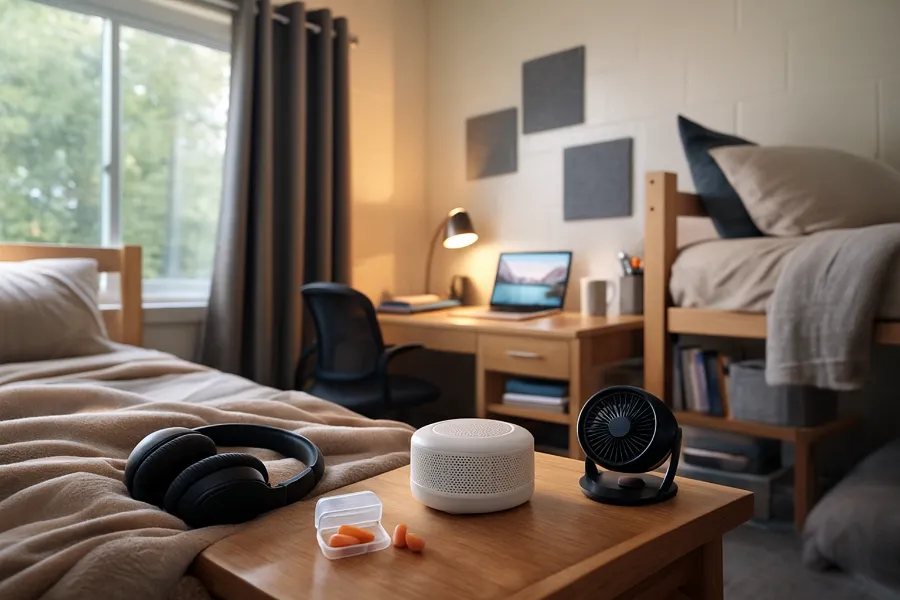
Before living in a dorm, earplugs were something I associated with plane rides and concerts. Then I got a roommate who loved watching motivational podcasts at 1 a.m. and a neighbor with a 5 a.m. gym routine. Foam earplugs became my nightly routine. They shrink the world down to something bearable, blocking out enough noise so you can sleep without flinching at every sound. It’s not total silence, but it’s a noticeable buffer a quiet pocket you create for yourself when the dorm refuses to cooperate.
Noise-Cancelling Headphones: The Big Investment That Pays You Back Every Day
There’s a moment when you slide on noise-cancelling headphones in a chaotic room, and suddenly everything softens. It’s almost shocking the first time. Whether you’re studying for an exam, on a call, or decompressing after a long day, they create a bubble that shuts out the randomness around you. They also serve as a “do not disturb” sign without needing to say anything. Even budget options make a massive difference in shared living environments. I used mine almost daily not just for school, but for peace.
White Noise Machines: The Soothing Sound That Helps You Forget the Chaos
White noise isn’t about replacing silence it’s about smoothing over unpredictable sounds. Dorm life is full of randomness: sudden laughter, slamming doors, someone sprinting down the hall at midnight. A white noise machine or even an app gives your ears something steady so your brain stops reacting to every disturbance. I loved brown noise the most because it had a soft, low rumble that helped me sleep even when my hall sounded like a Friday night social event. Over time, the steady hum becomes comforting.
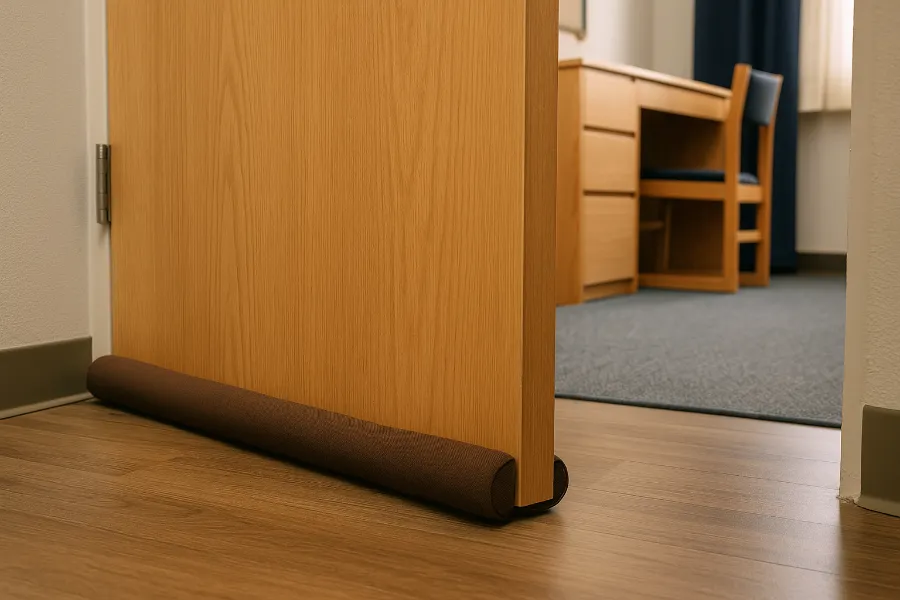
Door Draft Stoppers: A Small Fix for One of the Loudest Problems
Dorm doors almost always have a big gap underneath, and that gap acts like a noise tunnel. Everything in the hallway every conversation, every shuffle, every footstep slides right into your room. Adding a door draft stopper made my room instantly quieter. It blocked out hallway noise, reduced airflow sounds, and even kept the light from shining in during late-night comings and goings. It’s a cheap upgrade with a surprisingly big impact.
Thick Curtains: Soft Barriers That Instantly Calm a Room
Thick curtains act like mini sound absorbers. They soften noise from outside, reduce echoes, and make your room feel more insulated. If your window faces a busy walkway, a courtyard, or anywhere people like to gather, curtains can be the difference between a chaotic night and a peaceful one. They also help regulate light, which supports your circadian rhythm that naturally affects your ability to sleep and focus.
Soft Décor: How Fabrics Quiet a Room Without You Even Noticing
A dorm room with no fabrics echoes constantly. The simplest fix is soft décor rugs, pillows, blankets, even a fabric wall hanging. These absorb sound instead of letting it bounce around. Before I added a rug, my room had a sharp, loud quality to it; every move echoed. After adding soft décor, the entire space felt calmer, warmer, and noticeably quieter. It’s one of the easiest noise-reducing upgrades you can make.
Bed Canopies or Privacy Tents: Your Mini Quiet Zone
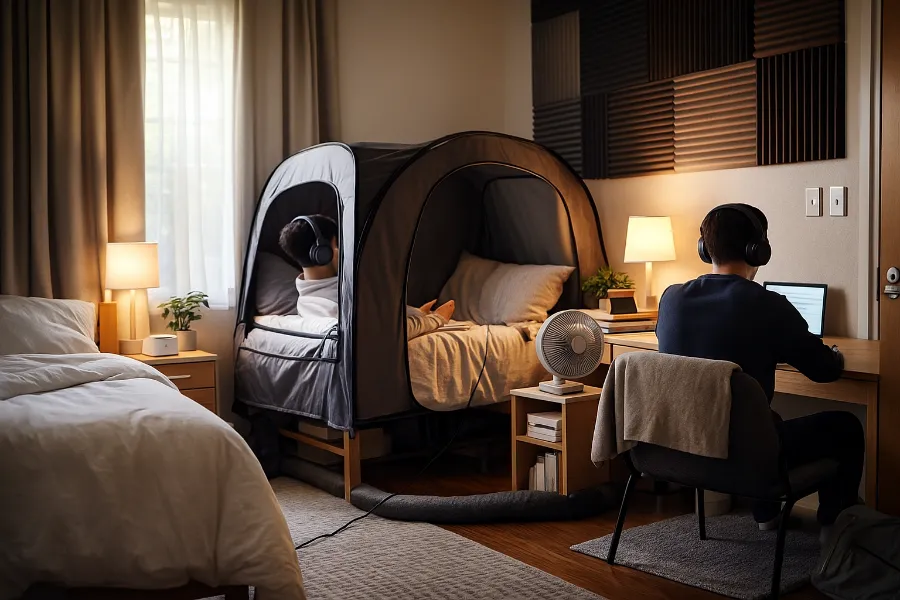
Privacy bed tents are more than cute TikTok dorm accessories they genuinely reduce noise. The fabric creates a cocoon effect that softens surrounding sounds. It doesn’t block everything, but it filters noise enough that you can sleep or relax without feeling overwhelmed. Pair it with earplugs or a white noise machine, and you suddenly have a private nook that feels far more peaceful than the rest of the room.
Acoustic Panels: A Stylish Way to Control Noise
Peel-and-stick acoustic panels are renter-friendly and helpful, especially if your neighbor is loud. Adding a few acoustic wall panels to a shared wall absorbs vibrations and cuts down on echo. You don’t need to treat the entire wall just a small section behind your bed or desk can shift the sound dynamics of your whole room. They also look surprisingly stylish, making them both functional and decorative.
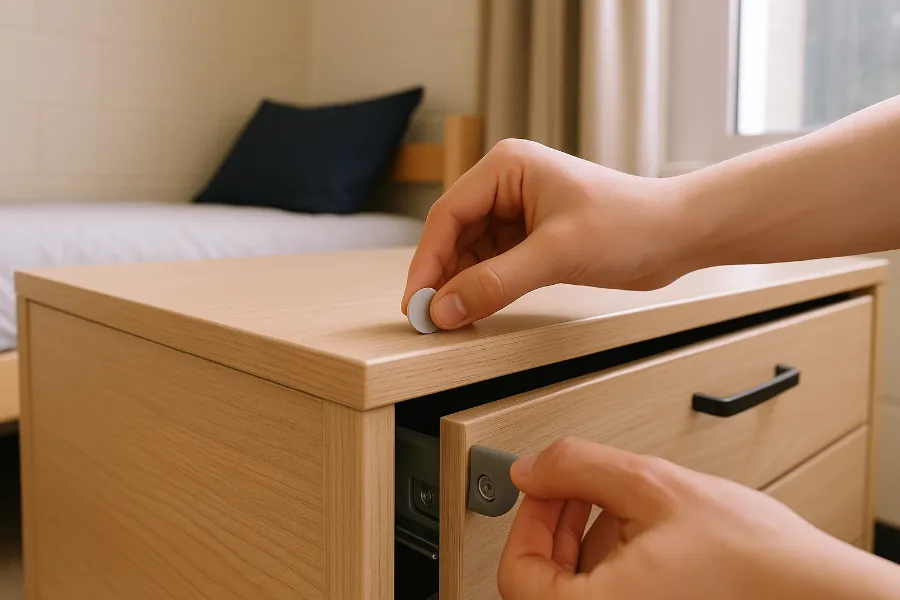
Soft-Close Add-Ons: Eliminating Those Sudden Mini Heart Attacks
Dorm drawers and closet doors can be shockingly loud. Adding soft-close pads to them prevents those sudden, jarring slams that can wake you up or break your concentration. They’re small, cheap, and improve the everyday feel of the room. Anything that reduces sharp impacts will make your space feel more peaceful.
Roommate Communication: The Most Important Noise Solution of All
No tool works better than clear communication. It’s wild how much frustration disappears after a simple conversation about noise habits. Setting casual, flexible expectations like using headphones at night or keeping calls at a moderate volume keeps the room harmonious. The goal isn’t perfect silence; it’s mutual respect. And usually, once both people understand each other’s needs, the environment naturally gets quieter.
Fans: Cool Air and a Gentle Hum That Helps You Relax
Fans add airflow and soft background noise at the same time. That steady hum fills the silence and masks disruptive sounds. Even on chaotic nights, the fan’s sound creates a calming blanket that makes it easier to sleep or study. It’s one of those things you don’t realize you need until you experience the difference it makes.
Smart Furniture Placement: Using Your Layout to Reduce Noise
Moving your furniture around can help more than you’d think. Shifting your bed away from a shared wall, placing a bookshelf between you and a noise source, or positioning your desk in a quieter corner can change how sound enters the room. Even small shifts make a difference. In a tiny dorm, you use every inch strategically.
Learning to Layer Sounds Instead of Fighting Them
Dorm living teaches you that silence isn’t realistic. Instead of chasing it, I learned to layer sounds earplugs with white noise, fans with soft décor, curtains with better room layout. Each layer softens the environment a little more. Together, they create a manageable, calming atmosphere where your mind can relax.
Creating Your Own Calm, Even in a Chaotic Setting
Dorm life will always be noisy. People come and go, talk, laugh, celebrate, and stay up far later than you expect. But your personal space doesn’t have to absorb all of that energy. Noise-reducing essentials help you create a small world inside the big, loud one. They don’t eliminate noise completely, but they transform it into something gentler something you can live with. And in a shared dorm, that kind of comfort matters more than you realize.
Final Thoughts: You Deserve Peace, Even in a Shared Space
Living in a shared dorm teaches you a lot how to share space, how to compromise, how to communicate, how to sleep through footsteps you swear are thunder. But it also teaches you how to create peace for yourself, even when the environment isn’t designed for it. Noise-reducing essentials aren’t about hiding from other people or shutting the world out. They’re about giving yourself control over your sensory environment so you can breathe, focus, rest, and just be yourself.
You deserve a space where your brain can relax. And when that space is a dorm? These tools become part of creating that calm bubble your personal retreat inside a building full of energy, movement, and (let’s be honest) questionable noise habits. It won’t be perfect silence. But it will be your peace and that’s more than enough.
FAQs
Earplugs, white noise machines, noise-cancelling headphones, and thick curtains are among the most effective tools.
They significantly reduce hallway noise, especially voices and footsteps, making them ideal for studying or sleeping.
Yes, they block the loudest gap under the door, reducing hallway conversations and foot traffic sounds.
White noise machines mask sudden sounds and create a calm, consistent background that helps you fall asleep faster.
Use rugs, blankets, curtains, and soft décor to absorb sound, and rearrange furniture to block noise pathways.
They soften sound and create a quieter personal space, especially when paired with earplugs or white noise.
Peel-and-stick acoustic panels are dorm-friendly and remove cleanly when used correctly.
Have a calm conversation about habits and set shared quiet hours or headphone rules to maintain peace.
Yes, fans create soothing ambient noise that masks hallway chatter and sudden disturbances.
Add soft items like rugs, pillows, and tapestries, which absorb sound instead of reflecting it.