It’s a sight that makes any homeowner’s heart sink: a tiny, determined line of ants marching across your clean kitchen counter. You wipe them up, but an hour later, they’re back. You spray, but the next day, a new trail appears. If you’re tired of playing whack-a-mole with kitchen ants, I get it. When we were renovating our 80s Colonial, I learned that the secret to winning the war isn’t just about dealing with the ants you see—it’s about outsmarting the thousands you don’t see. It felt like a constant battle, but once I shifted my strategy from just reacting to proactively outsmarting them, everything changed.
This guide will walk you through a complete, family-friendly strategy to eliminate kitchen ants for good. The goal isn’t just to clear your countertops for a day; it’s to target the source of the problem—the colony—and make sure those uninvited guests don’t get a return invitation. By understanding who your tiny intruders are and how they operate, you can reclaim your kitchen and keep it peaceful and pest-free. Let’s get to it!
First Things First: Identify Your Intruder and Find Their Path
Before you can effectively get rid of ants, you need to do a little detective work. The strategy for dealing with a few sweet-seeking ants is very different from handling a pest that could be damaging your home’s structure. Knowing your enemy and understanding their movements is the first and most crucial step in taking back your kitchen. Think of this as gathering intelligence before launching your campaign; it’s what separates a temporary fix from a long-term solution.
Sugar Ants vs. Carpenter Ants: Knowing the Difference in the Pacific Northwest
While there are many types of ants, two common culprits are likely making an appearance in your kitchen, especially here in the damp climate of the Pacific Northwest. Let’s break down how to tell them apart.
Most of the time, what we call sugar ants are actually Odorous House Ants. They are small (about 1/8-inch long), dark brown or black, and are primarily a nuisance. They’re drawn to sugary spills, crumbs, and moisture, which is why your kitchen is their favorite place. While they don’t cause structural damage, their colonies can be enormous. An odorous house ant colony can grow to include over 10,000 individuals, which explains why they seem to reappear endlessly. If you see a persistent trail of these tiny ants, they’re likely after a food or water source.
Carpenter ants, on the other hand, are a more serious threat. These ants are significantly larger, typically black, and can range from 1/4 to 1/2-inch long. They don’t eat wood, but they excavate it to create smooth tunnels and nests, which can cause significant structural damage over time. The damp climate in Portland makes homes particularly vulnerable to them. If you see large black ants in your kitchen, it’s a cause for concern. A fully-formed carpenter ant nest can cause up to $15 a day in damage to a home. The simple way to remember the difference is this: sugar ants are after your crumbs; carpenter ants might be after your home itself.
How to Find the Ant Superhighway
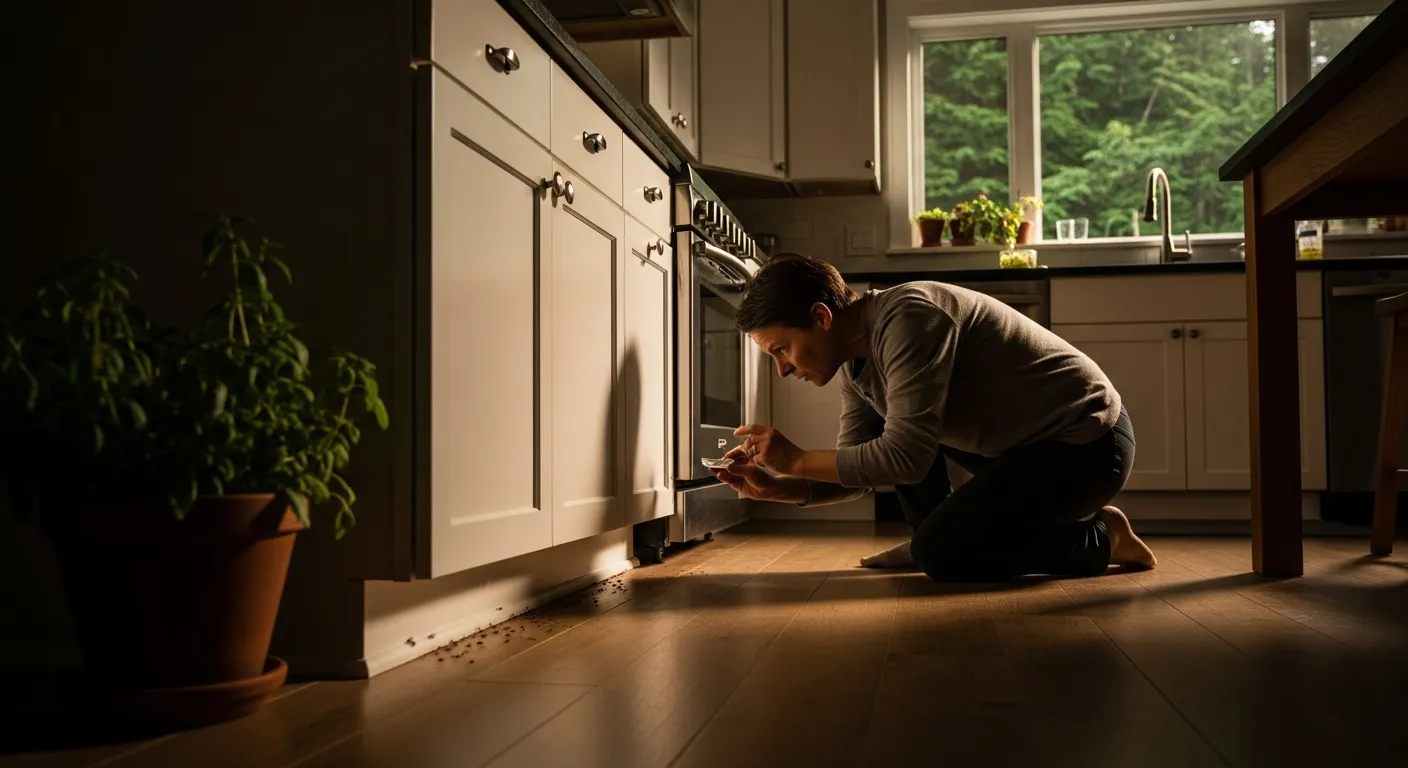
Ants are fascinatingly efficient. When a scout ant finds a food source, it returns to the colony, leaving behind an invisible chemical trail of pheromones for others to follow. According to recent reports, disrupting this pheromone trail is the key to stopping the invasion. To win, you must find this ant superhighway and shut it down. Don’t just wipe up the ants you see; take a moment to watch them. How are they getting in, and where are they going?
Follow the trail from the food source—that sticky spot of jam on the counter, the sink drain, the pet food bowl, or the trash can—back to its origin. You’re looking for the point where they enter your home. Check these common entry points carefully:
- Cracks in window sills or door frames.
- Gaps around plumbing pipes under the sink.
- Tiny crevices along baseboards.
- Behind electrical outlets.
Even in the cleanest kitchens, ants can find their way to overlooked spots. The silverware drawer, for instance, is a surprising hotspot for crumbs and can become an ant magnet. Be patient and thorough. Finding their entry point is essential for both eliminating the current trail and preventing future ones.
Your DIY Toolkit: Family-Friendly Solutions to Reclaim Your Kitchen
Now that you’ve done your reconnaissance, it’s time to take action. The best approach is a multi-step strategy that cleans up the current mess, eliminates the colony at its source, and sets up defenses to prevent a future invasion. These methods are simple, effective, and use ingredients you likely already have or can easily find.
Step 1: Erase the Trail and Remove the Invitation
Just squashing the ants you can see is not the solution. You have to eliminate that invisible pheromone trail they’ve left behind. The good news is, you don’t need harsh chemicals to do it. A simple and safe solution of 50/50 white vinegar and water in a spray bottle works wonders. The vinegar’s acidity destroys the pheromone trail, confusing the ants and preventing others from following. Spray the entire path you identified, from the food source back to the entry point. Wipe it clean, then spray and wipe the surrounding areas for good measure.
Next, remove their reason for visiting. Conduct a deep clean of your kitchen, paying special attention to sources of food and water. Seal all food—especially sugar, honey, and cereal—in airtight containers. Wipe down countertops, sweep the floor, and don’t forget to clean under appliances. Clean your pet’s food bowls regularly and avoid leaving pet food out overnight. Finally, take out the trash daily to remove any lingering temptations.
Step 2: The Ultimate Solution: A DIY Bait to Target the Colony
While repellent sprays kill ants on contact, they only deal with a tiny fraction of the colony. The most effective long-term strategy is to use a slow-acting bait. Worker ants will carry the bait back to the nest, believing it’s food. They then share it with the rest of the colony, including the queen. This eliminates the entire colony from the inside out, stopping the cycle for good. Making your own is incredibly easy and effective.
What You’ll Need:
- 1/2 cup sugar
- 1 1/2 tablespoons Borax (found in the laundry aisle)
- 1 1/2 cups warm water
- Cotton balls
- Small, shallow containers (like bottle caps or small lids)
Instructions:
- Mix the sugar and Borax in a bowl until thoroughly combined.
- Slowly add the warm water and stir until both the sugar and Borax have completely dissolved.
- Soak several cotton balls in the mixture until they are fully saturated.
- Place the cotton balls in the containers.
- Position the containers near the ant trails you identified, but make sure to keep them well out of reach of children and pets. Borax is a natural mineral, but it can be harmful if ingested.
You’ll likely see more ants at first as they swarm the bait—this is a good sign! It means they’re taking it back to the nest. Resist the urge to spray them. Within a week or two, you should see the ant traffic disappear completely. For more information on home maintenance, check out our other cleaning and repair articles.
Natural Repellents to Guard the Gates
Once the bait has done its job and the ants are gone, the final step is to set up a perimeter defense to prevent them from returning. Natural repellents are great for this, as they create barriers that ants are unwilling to cross. Many effective options are likely already in your pantry.
Simple items can be powerful deterrents. Try drawing a thick line with chalk at entry points; the calcium carbonate disrupts their ability to follow pheromone trails. You can also sprinkle cinnamon or spread used coffee grounds near cracks and doorways where ants enter. Wiping down window sills and baseboards with lemon juice or a cloth dabbed with peppermint essential oil can also create a scent barrier that ants will avoid.
When to Call for Backup: Knowing Your DIY Limits
While DIY methods are fantastic for common ant issues, some situations are too serious to handle on your own. Knowing when to put down the spray bottle and pick up the phone to call a professional is just as important as knowing how to mix your own bait. This is especially true when you suspect you might be dealing with a more destructive pest.
Signs Your Ant Problem is More Than a Nuisance
It’s important to distinguish between a minor annoyance and a full-blown infestation that could be signaling a bigger problem. The following table can help you decide on the best course of action.
| Situation | Your DIY Approach | When to Call a Professional |
| A few scout ants | Wipe them up with a vinegar solution and check for spills. | Not yet necessary. Monitor the area. |
| A persistent trail of small, dark ants | Use the DIY Borax bait and clean the area thoroughly. | If the bait doesn’t stop the trail after a week or two. |
| Large black ants seen in the kitchen | Try to identify if they are carpenter ants. Place bait, but monitor closely. | Immediately. These could be carpenter ants, and it’s crucial to get a professional inspection. |
| Finding small piles of fine sawdust | This is a major red flag for carpenter ant activity (this is called frass). | Call immediately. This indicates an active nest and potential structural damage. |
Why Carpenter Ants Require a Professional
If you see signs of carpenter ants, it’s time to call for backup. Their presence signals a hidden colony, potentially inside your walls, floors, or ceilings, where they are actively damaging your home’s structure. This is not a DIY-level problem.
For a problem this serious, especially with the risk to your home’s integrity, a professional assessment is non-negotiable. This is when you need local experts who understand the specific challenges of our Portland climate. Professional Portland pest control services have the skills to find the main colony and satellite nests. Companies like Aptive Pest Control implement effective, long-term solutions that eliminate the entire infestation and protect your home’s value, giving you peace of mind that a DIY solution simply can’t offer.
An Ant-Free Kitchen for Good
Dealing with ants can feel like a never-ending battle, but with the right strategy, you’re now equipped to take back your kitchen. The core strategy is simple and effective: identify the type of ant invading your space, find and destroy their chemical trail, use a slow-acting bait to eliminate the colony at its source, and finally, create natural barriers to prevent their return. This method moves beyond temporary fixes and addresses the root of the problem.
By focusing on the colony instead of just the scouts, you can solve the problem for good. And for those bigger battles, especially with destructive pests like carpenter ants, you know exactly when to call in the pros. Here’s to a clean, clear, and peaceful kitchen!