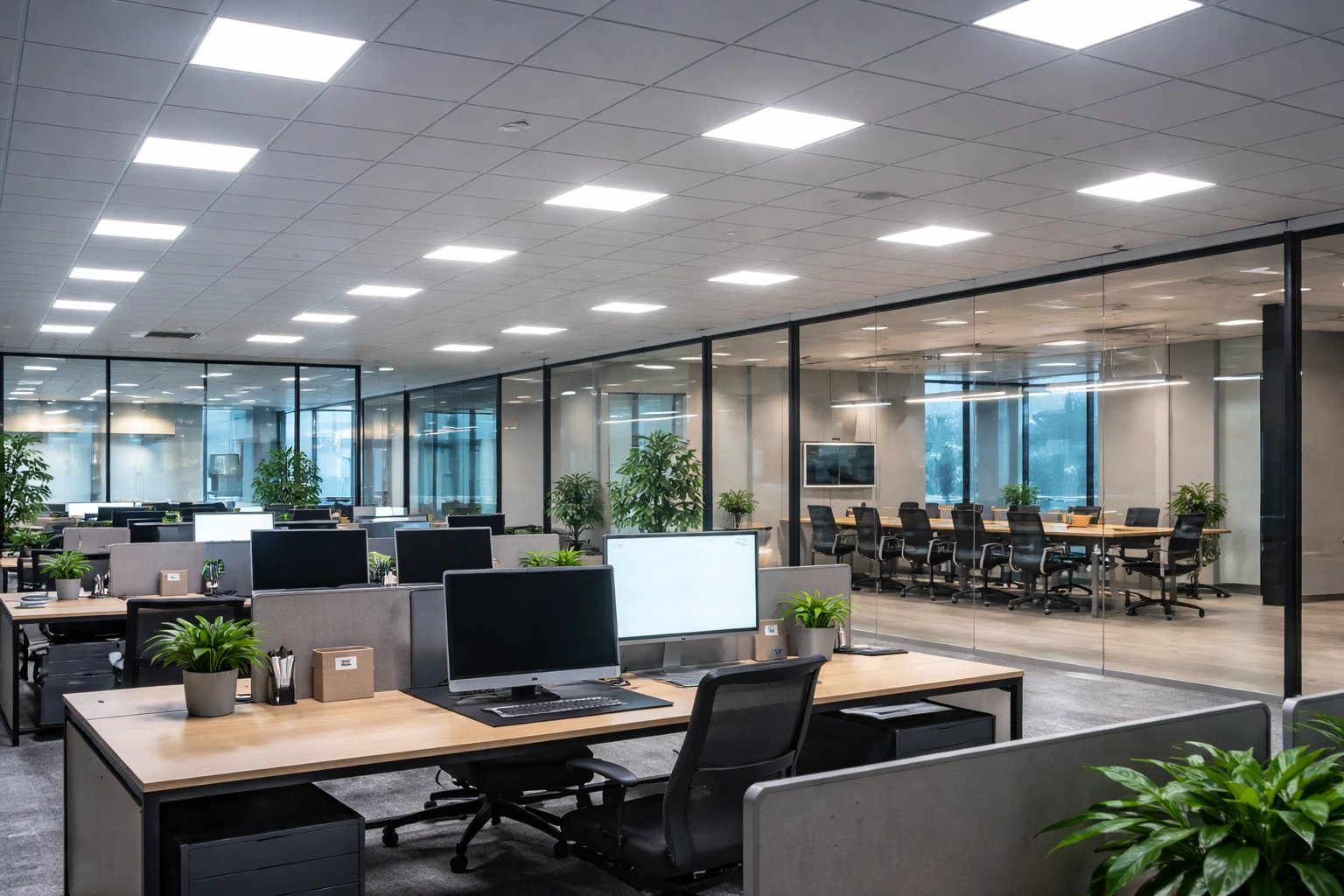
Lighting is the energy cost item with the greatest potential for control in a commercial property. Typically, it accounts for 20 to 40 percent of the total electricity use, depending on the type of building and the hours of its operation. Property owners and facility managers a) looking for significant cuts in their operating costs b) would naturally turn their attention to lighting infrastructure first as the component that can give them real, measurable returns.
Low-voltage commercial lighting systems are often discussed as if they were a niche technology while the reality is they are a mature, well-proven solution being implemented in office buildings, retail spaces, warehouses, and hospitality properties.
The main idea behind this is very simple. Conventional line, voltage lighting systems get their power directly from the main line at 120V or 277V. Low-voltage lighting systems on the other hand use 12V or 24V, and transformers (or drivers) are used to step down the voltage that goes to the fixtures. The combination of the lower operating voltage and LED light sources that are specifically designed to perform very well at those levels allows for considerable efficiency improvements, and a commercial property that lights up thousands of square feet for 10 to 16 hours a day can bank a large amount of money by turning efficiency gains into savings dollars.
Smart Controls Multiply the Savings
Low-voltage systems have a distinct advantage in the area of integration with smart lighting controls, and this is how the energy savings story becomes genuinely interesting. Since low-voltage systems are powered by DC and revolve around electronic drivers, they can seamlessly work with occupancy sensors, daylight harvesting systems, time-based scheduling, and networked building management platforms.
What would be a very complicated and costly control infrastructure to put in place for line, voltage systems can be done quite easily with low, voltage architecture. Occupancy-based controls alone, in general, can lead to a reduction in lighting energy use by 20 to 40 percent in spaces with variable occupancy, such as conference rooms, restrooms, storage areas, and corridors that normally don’t get continuous use.
In areas suitable for this application, daylight harvesting — which lowers artificial lighting as it senses the availability of natural light near windows and skylights is another effective way of saving energy. According to the U.S. Department of Energy, commercial buildings that combine LED lighting with smart controls can reduce lighting-related energy consumption by up to 75 percent compared to conventional systems, a figure that underscores just how much value the controls layer adds on top of an already efficient base system.
Real-World Payback and Financial Considerations
The financial case of low-voltage commercial lighting basically boils down to three numbers: installation cost, energy savings, and payback period. Installation costs have dropped significantly as the technology has developed and the manufacturers have become more competitive.
In most commercial retrofit scenarios, payback periods ranging from three to six years are normal, and a lot of projects are turning out to be even quicker when utility rebates are included in the calculation. Paying back the loan is just the start, then the savings accumulate through the lifetime of the system, which for a quality LED fixture is usually between 15 and 25 years, and that’s a substantial net positive cash flow over the asset’s operational life.
Utility rebates certainly merit a closer look as they are often claimed to be underutilized. The majority of commercial utility programs provide a good number of rebates to the most efficient lighting upgrades, and in many cases these rebates can be used to cover 20 to 40 percent of the total costs of the project, which leads to a great improvement in payback period. Rebates programs are not that easy to navigate; there is usually some required effort with documentation, pre-approval processes, and specific equipment requirements but the financial impact is worth it for any project that has some scale.
Companies like Touchstone Commercial specialize in helping property owners work through this financial analysis and implementation process, handling everything from initial energy audits to rebate processing and installation management. Having a partner who understands both the technical specifications and the financial optimization side of commercial lighting projects tends to produce better outcomes than managing the process piecemeal.
Choosing the Right System for Your Property Type
It’s pretty clear that the simple answer: “Use low-voltage lighting” is not a straightforward solution for most commercial spaces, and it takes matching the system to the space’s specific requirements for a successful outcome both from performance and economic standpoints. Apart from fixtures specifications, controls strategies, and installation methods that give the greatest value, the latter are totally different needs of warehouses and industrial sites as compared to retail environments or Class A office buildings.
High bay applications in warehouse and manufacturing plants normally get the greatest advantage from LED systems that can replace metal halide or high-pressure sodium fixtures, where the difference in wattage is largest and the savings in maintenance costs are estimated to be the most significant.
Office environments generally put color rendering quality and tunable white capability, along with efficiency at the top of their priority list because these two components of light have the biggest impact on occupant productivity and wellbeing that tenants care about. Retail is all about havingthe right colors plus the capability to effectively merchandise highlights, which nicely low, voltage LED solutions accomplish while at the same time providing the efficiency benefits.
FAQs
Low-voltage commercial lighting uses 12V or 24V power stepped down from the main electrical line through transformers or drivers. It is typically paired with LED fixtures designed for high efficiency at lower voltage levels.
It consumes less power per fixture and works efficiently with LED technology, lowering total electricity usage across large commercial spaces.
When combined with smart controls, businesses can reduce lighting-related energy consumption by up to 75% compared to conventional systems.
Smart controls include occupancy sensors, daylight harvesting systems, scheduling tools, and networked building management systems that optimize when and how lights operate.
They automatically turn lights off or dim them in unoccupied areas, reducing lighting energy use by 20 to 40 percent in variable-use spaces.
Daylight harvesting adjusts artificial lighting levels based on available natural light, cutting unnecessary electricity use near windows and skylights.
Most commercial projects see payback within three to six years, often faster when utility rebates are applied.
Yes, many utility programs offer rebates that can cover 20 to 40 percent of project costs, improving return on investment.
Yes, but the system design must match the property type, whether it’s a warehouse, office, retail store, or hospitality space.
Yes, quality LED fixtures typically last 15 to 25 years, significantly lowering replacement and maintenance expenses over time.