For homeowners craving beautiful outdoor spaces without endless mowing, pruning, and watering, gravel-based landscaping offers a stylish, practical solution. Gravel delivers texture, color, and structure all with minimal upkeep. Whether you’re crafting a serene retreat, a functional walkway, or a drought-resistant garden, gravel can transform your yard into a modern, low-maintenance oasis.
Why Choose Gravel for Landscaping?
Gravel is one of the most versatile and cost-effective materials for outdoor design. It works in every climate, complements a wide variety of architectural styles, and can be customized for any purpose from decorative borders to entire patios.
Key Benefits of Using Gravel
- Low Maintenance: Gravel never needs mowing or fertilizing, and it naturally suppresses weeds when used with a weed barrier.
- Excellent Drainage: Ideal for areas prone to pooling water or heavy rainfall.
- Budget-Friendly: Less expensive than concrete, brick, or stone while still delivering stunning aesthetics.
- Eco-Friendly: Gravel allows water to permeate into the soil, reducing runoff and erosion. In fact, the U.S. Environmental Protection Agency (EPA) highlights that permeable paving systems, when properly designed, help manage stormwater by letting water infiltrate rather than run off.
- Design Flexibility: With a wide range of colors, sizes, and textures, gravel suits both rustic and modern landscapes.
1. Gravel Pathways and Walkways
A gravel pathway instantly adds charm and direction to your landscape. Unlike poured concrete, it’s easy to install and repair. Crushed granite, pea gravel, and decomposed granite are popular choices due to their compact nature and smooth texture.
Tips for Creating a Durable Gravel Path:
- Mark your desired path and excavate a few inches of soil.
- Lay down landscape fabric to block weeds.
- Add a base layer of coarse gravel for stability.
- Top it off with finer gravel or decorative stones for comfort and style.
Design Ideas:
- Line the path with solar lights or pavers for a modern edge.
- Use larger stones on borders for contrast.
- Create winding shapes that draw the eye through your garden.
2. Gravel Driveways That Stay Beautiful
Gravel driveways are durable, permeable, and perfect for rural or modern minimalist homes. They provide excellent drainage and are less prone to cracking compared to asphalt or concrete.
Best Types of Gravel for Driveways:
- Crushed Granite: Dense and compactable.
- Pea Gravel: Rounded and decorative, though may shift more easily.
- Quarry Process Stone: A blend of crushed stone and dust for extra firmness.
Pro Tip:
Use edging materials like steel strips, cobblestones, or wood ties to contain the gravel and maintain clean lines. Refresh the top layer every few years to maintain texture and appearance.
3. Gravel Patios for Easy Outdoor Living
A gravel patio gives you the feel of a Mediterranean courtyard — perfect for relaxing under string lights or hosting evening gatherings. It’s one of the easiest hardscaping projects to install and maintain.
How to Build a Gravel Patio:
- Choose a flat area and remove the topsoil.
- Add landscape fabric and a 2-3 inch layer of crushed gravel.
- Rake it smooth and tamp it down for stability.
- Add outdoor furniture, planters, or a fire pit for atmosphere.
Styling Ideas:
- Mix grey or white gravel with dark metal furniture for a sleek modern aesthetic.
- Use warm-toned pea gravel with terracotta planters for a Mediterranean vibe.
- Define zones using different gravel colors or border stones.
4. Gravel Mulch in Garden Beds
If you’re tired of refreshing wood mulch every year, gravel mulch is your solution. It regulates soil temperature, reduces evaporation, and prevents weed growth while looking neat all year round.
Best Uses for Gravel Mulch:
- Around succulents, cacti, or Mediterranean herbs like lavender and rosemary.
- In xeriscape or drought-tolerant gardens.
- Along pathways or borders for added visual definition.
Bonus Tip:
Choose smaller gravel around delicate plants and larger stones for areas with heavy rain to avoid splashing dirt on leaves.
5. Xeriscaping with Gravel
Xeriscaping is the art of creating a water-efficient landscape — often achieved with gravel, drought-tolerant plants, and strategic layout. This approach is especially valuable in regions with water restrictions or hot climates. The U.S. Department of Energy provides guidance on “Landscaping for Water Conservation,” emphasising irrigation efficiency, limiting turf areas, improving soil, and using mulches all applicable to gravel-based designs.
Core Principles of Gravel Xeriscaping:
- Efficient Design: Group plants by water needs.
- Soil Improvement: Use compost or sand to promote drainage.
- Gravel Mulch: Retains moisture and reduces evaporation.
- Native Plants: Opt for species that thrive naturally in your area.
Plant Pairings that Thrive with Gravel:
- Agave, yucca, and sedum for structure.
- Lavender, sage, and ornamental grasses for fragrance and movement.
- Cacti and succulents for ultra-low maintenance beauty.
6. Gravel Around Trees and Shrubs
Instead of grass or bark mulch around trees, consider a gravel base. It keeps the root zone cool, prevents compaction, and avoids the maintenance of trimming around trunks.
Installation Tip:
Leave a few inches between the tree base and gravel edge to allow airflow and prevent rot. Choose natural-colored stones that complement the bark and leaves.
7. Decorative Gravel Features
Gravel isn’t just practical it’s a design element in itself. You can use it to craft focal points or define spaces with texture and contrast.
Creative Decorative Ideas:
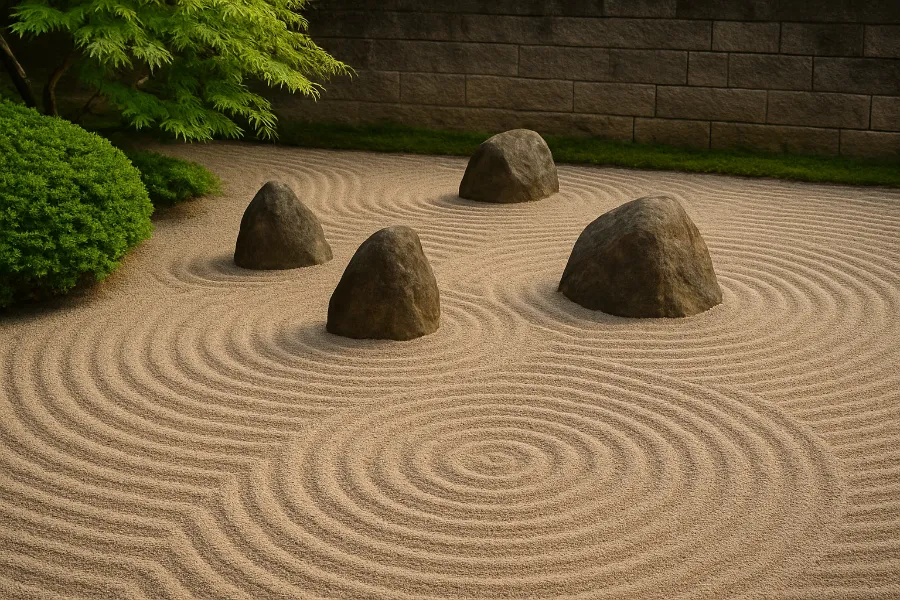
- Zen Garden: Rake fine gravel into rippling patterns for a tranquil effect.
- Gravel Borders: Outline flower beds, patios, or driveways.
- Rock Gardens: Combine gravel with boulders and drought-resistant plants.
- Dry Creek Bed: Simulate a stream using varying sizes of gravel and stones for natural drainage.
8. Combining Gravel with Other Materials
To elevate the look of your gravel landscape, blend it with other materials for contrast and structure. Mixing mediums can create visual interest while keeping maintenance low.
Top Material Combinations:
- Gravel + Pavers: Frame gravel with stepping stones or concrete pavers for structured elegance.
- Gravel + Wood: Use wooden decking or borders to warm up the color palette.
- Gravel + Plants: Create visual rhythm with bursts of greenery between gravel areas.
Design Insight:
Neutral gravel tones like grey and beige pair beautifully with rich wood stains and deep green foliage, while white gravel enhances modern minimalist spaces.
9. Gravel Fire Pit Zones
Nothing defines an outdoor gathering space like a fire pit surrounded by gravel. It’s functional, visually appealing, and prevents sparks from igniting grass or wood decking.
Steps to Create a Gravel Fire Pit Area:
- Clear and level your chosen area.
- Add a thick layer of compactable gravel.
- Set a fire ring or built-in stone pit at the centre.
- Surround with Adirondack chairs or benches.
Safety Tip:
Always use non-flammable edging materials like stone or steel, and keep a safe distance between the pit and any structures or trees.
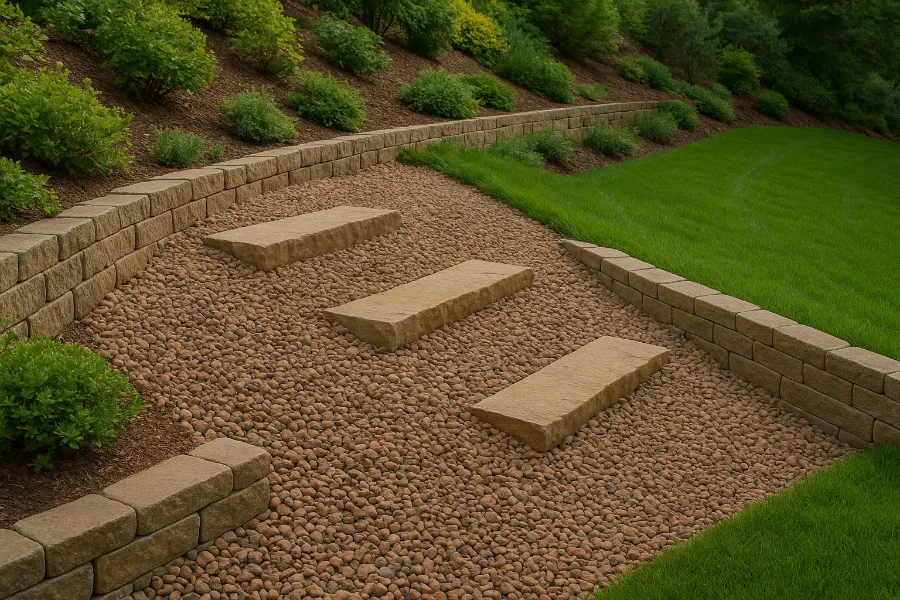
10. Gravel Courtyards for Minimalist Homes
A gravel courtyard evokes the charm of European villas or Japanese-inspired designs. These spaces often require little more than occasional raking to stay pristine.
Styling Touches:
- Add planters with bamboo or ornamental grasses.
- Use clean lines and neutral gravel shades for a modern touch.
- Integrate stepping stones leading to a central seating area or sculpture.
Gravel courtyards can be peaceful retreats or welcoming entryways — both elegant and simple to maintain.
11. Pet-Friendly Gravel Landscaping
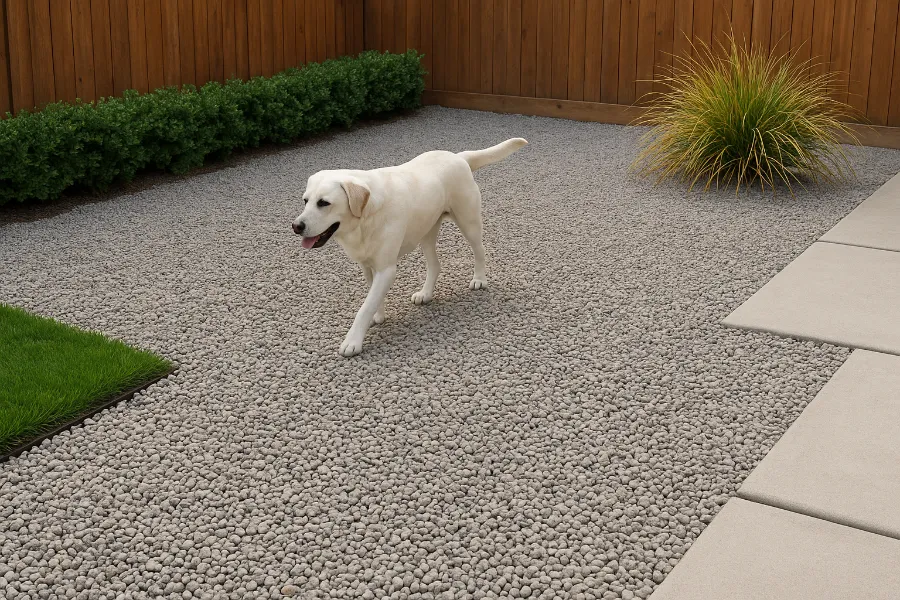
Pet owners can benefit from gravel landscapes that are easy to clean and resistant to wear. Certain gravel types, such as pea gravel, are gentle on paws and perfect for creating pet play zones or potty areas.
Quick Tips:
- Avoid sharp stones like crushed limestone.
- Install a weed barrier for easy cleanup.
- Choose medium-sized gravel that doesn’t cling to fur or track indoors.
12. Erosion Control and Sloped Areas
Gravel is a powerful ally in managing slopes and erosion-prone zones. Its natural drainage properties help control runoff while adding stability and texture.
Design Ideas:
- Use layered gravel with larger stones at the base and smaller ones on top.
- Create terraced sections with retaining walls and gravel pathways.
- Integrate native plants for additional root support.
13. Gravel for Small Spaces and Courtyards
Even the tiniest backyard or urban patio can shine with gravel. Its light-reflecting qualities make small spaces feel larger and more open.
Best Ideas for Small Areas:
- Use light-coloured gravel to brighten shaded spaces.
- Add tall potted plants or vertical gardens for dimension.
- Create mini sitting areas or reading nooks surrounded by gravel.
14. Maintaining Your Gravel Landscape
While gravel is famously low maintenance, a few small efforts will keep your outdoor spaces looking immaculate year-round.
Simple Maintenance Routine:
- Rake Regularly: Smooth footprints and redistribute stones.
- Weed Prevention: Use pre-emergent weed control or remove growth manually.
- Top Off Occasionally: Add new gravel layers every 1–2 years.
- Clean Up: Hose down dusty areas and sweep gravel away from patios or walkways.
Pro Tip:
Choose darker gravel in high-traffic zones — it hides dirt and footprints better than lighter varieties.
15. Choosing the Right Gravel for Your Landscape
Different gravel types offer different aesthetics and functions. Selecting the right one ensures durability and harmony with your overall design.
| Type of Gravel | Best For | Texture | Maintenance Level |
|---|---|---|---|
| Pea Gravel | Walkways, patios | Smooth, rounded | Low |
| Crushed Granite | Driveways, paths | Angular, compact | Very low |
| River Rock | Borders, water features | Smooth, varied sizes | Low |
| Decomposed Granite | Modern gardens, paths | Fine, compactable | Very low |
| Lava Rock | Decorative, planters | Porous, lightweight | Low |
Bringing It All Together
Gravel is more than filler — it’s a foundation for a lasting, eco-friendly landscape that thrives with minimal care. Whether you’re transforming a front yard, courtyard, or sprawling garden, gravel invites simplicity, beauty, and sustainability.
From modern minimalist walkways to lush, Mediterranean-inspired courtyards, gravel adapts to any vision you have for your home. Combine it with the right plants, lighting, and borders, and you’ll have a space that looks elegant and stays easy to maintain year after year.
FAQs
Gravel requires minimal upkeep—no mowing, watering, or fertilizing—making it an easy, long-lasting choice for outdoor spaces.
Yes. Using landscape fabric under gravel helps block sunlight and stops weed growth effectively.
Pea gravel and decomposed granite work best for walkways because they’re smooth underfoot and easy to compact.
Install edging materials such as metal strips, pavers, or wooden borders to keep gravel neatly contained.
Absolutely. Gravel allows rainwater to pass through easily, reducing runoff and preventing puddles.
Yes. Gravel mulch conserves moisture, controls weeds, and protects roots from extreme temperatures.
Most gravel surfaces only need topping off every 1–2 years to maintain depth and color.
Lighter-colored gravel reflects heat better than darker types, making it cooler to walk on during hot days.
Definitely. Gravel pairs beautifully with wood, stone, or concrete for modern, textured designs.
Yes. Gravel is permeable, supports stormwater drainage, and reduces the need for water-intensive lawns.