Learning how to store scooters in a garage sounds simple—until you’re tripping over handlebars, scraping walls, or playing scooter Tetris every time you park your car. I’ve seen garages that look calm and functional… and others that feel like a scooter ambush waiting to happen.
The difference isn’t garage size.
It’s storage strategy.
Scooters, whether for kids, commuters, or electric riders, take up awkward space. They’re tall. They tip over easily. And they never seem to fit neatly next to anything else. But with the right approach, scooters can disappear into your garage layout without chaos, clutter, or damage.
This guide walks through exactly how to store scooters in a garage the smart way. Not theory. Not fluff. Just practical solutions that work in real homes.
Why Proper Scooter Storage Matters More Than You Think
Scooters don’t just clutter a garage.
They create friction.
Leaning scooters fall over.
Loose scooters block walkways.
Electric scooters get damaged by poor storage conditions.
Over time, bad storage leads to:
- Bent handlebars
- Scratched decks
- Battery issues (for electric models)
- Frustration every time someone needs to grab one
Good storage fixes all of that. It protects your investment and makes the garage easier to live with.
And yes, scooters are an investment now. Some cost as much as a decent bicycle or appliance.
Start With Your Garage, Not the Scooter
Before choosing hooks, racks, or DIY builds, pause.
Ask three questions:
- Where do people walk most often?
- Which walls are underused?
- How much vertical space is going unused?
Most garages have more vertical space than floor space. That’s your opportunity.
Quick Garage Assessment Checklist
- Measure wall height and ceiling clearance
- Identify obstructions (doors, windows, electrical panels)
- Note weight limits for drywall vs studs
- Confirm clearance for cars and doors
This step saves money. It prevents buying storage that doesn’t fit or function.
Not All Scooters Store the Same Way
Understanding what kind of scooter you’re storing is critical.
Common Scooter Types
- Kids’ kick scooters – lightweight, narrow decks
- Adult commuter scooters – heavier, longer handlebars
- Electric scooters – weight + battery considerations
- Folding scooters – flexible storage options
- Non-folding scooters – need fixed space
Electric scooters especially demand better planning. Weight matters. Heat matters. Battery access matters.
One-size-fits-all storage almost never works.
Floor Storage: Simple, But Not Always Smart
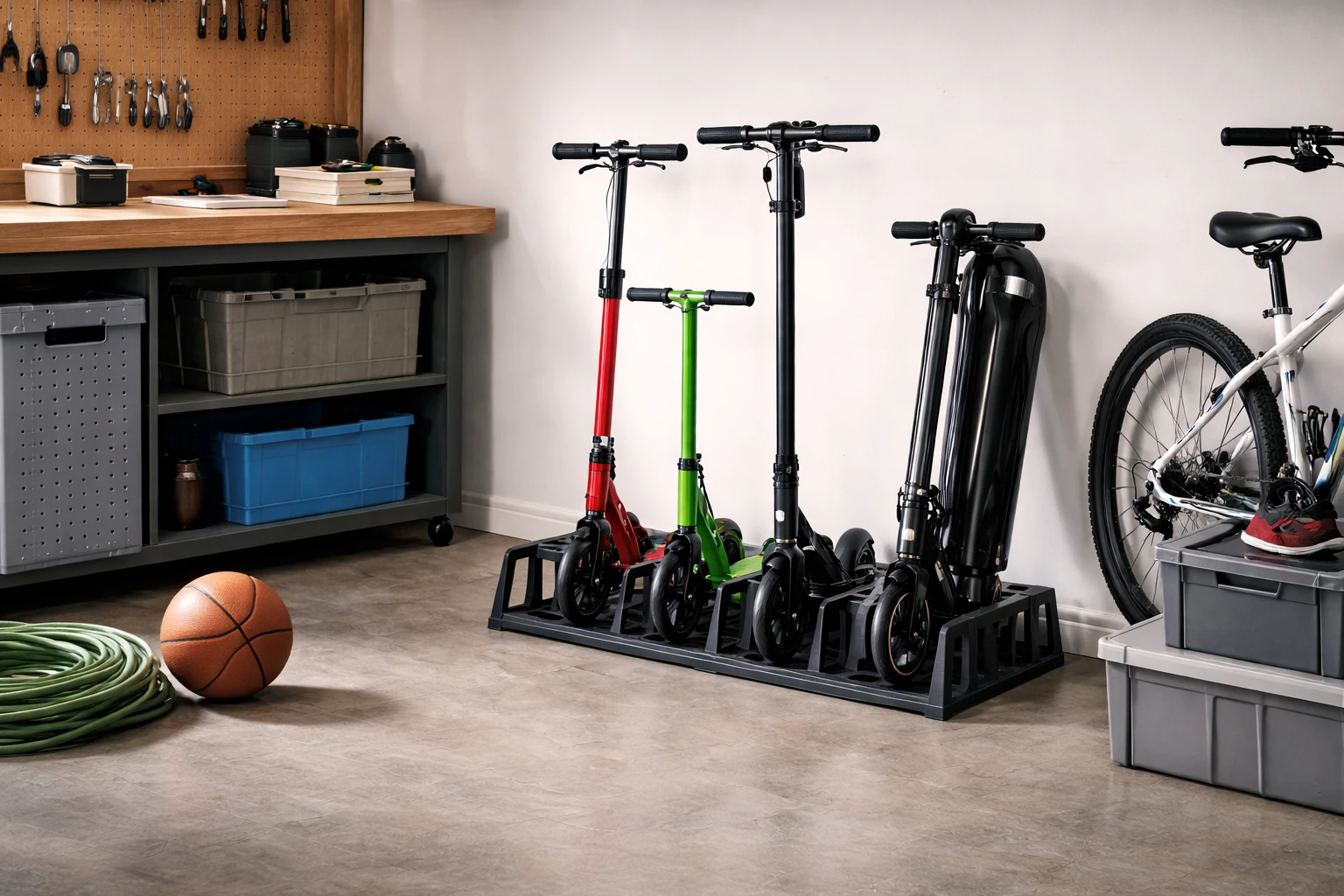
Floor storage feels intuitive. You roll the scooter in and lean it against a wall.
It works. Until it doesn’t.
When Floor Storage Makes Sense
- Small kids’ scooters
- Temporary storage
- Garages with excess floor space
Better Floor Storage Options
- Scooter stands that hold the front wheel upright
- Multi-scooter racks for families
- DIY parking rails using wood or metal guides
Pros
- No drilling required
- Easy access
- Budget-friendly
Cons
- Takes up valuable floor space
- Scooters still get knocked over
- Not ideal for tight garages
If you’re serious about learning how to store scooters in a garage efficiently, floor storage should be a starting point—not the end goal.
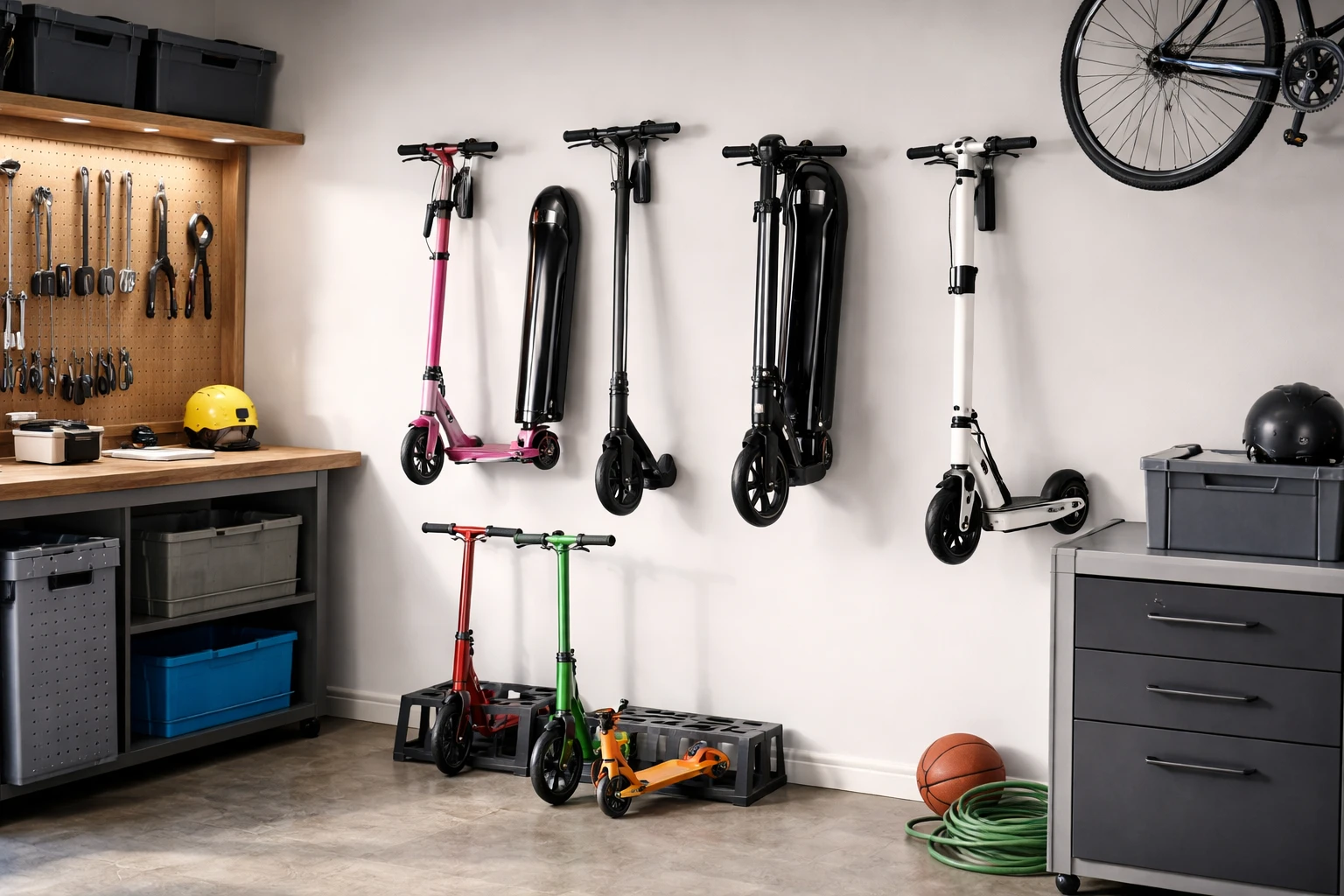
Wall-Mounted Storage: The Sweet Spot for Most Garages
Wall storage is where garages start to feel organized.
And calm.
Popular Wall Storage Options
- Vertical hooks (front wheel or deck)
- Horizontal wall brackets
- Adjustable rail systems
Vertical storage is the most space-efficient for scooters. It keeps decks off the ground and clears walkways instantly.
Installation Tips That Matter
- Mount into studs whenever possible
- Use heavy-duty anchors for drywall
- Leave space between scooters to avoid handlebar tangling
- Install at varying heights for kids vs adults
Wall-mounted systems work especially well when storing multiple scooters in one garage.
Ceiling Storage: Maximum Space, Maximum Caution
Ceiling storage is powerful. It’s also easy to do wrong.
When Ceiling Storage Works
- Lightweight scooters
- High garage ceilings
- Long-term or seasonal storage
Common Ceiling Solutions
- Overhead hooks
- Pulley hoist systems
- Hybrid bike-and-scooter mounts
What to Watch Out For
- Door clearance
- Weight limits
- Ease of access
If you have to wrestle a scooter down every time, you’ll stop using the system. Storage should reduce effort, not increase it.
Folding Scooters Change Everything
Folding scooters unlock options that non-folding models don’t.
Once folded, scooters can be:
- Stored on shelves
- Placed inside cabinets
- Slid under workbenches
This is especially useful in shared garages.
Smart Folding Scooter Storage Ideas
- Garage shelving units
- Lockable metal cabinets
- Under-shelf hanging hooks
Electric folding scooters benefit most from cabinet storage, especially in dusty or humid garages.
How to Store Electric Scooters in a Garage Safely
Electric scooters are different. Full stop.
They’re heavier.
They contain lithium batteries.
They react poorly to heat, moisture, and neglect.
Key Electric Scooter Storage Rules
- Store in a dry, ventilated area
- Avoid direct sunlight
- Don’t store near flammable materials
- Charge away from clutter
Battery Best Practices
- Store at 30–80% charge for long-term storage
- Avoid extreme temperatures
- Use manufacturer-approved chargers only
A wall-mounted charging station works beautifully here. Clean. Safe. Organized.
If you’re researching how to store scooters in a garage, electric models deserve their own plan.
DIY Scooter Storage Ideas That Actually Work
DIY doesn’t mean sloppy. It means intentional.
Proven DIY Options
- PVC pipe racks for kids’ scooters
- Pegboard systems with adjustable hooks
- Repurposed bike racks with deck supports
- Custom wood wall mounts
DIY shines when:
- You’re storing multiple scooters
- Kids need easy access
- Budget matters
Just don’t cut corners on anchors or weight limits. Ever.
Organizing Multiple Scooters in One Garage
This is where most garages fail.
One scooter is easy.
Four scooters? That’s strategy.
Family-Friendly Organization Tips
- Assign each scooter a “home”
- Mount kids’ scooters lower
- Group by size or rider
- Combine scooter and bike zones
Color-coded hooks or labels help kids put scooters back where they belong. And yes, that matters.
Protecting Scooters During Long-Term Storage
Storing scooters for weeks or months requires prep.
Pre-Storage Checklist
- Clean decks and wheels
- Dry thoroughly
- Check tire pressure
- Remove accessories
Long-Term Protection Tips
- Use wall storage to prevent tire flat spots
- Apply light rust protection to metal parts
- Cover electric scooters loosely (not airtight)
Good storage extends scooter life. Period.
Common Scooter Storage Mistakes to Avoid
These mistakes cost money.
And patience.
- Leaning scooters against walls
- Hanging scooters by handlebars alone
- Blocking garage exits
- Overloading drywall anchors
- Ignoring electric battery safety
If a storage method feels unstable, it probably is.
Choosing the Right Storage for Your Garage Setup
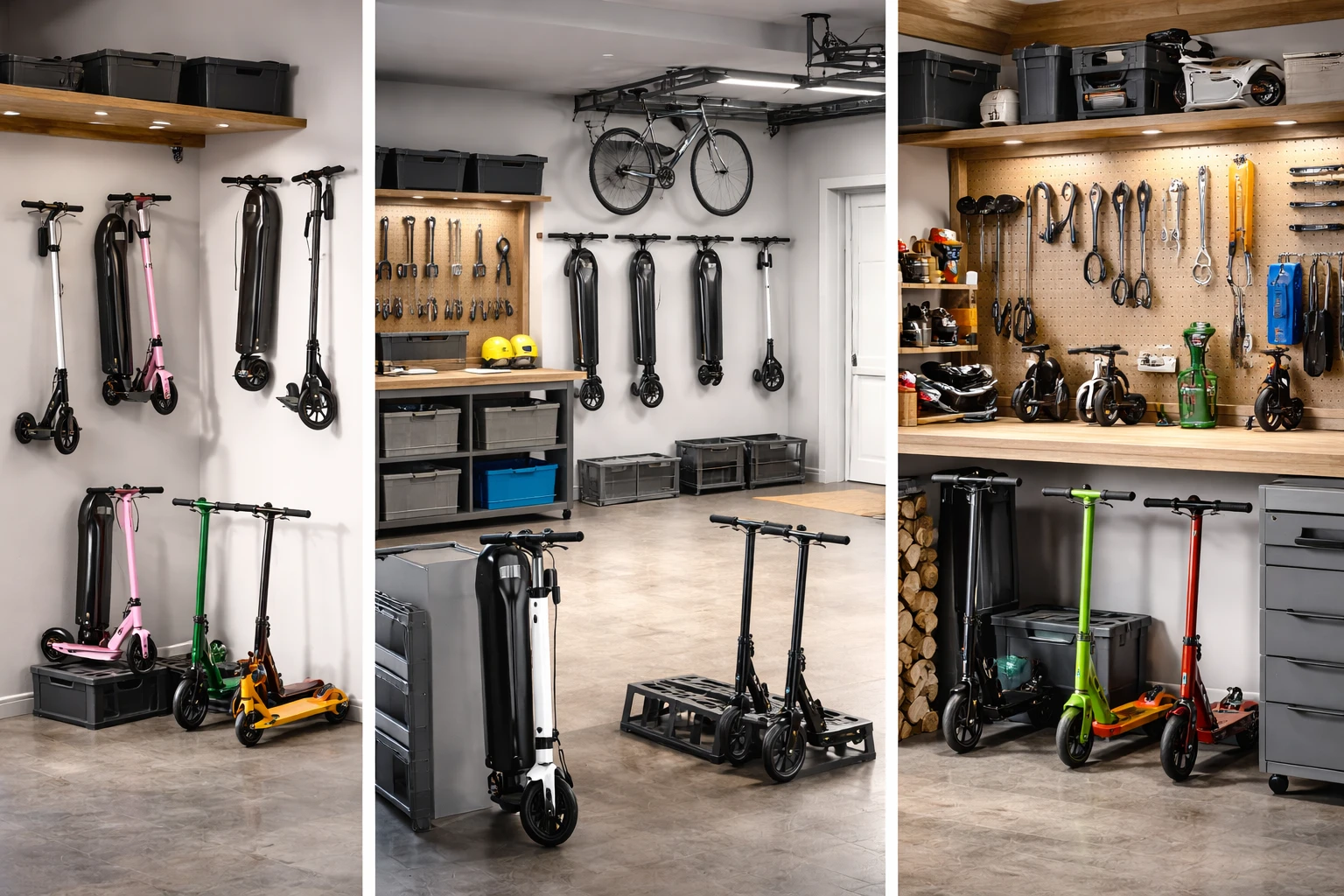
No two garages are identical.
Small Garage
- Vertical wall hooks
- Folding scooter shelving
- Minimal floor storage
Shared Garage
- Assigned zones
- Adjustable wall rails
- Multi-use racks
Workshop Garage
- Wall-mounted storage near tools
- Foldable systems for flexibility
Detached garages offer more freedom, but the same principles apply.
Cost Breakdown: What Scooter Storage Really Costs
| Storage Type | Typical Cost | Best For |
| Floor stands | $15–$40 | Single scooters |
| Wall hooks | $10–$30 | Most garages |
| Rail systems | $50–$150 | Multiple scooters |
| Ceiling hoists | $40–$120 | Seasonal storage |
| DIY builds | $20–$80 | Budget setups |
Spend money where safety matters. Save where access doesn’t.
Maintenance and Safety Tips That Pay Off
Storage isn’t “set it and forget it.”
Check mounts quarterly.
Inspect hooks and anchors.
Adjust heights as kids grow.
A well-stored scooter is easier to use. And more likely to be used.
Final Thoughts: A Garage That Works With You
Learning how to store scooters in a garage isn’t about perfection. It’s about intention.
When scooters have a place, the garage feels calmer. Safer. More functional.
And that feeling matters more than people admit.
Choose storage that fits your space. Respect the weight. Think vertically. And don’t settle for clutter just because scooters are “temporary.”
They never are.
FAQs
Wall-mounted vertical hooks are usually the most space-efficient and safest way to store scooters in a garage.
Yes, but floor storage works best with dedicated scooter stands to prevent tipping and wasted space.
Wall storage is safe for electric scooters when mounted into studs and rated for the scooter’s full weight.
Most scooters need about 12–18 inches of horizontal wall space when stored vertically.
Ceiling storage works for lightweight scooters but is better suited for long-term or seasonal storage.
Folding scooters can be stored on shelves, inside cabinets, or under workbenches to save space.
Yes, as long as the garage is dry, well-ventilated, and not exposed to extreme heat or cold.
Use vertical wall storage with staggered heights and assign each scooter a designated spot.
Yes, cleaning scooters before storage helps prevent rust, dirt buildup, and long-term damage.
Avoid leaning scooters against walls, overloading drywall anchors, and blocking walkways or exits.