
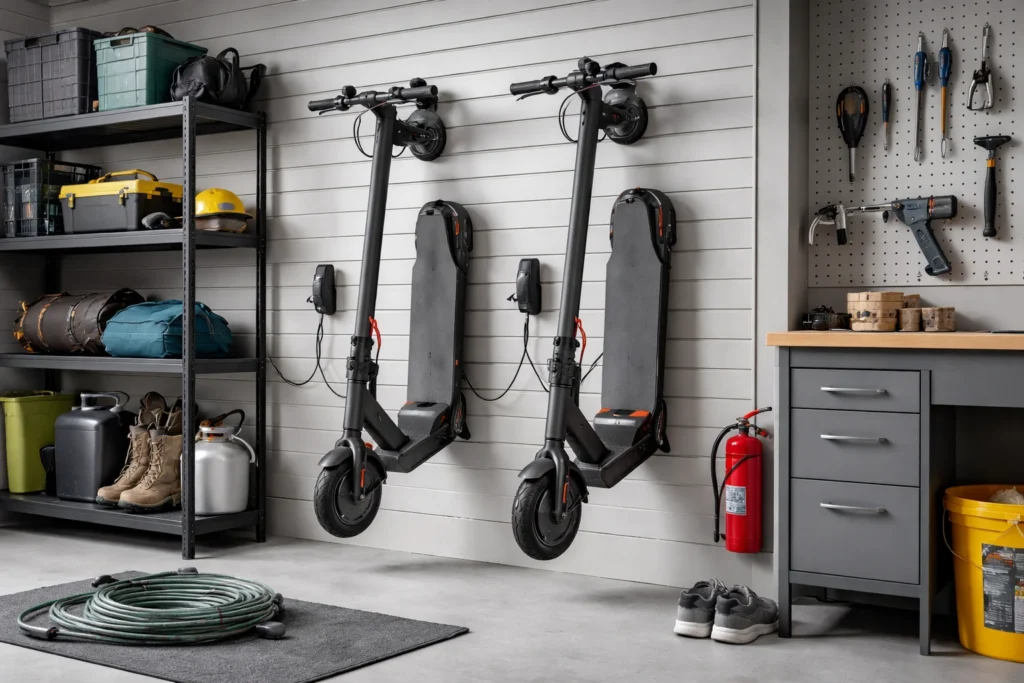
Electric scooters have moved from novelty to everyday transport surprisingly fast. They’re now a regular part of daily commutes, school runs, short errands, and weekend rides. With that convenience comes a new challenge many homeowners didn’t plan for: safe storage. For most people, the garage becomes the default home for an electric scooter. It feels logical. It’s out of the way, protected from the weather, and close to an electrical outlet. But garages can also be one of the most dangerous places to store an electric scooter if they’re not set up properly.
Between lithium-ion batteries, fluctuating temperatures, moisture, clutter, and fire risks, poor storage can shorten a scooter’s lifespan or create genuine safety hazards. This guide walks through how to store electric scooters in a garage safely, focusing on battery protection, fire prevention, physical security, and long-term reliability.
Why garage storage needs special attention
Garages are not controlled environments. Unlike living spaces, they often experience extreme heat in summer, cold snaps in winter, poor airflow, and higher humidity. They’re also where flammable materials tend to live. Fuel cans, paint, solvents, cardboard boxes, cleaning chemicals, and vehicles are all common garage residents. Introducing a lithium-ion battery into that mix raises the stakes.
Electric scooter batteries store a significant amount of energy in a compact space. Most modern scooters rely on lithium-ion batteries, which are efficient but sensitive to heat, impact, and charging conditions. According to Wikipedia’s overview of lithium-ion batteries, these batteries can experience thermal runaway when damaged or overheated, a chain reaction that can lead to fires or explosions if not properly managed.
Understanding the main risks of storing electric scooters in a garage
The biggest concern is the battery. Lithium-ion batteries can overheat, swell, or fail if they’re exposed to high temperatures, physical damage, or faulty charging conditions. Garages can reach well above recommended storage temperatures during summer, especially in warmer climates or poorly ventilated spaces. Moisture is another issue. Even garages that feel dry can trap humidity, particularly overnight or during seasonal changes. Moisture can slowly damage electrical connections, sensors, and wiring inside the scooter.
Physical damage is also common. Scooters stored on the floor can be knocked over by cars, bikes, lawn equipment, or people squeezing past. Falls can crack battery casings or bend frames without obvious signs until a problem appears later. Finally, there’s the human factor. Children, pets, and visitors may interact with a stored scooter without understanding the risks. Loose charging cables, exposed batteries, or unstable storage positions all increase the chance of accidents.
Choosing the safest location in your garage
Where you place the scooter matters as much as how you store it. The safest location is away from vehicles, fuel storage, and ignition sources. Avoid placing scooters near water heaters, furnaces, or electrical panels. These areas often produce heat or sparks and should remain clear.
Corners of the garage tend to work well, especially when paired with wall storage. This keeps the scooter out of driving paths and reduces the chance of being struck by a vehicle. If your garage is attached to your home, avoid placing scooters directly against shared walls with living spaces whenever possible. Clearance matters. The scooter should not be pressed tightly against walls or other objects. Leaving space around it improves airflow and makes it easier to spot early warning signs like battery swelling or unusual odors.
Managing temperature and ventilation

Temperature control is one of the most overlooked aspects of electric scooter storage. Most manufacturers recommend storing lithium-ion batteries in moderate temperatures, generally between 50°F and 77°F. While garages rarely stay within that range year-round, you can still reduce extremes.
Ventilation helps. Even basic airflow can lower peak temperatures and prevent heat from building up around the battery. Cracking a garage vent or installing a small exhaust fan can make a noticeable difference. In hot climates, insulation can slow heat transfer. In colder regions, keeping the scooter elevated off cold concrete helps protect the battery from extreme cold soaking into the frame. Avoid storing scooters near garage doors, which tend to be the most temperature-unstable areas.
Battery safety and storage fundamentals
The battery is the heart of the scooter and the most sensitive component. Proper battery care dramatically reduces safety risks and extends lifespan. For short-term storage, leaving the battery installed is usually fine, as long as the scooter is powered off and not connected to a charger. For long-term storage, many manufacturers recommend keeping the battery partially charged, typically between 40 and 70 percent. Fully charging or fully draining a battery before extended storage can cause long-term degradation.
If your scooter has a removable battery, storing it separately in a temperature-stable area may be safer, especially during extreme weather. When doing so, place the battery on a non-flammable surface and away from combustible materials.
The U.S. Consumer Product Safety Commission has repeatedly highlighted that damaged or improperly stored lithium-ion batteries present a higher fire risk, particularly when charged or stored near flammable materials. Their guidance reinforces the importance of proper storage conditions and early detection of battery damage. Regular checks matter. Every few weeks, inspect the battery for swelling, cracks, unusual heat, or chemical smells. These are warning signs that should never be ignored.
Safe charging practices in a garage
Charging is when most battery incidents occur, not during storage. That makes charging habits critical. Only use the charger provided by the manufacturer or a certified replacement. Cheap or incompatible chargers can deliver unstable voltage and cause overheating. Avoid extension cords whenever possible, as they can overheat and fail under continuous load.
Charging should be done when you’re awake and nearby, not overnight or while away from home. If something goes wrong, early intervention matters. Placing the scooter on a non-flammable surface during charging adds another layer of protection. Unplug the charger once charging is complete. Leaving scooters plugged in indefinitely can stress the battery and increase heat buildup, especially in warm garages.
Wall-mounted storage for safety and space
Wall storage is often the safest and most efficient option for garage scooter storage. Mounting the scooter off the floor protects it from impacts, moisture, and clutter. Proper installation is essential. Mounts should be anchored into wall studs or masonry, not drywall alone. Always check the weight rating of hooks or brackets and factor in a safety margin.
Vertical mounting saves space but requires secure hooks and careful placement to prevent accidental releases. Horizontal mounting may take more wall space but can offer easier access and better balance. Regardless of style, the scooter should sit securely with minimal movement. Any wobble increases the risk of falls.
Ceiling and overhead storage considerations
Ceiling storage can work in garages with limited wall space, but it comes with trade-offs. Pulley systems allow scooters to be raised and lowered, keeping them completely out of the way.
Weight limits are critical. Many ceiling systems are designed for bikes and may not be rated for heavier electric scooters. Installation must be done carefully to avoid structural damage or sudden failures. Overhead storage is best for long-term storage rather than daily use. Frequent lifting increases wear on pulleys and raises the chance of user error.
Floor storage done safely
Sometimes floor storage is unavoidable, especially in shared garages or rentals. If storing a scooter on the floor, stability is key.
Use a dedicated stand or wheel cradle to prevent tipping. Position the scooter away from vehicle paths and mark the area clearly if necessary. Anti-slip mats can prevent rolling and protect tires from cold concrete. Never lean scooters loosely against walls or shelves. Falls are one of the most common causes of hidden battery damage.
Fire safety measures every garage should have
Basic fire preparedness is essential when storing electric scooters. Install smoke detectors rated for garage use, or heat detectors if smoke alarms are unsuitable due to fumes.
Keep a fire extinguisher nearby, ideally one rated for electrical fires. While standard extinguishers can help control surrounding fires, lithium-ion battery fires behave differently and may reignite. The goal is containment and escape, not heroics. Avoid storing scooters near flammable items. Clear zones reduce the chance of fire spread and give you time to react if something goes wrong.
Moisture and humidity control
Moisture slowly damages electronics, even if problems aren’t immediately visible. Garages often trap humidity, especially overnight or during rainy seasons.
A small dehumidifier can dramatically improve conditions. Moisture-absorbing products also help in tight spaces. Elevating the scooter off the floor reduces exposure to condensation that forms on concrete. Always allow scooters to dry fully after wet rides before storing them in the garage. Trapped moisture accelerates corrosion and electrical issues.
Security considerations for garage storage
Garages are not theft-proof, especially shared or detached ones. Locking the scooter even inside the garage adds an extra layer of security.
Anchor locks that secure the scooter to wall mounts or floor anchors are effective deterrents. If the garage door is left open during the day, consider positioning scooters out of direct view. Smart locks and alarms can provide peace of mind, especially for higher-value models.
Keeping storage safe for children and pets

Children and pets are naturally curious. Scooters stored within reach can be tempting toys.
Disable power whenever possible and secure throttles or batteries if your model allows it. Keep charging cables tidy and out of reach. Wall storage helps reduce access, but additional locks may be necessary in family homes. Educating household members about battery safety adds another layer of protection.
Long-term storage versus daily use setups
Scooters used daily need accessible, convenient storage, while long-term storage prioritizes preservation. For extended storage, check tire pressure periodically to avoid flat spots. Cycle the battery occasionally to maintain health. Before returning a long-stored scooter to use, inspect it carefully. Look for corrosion, low tire pressure, and battery performance issues.
Common storage mistakes to avoid
Storing scooters near heat sources, charging overnight unattended, using damaged chargers, and ignoring manufacturer guidelines are among the most common mistakes. Another frequent error is assuming that because a scooter looks fine, it is fine. Many battery issues develop internally before external signs appear.
When not to store a scooter in the garage
Not all garages are suitable. Garages that regularly flood, trap excessive heat, or lack ventilation may pose more risk than benefit. In those cases, indoor storage in a temperature-stable area or a dedicated shed designed for battery storage may be safer options.
Final thoughts on safe garage storage
Storing electric scooters safely in a garage isn’t complicated, but it does require intention. Thoughtful placement, smart charging habits, battery awareness, and basic fire precautions dramatically reduce risk. A well-organized garage doesn’t just protect your scooter. It protects your home, your family, and your peace of mind. Small changes in how and where you store an electric scooter can make a meaningful difference over time, turning the garage into a safer, more reliable space for modern electric transport.
FAQs
Yes, as long as the garage is dry, ventilated, and the scooter is stored away from heat sources and flammable materials.
No, scooters should not remain plugged in while stored, as prolonged charging can stress the battery and increase fire risk.
Most electric scooter batteries are best stored between 50°F and 77°F to maintain battery health and safety.
Yes, but it should be secured with a stand or wheel cradle and kept out of vehicle paths to prevent tipping or damage.
Wall-mounted storage is one of the safest options when properly installed into wall studs with weight-rated hardware.
If the battery is removable and the scooter won’t be used for a long time, storing the battery separately can be safer.
It’s best to inspect the scooter and battery every few weeks for signs of swelling, corrosion, or moisture.
Yes, excess humidity can corrode electrical components, so moisture control is important for long-term storage.
Overnight charging is not recommended, as most battery-related incidents occur during unattended charging.
Avoid storing scooters near water heaters, furnaces, fuel containers, or areas with poor ventilation.