Refreshed your home for the season doesn’t necessarily mean that you need to get new furniture or dedicate a whole weekend to painting. Fast changes usually come from things already in most homes: shades and personal recollections. Adding a gentle change in tones paired with meaningful pictures can swiftly revamp the mood, fostering a feeling of freshness instead of sameness in your usual surroundings. This approach is especially simple in areas with flexible setups like digital picture frames, which let photos adapt to shifting seasons and feelings without printing new ones.
Start With Mood
Each season carries its own distinct vibe. Spring often evokes lightness and hopefulness. Summer suggests brightness and fun. Fall tends toward warmth and stability. Winter frequently invites gentleness and serenity. Selecting a single “mood descriptor” for the period simplifies all choices. Cozy. Fresh. Sunny. Quiet. This one term serves as a guide for what to retain and what to remove.
Following that, identify a unifying color element that can weave through the space. This isn’t about a complete color scheme redesign. Consider it a connecting thread. A gentle green for spring. A beige neutral for summer. An earthy rust for fall. A rich blue for winter. This hue can appear in items like a cushion, a vase, a modest artwork, or a candle.
Lighting does more than brighten a room. It sets the tone. With a simple shift in light, the same furniture can feel completely different. Warmer light instantly makes a space feel cozy and welcoming, which fits fall and winter. Cleaner, brighter light helps spring and summer feel open and fresh. In homes where loved ones live far apart, a soft color glow from long distance lamps can add an extra layer of meaning, blending everyday decor with a simple habit that feels natural to use.
One Room, One Palette: Easy Color Shifts That Look Intentional
Seasonal styling looks more sophisticated if the color palette is kept focused. Implementing a “one room, one palette” approach prevents the mistake of piling up seasonal items over the ones that are already there. What one wants is a small trade that communicates the intention of design.
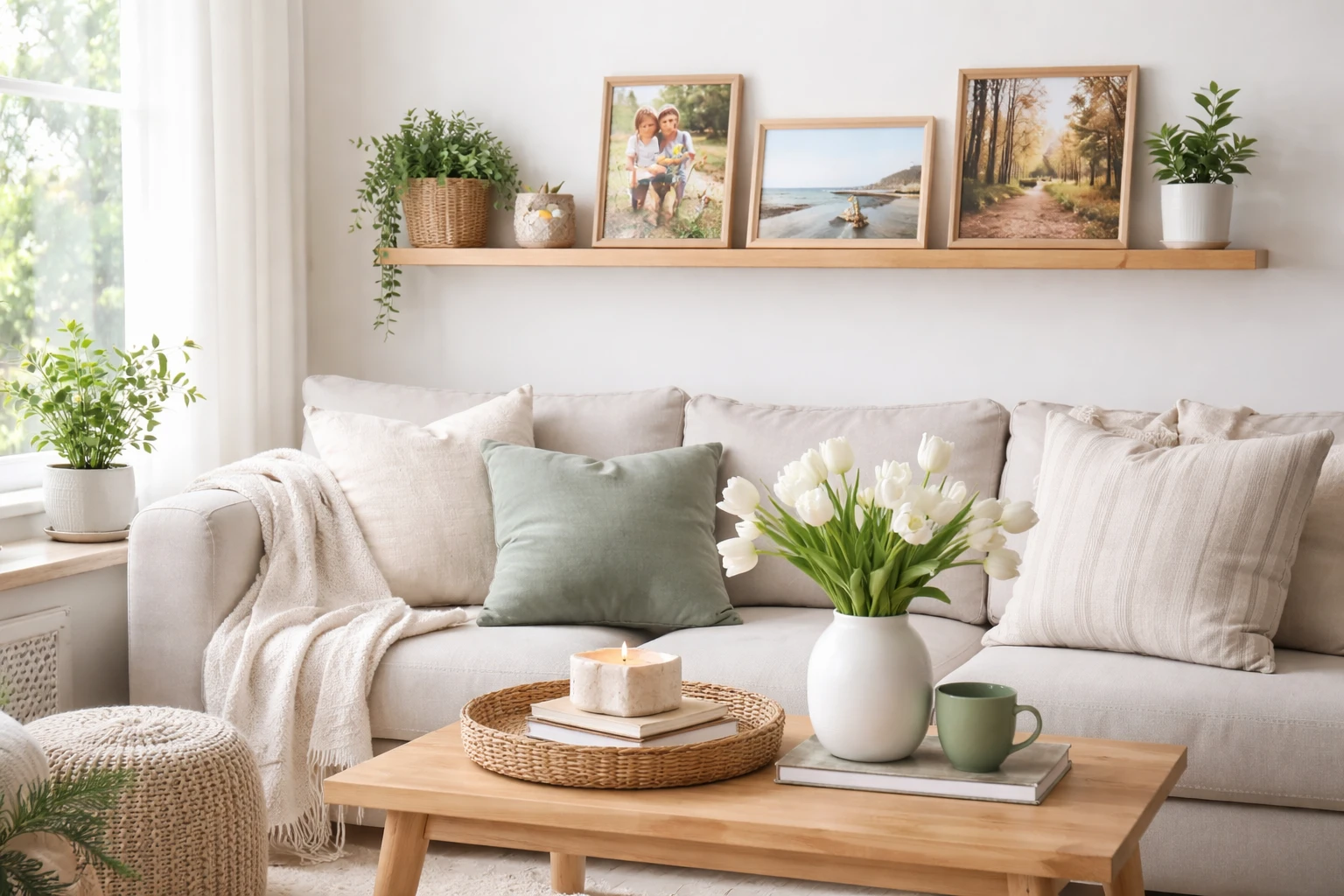
Begin with an existing foundation in the area, such as light walls, a neutral couch, or wooden accents. Introduce one complementary shade aligned with the season’s tone. Then incorporate a single texture for depth, such as linen, knit fabric, pottery, or basketry.
Lighting in this case may be used as a stylistic accent instead of simply serving a functional role. A significant light structure at a well thought-out point has the capacity to change the entire atmosphere especially if it changes colors to reflect different times of a year. In this capacity, long distance lamps integrate effortlessly into a do-it-yourself decor strategy, as they can be positioned like ornamental items while offering utility that extends beyond the immediate setting.
A seasonal update should involve eliminating one element, not solely additions. As spring items arrive, bulky winter blankets can be put away. When summer shades are introduced, excess designs can be minimized. Removal is what lends the change a purposeful appearance.
Photo Swaps That Tell a Story, Not Just Fill Space
Photographs represent one of the most underutilized elements in home design. They bring comfort, character, and flow. A seasonal image rotation succeeds when guided by a motif rather than scattered selections.
Select a narrative tied to the season. Nature strolls and vibrant outings for spring. Seaside escapes or garden scenes for summer. Intimate assemblies and amber illumination for fall. Peaceful dawns, festive customs, or wintry vistas for winter. Then cycle images in a designated area to prevent the entire residence from resembling an ever-shifting exhibit.
A photo shelf, a mantel, a bureau surface, or a compact wall grouping serves effectively. Maintain uniform frame shades so the images take center stage. Consistent framing ensures even varied pictures appear unified.
For an effortless arrangement that retains a personal touch, digital photo frames simplify the periodic changes. Fresh visuals can emerge without relocating fixtures. This facilitates keeping current images displayed, especially in homes aiming to foster connections with distant loved ones.
This approach subtly enhances a lived-in quality without introducing clutter. The styling remains tidy. The narrative continues to unfold.
Texture and Light: The Two Fastest Ways to Change a Room
Color creates the route. Texture and brightness help us to really feel it. Texture works well by changing not only what you see, but also what you feel through touch. Warm seasons are associated with lighter fabrics such as cotton, linen, and open weaves whereas colder seasons agree more with knits, synthetic fur, velvet, and layering. Raising or lowering just one aspect of the texture has the ability to change a sofa, a bed, or a chair completely.
Illumination completes the vibe. Relying solely on ceiling fixtures can render a space uninteresting. A superior configuration involves multiple sources. One for general glow. One for focused tasks. And one for subtle emphasis. Distributed lighting adds dimension and ease to the area.
Positioning outweighs brightness levels. A fixture beside a seating nook creates a deliberate zone. A modest light on an entry table sets a hospitable mood. A gentle glow by the bed promotes tranquility in a sleeping area, even with sparse adornments. Seasonal transitions simplify when light transcends basic functionality. It integrates into the environment.
The 30-Minute Seasonal Reset That Keeps Your Home Feeling Fresh
A seasonal update remains manageable when treated as a consistent process. A brief overhaul suffices. The objective is to refine, cycle, and revitalize in a manner that sustains a contemporary feel without generating storage disarray.
- Select one mood descriptor and one highlight shade for the period.
- Exchange two fabric elements, such as cushion cases, a blanket, or a table cloth.
- Cycle images in one photo area to convey a fresh tale.
- Modify light warmth and positioning to align with the seasonal essence.
- Declutter one area. Reintroduce one significant piece.
- Organize seasonal items in a marked container for seamless future updates.
A residence that adapts smoothly across seasons avoids excess ornamentation. It relies on minor selections that uphold a motif. With steady color elements and evolving images throughout the year, the environment begins to reflect progression alongside its inhabitants. This renders the update authentic, individualized, and repeatable.
FAQs
Refreshing your home four times a year—once per season—is usually enough to keep spaces feeling new without becoming overwhelming.
No, most seasonal refreshes can be done by rotating items you already own, such as pillows, blankets, and photo displays.
Start by choosing a seasonal mood and a single accent color, then update a few textiles or decorative items to match that theme.
Using one main seasonal color alongside your existing neutral base keeps the room cohesive and prevents the space from feeling cluttered.
Photos that reflect seasonal experiences—nature walks, family gatherings, travel moments, or cozy indoor scenes—help create a meaningful visual story.
Yes, digital frames make it easy to rotate seasonal photos without printing new pictures, allowing your display to evolve throughout the year.
Warmer lighting creates a cozy atmosphere for fall and winter, while brighter, cooler lighting helps rooms feel open and fresh during spring and summer.
Lighter fabrics like linen and cotton suit warmer months, while heavier textures such as knits, velvet, and faux fur add warmth during colder seasons.
A simple seasonal reset can take as little as 30 minutes if you focus on swapping textiles, rotating photos, and adjusting lighting.