
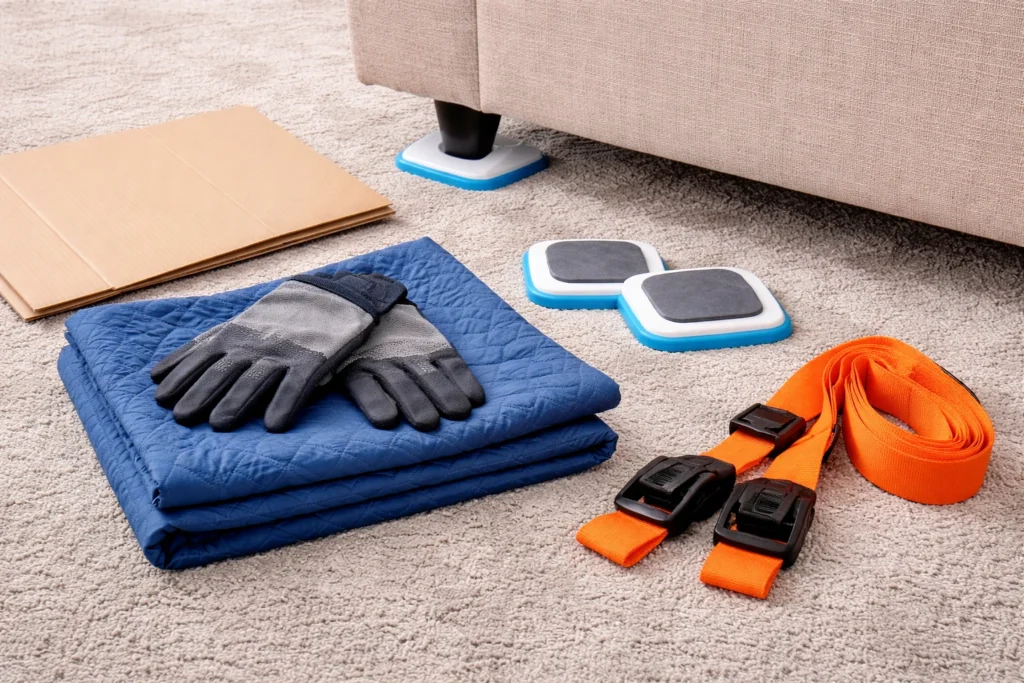
Moving heavy furniture alone can feel overwhelming. Add carpet into the equation, and it becomes even more challenging. Carpet increases friction, grips furniture legs, and makes even lightweight couches feel twice as heavy. But strength isn’t the real solution here. Technique is.
If you understand leverage, friction, and body mechanics, you can absolutely move a couch on carpet by yourself safely without injuring your back or damaging your flooring. This guide walks you through exactly how to do it the right way.
Why Moving a Couch on Carpet Is Harder Than It Looks
Carpet works against you. Unlike hardwood or tile, carpet fibers create resistance. The couch legs sink slightly into the pile. The padding underneath compresses. Every push meets friction. That resistance often causes people to jerk the couch forward. Or pull with their arms. Or twist their spine mid-movement.
That’s when injuries happen.
Couches are also awkward. Their weight isn’t evenly distributed. Sectionals and sleeper sofas can be especially heavy on one side. Even a standard three-seat sofa can weigh 150–250 pounds depending on the frame.
The key isn’t lifting it fully. The key is reducing friction and moving it strategically.
From a physics standpoint, this challenge is about overcoming friction the force resisting motion between two surfaces in contact. If you want a deeper explanation of how friction works mechanically, you can review this overview from Wikipedia. Understanding that simple concept makes everything else easier. Reduce friction, and the couch becomes manageable.
How to Move a Couch on Carpet by Yourself Safely: Preparation First
Before you touch the couch, prepare the room.
Clear the entire path. Remove coffee tables, side tables, lamps, rugs, décor, and anything that could catch a leg or block your movement. You want zero obstacles. Next, measure doorways and hallways. It takes two minutes and prevents the frustration of getting stuck halfway through a turn.
Now lighten the couch:
- Remove all cushions and throw pillows
- Detach sectional pieces if possible
- Unscrew removable legs
- Remove any built-in storage contents
Every pound you remove makes a difference.
Wear closed-toe shoes with grip. Gloves help with fabric or leather couches. If you’ve had previous back issues, consider wearing a back support brace for added stability. You’re not rushing this. You’re controlling it.
The Right Tools Make a Huge Difference
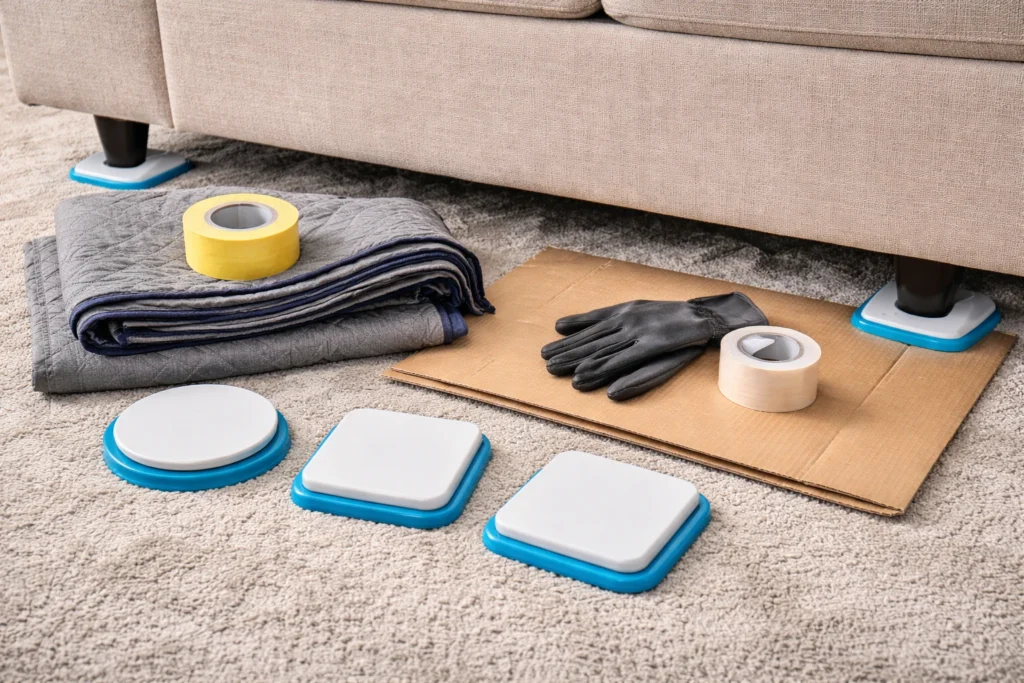
You can move a couch without tools. But it’s harder than it needs to be.
Furniture Sliders
These are the best solution for carpet. Choose hard plastic sliders designed specifically for carpeted floors. They reduce friction by creating a smooth surface between the couch legs and carpet fibers. Use large sliders for heavier couches. They distribute weight better and prevent sinking into plush carpet.
Moving Blankets
If you don’t have sliders, a thick moving blanket can help. Wrap it under the base and drag gently. It reduces friction and protects upholstery.
Cardboard Sheets
Sturdy cardboard can act as a temporary glide surface. Slide pieces under each leg before moving.
Lifting Straps
Forearm lifting straps redistribute weight and engage larger muscle groups. However, they require careful positioning and aren’t ideal for very tight spaces. If you want to move a couch on carpet by yourself safely, sliders remain the most efficient tool.
Step-by-Step: How to Move a Couch on Carpet by Yourself Safely
Step 1: Position Yourself Correctly
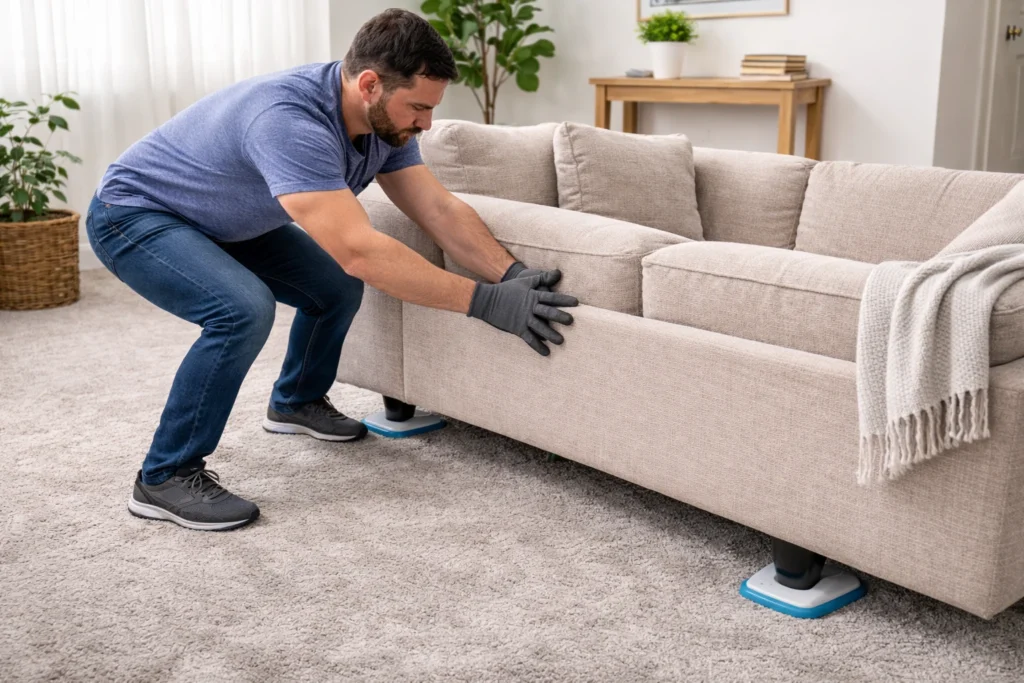
Stand at one end of the couch. Bend your knees. Keep your back straight. Tighten your core slightly to support your spine.
Grip the solid frame underneath not the cushions.
Proper lifting technique is not optional. The U.S. Occupational Safety and Health Administration (OSHA) provides guidance on safe lifting and ergonomic practices to reduce strain and musculoskeletal injuries. You can review their ergonomics guidance. Applying these principles while moving furniture significantly lowers your risk of injury.
Step 2: Tilt and Insert Sliders
Gently tilt one side of the couch backward just enough to slide a furniture slider under each front leg. Lower carefully. Repeat for the back legs. If using cardboard or a blanket, place them securely under the base while tilted. Never lift higher than necessary. Small controlled movements are safer.
Step 3: Push — Don’t Pull
This is critical.
Pulling encourages rounding your back. Pushing allows you to use your legs and body weight more effectively. Place both hands firmly on the frame. Lean slightly forward from your hips and push steadily. No jerking. No sudden force. You’ll feel resistance at first. Then it will start to glide.
Step 4: Move in Small Increments
Don’t try to shove the couch across the room in one motion. Move it a few inches. Reset your footing. Push again. This “walk it forward” technique prevents overexertion and keeps sliders aligned. If you feel resistance spike suddenly, stop. Check that sliders haven’t shifted.
Step 5: Pivot Carefully Around Corners
Corners require patience.
Move one end slightly forward while holding the other steady. Make small angle adjustments rather than sharp rotations. If necessary, stand the couch upright briefly but only if you can do so without twisting your torso under load. Controlled movement protects both walls and your spine.
Different Carpet Types Require Different Effort
Not all carpet behaves the same.
Low-Pile Carpet
This is the easiest to work with. Sliders glide relatively smoothly, and resistance remains manageable.
Plush or High-Pile Carpet
Here, the couch sinks deeper. Use larger sliders to distribute weight and reduce fiber compression. Move more slowly. Expect more resistance.
Carpet Over Thick Padding
Extra padding increases drag. Apply steady, even pressure rather than bursts of force. Understanding your carpet type helps you anticipate effort and adjust accordingly.
Protecting Your Body While Moving Heavy Furniture Alone
If you remember only one thing from this guide, let it be this:
Your back is more important than the couch.
Follow these safety principles:
- Lift with your legs, not your spine
- Keep the couch close to your body when tilting
- Avoid twisting while holding weight
- Set the couch down before repositioning yourself
- Take breaks if you feel fatigued
Fatigue leads to poor form. Poor form leads to injury.
Hydrate. Move slowly. Stay intentional.
Moving a couch on carpet by yourself safely depends more on technique than strength.
How to Prevent Carpet Damage
Dragging a couch directly across carpet can cause:
- Fiber stretching
- Snagging (especially with looped carpets like Berber)
- Compression dents
Always use a barrier sliders, cardboard, or a blanket.
If dents appear after moving, place an ice cube in the indentation and allow it to melt completely. Once dry, gently fluff the fibers with a spoon or fork to restore texture. Move slowly to avoid sudden fiber pulls.
When You Should Not Move a Couch Alone
There are situations where solo moving isn’t worth the risk.
Avoid doing it alone if:
- The couch is a sleeper sofa with metal framing
- It weighs over 250 pounds
- You must navigate stairs
- You have back, shoulder, or knee issues
- The couch must be lifted vertically through tight spaces
In these cases, asking for help is not weakness. It’s smart risk management.
Final Thoughts on How to Move a Couch on Carpet by Yourself Safely
You don’t need extraordinary strength to do this.
You need preparation.
You need the right tools.
You need controlled movement.
Clear the space. Lighten the load. Use sliders. Push steadily. Move in small increments. Protect your spine at every step. When you reduce friction and apply safe lifting principles, the process becomes manageable. Even smooth. And that’s the real goal to move the couch without moving yourself into pain.
FAQs
Yes, but it’s harder. Thick blankets, sturdy cardboard, or plastic lids can reduce friction, though sliders work best.
Pushing is safer because it helps you use your legs and core instead of straining your lower back.
Bend your knees, keep your back straight, avoid twisting, and move in small controlled increments.
It can if dragged directly. Use sliders or a protective barrier to prevent fiber stretching and dents.
Place an ice cube in the dent, let it melt, then fluff the fibers gently with a spoon or fork.
Hard plastic sliders designed specifically for carpeted surfaces work best, especially larger ones for heavy couches.
Yes, if possible. Removing legs lowers the height, reduces tipping risk, and makes maneuvering easier.
Only if it separates into lighter sections. Large, one-piece sectionals are usually too heavy for safe solo moving.
Most standard sofas weigh between 150 and 250 pounds, while sleeper sofas can exceed 300 pounds.
Avoid solo moves if stairs are involved, the couch is extremely heavy, or you have existing back or joint issues.