Sliding glass doors are one of the best features in a home. They flood a space with natural light, visually expand the room, and create a seamless connection to the outdoors. But when it comes to privacy, glare control, and temperature management, they can quickly become a challenge. That’s exactly why many homeowners search for how to hang bamboo shades on sliding glass doors and for good reason.
Bamboo shades strike a rare balance. They soften harsh sunlight without fully blocking it, add warmth and texture to large glass surfaces, and feel intentional rather than utilitarian. When installed correctly, they function smoothly on sliding doors. When installed incorrectly, they can swing, scrape, or interfere with daily use. This guide walks through everything you need to know, from planning and measuring to installation and long-term care.
Why Bamboo Shades Work So Well on Sliding Glass Doors
Bamboo shades are made from natural materials such as bamboo, reeds, and grasses woven together into flexible panels. Bamboo itself is known for its strength-to-weight ratio and sustainability, which is why it’s widely used in both construction and home décor. You can read more about the material itself here.
For sliding glass doors, bamboo shades offer several advantages over traditional blinds. They can span wide openings without looking bulky. They stack neatly when raised, keeping the door usable and visually open. And unlike vertical blinds, they add character instead of feeling purely functional. Another advantage is airflow. Bamboo shades allow air to circulate even when lowered, which is especially helpful for patio doors or rooms that heat up quickly in the afternoon sun.
Choosing the Right Bamboo Shades Before You Install
Before learning how to hang bamboo shades on sliding glass doors, choosing the right shade style is critical. Width is the first decision. Sliding glass doors are wide, and while it may be tempting to use one oversized shade, this often leads to uneven lifting and long-term wear. Two or three narrower shades installed side by side typically perform better and last longer.
Roll-up bamboo shades create a casual, natural look and are ideal for patios or relaxed living spaces. Roman-style bamboo shades offer cleaner folds and a more tailored appearance, which works well in formal rooms. Cordless bamboo shades are strongly recommended for sliding glass doors. They eliminate dangling cords that can get caught in door handles and improve safety, especially in homes with children or pets.
Lined bamboo shades provide better privacy and light control. Unlined shades allow more light through and work well when privacy is less of a concern. Inside mount versus outside mount also matters. In most cases, an outside mount works best for sliding glass doors. Mounting the shade above the door frame allows full coverage and avoids interference with door movement.
Measuring Sliding Glass Doors Correctly
Accurate measurements are the foundation of a successful installation.
Measure the full width of the glass area you want to cover, not just the frame. If you’re installing multiple shades, divide the total width evenly and leave a small gap between shades so they operate independently. For outside-mounted shades, add one to three inches of extra width on each side to minimize light gaps and improve privacy.
Measure height from the mounting point down to where the shade should stop. Bamboo shades should hover slightly above the floor or track to prevent dragging. This small clearance dramatically improves durability. Double-check all measurements before ordering. Some bamboo shades can be trimmed, but many cannot.
Tools and Materials You’ll Need
Installing bamboo shades does not require advanced tools, but preparation matters.
You’ll need a tape measure, pencil, level, drill, drill bits, and a screwdriver. A stud finder can help if you’re mounting into drywall above the door frame. Most bamboo shades come with mounting brackets and screws, but wide or heavy shades may require stronger anchors. Optional accessories such as hold-down brackets or bottom weights are especially useful for sliding glass doors.
Preparing the Door Area
Before installing anything, open and close the sliding doors fully. Pay attention to handles, locks, and how far the door panels overlap. Hold the shade up to the door to visualize its final position. This step helps you catch potential issues before drilling holes. Mark bracket placement lightly with a pencil and use a level to ensure everything lines up. Even small alignment errors are noticeable on large door spans.
How to Hang Bamboo Shades on Sliding Glass Doors Step by Step
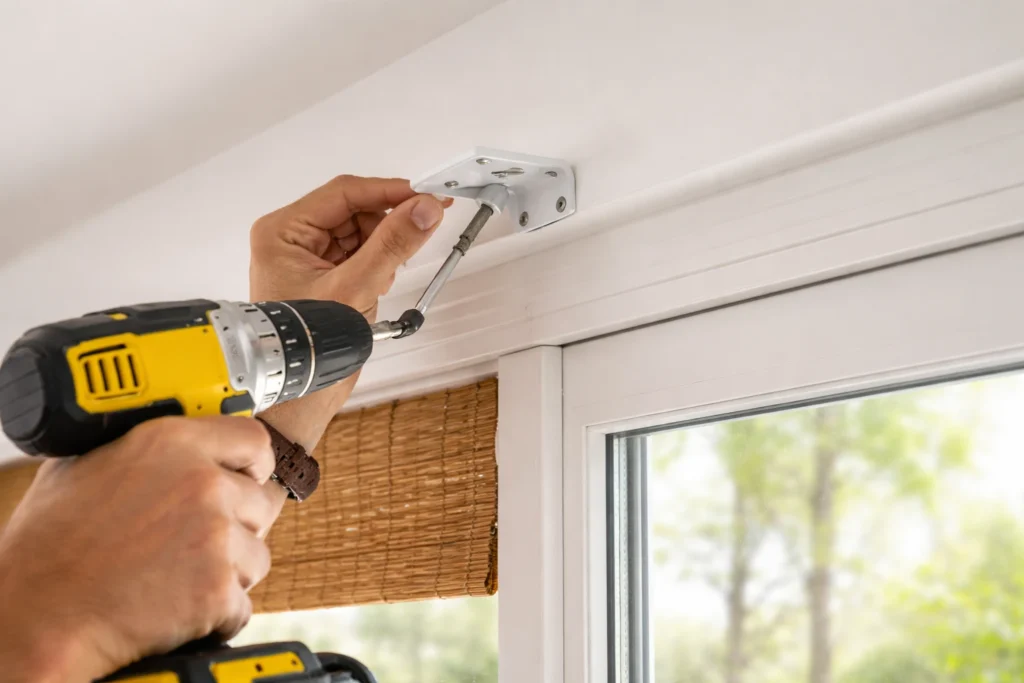
Begin by installing the mounting brackets. For outside mounts, brackets should be positioned above the door frame and evenly spaced. Follow the manufacturer’s guidelines for spacing, especially for wider shades that require center support brackets. Drill pilot holes to prevent cracking and make installation easier. Secure the brackets firmly, but avoid overtightening.
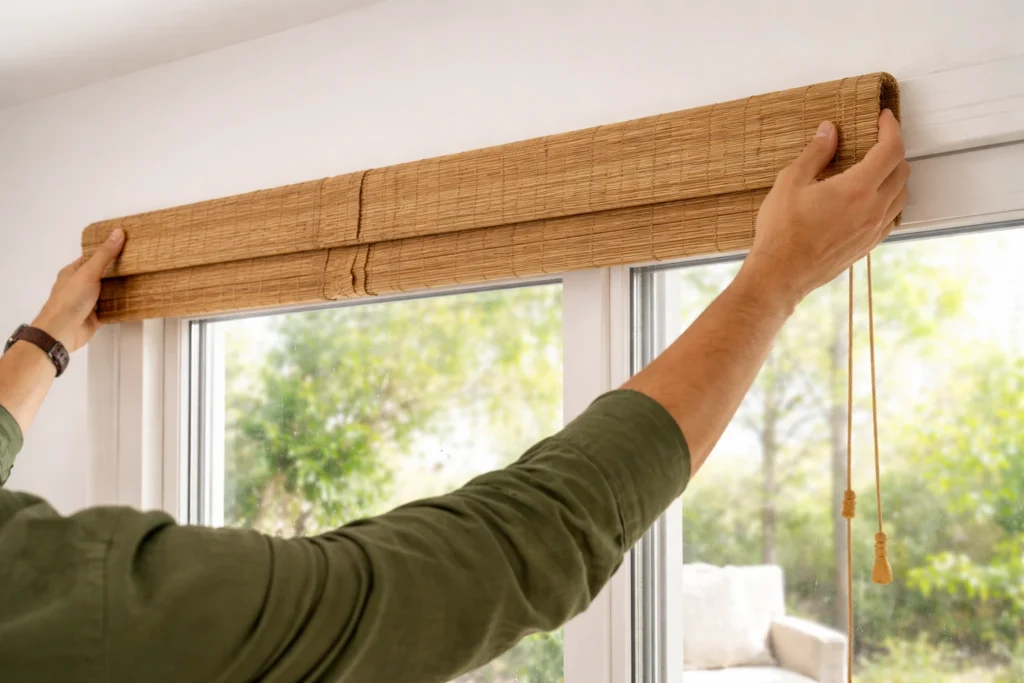
Once the brackets are in place, attach the bamboo shade according to the manufacturer’s instructions. Some shades snap into the brackets, while others rest on hooks or rods. Lower the shade slowly and check that it hangs evenly. Use the level again if adjustments are needed. Test the shade several times. Raise and lower it fully. Open and close the sliding doors while the shade is down to ensure it doesn’t rub against handles or frames.
Installing Multiple Bamboo Shades Side by Side
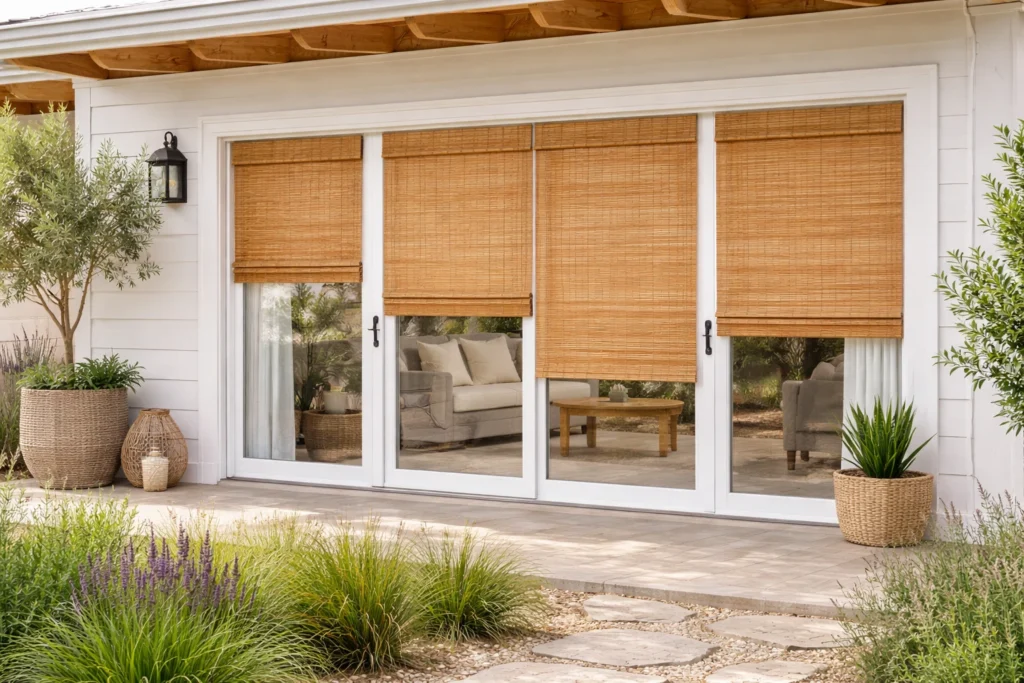
For wide sliding glass doors, installing two or three bamboo shades side by side is often the best solution. Measure and mark each bracket location carefully so all shades align at the same height. Even minor inconsistencies become obvious once installed.
Leave a narrow gap between shades so they don’t bind when raised or lowered. When down, the shades should visually read as one continuous surface. This approach improves functionality and extends the life of the shades.
No-Drill Installation Options and Their Limits
Some homeowners look for alternatives to traditional mounting, particularly renters who want to avoid permanent changes. While many people search for how to hang bamboo shades without drilling, it’s important to understand the limitations before choosing this route.
Tension rods may work for very lightweight shades but often lack stability on sliding doors. Adhesive brackets can weaken over time due to heat and humidity, especially on sun-facing glass. Magnetic mounts only work on metal frames and require strong magnets to safely support bamboo shades. For long-term reliability and daily use, drilled installations remain the most secure option for sliding glass doors.
Preventing Movement and Swinging
Sliding doors create airflow and vibration, which can cause bamboo shades to sway. Hold-down brackets at the bottom corners help anchor the shade. Bottom weights also improve stability and keep the shade hanging straight. Mounting the shade slightly away from the door surface can reduce friction when doors move.
Common Installation Problems and Solutions
If the shade hangs unevenly, recheck bracket alignment. This is the most common issue. If the shade hits the door handle, raise the mounting height slightly or shorten the shade length. If lifting feels stiff or uneven, inspect the cords or lift mechanism. Extra-wide shades often benefit from being split into multiple panels. Light gaps can usually be fixed by widening coverage or layering curtains on the sides.
Energy and Light Control Considerations
Window coverings play a role in indoor comfort and energy efficiency. According to the U.S. Department of Energy, properly chosen window treatments can help reduce heat gain and loss in a home, especially on large glass surfaces like sliding doors. Bamboo shades help diffuse sunlight and reduce glare while still allowing daylight into the space. When paired with liners or curtains, they can contribute to improved temperature control year-round.
Cleaning and Maintenance
Dust bamboo shades regularly using a soft brush or vacuum attachment. Avoid soaking them with water, as moisture can cause warping. In humid environments, ensure good airflow near sliding doors to prevent moisture buildup. Periodically check mounting hardware to make sure screws remain tight. With basic care, bamboo shades can last for many years even on frequently used sliding doors.
Styling Bamboo Shades for a Finished Look
Bamboo shades look best when they feel intentional. Pairing them with light curtains adds softness and improves nighttime privacy. Matching bamboo tones with flooring or furniture creates visual cohesion. Flat-weave shades suit modern interiors, while textured weaves work well in coastal or bohemian spaces. Consistency across rooms helps sliding glass doors feel like part of the overall design rather than an afterthought.
Final Thoughts
Learning how to hang bamboo shades on sliding glass doors is less about technical difficulty and more about planning and precision. When the right shades are chosen, measurements are accurate, and installation is done thoughtfully, bamboo shades become a functional design feature rather than a compromise. They manage light, add warmth, and maintain the usability of your sliding doors. Take your time, follow the steps carefully, and you’ll end up with a solution that looks good and works smoothly every single day.
FAQs
Yes, bamboo shades can be installed on sliding glass doors using inside or outside mounts, with outside mounts being the most common option.
Multiple narrower shades usually work better than one wide shade because they operate more smoothly and last longer.
Yes, especially lined bamboo shades, which provide better privacy and light control than unlined versions.
Not if they’re installed properly and mounted high enough to clear handles and door tracks.
Typically 2–4 inches above the frame for an outside mount, ensuring full coverage and smooth operation.
Yes, but no-drill methods like tension rods or adhesive brackets are less secure for frequently used sliding doors.
Install hold-down brackets or add bottom weights to stabilize the shades.
They help reduce glare and filter sunlight, and when lined, they improve insulation and heat control.
Cordless bamboo shades are the safest option for homes with kids and pets.
Dust regularly with a soft brush or vacuum attachment and avoid soaking them with water.