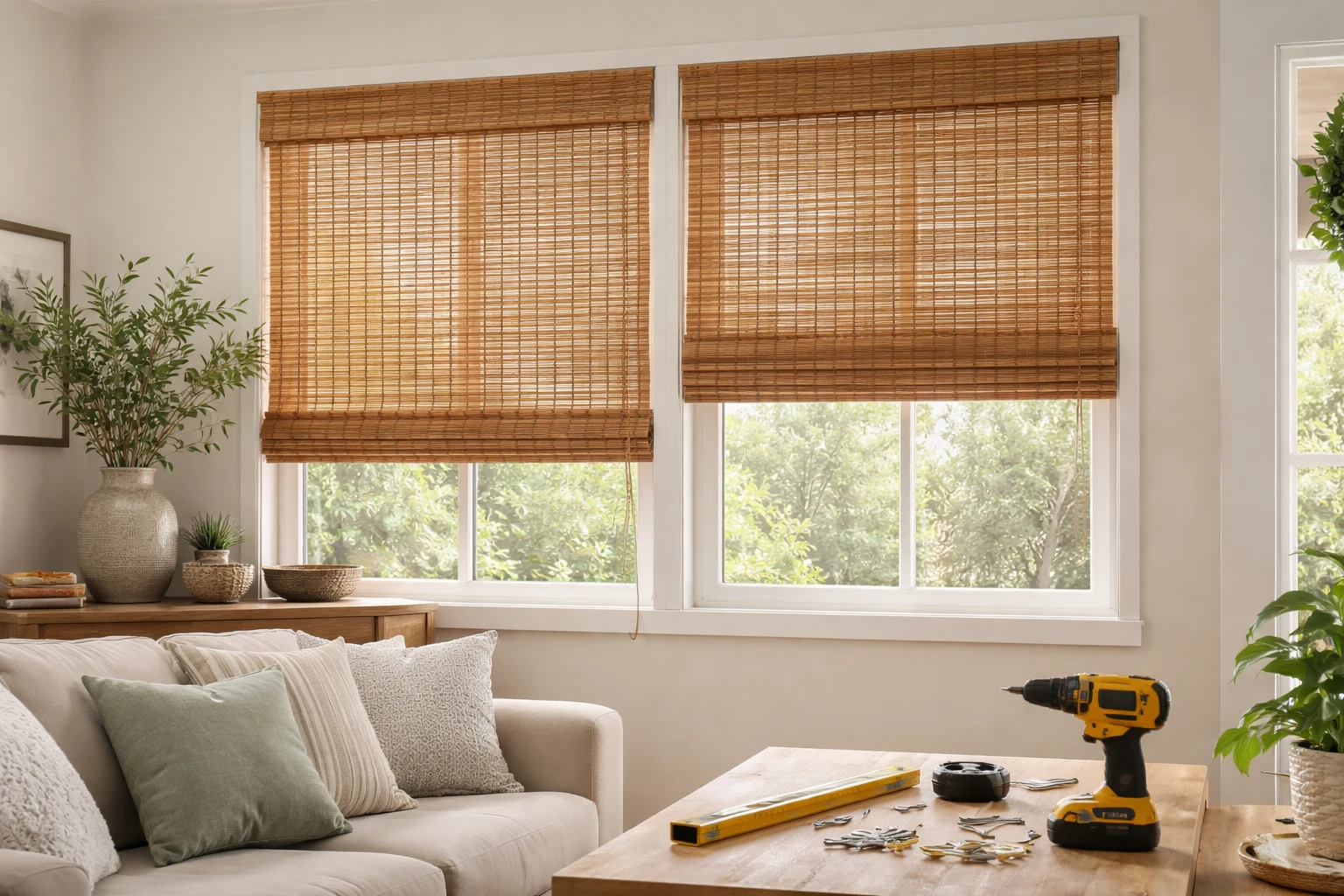
Learning how to hang bamboo shades isn’t about following a generic set of instructions and hoping for the best. It’s about understanding how these natural window coverings behave, how walls and frames respond to hardware, and how small setup decisions affect the final look.
Bamboo shades bring warmth and texture into a room instantly. They soften hard lines. They filter light instead of blocking it harshly. And when they’re installed correctly, they look intentional—not like a rushed weekend project.
I’ve installed bamboo shades in apartments, older homes, new builds, and rentals with strict rules. The process is straightforward, but only if you slow down at the right moments. This guide walks you through exactly how to hang bamboo shades the right way, step by step, without shortcuts that come back to haunt you later.
Why Bamboo Shades Are Worth the Effort
Bamboo shades sit in a unique space between design and function. They aren’t purely decorative, and they’re not purely utilitarian either.
They offer:
- Natural texture that works in modern, coastal, bohemian, and traditional spaces
- Light filtering without feeling dark or heavy
- Privacy without the boxed-in feel of vinyl blinds
- A cleaner visual profile than fabric curtains alone
But bamboo is also less forgiving than fabric. It doesn’t stretch. It doesn’t hide mistakes. If it’s hung crooked, you’ll notice.
That’s why understanding how to hang bamboo shades properly matters more than people expect.
Understanding Bamboo Shades Before You Start
Before you pick up a drill, it helps to understand what you’re actually installing.
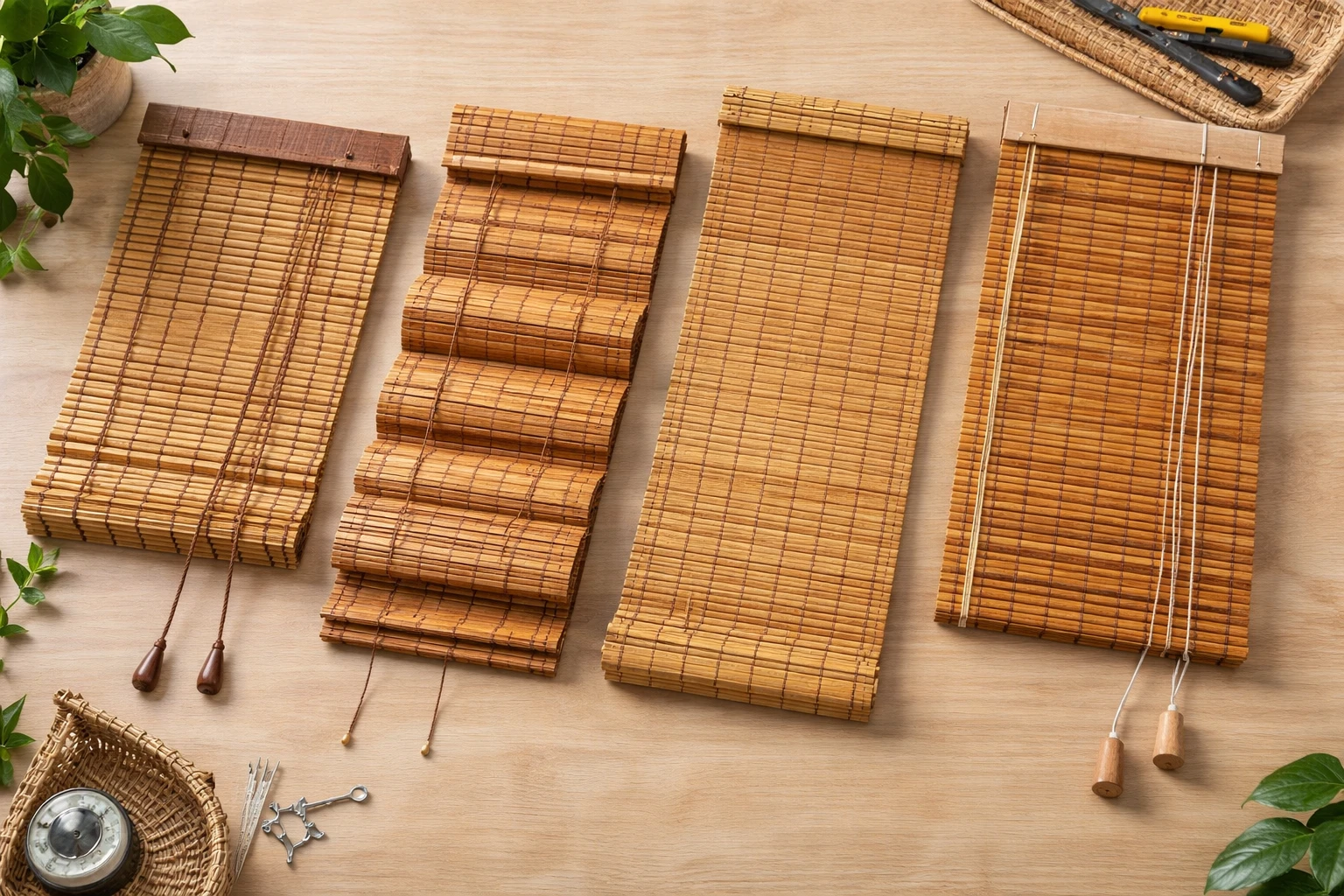
Bamboo shades are typically made from woven natural materials like bamboo reeds, jute, grasses, or wood slats. They’re lightweight compared to wood blinds, but heavier than fabric shades.
The most common types include:
- Roll-up bamboo shades, which lift evenly from the bottom
- Roman-style bamboo shades, which fold into soft pleats
- Cordless bamboo shades, operated by hand
- Corded bamboo shades, controlled with a pull cord
Each style mounts similarly, but the weight distribution changes how precise you need to be.
You’ll also need to decide between:
- Inside mount (installed within the window frame)
- Outside mount (installed on the wall or trim above the window)
That choice affects measurements, bracket placement, and even how tall your room feels.
Tools and Materials You’ll Need
You don’t need a full workshop to hang bamboo shades. You do need accuracy.
Here’s a simple checklist:
| Tool or Material | Purpose |
| Measuring tape | Accurate window measurements |
| Pencil | Marking bracket placement |
| Level | Preventing crooked installation |
| Drill or screwdriver | Securing brackets |
| Screws (included or upgraded) | Mounting hardware |
| Wall anchors | Required for drywall installs |
Most bamboo shades come with mounting brackets. Still, don’t assume the included screws are ideal for every wall type. If you’re mounting into drywall without a stud, anchors are non-negotiable.
Skipping anchors is the fastest way to end up rehanging everything later.
Measuring Your Window Correctly
This is where most installation problems begin.
When people struggle with how to hang bamboo shades, it’s usually because measurements were rushed.
Inside Mount Measurements
Measure the inside width of the window frame at:
- Top
- Middle
- Bottom
Use the smallest measurement.
Then measure the inside height from the top of the frame to the sill. Measure in three spots again and use the longest number unless the manufacturer says otherwise.
Outside Mount Measurements
Measure the width of the window and add:
- 2–3 inches on each side for better coverage
For height, measure from where you want the shade to start (usually above the trim) to where you want it to end.
Always measure twice. Always.
Choosing the Right Mounting Method
Both mounting methods work. The right choice depends on your window and your goals.
Inside Mount
Best when:
- Your window frame is deep enough
- You want a clean, built-in look
- You’re pairing shades with curtains
Challenges:
- Shallow frames
- Uneven interiors
- Less light control on wide windows
Outside Mount
Best when:
- Frames are shallow
- You want better light blocking
- You want windows to appear taller
Outside mounting is more forgiving. It’s often the safer option if you’re new to learning how to hang bamboo shades.
Preparing the Installation Area
Preparation saves time later. Always.
Clear the area around the window. Lay out your tools. Unroll the shade fully and inspect it.
Before drilling:
- Hold the shade up to the window
- Visually confirm placement
- Check that it centers correctly
Use a pencil to mark bracket locations lightly. Measure the distance between brackets twice. Then use a level to confirm alignment.
If the brackets aren’t level, the shade won’t hang evenly. No adjustment later will fully fix that.
How to Hang Bamboo Shades: Inside Mount Installation
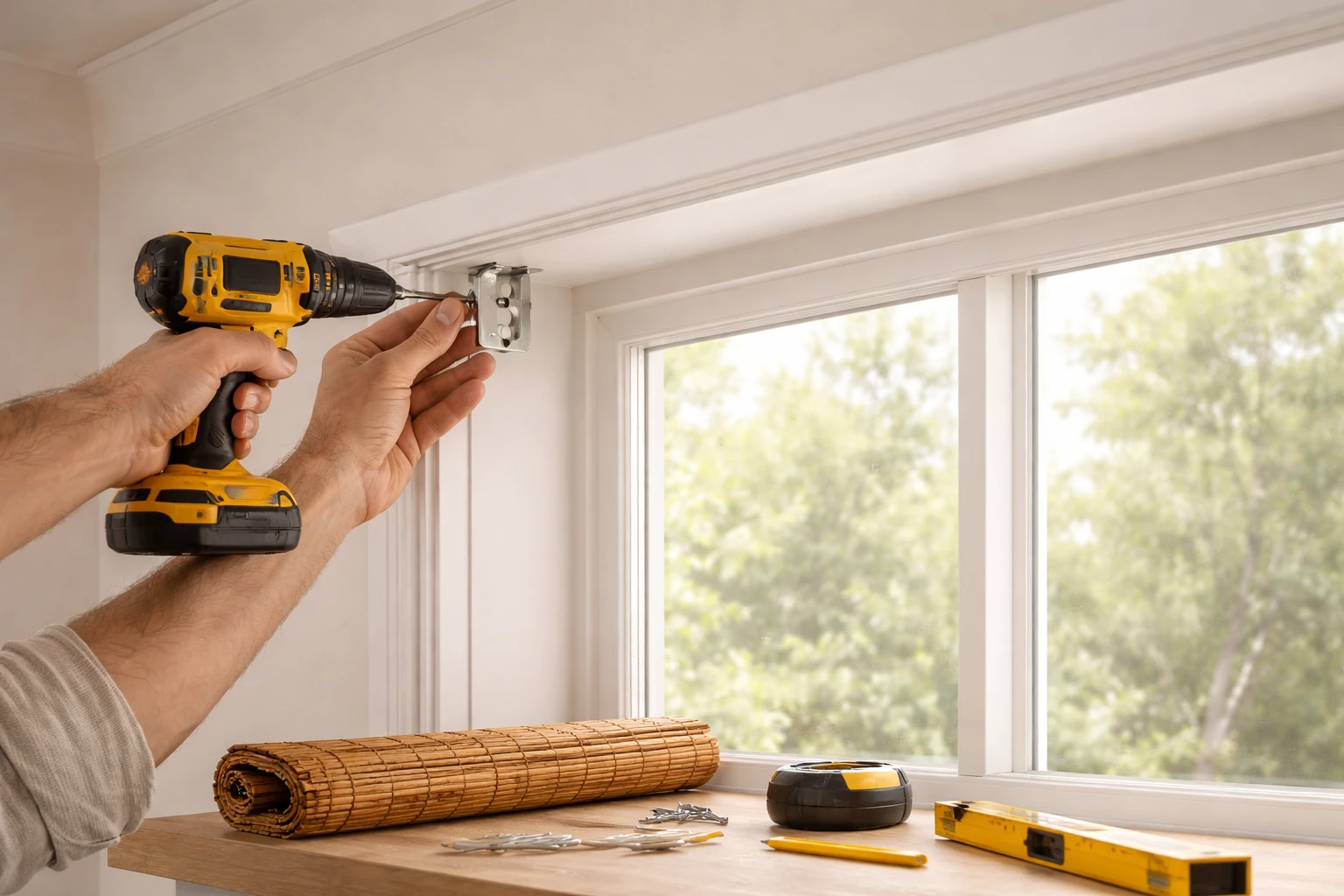
Inside mounting requires precision. Take your time.
Step 1: Mark Bracket Placement
Place brackets evenly inside the top of the window frame. Keep them slightly inset from the edges to avoid interference.
Step 2: Drill Pilot Holes
Pilot holes prevent wood splitting and help screws go in straight.
Step 3: Secure the Brackets
Tighten screws firmly, but don’t overtighten. Stripped holes weaken the mount.
Step 4: Attach the Shade
Most bamboo shades snap or hook into the brackets. Follow the manufacturer’s direction carefully here.
Step 5: Test Operation
Raise and lower the shade fully. It should move smoothly without catching.
Step 6: Adjust as Needed
Small alignment issues can often be fixed by loosening one bracket slightly and adjusting.
How to Hang Bamboo Shades: Outside Mount Installation
Outside mounting gives you more flexibility.
Step 1: Determine Placement Height
Mounting the shade a few inches above the window frame makes ceilings feel taller.
Step 2: Measure and Mark
Mark bracket locations on the wall or trim. Use a level.
Step 3: Install Anchors (If Needed)
If you’re drilling into drywall, anchors are essential.
Step 4: Secure Brackets
Check stability before hanging the shade.
Step 5: Hang the Shade
Attach the shade to the brackets according to the manufacturer’s instructions.
Step 6: Final Test
Lower the shade completely. Check coverage and alignment.
Outside mounting is often more forgiving, which is why many first-time installers prefer it when learning how to hang bamboo shades.
Hanging Bamboo Shades Without Drilling
Sometimes drilling isn’t an option. Rentals. Tile. Metal frames.
Alternatives include:
- Tension rods (only for very lightweight shades)
- Adhesive brackets (check weight ratings carefully)
- Magnetic mounts (for metal frames)
These methods work best for temporary installs. They are not ideal for large or heavy bamboo shades.
If the shade pulls loose, it can damage both the shade and the surface underneath.
Adjusting and Testing After Installation
Don’t skip this part.
Test the shade several times. Watch how it rolls. Listen for rubbing or catching.
Check:
- Evenness across the bottom
- Smooth lifting motion
- Cord or cordless mechanism response
If something feels off, fix it now. Small issues become bigger once the shade settles.
Common Problems and How to Fix Them
Here’s a quick troubleshooting table:
| Problem | Likely Cause | Fix |
| Shade hangs crooked | Brackets not level | Re-measure and adjust |
| Shade won’t roll evenly | Uneven mounting | Adjust bracket height |
| Screws pulling out | No anchors used | Install proper anchors |
| Shade rubs frame | Too tight fit | Switch to outside mount |
Most problems trace back to alignment or support. Rarely the shade itself.
Long-Term Care and Durability Tips
Bamboo shades last longer when they’re treated properly.
Basic care includes:
- Dusting regularly with a microfiber cloth
- Avoiding excessive moisture
- Keeping them out of direct, constant humidity
In kitchens or bathrooms, ventilation matters. Bamboo absorbs moisture. Over time, that can cause warping.
Once or twice a year, check bracket screws. Tighten if needed.
Styling Bamboo Shades So They Look Intentional
Installation is only half the story.
Bamboo shades look best when paired thoughtfully:
- Layer with light curtains for softness
- Choose tones that complement flooring
- Use outside mounts to add height visually
They work especially well in:
- Living rooms
- Bedrooms
- Sunrooms
- Offices that need light without glare
The key is balance. Bamboo shades should support the room, not dominate it.
When Hiring a Professional Makes Sense
Sometimes DIY isn’t the best choice.
Consider professional installation if:
- The shade is oversized or motorized
- Windows are very high or awkwardly placed
- Wall materials are unpredictable
- Time matters more than cost
A professional install doesn’t mean you failed. It means you chose efficiency.
Final Thoughts on How to Hang Bamboo Shades
Once you understand how to hang bamboo shades, the process stops feeling intimidating. It becomes methodical. Measured. Predictable.
Take your time. Measure carefully. Use proper support. Test everything.
The result is a window treatment that looks clean, natural, and intentional—exactly what bamboo shades are meant to deliver.
If you do it right the first time, you won’t think about them again.
They’ll just work. And they’ll look good doing it.
FAQs
Yes, bamboo shades work on most windows as long as the surface can support the brackets and the window is measured correctly.
Inside mounts create a clean look, while outside mounts offer better light control and are more forgiving for uneven frames.
Most bamboo shades include brackets and screws, but wall anchors may be needed depending on your wall type.
Most installations take 30–60 minutes per window once measurements are complete.
Lightweight bamboo shades can sometimes be mounted with adhesive brackets or tension rods, but drilling provides the most secure result.
Incorrect measurements and uneven bracket placement are the most frequent issues.
They offer moderate privacy, but pairing them with curtains is recommended for full nighttime coverage.
They can be used if the space is well ventilated, but prolonged moisture exposure should be avoided.
Uneven rolling usually means the brackets are not level or evenly spaced.
Cordless bamboo shades are the safest option and are recommended for homes with children or pets.