Gravel paths are one of the most flexible and cost-effective ways to create walkways in gardens, yards, and outdoor spaces. They drain well, adapt to different layouts, and suit everything from formal landscapes to relaxed cottage gardens. But gravel has one major drawback: it moves. Without proper containment, gravel slowly spreads into lawns, flower beds, and surrounding surfaces, turning a neat path into a constant maintenance problem.
The real solution isn’t raking more often or adding extra gravel every season. The long-term fix is correct edging. When edging is chosen carefully and installed properly, it keeps gravel where it belongs, maintains clean lines, and dramatically reduces ongoing upkeep. This guide explains why gravel spreads, how edging prevents it, and how to edge a gravel path properly so it stays stable and attractive for years.
Why Gravel Paths Spread Over Time
Gravel is a loose aggregate, meaning each stone moves independently. Every footstep pushes stones sideways. Wheels, pets, and garden equipment accelerate this movement. Rainwater washes fine particles toward the edges, while larger stones slowly migrate outward. In colder climates, freeze thaw cycles lift gravel and allow it to settle in new positions.
Installation mistakes make the problem worse. Paths laid directly on soil without compaction allow gravel to sink and spread. Shallow paths don’t have enough mass to resist movement. Rounded gravel, such as pea gravel, rolls easily beyond the edges. On sloped ground, gravity constantly pulls material downhill.
From a materials perspective, gravel behavior depends heavily on shape and size. Angular aggregates interlock and resist movement, while rounded aggregates shift freely. This distinction is well documented in construction and landscaping practices, and a useful overview of aggregate types can be found. Without a physical boundary, gravel will always migrate outward. Edging doesn’t eliminate internal movement, but it stops lateral escape and forces gravel to compact downward instead of spreading.
What Edging Actually Does
Edging is not just decorative trim. It is structural containment.
Its primary purpose is to resist the outward pressure created by foot traffic, water flow, and natural settling. When gravel presses against a solid edge, it compacts instead of spilling out. Over time, this creates a firmer, more stable walking surface.
Edging also defines the shape of the path. Straight lines stay crisp. Curves remain intentional. This visual clarity makes even simple gravel paths look professionally installed rather than improvised. Another benefit is reduced maintenance. Edged gravel paths require less raking, fewer top-ups, and less trimming where grass and soil encroach. Instead of constantly correcting movement, you maintain a stable system.
Choosing the Right Edging Material
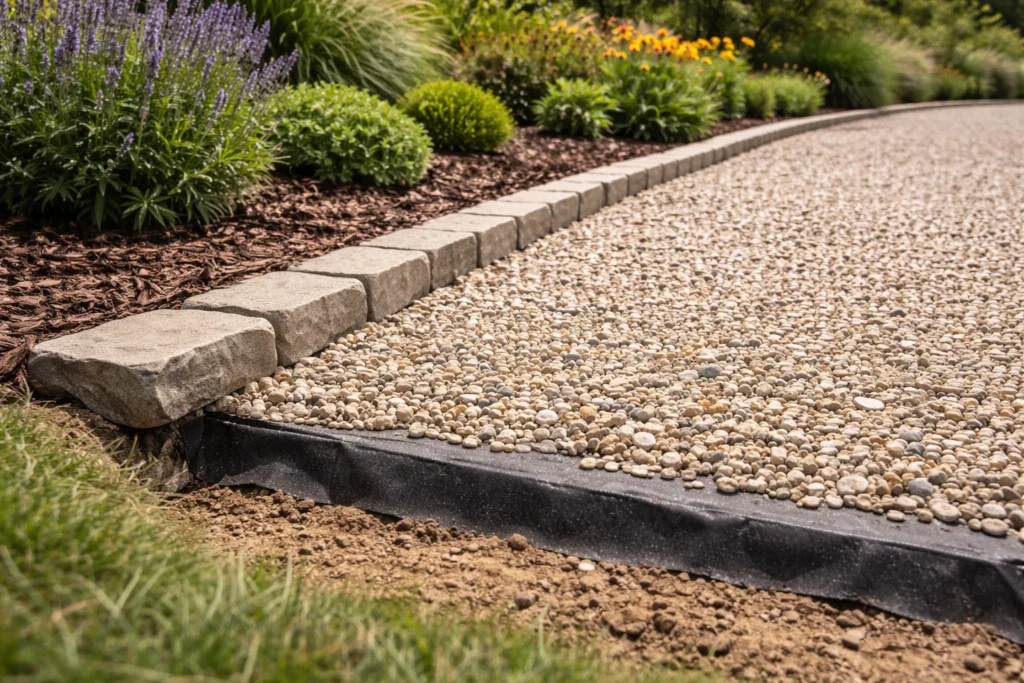
Not all edging materials perform equally. The right option depends on traffic levels, climate, path shape, and how permanent you want the installation to be. Understanding the best edging materials for gravel garden paths helps balance durability, appearance, and long-term performance. Metal edging, typically steel or aluminum, is one of the most effective choices. It creates a thin but strong barrier that resists pressure without dominating the design. Steel offers maximum rigidity and longevity, while aluminum is lighter and easier to shape. Metal edging works especially well for straight or gently curving paths.
Plastic or composite edging is flexible and budget-friendly. It bends easily around curves and suits informal garden layouts. However, it must be installed deeply and secured with stakes to prevent lifting or warping over time, particularly in areas with temperature extremes. Timber edging provides a natural, rustic appearance. Pressure-treated wood or rot-resistant species can work, but wood is vulnerable to moisture and soil contact. If not anchored deeply, timber edging can tilt or decay, allowing gravel to escape underneath.
Stone, brick, or paver edging offers excellent containment when installed correctly. These materials are heavy and stable, making them ideal for high-traffic paths. They require more excavation and careful base preparation but deliver long-term durability. Concrete edging, whether poured in place or precast, provides the strongest containment. It is best for paths that need to remain fixed for decades, though it offers little flexibility once installed.
Preparing the Ground Properly
Even the best edging will fail if the base beneath it is unstable. Preparation is the foundation of a long-lasting gravel path. Begin by marking the path layout clearly using string lines, stakes, or marking paint. Smooth, deliberate curves perform better than tight or irregular ones.
Excavate the path to the correct depth. Most gravel paths require 4 to 6 inches of total depth, depending on traffic and soil conditions. This allows space for a compacted base, landscape fabric, and gravel.
Compact the exposed soil thoroughly. Loose subgrade is one of the most common causes of edging failure. Use a hand tamper or plate compactor to create a firm foundation. Lay landscape fabric over the compacted soil. This prevents gravel from sinking into the soil and helps control weeds. Trim the fabric neatly along the edges so it does not interfere with edging installation.
Installing Edging Correctly
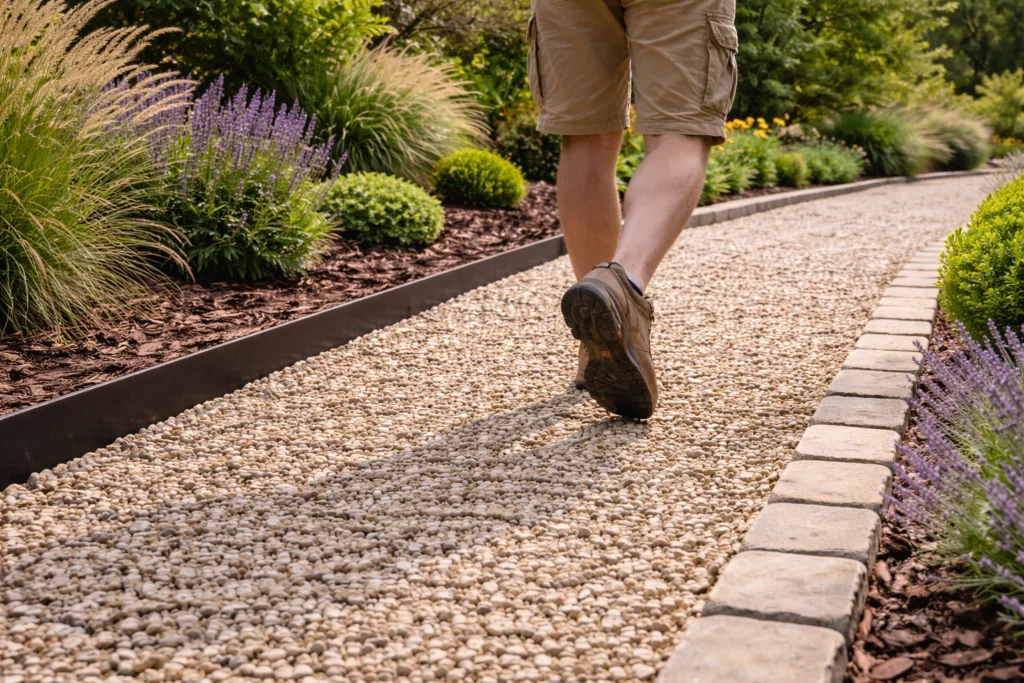
Edging should always be installed before adding gravel.
Dig a narrow trench along both sides of the path. At least half of the edging height should sit below ground level, with deeper installation providing greater resistance to movement. Set the edging into the trench, following the path layout carefully. Use a level to maintain consistent height. Small inconsistencies become very noticeable once gravel is added.
Secure the edging according to the material. Metal and plastic edging typically use stakes driven into the soil at regular intervals. Timber edging often requires rebar stakes or long galvanized spikes. Stone and brick edging should be set on a compacted crushed-stone base for stability. Backfill soil against the outside of the edging and compact it firmly. This external support is critical. Loose soil on the outside allows edging to shift under pressure.
Adding and Compacting the Gravel
Add gravel in layers rather than all at once. Spread a thin layer, rake it level, and compact it before adding the next layer. Layered installation helps gravel interlock and reduces future movement.
Choose angular gravel rather than rounded stone. Sizes between ¼ inch and ¾ inch work best for paths. Rounded materials tend to spread more easily and require taller edging to contain. Fill the path so the gravel surface sits slightly below the top of the edging. This prevents overflow during heavy rain and foot traffic. Compact the final surface thoroughly.
Getting Height and Depth Right
Edging should typically rise about ½ to 1 inch above the gravel surface. This provides containment without creating a tripping hazard.
Depth matters more than height. Shallow edging shifts over time regardless of material. Deeply anchored edging resists pressure from gravel movement, soil expansion, and repeated use.
Slopes, Drainage, and Water Control
Sloped gravel paths require extra attention. Gravity increases lateral pressure and accelerates spreading.
Where possible, break long slopes into shallow terraces instead of running the path continuously downhill. Proper drainage is equally important. Water flowing across the path can wash away fines and undermine the base. Subtle crowning or a slight cross-slope helps shed water without carrying gravel away.
Common Mistakes That Cause Gravel to Escape
Installing edging too shallow is one of the most common failures. It may look fine initially but shifts within months. Skipping base compaction undermines even the strongest edging materials. Using lightweight edging in high-traffic areas leads to bending and lifting. Ignoring early signs of movement allows small gaps to turn into major problems.
Long-Term Maintenance
A properly edged gravel path requires minimal maintenance. Periodically check for loose edging, exposed fabric, or low spots, especially after extreme weather.
Recompact gravel as needed, particularly during the first year as the material settles. Replace displaced gravel promptly to maintain even pressure against the edging. Trim vegetation carefully along the edges. Roots and grass can push against edging if left unmanaged.
DIY vs Professional Installation
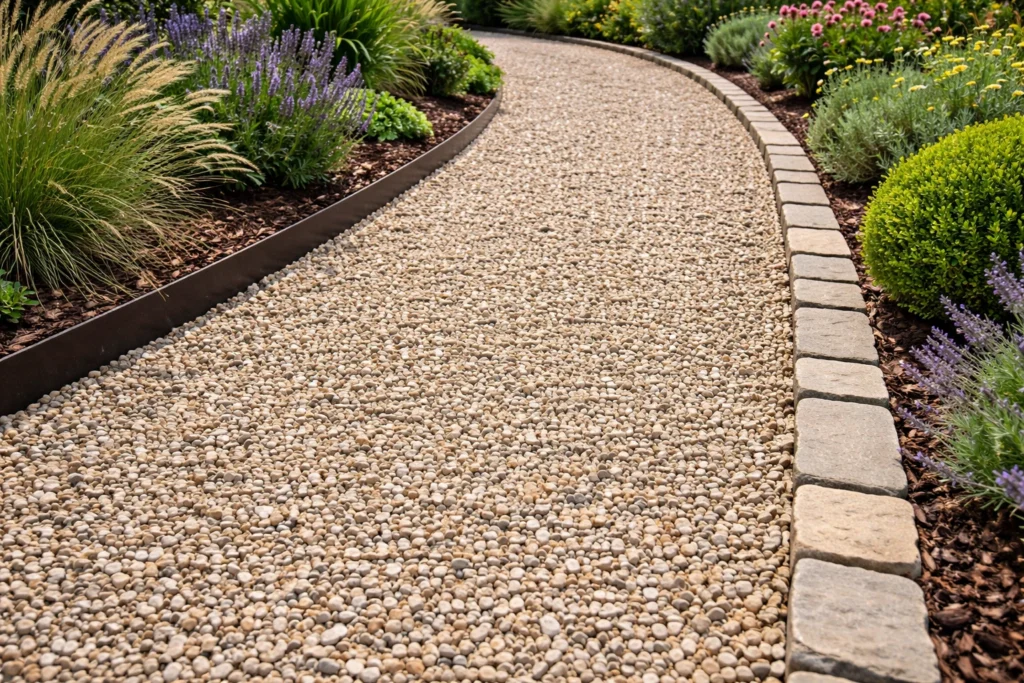
Many homeowners successfully install gravel path edging themselves, especially on small projects. Success depends on preparation, patience, and attention to detail rather than speed.
Professional installation may be worth considering for long paths, stone or concrete edging, complex curves, or sloped terrain. The higher upfront cost often results in greater durability and precision.
Why Proper Edging Is Worth the Effort
A gravel path without edging is temporary by nature. It will spread, blur, and degrade no matter how often it is maintained.
Proper edging turns gravel into a controlled surface. It reduces maintenance, preserves appearance, and extends the life of the path. With correct preparation, material selection, and installation, gravel stays where it belongs and your path remains clean, functional, and intentional for years to come.
FAQs
Yes, edging is essential to prevent gravel from spreading into lawns, beds, and surrounding surfaces over time.
Metal edging and stone edging are the most durable options for long-term gravel containment.
Edging should be buried so at least half its height sits below ground for proper stability.
Yes, metal, plastic, timber, and stone edging can all be installed without concrete if properly anchored.
Landscape fabric helps prevent sinking and weed growth but does not stop lateral spreading without edging.
Angular gravel spreads less than rounded gravel because it interlocks and compacts more effectively.
Edging should typically sit ½ to 1 inch above the gravel surface to contain movement without creating a trip hazard.
Some internal movement is normal, but proper edging prevents gravel from escaping the path.
Yes, even low-traffic paths benefit from edging to maintain shape and reduce maintenance.
Well-installed metal or stone edging can last decades with minimal maintenance.