I’ve worked around hardscapes long enough to know this truth: pavers don’t fail suddenly. They fade. They darken. And they quietly collect grime until one day the patio looks tired and the driveway feels neglected. If you’re searching for how to clean pavers properly, you’re already ahead of most homeowners. Cleaning isn’t about blasting dirt away and hoping for the best. It’s about restoring surface integrity, preserving joint stability, and extending the life of your investment. Done right, patio pavers can look nearly new again. Done wrong, they can be permanently damaged in minutes.
And yes—this applies whether you’re caring for a small backyard walkway or a large residential drive in Akron, Ohio, where seasonal moisture and freeze-thaw cycles accelerate buildup.
Let’s walk through this the right way. Step by step. No fluff. No shortcuts.
Why Dirty Pavers Are More Than a Cosmetic Problem
Grime doesn’t just sit on the surface.
It penetrates pores. It traps moisture. And it feeds organic growth that spreads under joints and edges.
Over time, this causes:
- Color dulling and blotchy staining
- Algae and mildew slicks that become slip hazards
- Joint sand erosion
- Uneven settling from compromised interlock
If you want to understand how to clean pavers effectively, you have to think beyond appearance. You’re restoring function, not just looks.
Know Your Pavers Before You Clean Them
Not all pavers are created equal. Pressure that works on one surface can scar another.
Common Paver Types
- Concrete pavers – Durable, porous, forgiving when cleaned correctly
- Brick pavers – Softer surface, more vulnerable to surface wear
- Natural stone pavers – Dense but easily etched if mishandled
Before you do anything else, identify what you’re standing on. That single step determines how aggressive you can be.
What High-Pressure Cleaning Actually Does
This is where many people go wrong.
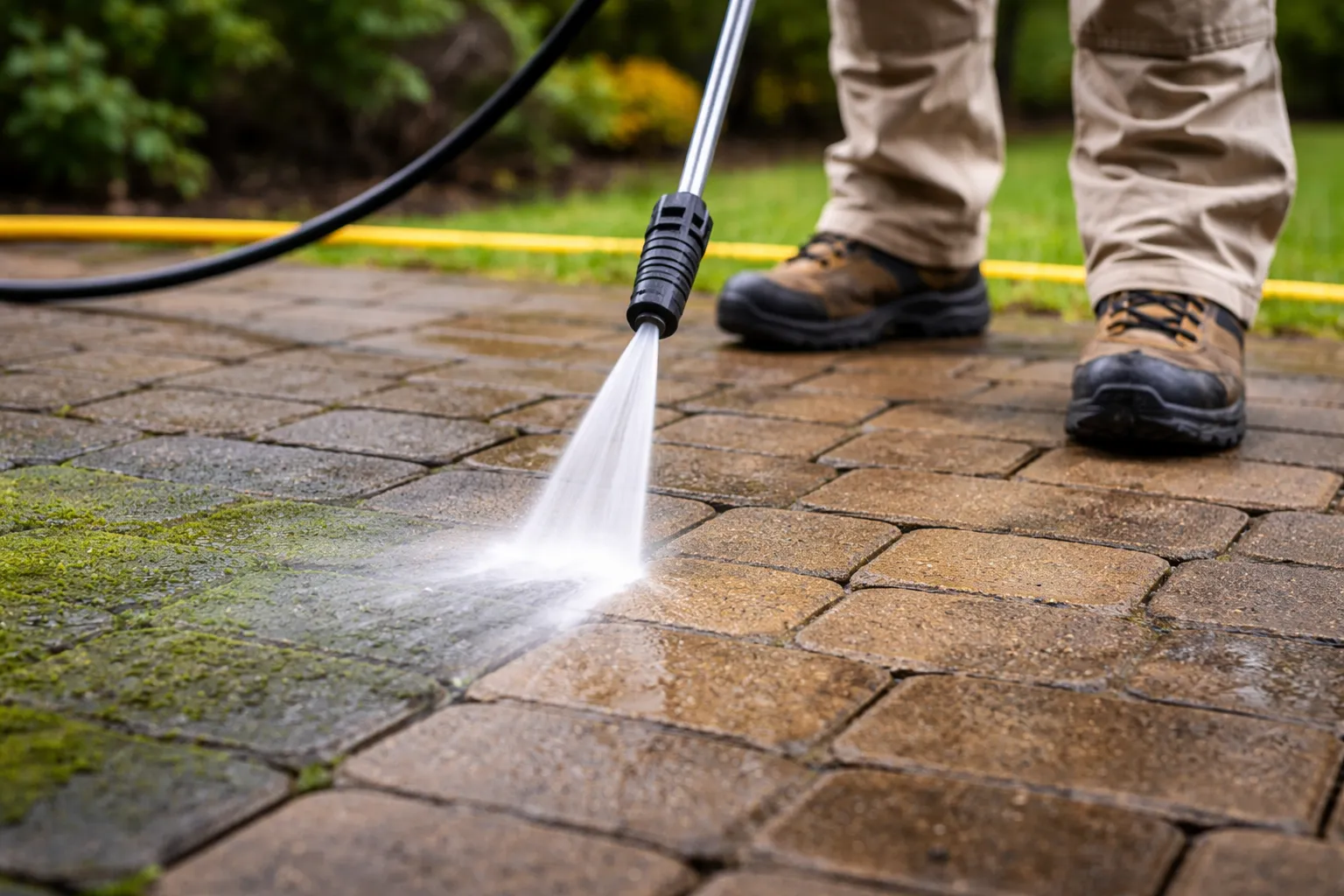
High-pressure water doesn’t “clean” in the traditional sense. It shears contaminants away from the surface using force. When used correctly, power washing removes embedded dirt, organic growth, and surface film without chemicals.
When used incorrectly, it:
- Etches the paver face
- Blows out joint sand
- Weakens edge restraints
Understanding this balance is central to learning how to clean pavers without shortening their lifespan.
When High-Pressure Cleaning Is the Right Choice
You don’t always need aggressive cleaning. But sometimes, it’s the only option.
High-pressure cleaning makes sense when:
- Pavers show dark organic staining
- Algae or moss returns quickly after rain
- Sweeping and rinsing no longer help
- Joint sand appears compacted but dirty
It’s not ideal when:
- Pavers are crumbling or flaking
- Joints are already loose
- Edges are poorly restrained
Knowing when not to clean aggressively is just as important as knowing how.
Equipment That Gets the Job Done Right
You don’t need a commercial rig. You do need control.
Pressure Washer Guidelines
| Component | Recommendation |
| PSI | 1,500–2,500 |
| Nozzle | 25° or 40° fan |
| Distance | 8–12 inches from surface |
| Motion | Continuous, even passes |
Avoid turbo nozzles. They concentrate force and leave visible damage.
If you want to truly master how to clean pavers, consistency matters more than raw pressure.
Preparation: Where Good Results Begin
Skipping prep is the fastest way to ruin a good surface.
Before cleaning:
- Remove furniture and planters
- Pull visible weeds from joints
- Sweep away loose debris
- Wet surrounding grass and plants
Then test. Always test.
Choose an inconspicuous area and verify that pressure and distance leave no surface marks.
Step-by-Step: How to Clean Pavers Properly
This is the core process. Follow it closely.
1. Initial Rinse
Use low pressure to remove loose dirt and cool the surface.
2. Controlled Cleaning Passes
Work in sections. Keep the nozzle moving. Never linger.
3. Maintain Angle and Distance
Hold the wand slightly angled. This reduces surface wear and joint blowout.
4. Rinse Thoroughly
Flush away all residue so loosened grime doesn’t resettle.
5. Inspect Immediately
Look for sand loss, surface scarring, or uneven results.
This method works whether you’re restoring a backyard patio or tackling a driveway in Akron, Ohio, where environmental buildup is common.
Mistakes That Cost Homeowners Thousands
I’ve seen these over and over.
- Standing too close to the surface
- Using maximum pressure “to save time”
- Cleaning joints directly
- Working on hot, dry pavers
- Skipping sand replacement afterward
Every one of these mistakes undermines the goal of learning how to clean pavers safely and sustainably.
Joint Sand: The Step Everyone Forgets
Joint sand is not cosmetic. It’s structural.
After cleaning, joints are often partially emptied. Left alone, pavers will shift, spread, and sink.
Restoring Joints
- Allow pavers to dry completely
- Sweep polymeric or joint sand into gaps
- Compact gently with a plate compactor (if applicable)
- Lightly mist to activate binding
This single step often determines whether your results last months—or years.
Should You Seal After Cleaning?
Sometimes yes. Sometimes no.
Sealing helps when:
- You want color enhancement
- The area sees heavy traffic
- Stains have been a recurring issue
Avoid sealing if:
- Moisture is still trapped
- Pavers are in shaded, damp areas
- You prefer a natural, matte finish
Sealing is not required to understand how to clean pavers, but it can lock in results when conditions are right.
DIY vs Professional Cleaning
This comes down to risk tolerance.
DIY Makes Sense If:
- Area is small
- Pavers are concrete
- You’re comfortable adjusting pressure
Hire a Pro If:
- Surface is natural stone
- Joints are already compromised
- The area is large or sloped
Professionals don’t just bring equipment. They bring judgment.
When Hiring a Professional Is the Smarter Move
If you’re unsure about pressure settings, surface tolerance, or joint protection, hiring a professional power washing company can be the safer option. Experienced crews know how different paver materials react under pressure and adjust technique in real time to avoid surface scarring, joint loss, or uneven results.
Professionals also reduce risk. They bring commercial-grade equipment with better flow control, understand runoff management, and handle large or sloped areas more efficiently. For homeowners who want consistent results without the learning curve—or who are working with older, delicate, or high-value pavers—outsourcing the job often saves time, prevents costly mistakes, and delivers longer-lasting outcomes.
It’s not required. But it’s often easier. And in many cases, safer.
Maintenance That Keeps Pavers Looking New
Cleaning once isn’t the finish line.
To maintain results:
- Sweep monthly
- Rinse seasonally
- Spot-clean spills immediately
- Address drainage issues early
Routine care dramatically reduces how often deep cleaning is needed.
Environmental and Safety Notes
Water moves somewhere after cleaning.
Be mindful of:
- Runoff direction
- Nearby storm drains
- Landscaping overspray
Wear eye protection. Closed-toe shoes. Gloves. Control matters.
Final Thoughts: Clean With Intention
Learning how to clean pavers isn’t about force. It’s about restraint.
Slow passes beat aggressive blasts.
Preparation beats correction.
And maintenance always beats repair.
Do it thoughtfully, and your pavers won’t just look better.
They’ll last longer.
FAQs
Most pavers benefit from a deep clean every 1–3 years, depending on exposure to moisture, shade, and foot or vehicle traffic.
Yes, excessive pressure or poor technique can etch the surface and remove joint sand, which may lead to shifting or settling.
A pressure range between 1,500 and 2,500 PSI is generally safe for concrete pavers when paired with proper distance and nozzle control.
In most cases, yes—cleaning often removes some sand, and restoring it helps maintain structural stability and interlock.
Water alone is usually sufficient for removing dirt and organic buildup when done correctly and consistently.
It can reduce surface staining, but deep oil stains may require additional treatment or professional attention.
Sealing is optional but can help protect color, reduce future staining, and extend the time between cleanings.
Mild, overcast days are ideal since extreme heat can cause rapid drying and uneven results.
Older or deteriorating pavers require extra care, and aggressive cleaning may worsen existing surface damage.
If you’re unsure about pressure settings, working with natural stone, or managing large areas, a professional service can reduce risk and improve results.