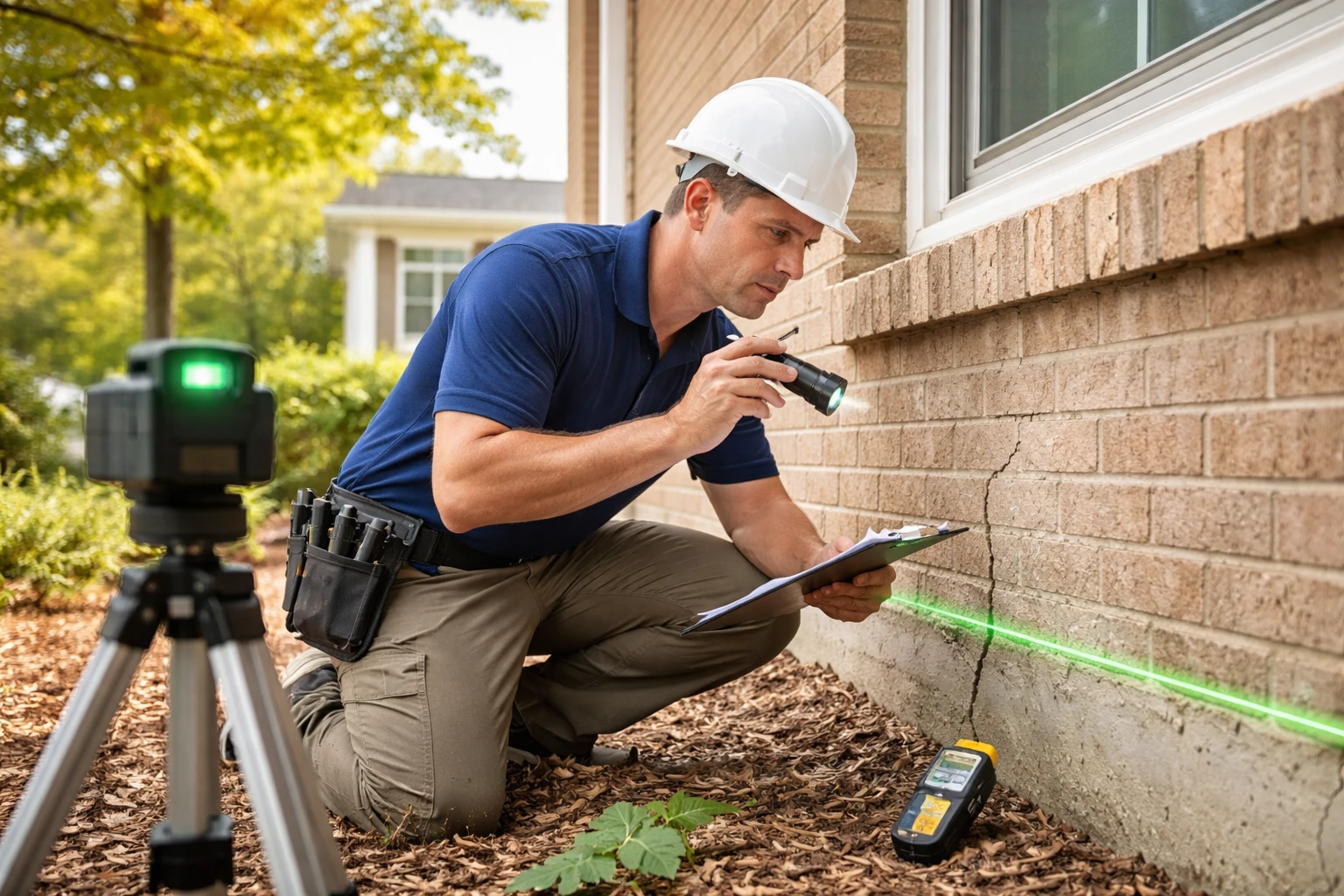
A home often reveals its problems through subtle signs before visible indicators. These can appear as uneven floors, sticking doors and windows, hairline cracks, or even small, unexplainable water stains. Many people ignore these signs as minor problems, unaware that they can lead to structural issues and disruptive, costly repairs in the future. A professional inspection could be the key to staying on top of foundation issues in your home.
Experts identify issues hidden from the untrained eye to prevent them from affecting the home’s structure and overall value. If you want to schedule an inspection, consult with a trusted foundation repair contractor that has the experience, tools, and techniques to examine the elevation, soil behavior, and load distribution to detect issues early and manage them with appropriate repairs.
Why Early Detection Matters
Foundation damage is not limited to the basement. In extreme cases, shifts in the foundation weaken load-bearing structures and the home’s structural integrity. Mold, mildew, bowed walls, and weak structures can develop here, potentially affecting residents’ health and safety.
Even minor issues such as cracks, uneven floors, and mold can affect the house’s flooring, plumbing, and walls, slowly weakening the structure and leading to foundation failure. Identifying issues and addressing them early lowers expenses, because minor repairs cost less than extensive foundation restorations.
Having a healthy, safe foundation assures the homeowners that problems are not lurking beneath the surface. When the foundation is stable and monitored regularly, homeowners feel confident about the home’s safety and market value, protecting their peace of mind for decades.
Common Causes of Hidden Foundation Problems
A home’s foundation is under pressure from different elements, especially those hidden below ground. Expansive soil is a major cause of foundation damage because it expands when wet and shrinks when dry. Drainage and water intrusion cause soil saturation, which puts pressure on the foundation and leads to uneven settlement, especially when roots from nearby trees and shrubs disturb the soil.
The use of low-quality materials and improper construction techniques during building is just as much of a problem. Together, these factors cause foundation damage, which most people notice only when visible signs appear inside and outside their home.
Signs Homeowners Might Miss
The most common signs of a foundation problem are small cracks, sticking doors and windows, and uneven floors. These subtle signs are dismissed as harmless, attributed to natural settling and seasonal changes. This is why hiring a professional inspector is so important: they can identify potential issues that most homeowners overlook.
How Experts Detect Problems
With their experience, foundation experts can recognize the signs of problems long before they turn into catastrophes. Then, they can recommend proactive solutions, like soil management or basement waterproofing, to reduce the risk of lasting damage.
Comprehensive Visual Inspections
The process begins with a thorough examination of the exterior of your home. The inspector walks around the perimeter, looking for signs of damage, including cracks, pooling moisture, soil shifts, and improper grading.
Then, the expert will conduct an internal examination of the basement or crawl space. They will notice damage such as foundation cracks, bowed walls, stains, efflorescence, and water pooling. They consider the type, size, direction, and location of cracks to distinguish cosmetic issues from serious structural defects. They can track changes and determine whether movement is stable or ongoing.
Precision Leveling and Elevation Measurements
After the inspection, professionals check for elevation changes. They use surveying equipment, like digital altimeters and laser levels, to detect fluctuations in surface height. These readings signal foundation movement, tilting, or rotation that can’t otherwise be detected.
An elevation map is created from the collected data and compared with previous readings or industry standards to determine movement. By analyzing data over time, professionals determine whether the movement has stabilized or is ongoing and requires remedial solutions.
Soil and Drainage Analysis
Soil around the foundation drastically affects its health and stability. Clay soil is expansive and can cause foundation movement, whereas sandy soil can erode, leading to settlement. Foundation experts analyze soil composition, density, moisture content, and its response to environmental changes.
The next step is to examine drainage systems for clogged gutters, poor grading, and how close downspouts are to the foundation. They’ll analyze these conditions and recommend preventive and restorative measures to ensure a healthy foundation. These solutions address the root cause of foundation movement and prevent future problems, which play a big role in the building’s long-term stability.
Advanced Diagnostic Tools and Technology
One benefit of professional inspection is access to advanced tools and technology. These tools precisely identify foundation issues without invasive procedures. Experts can use thermal cameras to detect temperature fluctuations and crack monitors to track changes over time. These instruments provide real-time changes in foundation movement and moisture levels to stay ahead of potential problems.
Compared with traditional visual inspections and invasive methods, digital tools such as sensors, Ground-Penetrating Radar, and drones provide actionable insights, making inspection data-driven. This technology-driven approach enables professionals to make accurate diagnoses and provide more targeted repair recommendations.
Structural Load and Stress Assessment
An engineer will assess the foundation’s ability to support the home’s structure without settlement or failure. They assess load and stress distribution throughout the home and identify the weak points and compromised supports that can lead to failure. They also inspect beams, load-bearing walls, and piers to make sure they are functioning as intended.
Historical and Environmental Review
Experts also review historical information and environmental factors, and analyze the building’s age, construction materials and techniques, and previous renovations. They’ll assess environmental factors such as climate patterns, drought cycles, soil and moisture levels, water management, and the impact of nearby trees and shrubs to gain a comprehensive understanding of the situation.
What Happens After a Problem is Detected
Once the experts identify an issue, they clearly share their findings with the homeowners. They determine whether immediate corrective action is required or whether preventive measures and monitoring will suffice. Combined with current findings, they provide a comprehensive and precise assessment.
When Homeowners Should Call for Professional Help
Major weather events, such as heavy rainfall, storms, prolonged drought, and flooding, can significantly affect the foundation. Professionals can identify potential issues and take remedial action to manage weather-related damage. Cracks, uneven floors, and bowing walls are also severe signs that require professional expertise for repairs.
Even without symptoms, a professional inspection every two years helps detect issues early and prevent costly repairs. Foundation experts provide valuable insights into the foundation’s condition and its impact on the home’s structural integrity. This is especially important when buying or selling a home, as it significantly affects property value.
Final Thoughts
Foundation repair experts with years of experience, knowledge, and tools identify problems before symptoms appear. From visual inspections and precise measurements to soil analysis and advanced diagnostics, their experience makes a big difference. They address potential issues long before they cause lasting damage, which helps you avoid costly repairs, protect structural integrity, and preserve the property’s value. Take a proactive approach to foundation health and schedule an inspection with a reliable foundation expert today.
FAQs
They use a combination of experience, visual inspections, precise measurements, soil analysis, and advanced diagnostic tools to detect early movement or stress.
Not always, but experts analyze the size, direction, and location of cracks to determine whether they’re cosmetic or structural.
Shifts in the foundation can cause frames to move out of alignment, making doors and windows difficult to open or close.
Expansive or eroding soil can swell, shrink, or shift, placing uneven pressure on the foundation over time.
They use laser levels, digital altimeters, and elevation mapping to detect subtle changes in floor height and structural alignment.
Yes, poor drainage and water intrusion can saturate soil, increase pressure on foundation walls, and lead to uneven settlement.
Tools like thermal cameras, crack monitors, ground-penetrating radar, and moisture sensors help identify issues without invasive testing.
Experts explain the findings clearly and recommend either immediate repairs, preventive solutions, or ongoing monitoring based on severity.
Even without visible signs, an inspection every two years helps catch issues early and avoid costly repairs.
Addressing minor issues early reduces repair costs, protects structural integrity, and preserves the home’s long-term value.