Designing a custom pool is never just about shape, size, or finishes. One of the most overlooked factors is elevation. Whether a yard slopes gently, drops off dramatically, or sits unevenly across multiple levels, changes in elevation quietly shape almost every design decision that follows. From engineering and drainage to aesthetics and long term maintenance, elevation plays a role that homeowners often only realize once the planning process is underway.
Understanding how elevation affects pool design early can save time, reduce surprises, and open the door to features that might not have seemed possible at first. A sloped yard is not a limitation. In many cases, it becomes the reason a pool feels truly custom.
Reading the Land Before Designing the Pool
Before any design sketches are drawn, experienced pool builders study the land itself. Elevation determines how water moves, where soil pressure builds, and how stable different sections of the yard may be. Even small changes in grade can affect where a pool can safely sit.
A relatively flat yard offers flexibility, but sloped terrain demands thoughtful planning. Builders look at how steep the slope is, where high and low points sit, and how close the pool will be to retaining walls, foundations, or property lines. These details guide decisions about pool placement and whether additional structural support will be required. This step often surprises homeowners. The most visually appealing spot for a pool is not always the safest or most cost effective location.
Structural Considerations on Sloped Properties
Elevation changes often require more complex structural solutions. When part of a pool sits higher than the surrounding ground, retaining walls may be necessary to hold back soil. In other cases, sections of the pool shell must be reinforced to handle uneven pressure from the earth.
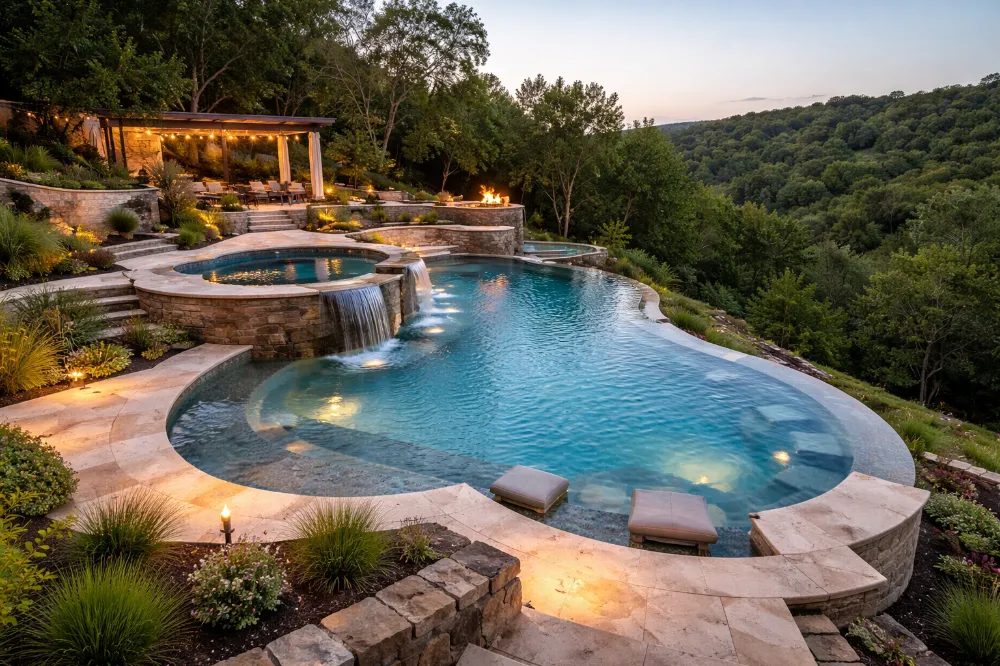
On steeper slopes, builders may recommend stepping the pool into the landscape rather than forcing a single flat plane. This approach distributes weight more evenly and reduces stress on the structure over time. It can also help preserve more of the natural terrain instead of dramatically reshaping the yard. These structural decisions are not just about safety. They directly influence the final look of the pool and how seamlessly it blends with the environment.
How Elevation Impacts Pool Shape and Layout
Elevation often dictates pool shape more than personal preference. Long, rectangular pools are easier to place on flat areas, while freeform designs adapt better to uneven terrain. Curves and organic lines allow designers to follow the land instead of fighting it.
Changes in height also affect how different areas of the pool are arranged. A shallow lounging area may sit at a higher point, while deeper swimming zones transition downward. Steps, benches, and ledges often double as subtle elevation changes within the pool itself. When handled well, these variations feel intentional rather than forced. The pool flows naturally from one section to the next, mirroring the movement of the landscape.
Creating Visual Drama With Elevation
One of the biggest advantages of elevation is the opportunity for visual impact. Pools built on slopes often feature raised edges, infinity edges, or vanishing edges that take advantage of the drop in elevation. Water appears to spill into the distance, drawing the eye outward.
Even modest elevation changes can create a sense of depth and luxury. A raised spa that overlooks the main pool or a cascading water feature that steps down the hillside adds movement and sound. These elements feel dynamic, especially when viewed from inside the home. Rather than hiding elevation changes, many designers now highlight them as a defining feature of the backyard.
Drainage and Water Management Challenges
Elevation affects how water behaves during heavy rain or pool use. Sloped yards can direct runoff toward the pool area if drainage is not carefully planned. This can lead to muddy decks, erosion, or excess debris entering the water. Designers address this by incorporating proper grading, channel drains, and sometimes underground drainage systems. Deck materials and joint placement also matter, since water needs a clear path away from the pool structure.
Access, Safety, and Everyday Use
Elevation influences how people move around the pool. Steep changes in height may require additional steps, ramps, or terraced decking to ensure safe access. This is especially important for families with children or guests who may not be familiar with the space.
Designers often use elevation to subtly separate areas. A higher lounging deck feels calm and social, while a lower swimming zone becomes active and playful. These level changes create natural zones without the need for walls or fences. When thoughtfully planned, elevation enhances usability rather than complicating it.
Turning Elevation Into an Advantage
Elevation changes influence nearly every aspect of custom pool design, from engineering and layout to aesthetics and daily use. While uneven terrain introduces challenges, it also opens the door to creative solutions that flat yards simply cannot offer. If you are looking for pools in College Station, there are contractors who can help.
By understanding the land, planning for structure and drainage, and leaning into the natural rise and fall of the yard, homeowners can transform elevation into a defining feature. The result is a pool that feels intentional, balanced, and deeply connected to its surroundings.
FAQs
Elevation affects structural stability, drainage, layout, and how the pool integrates with the surrounding landscape.
Yes, pools can be designed for sloped yards using retaining walls, stepped designs, or terraced layouts to ensure safety and durability.
Changes in elevation can increase costs due to added engineering, structural reinforcement, and drainage solutions.
Uneven terrain often favors freeform or organic shapes that adapt better to natural slopes than rigid rectangular designs.
Retaining walls, reinforced pool shells, and stepped foundations are commonly used to manage uneven ground pressure.
Yes, elevation allows for features like infinity edges, raised spas, and cascading water features that add visual impact.
Sloped yards require careful grading and drainage systems to prevent runoff, erosion, and debris from entering the pool.
They can be, as long as designers include proper steps, railings, and terraced decking to ensure safe movement.
Yes, elevation can create natural zones for lounging, swimming, and entertaining, improving functionality.
Absolutely. Understanding elevation early helps avoid surprises and allows designers to turn challenges into design advantages.