What’s more ancient than the act of sitting? Taking a moment out of your day to recline, relax and reflect is surely one of the most natural of human endeavours, which would explain why we’ve been building beautiful armchairs for well over 4,000 years! Just take a look at this lush sedan chair, once belonging to Queen Hetepheres of Egypt in the 2500s BCE. With so much history wrapped up in the art of parking one’s behind somewhere comfy, we think it’s imperative that you take your time when choosing the right chairs for your home.
In this style guide, I’ll be exploring armchairs and their ability, specifically, to transform and elevate your interior design and décor. Armchairs are synonymous with relaxing providing maximum comfort and support but they’ve got so much more to offer, as well. Let’s discover the wonderful versatility of armchairs, and ask ourselves what’s best to keep in mind when hunting for the perfect piece to complete your living room look.
The versatility of armchairs: How the humble chair can transform interior design
So what exactly can an armchair do for you? A chair is just a chair at the end of the day, isn’t it? Well, not in my opinion. As a longtime interior stylist, I’ve seen firsthand the extraordinary impact a well-placed, well-selected chair can have on a living room. Armchairs can unite two clashing materials and they can tie together a messy sense of feng shui; they can be the centrepiece or make perfect background filler; and most importantly of all, armchairs can introduce an immediate sense of homely, welcoming comfort to your interior space, no matter how modernist or minimal it is. Let’s take a look at some of the key characteristics which give armchairs their unique charm and versatility.
Shape
The beauty of the humble chair is that there are, with few exceptions, no rules to their construction. So long as the thing has four legs and a seat, it’s a chair the rest is left to pure imagination! Hence why when you scour the internet for inspiration, you’ll be met by more shapes, colours, styles and sizes of armchair than you can possibly comprehend.
Shape is a good place to start, as the shape of an armchair is its foundation. Armchairs can be quite rigid and rectangular, with long, strong lines, or they can be much softer and more rounded for a gentler aesthetic. They can be high-backed or low, sunken or quite tall. Depending on the size and shape of your living room, you’ll want an armchair which fits the existing space as if it was made to do so.
Colour
The colour of an armchair is another important characteristic. Because armchairs tend to occupy a relatively small portion of your living room, they present an exciting opportunity to add splashes of colour (or conversely, neutrals and mute tones) to a space without being overwhelming.
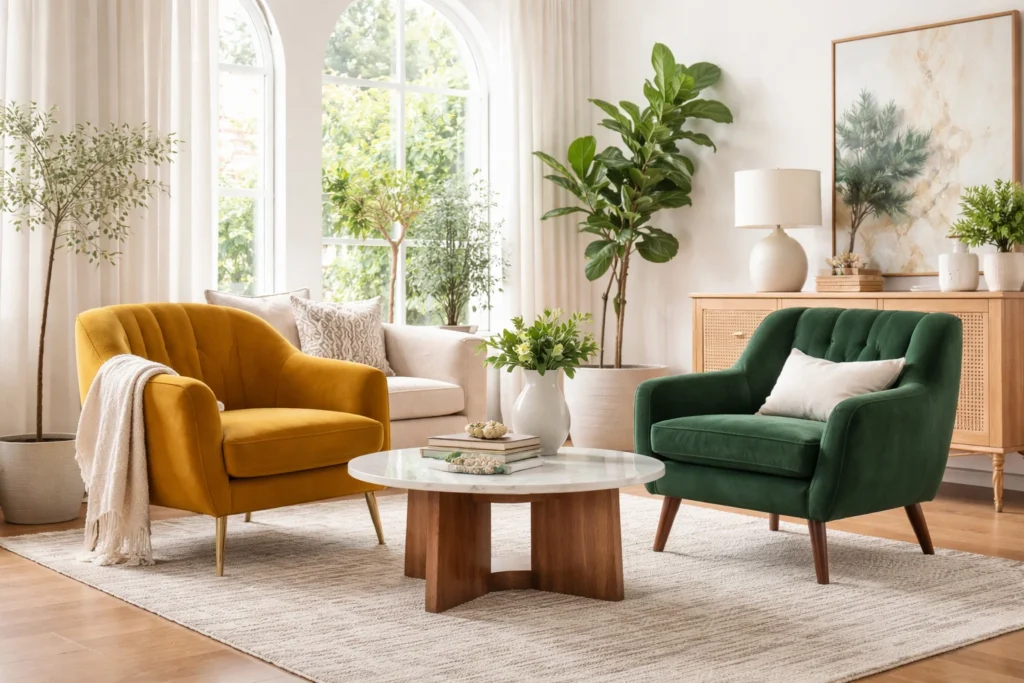
White, grey and sandy or beige living-room palettes, for example, can be instantly elevated with an armchair in, say, a bright sunburst orange or deep and swirling blue-green. The same goes the other way round, too, where a neutral-tone armchair can help to ground more vibrantly-styled interior spaces.
Material
When we think about armchairs, often the first thing we think about is the material. The material of an armchair indicates how comfortable it’s liable to be a leather armchair over metal, for example but also has implications in terms of texture and uniformity of interior design. Armchair manufacturers tend to utilise a combination of either wood or metal with cushioning upholstered in leather or cotton, jute, linen, wool, velvet or polyester.
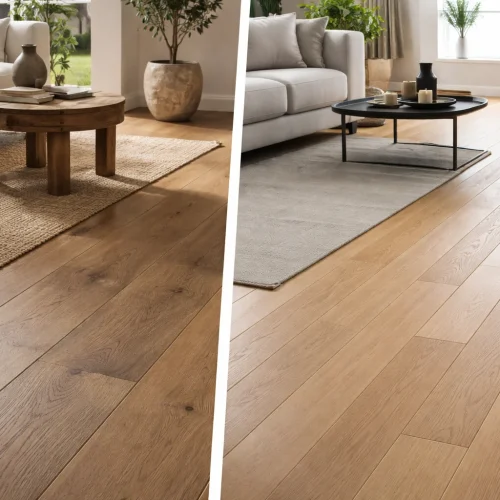
Personally, I like to pair materials together meaning if I’m styling a living room with nice wooden floors, I’ll look for armchairs with wooden legs whose grain and colour complement (without exactly matching) the floorboards. Of course, you could choose armchair materials which contrast with your living room instead. It all depends on what kind of aesthetic you’re trying to create.
Style
Last but not least is style. Style is all about your individual taste. Thankfully, there are dozens, if not hundreds, of unique armchair styles from different cultures, eras and artisans, meaning there’s bound to be at least one armchair style out there to tick all your boxes. From wingback and chesterfield armchairs to rocking chairs, sleek mid-century numbers, love seats and recliners, the best way to know what you like is to simply shop around!
How to pick the perfect armchair to complete your living room look
Now that we’ve looked at how an armchair could elevate your living room, it’s time to consider how to pick the armchair that will.
Consideration 1) Comfort vs statement
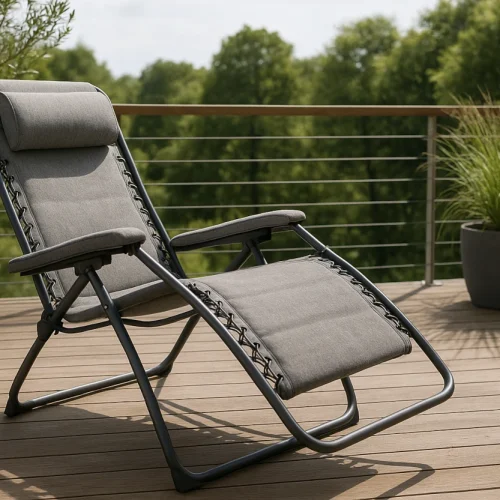
This is maybe the most important decision to make when shopping for living room chairs and armchairs. Essentially: What’s most important to you, comfort, style, or a happy medium? With so many armchair styles to choose from, it’s only natural that some depend largely on comfort as their appeal, while others prioritize style. A recliner armchair, for example, is essentially a kind of bed or chaise lounge, providing ultimate comfort for cosy movie nights and TV dinners. At the other end of the spectrum are highly-stylised mid-century modern (MCM) chairs, designed in the post-war years and characterised by clean lines, natural curves and minimalistic simplicity. An accent armchair, as we might term most MCM chairs, is undeniably stylish, but likely not as comfortable to sit in for extended periods of time as something built with comfort as the central goal.
Consideration 2) Contrast vs complement
I mentioned earlier the various ways in which armchairs can either contrast or complement your existing interior design. Again, it all comes down to your personal taste do you prefer discord or harmony? Maybe you prefer matching colours but like materials to clash, or vice versa. Whatever your personal style, it’s worth thinking about what you need your armchairs to do does your living room need toning down, or livening up?
Consideration 3) Assessing accessibility
On a much more practical note, the accessibility of an armchair may also be something you need to consider. For households with older occupants, folks with disabilities or who require additional support, the design of an armchair will also directly impact how functional it is. Lower seats may make getting back out of the armchair impossible, whilst too minimal a design might not provide the support to backs and limbs, which your family need.
Consideration 4) Budget doesn’t mean basic
Next up is, of course, the question of money. Armchairs, as with any living room furniture, come in a huge variety of prices. The price can be influenced by lots of different factors, too, such as the quality of materials used, the prestige of the manufacturer or designer, a big brand name, any repairs or upholstering required, vintage and era; the list goes on.
Depending on how much money you have to play with, you might be restricted to what armchairs you can decorate your living room with. Thankfully, budget doesn’t have to mean basic when it comes to armchairs some of the simplest are also the most popular whilst a tighter wallet might even present an opportunity for stylish improvisation…
Consideration 5) Adding a unique final flourish
Which brings us to our final point: Are you going to go straight-out-the-box, or would you prefer a chair with a little more ‘you’ in it? You see, the upshot to a well-made armchair is that it can be customised any number of times typically through upholstery.
Reupholstering an armchair means stripping the chair’s cushioning of its material and recovering it with new stuff. Upholstery gives you the option to take a style and shape of armchair you love, and give it a makeover so that it fits your living room’s aesthetic perfectly such as matching the colour or pattern of your armchair to your carpet, curtains or the art on your walls.
Conclusion: Recapping how to elevate your living room with armchairs
Armchairs have been around for literally thousands of years they’re even older than the pyramids and as a result, there are more types of armchair than you could possibly count.
Though often overlooked (sofas tend to be the focus of most living room designers), an armchair can help elevate the look and feel of your living room like nothing else. With a wide variety of shapes, styles, materials, colours, forms and functionalities, armchairs are the key to unlocking your home’s true design potential.
FAQs
An armchair can introduce contrast, texture, or color, instantly adding depth and personality to the space.
Not necessarily armchairs can either complement your sofa for harmony or contrast it for visual interest.
Compact, low-profile, or armless designs help maintain flow without overwhelming limited space.
Some are, but many prioritize style check cushioning, seat depth, and back support before committing.
Leather, tightly woven fabrics, and quality hardwood frames tend to offer long-lasting performance.
Consider whether you want it to blend into your palette or serve as a bold focal point.
Yes, placing one strategically can balance empty corners and improve the room’s visual symmetry.
Statement chairs prioritize aesthetics, while comfort chairs focus on ergonomics and support.
If the frame is solid, reupholstering can be a cost-effective way to customize and refresh your décor.
It depends on room size and layout, but one or two well-placed chairs typically create balance without clutter.