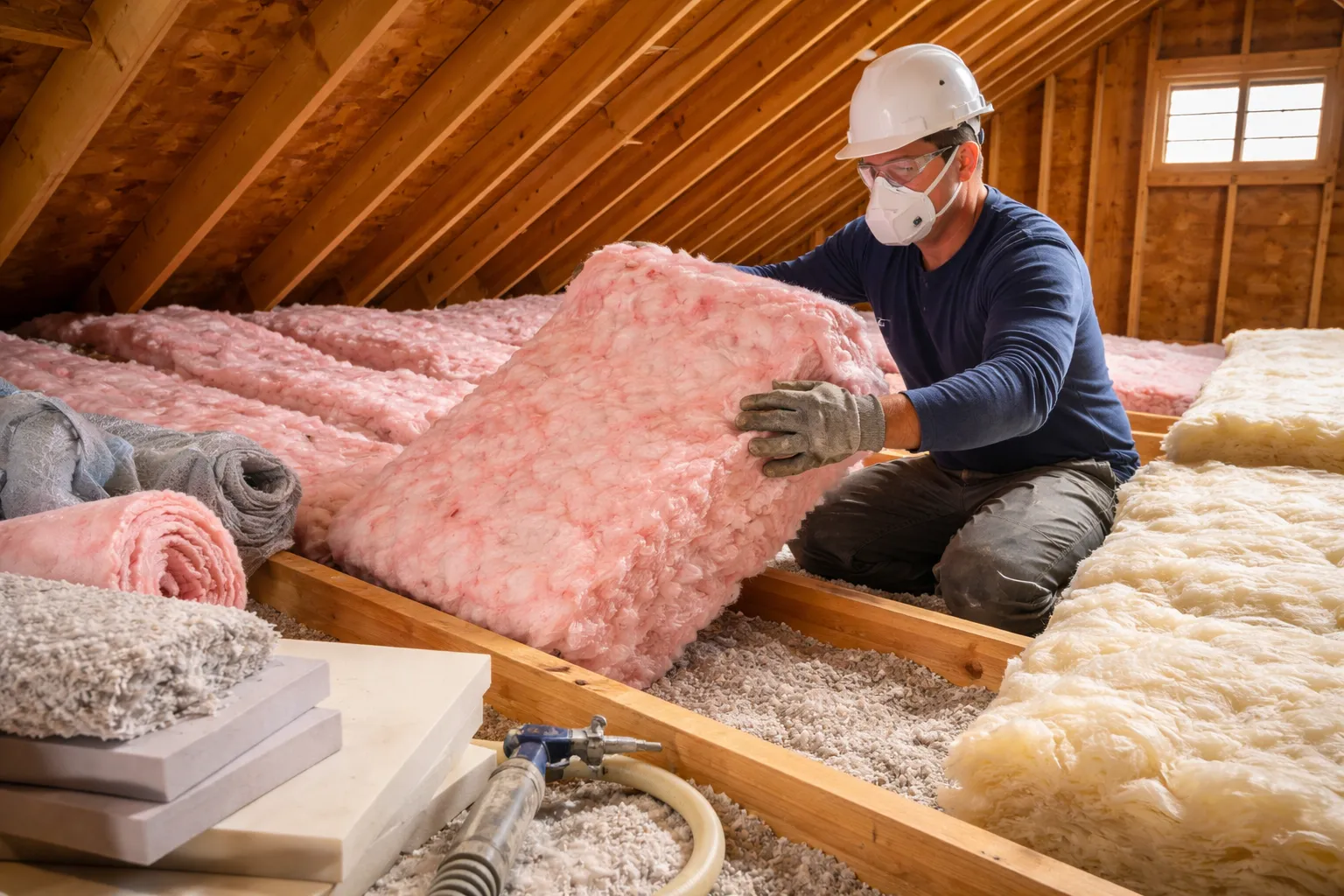
Typically, the person installing the house insulation does not explain it well. While homeowners hear of potential energy savings and comfort, several key questions go unanswered. Being aware of these elements makes it easy for residents to make informed decisions to maximise efficiency and minimise issues after installation.
Types of Insulation
Energy efficiency improvements may include house insulation in Wellington during renovations. Various materials are used to create more temperature-controlled homes year-round. There are four main types of insulation: fibreglass, cellulose, spray foam, and rigid foam panels, and each type has its own set of benefits.
Installers often reference various types of roofs, but they rarely discuss the factors to consider, such as your home’s age, climate, or existing structure. Not all materials are appropriate for every home due to variations in attic space, moisture exposure, and wall construction.
Installation Techniques Matter
If insulation is not installed correctly, it will not work as it should. If the sections are separated or very loose in fitting, there is space for air to pass through, reducing efficiency. Installers might not emphasise that even small gaps or compressions can cause draughts and temperature shifts. Cunningly fitted and sealed around pipes, cables, and junctions, this also prevents cold spots and wasted energy.
R-Value: More Than a Number
R-value indicates how well the insulation will resist heat flow, but installers do not always give the complete picture of its limitations. Most people believe that more is better, but the quality of the installation and the climate where you live play essential roles. For example, compressed insulation or voids can reduce the expected resistance. Furthermore, regional climate variations mean that what is best for one area might be mediocre somewhere else.
Ventilation and Comfort
Adequate insulation can lead to comfort, but balanced ventilation is essential. One thing some installers fail to warn about is that, without sufficient airflow, homes can experience trapped moisture or stagnant air. Roof and soffit vents help airflow, along with exhaust fans and window placement. Even a properly insulated area needs to be able to ‘breathe’ to prevent condensation and the complications it can cause.
Hidden Costs and Maintenance
Many installers focus on upfront costs but overlook long-term maintenance or hidden expenses. Over time, they settle, shift, or simply break down, losing some of their potency. Contrary to some assumptions, homeowners may need to inspect and replace insulation after many years, especially if it becomes infested with pests or subjected to water infiltration. During seasonal inspections, many issues can be identified, such as damp spots, mould, or missing sections. Your comfort level is affected, and your system is not as effective as it should be.
Health and Safety Considerations
Not all insulation products present the same health hazards. Many of these release dust or fibres when installed, and others contain chemicals that can eventually offgas fumes or irritants. Due to time constraints, installers tend to skim over detailed conversations about protective measures or ventilation procedures. The state says residents should know that their indoor air may be affected, limit their time in the work area, wear masks, and leave while work is in progress.
Environmental Impact
More and more residents have sustainability on their minds. The installer may not discuss the environmental footprint of other insulation options. Some products use recycled content or renewable resources, and others use petrochemicals. End-of-life disposal for insulation is essential, too. There are many ways in which property owners can reduce the waste they produce and their carbon footprint by choosing more sustainable options.
Insulation and Energy Bills
Installers cited reduced energy use as the primary benefit. The amount you save varies widely based on the size of your home, the local weather, and your regimen. More insulation will not reduce costs as long as windows, doors, or even ductwork are loose. New insulation will pay dividends, but so will remedial work to rectify draughts and upgrade heating systems.
Conclusion
The common misconception that house insulation only involves material selection and installation is not accurate. Installation methods, air sealing, ventilation, maintenance, health, and environmental factors will provide long-term comfort and savings.
Homeowners can maximise their efforts for both immediate impact and long-term performance by ensuring the process works around the best questions and solutions for each component, and they can enjoy the benefits of comfortable, efficient, and healthy indoor spaces year after year.
FAQS
Even high-quality insulation can underperform if it’s poorly installed, compressed, or has gaps that allow air leakage.
No, the best option depends on factors like your home’s age, climate, moisture exposure, and wall or roof structure.
Small gaps, loose fitting, or compressed sections allow air movement, reducing insulation effectiveness and causing temperature fluctuations.
R-value measures resistance to heat flow, but real-world performance also depends on installation quality and local climate conditions.
Yes, without proper ventilation, excessive insulation can trap moisture and lead to condensation, mould, or stale indoor air.
Ventilation allows moisture and stale air to escape, helping prevent condensation and maintaining indoor comfort and air quality.
Yes, insulation can settle, degrade, or be damaged by pests or moisture, so periodic inspections are recommended.
Some materials release dust, fibres, or fumes during installation, so protective equipment and temporary avoidance of the work area are advised.
Environmental impact varies by product, with some using recycled or renewable materials and others relying on petrochemicals.
Insulation helps, but the greatest savings come when combined with draught sealing, efficient windows, and well-maintained heating systems.