We spend almost all our time moving between screens. Wake up to the phone, work on the laptop, and then “relax” by staring at the TV. Honestly, it’s a lot. It is so easy to feel like the four walls of the house are just closing in on you, even if you love your home. There is this specific kind of brain fog that comes from being stuck inside all day. You know that dull ache in your eyes? That’s the blue light. It’s heavy.
But why do we just accept that as the way things are?
That’s why your outdoor space, whether it’s a tiny balcony or a big yard, isn’t just “extra” space. It’s a place actually to breathe. When you step outside, everything shifts. The air feels different. The light is real. Even the neighborhood noise somehow feels better than the hum of a refrigerator. It changes your mood. It just does.
Creating a Spot Where You Can Actually Relax
Rest doesn’t always mean a nap. Usually, it just means a break from the “to-do” list. Inside the house, you’re always seeing things that need fixing. A dish in the sink. A pile of mail. But outside? Those things disappear. And that’s really the whole point.
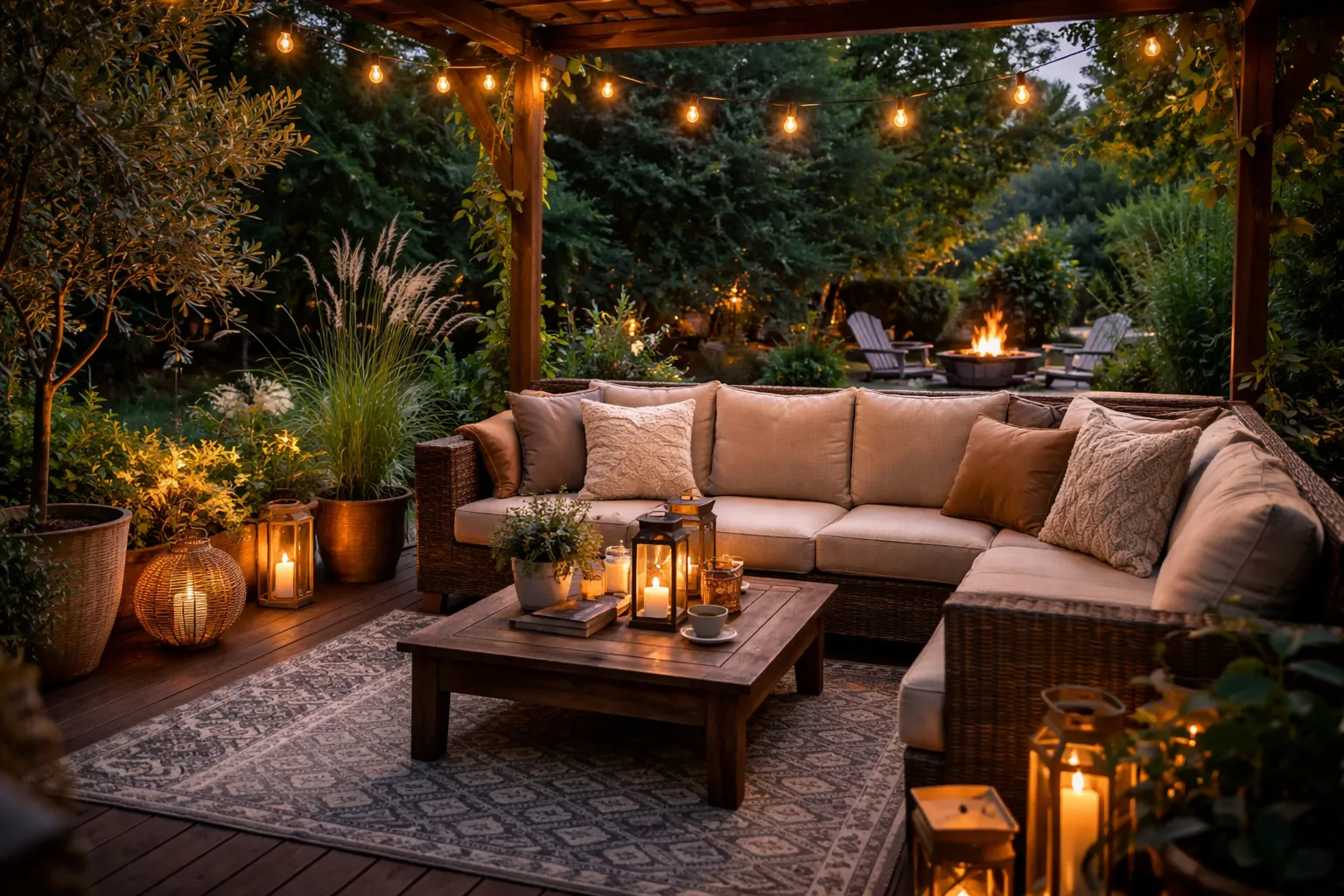
If you want to actually use the space, you have to make it comfortable. Because if the chairs are stiff or you’re squinting in the sun, you’re going to go back inside after five minutes. You need a little nook that feels like a hideout. Maybe some tall plants for privacy or a big umbrella for shade. When you have a spot that feels tucked away, your brain finally starts to quiet down. You can just sit there. Watch the clouds. Maybe read a few pages of a book. For a second, life feels a lot slower. And I think we all need that more than we realize.
Why We Need to Connect Outside
Outdoor spaces are also just better for hanging out with people. There’s something about being outside that makes everything less formal. In a dining room, you feel like a “host.” On a porch, you’re just a person. Conversations just seem to go deeper when you’re looking at a sunset instead of a wall.
But we have to prioritize the talk over the “look.”
To make that happen, you have to think about where people sit. You want people looking at each other, not at a screen. A few chairs in a circle or a big, messy outdoor couch can change everything. When you explore various patio furniture options, look for pieces that invite people to stay a while. The goal is to create a space where time feels like it’s expanding rather than slipping away.
So many of our best stories happen after the sun goes down. Whether it’s a slow breakfast on a Sunday morning or a late-night conversation under the stars, these outdoor moments are usually the ones we hold onto. You know, the kind of talks where you lose track of the time entirely. It’s those 2 a.m. porch talks that stay with you.
Getting Back to the Senses
Inside an office or a kitchen, everything is artificial. Fluorescent lights. The buzz of the computer. But outside, your senses get a break. You smell the grass. You feel the wind. You touch the rough wood of a table or a cold stone.
And that’s the magic of it.
Maybe add a small fountain or some wind chimes. That sound of water is so much better than the sound of traffic. Even a tiny pot of herbs helps. Just brushing your hand against some rosemary while you walk by, it’s a small thing, but it grounds you. It’s way better than the hum of a laptop at midnight. These little details remind us that we’re part of a real, living world.
It’s Not Just for Summer
We shouldn’t only go outside when it’s 75 degrees. There’s something really peaceful about the seasons changing. A cold fall night with a big blanket and a hot coffee can be just as good as a summer day. Maybe even better.
But do we ever really let ourselves stay out there when it’s chilly?
If you have a fire pit or a decent heater, you can use that space almost all year. It’s just about changing how you think about “outdoor time.” Sometimes, connection is just sitting in the dark with someone while it rains. And honestly? That’s plenty. You don’t always need to be doing something. Your outdoor space should be a place where you can just be. Regardless of what the calendar says.
A Quick Final Thought
At the end of the day, our homes are supposed to help us feel human. We aren’t machines. We aren’t meant to be “productive” every single minute. We need spaces that let us slow down. By focusing on comfort and just being intentional with your yard, you’re making a real investment in your own happiness. And that really matters. It’s about living your life, not just getting through it.
FAQs
Outdoor areas provide a mental break from screens and indoor distractions, helping the brain relax and reset more naturally.
Yes, even a tiny balcony can offer fresh air, natural light, and a sense of escape that supports relaxation and clarity.
Comfort, shade, and a feeling of privacy are key—when your body is comfortable, your mind follows.
Being outside feels less formal, which often leads to longer, deeper conversations and more meaningful shared moments.
Arrangements that face people toward each other, like circular seating or shared couches, naturally invite conversation.
Engaging the senses—light, air, sound, and texture—helps create stronger emotional connections and lasting memories.
Small touches like plants, water features, or wind chimes ground you in the moment and reduce mental noise.
No, with blankets, heaters, or a fire pit, outdoor areas can be comforting and inviting year-round.
Yes, stepping outside interrupts constant stimulation and encourages slower, more mindful moments.
It’s a place to slow down, connect, and simply exist without pressure—something modern life often forgets to allow.