University dorms share a distinct aesthetic: “honey oak” wood, cold steel, and industrial laminate. Built to be indestructible rather than inspiring, these immovable objects often dominate the room. Strict “no paint” rules leave many students feeling powerless, resigned to living in a space that feels more like a waiting room than a sanctuary.
However, a lack of permanence doesn’t mean a lack of style. Just as you might seek academic support to write your essay with guaranteed quality to manage workload stress, you can employ strategic hacks to alleviate visual stress. Transforming your dorm doesn’t require a renovation budget. It simply requires a shift in perspective: disguising the furniture rather than rebuilding it. With ingenuity and the right materials, you can mask industrial drabness and create a personalized space without risking your security deposit.
The Magic of Contact Paper: A Temporary Face-Lift
The single most powerful tool in the dorm decorator’s arsenal is removable contact paper (often sold as “peel-and-stick wallpaper”). This material has come a long way from the sticky shelf liners of the past. Modern versions are thick, textured, and designed to be removed without leaving a sticky residue.
If you are stuck with a desktop that is stained, scratched, or just an ugly color, contact paper acts as a new skin. You can cover the top of your desk in a faux white marble, a matte black, or a warm, rustic wood grain that clashes less with your bedding. The key to making this look high-end rather than cheap is the application technique. You must go slowly, using a credit card or squeegee to push out air bubbles as you unroll the paper.
Tips for Contact Paper Success
- Measure Twice, Cut Once: Always leave an inch of overhang on all sides to wrap around the edges of the desk or dresser. This hides the original color completely and prevents the paper from peeling up at the corners.
- Heat is Your Friend: If you are wrapping curved edges, use a hair dryer on a low setting to warm the vinyl. It becomes pliable and stretchy, allowing you to mold it around corners for a seamless finish.
- Don’t Forget the “Kickplate”: The ugly recessed area at the bottom of a wardrobe or dresser is often overlooked. Covering just this strip with a metallic gold or matte black paper can make the piece look like intentional furniture design.
Hardware Swaps: The “Jewelry” of Furniture
Often, it isn’t the wood of the dresser that makes it look dated; it is the cheap, generic handles. Most dorm furniture uses standard screw sizes for knobs and pulls. Swapping these out is one of the fastest, easiest ways to upgrade a piece of furniture, and it requires zero skill.
You can replace plain wooden knobs with modern matte black bars, crystal knobs, or leather pulls. This small change alters the entire silhouette of the furniture. It shifts the vibe from “institutional” to “curated.” The critical step here is organization. When you remove the original hardware, place all the screws and knobs immediately into a Ziploc bag. Tape this bag securely to the inside or back of the drawer itself. Do not rely on your memory to find them in May. When move-out day arrives, you simply unscrew your fancy handles, screw the old ones back in, and leave no trace that you were ever there.
Aesthetics as Efficiency
The impact of these changes goes beyond vanity. It creates an environment conducive to work. Raymond Miller, a writer for the essay writing service DoMyEssay with a background in English and Business, argues that modifying existing structures is a logical choice for resource management. Miller suggests viewing the dorm room as a workspace requiring optimization. Visual “noise” creates mental friction; covering a chaotic desk with a clean surface is a productivity hack. It reduces visual clutter, allowing the brain to focus on the task at hand rather than the environment’s flaws.
Tension Rods and “Soft Doors”
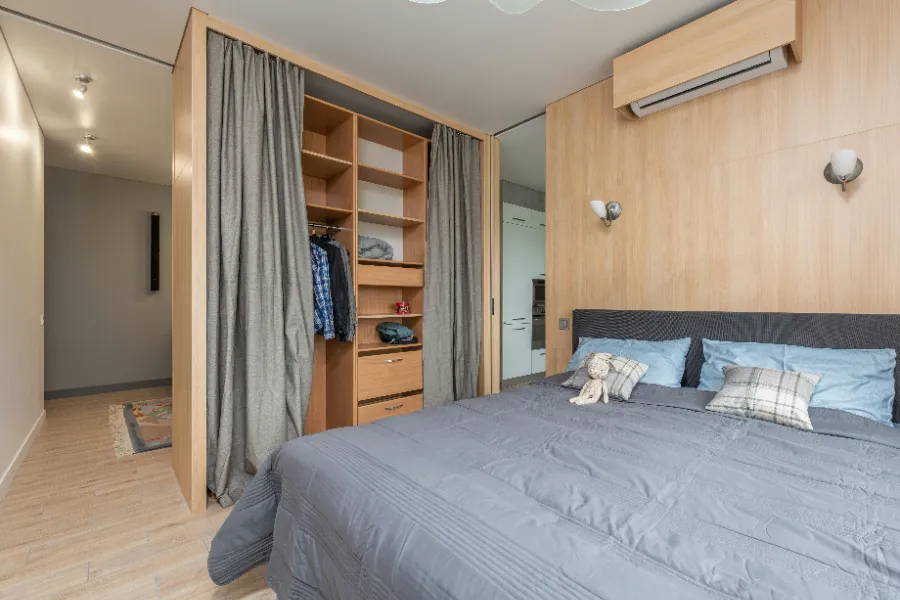
Many dorms feature open shelving units or under-bed storage areas that expose all your clutter to the world. Seeing stacks of textbooks, ramen noodles, and cleaning supplies contributes to visual overstimulation. Since you cannot install cabinet doors, the next best thing is a “soft door.” Using simple tension rods (which rely on pressure and require no screws), you can hang fabric curtains over open shelving. This instantly calms the room. You can use a neutral linen fabric to make the shelves disappear into the wall, or a bold pattern to create a statement piece. This technique is also perfect for the dreaded “closet with no door” situation found in many older dorms.
Washi Tape: The Detail Work
For metal furniture, like the frame of a loft bed or the legs of a desk, contact paper can be difficult to apply. Enter Washi tape. This Japanese masking tape comes in thousands of colors and patterns, is durable enough to stay on for a year, but comes off as easily as painter’s tape. You can use wide Washi tape to “stripe” the legs of a metal chair, turning cold grey steel into a gold or colorful accent. You can also use it to frame the edges of a bookshelf. It is a low-stakes, high-impact way to add color to the rigid lines of dorm furniture without the permanence of paint.
Conclusion
Hiding ugly dorm furniture is an exercise in creativity and engineering. It teaches you to look at an immutable object and see potential rather than a problem. By utilizing surface treatments like contact paper, swapping hardware, and employing textiles to soften harsh lines, you can completely rewrite the visual language of your room. You aren’t just hiding ugly wood. You are claiming ownership of your space, creating a home that supports your mental well-being and academic success, all without forfeiting your security deposit.
FAQs
Use removable options like contact paper, tension-rod curtains, hardware swaps, and textiles that leave no damage.
Yes high-quality removable contact paper peels off cleanly when applied correctly.
It works best on smooth surfaces such as desks, dressers, bookshelves, and some laminates.
Apply slowly, smoothing with a squeegee or card as you peel the backing away.
Most dorm furniture uses standard screws, so temporary hardware swaps are easy and reversible.
Use tension rods and fabric to create soft, removable curtains.
Yes Washi tape adheres well to metal and removes cleanly without residue.
Cover it with contact paper, add a desk mat, or layer decorative trays and organizers.
Throws, curtains, and small rugs soften harsh lines and visually hide dated materials.
Swap the knobs, cover the top with contact paper, and add matching storage bins nearby.