Hosting families overnight isn’t the same as hosting a solo traveler or a couple. One guest needs a comfortable bed. A family needs space, flexibility, privacy, and bedding that adapts to kids, parents, and sometimes grandparents all at the same time. And when you’re the host, you want to create a setup that feels welcoming and practical without turning your home into a full-time hotel.
Over the years, I’ve experimented with a lot of guest room arrangements: trundles, floor beds, pull-outs, air mattresses that were perfect until they weren’t, bunk beds that fit until a child outgrew them, and hybrid setups that worked better than expected. And the truth is, the best guest room bedding solutions blend comfort, versatility, and durability. Families need options, and your space needs to stay usable even when guests aren’t staying overnight. This guide breaks down everything you need to know about building the perfect guest room for hosting families from bed types to layout strategies to real-world details that make the space feel like home (for them) while staying easy to maintain (for you).
The Heart of the Guest Room: The Primary Bed
The main bed sets the tone for the entire room. Whether a family is staying with you for one night or a full week, adults need a comfortable, supportive mattress. If the “big bed” is bad, no amount of creative kid accommodations will save the visit.
A Queen Bed Works for Most Guests
A queen bed is the sweet spot: roomy enough for two adults, not oversized for the room, and easy to outfit with standard bedding. Unlike a king, a queen fits comfortably in most room sizes without sacrificing floor space needed for additional sleeping options.
A Full Bed Can Still Work
If your space is smaller, a full bed can still accommodate two adults but choose a truly supportive mattress and quality pillows. A durable mattress topper can instantly elevate the comfort level, giving guests a more plush sleep surface.
Should You Consider a King Bed?
If you have a large guest room or frequently host couples who prefer lots of personal space, a king bed can turn your home into a mini retreat. The only drawback is losing some floor space for kids’ sleeping setups, but if space allows, a king bed significantly boosts comfort for long-term stays.
Secondary Bedding: Where Flexibility Begins
Once the main bed is in place, the family-friendly magic comes from extra sleeping solutions. This is what turns an ordinary guest room into a family-ready space.
Option 1: A Trundle Bed (The Most Versatile Choice)
A trundle offers the best of both worlds: compact when not in use, but big enough for older kids or teenagers when pulled out. Families love it because:
- Kids sleep independently without crowding the primary bed
- Siblings get their own sleeping spots
- You don’t permanently lose floor space
A daybed with a trundle doubles as seating during the day, making the room feel more like a cozy suite.
Option 2: High-Quality Air Mattresses
Air mattresses get a bad reputation, but the newer, elevated models are much more supportive. They work especially well for:
- Teenagers needing bigger sleeping surfaces
- Large families needing extra beds
- Short-term stays
- Rooms with limited floor space
To make them feel more luxurious, use real sheets and add a soft topper. And always have a small bedside surface available, even if it’s just a stool.
Option 3: Foldable Foam Mattresses
Foldable mattresses are a lifesaver for hosting little ones. They’re incredibly kid-friendly because they’re low to the ground, soft, and safe.
They also fold into small cubes for easy storage and can double as play mats or reading corners.
Option 4: Sleeper Sofas
A sleeper sofa is perfect for guest rooms that double as offices or lounges. Choose memory foam pull-out styles with easy-open mechanisms. Avoid older models with metal bars that dig into your back.
Parents can take the sofa bed while kids use trundles or floor beds. It’s a flexible setup that works for mixed-age families.
Option 5: Bunk Beds (For Frequent Family Visitors)
If hosting families is a regular part of your life, bunk beds offer unbeatable convenience:
- Kids love them
- They save floor space
- They comfortably fit siblings or cousins
Opt for sturdier models with good weight limits so they work for teens too not just children.
Layering the Bedding: Comfort for All Ages
Layering is what transforms a bed from “acceptable” to “wow, this is comfortable.” For family guests, comfort matters even more because multiple people sleep at different temperature preferences.
Invest in a Pillow Variety
Offer a mix of:
- Soft pillows
- Medium-support pillows
- Firm pillows
This ensures everyone can find a pillow that feels right.
If allergies are a concern, consider adding hypoallergenic options. The Wikipedia page for “Hypoallergenic” explains how certain materials reduce allergen exposure and why these pillow types are beneficial for sensitive sleepers.
Use Soft, Breathable Sheets
Stick to:
- 100% cotton
- Linen
- High-quality microfiber
Avoid stiff polyester blends that trap heat and feel scratchy.
Add a Blanket Basket
Keep a basket with options:
- Lightweight throws
- Medium-weight quilts
- One plush, warm blanket
Different guests run at different temperatures, and families appreciate having choices.
Storage Solutions That Make Guests Feel at Home
Families bring more belongings than solo travelers. Provide spaces for them to unpack so they’re not living out of suitcases.
Clear One Drawer or Shelf
You don’t need to empty an entire dresser just one drawer goes a long way.
Add Luggage Stands
These keep bags organized and prevent back strain.
Provide Bedside Surfaces for Each Sleep Area
Even temporary sleep areas (trundle, foldable mattress, air mattress) should have:
- A small table
- A cup holder
- A phone charging spot
It makes each sleeping space feel intentional.
Make the Space Kid-Friendly Without Making It Childish
A family-friendly room should feel comfortable for adults but adaptable for kids.
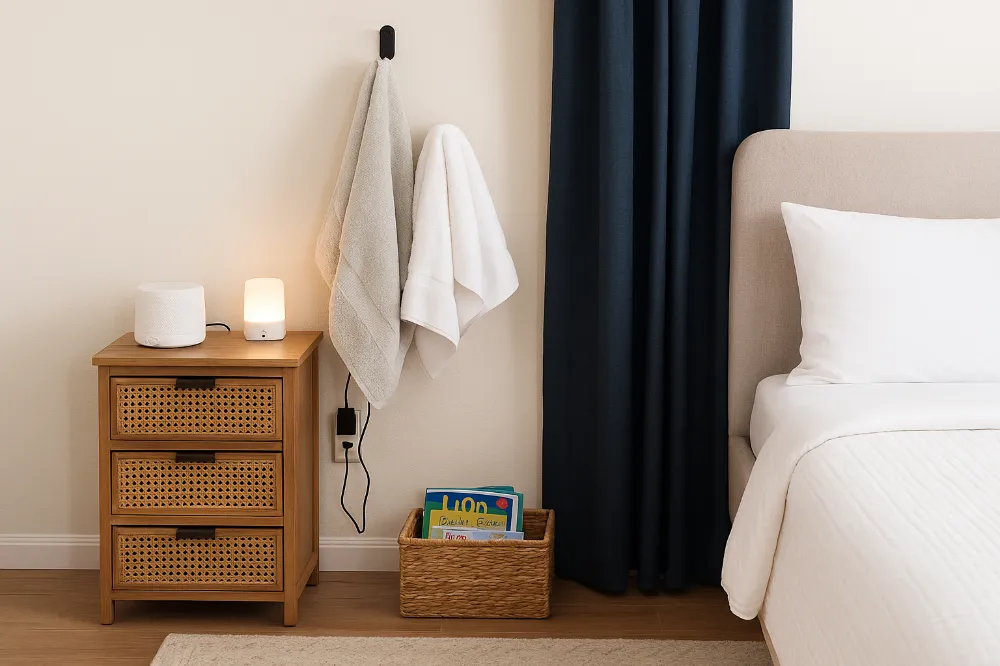
Add:
- A small nightlight
- A sound machine
- Blackout curtains
- Extra towels
- USB chargers
- A small basket of children’s books
None of these make the room look juvenile but they make it incredibly convenient for parents.
Bathroom & Linen Tips for Families
Families always need more linens than expected.
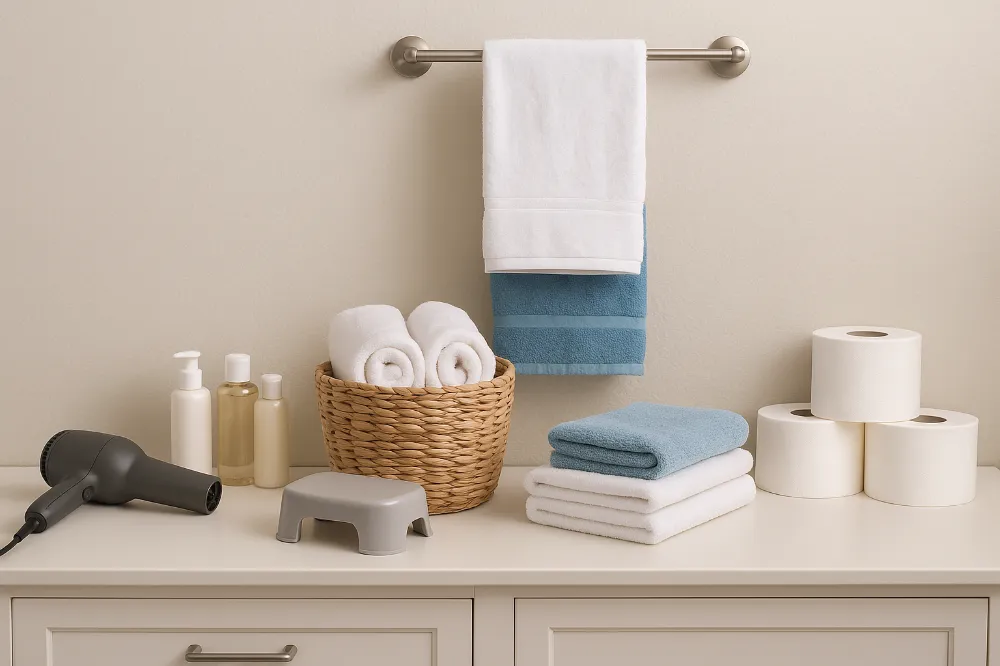
Stock the Guest Bathroom Like a Mini Hotel
Include:
- Towels for each guest
- Children’s towels for younger kids
- Body wash, shampoo, conditioner
- A stepping stool
- A hair dryer
- Extra toilet paper
A small set of travel-size toiletries is incredibly helpful if someone forgets something.
Protect the Mattresses
Always use quiet, waterproof protectors especially for trundles and foldable beds. Children have accidents; protect your investment without making anyone feel bad.
Room Layout Ideas for Real Homes
Families come in all shapes and sizes. Here are layout ideas that work in real-world houses:
Layout 1: Queen + Trundle + Foldable Mattress
Great for:
- Parents
- One older child
- One toddler
Minimal furniture, maximum flexibility.
Layout 2: King + Air Mattress
Ideal for longer stays where parents want extra comfort and teens need their own spaces.
Layout 3: Full Bed + Bunk Bed
Perfect for guests who visit frequently and want a dedicated family suite.
Layout 4: Sleeper Sofa + Daybed
Ideal for multipurpose rooms like offices or dens.
Little Luxuries That Make a Big Difference
Families appreciate small touches that make their stay easier:
- A snack basket
- Water carafe
- A fan
- White-noise machine
- A folding screen for privacy
- A small diaper changing surface
- A few extra hangers
These simple additions elevate the whole experience.
When Space Is Limited
Even tiny rooms can host families. Focus on:
- A queen or full bed
- One flexible extra sleep surface
- A rolling storage cart
- Foldable beds
Mount lighting on the wall to save precious floor space.
If your home tends to get warm, the U.S. Department of Energy’s guide to proper bedroom temperature offers insights into maintaining comfortable sleep environments. This is useful when families include infants or toddlers who are more sensitive to temperature changes.
When You Don’t Have a Guest Room
If guests sleep in your living room, office, or bonus room, choose:
- A high-quality sleeper sofa
- A rollaway cot
- A trifold mattress for kids
Store all bedding in a single organizer bin so setup is fast and easy.
Final Thoughts
Hosting families requires flexibility, thoughtful design, and bedding that adapts to different ages and needs. The right mix of a comfortable primary bed, versatile secondary beds, layered linens, and kid-friendly touches transforms your space into a welcoming retreat. Small details matter extra blankets, good pillows, storage solutions, and simple privacy options all help families settle in comfortably. Whether your guest room is big or small, dedicated or multifunctional, you can create a space that families love returning to.
FAQs
A queen bed is the most versatile, offering comfort without taking too much floor space needed for kids’ beds.
Use trundle beds, foldable mattresses, or high-quality air mattresses that pack away easily.
Yes, trundles are ideal kids get their own space to sleep, and the mattress stores neatly during the day.
Use hypoallergenic pillows, mattress protectors, and breathable cotton or linen sheets.
They do, especially in multipurpose rooms. Choose models with comfortable memory foam mattresses.
Prioritize one good bed, add one flexible sleep surface, and use vertical storage to keep the room open.
Stock soft sheets, extra blankets, pillows of varying firmness, and a few kid-sized options.
Yes, children sleep better and safer on their own beds foldable mats, trundles, and air beds work well.
Nightlights, sound machines, extra towels, blackout curtains, and charging stations elevate comfort.
Use waterproof, quiet mattress protectors on every bed, including trundles and foldable mattresses.