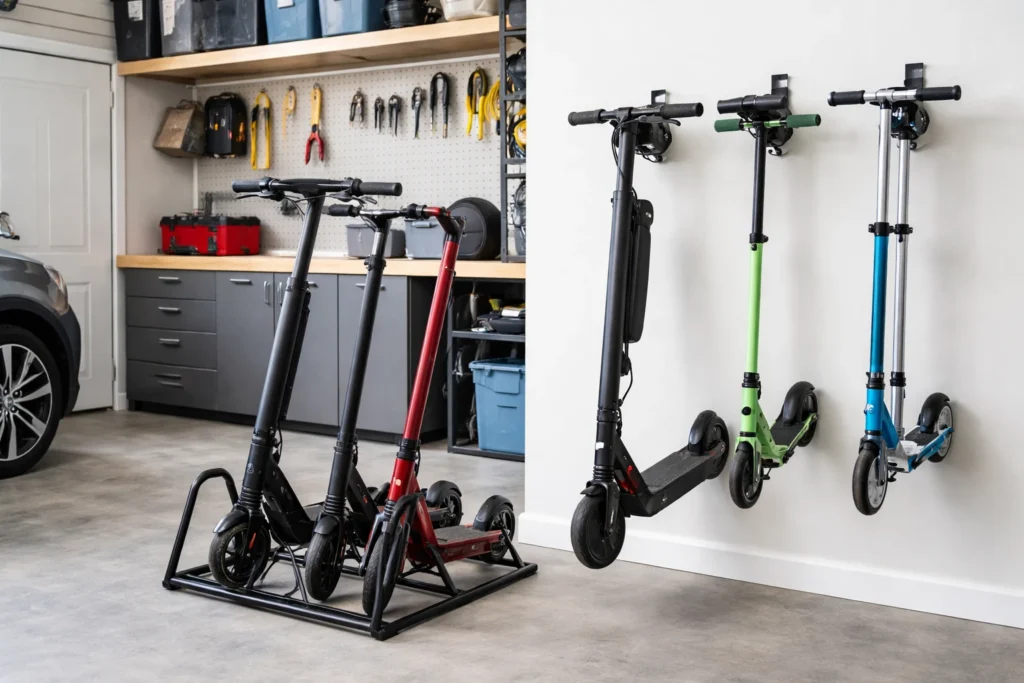
Scooters have a funny way of multiplying. One turns into two. Then an electric scooter joins the mix. Suddenly your garage floor feels tighter, walkways disappear, and every trip in or out becomes a balancing act. Good scooter storage isn’t just about tidiness. It’s about safety, convenience, and protecting equipment that isn’t cheap to replace.
Two storage options dominate most garages: scooter racks and wall hooks. Both can work brilliantly. Both can also be frustrating if chosen for the wrong reasons. This comparison breaks down how each option performs in real garages, with real constraints, and real scooters. By the end, you’ll know which solution fits your space, your scooters, and your daily routine.
Why Proper Scooter Storage Matters More Than You Think
At first, leaning a scooter against a wall feels harmless. But over time, the problems add up. Scooters tip over. Handlebars snag on bikes or shelving. Decks scratch walls. Electric scooter batteries sit in hot corners or damp spots.
Poor storage creates three major risks:
- Safety hazards from scooters falling or blocking pathways
- Damage to walls, vehicles, and the scooters themselves
- Shortened scooter lifespan, especially for electric models
Electric scooters, in particular, use lithium-ion batteries that are sensitive to heat, moisture, and physical impact. If you’re figuring out how to store electric scooters in a garage safely, stable positioning, airflow, and distance from heat sources matter just as much as keeping the floor clear. Good storage eliminates those risks. The question isn’t whether you should organize scooters. It’s how.
Understanding Your Garage Storage Reality
Before comparing racks and hooks, it helps to look at what garages actually deal with day to day.
Most garages are shared spaces. Cars come first. Tools, bins, bikes, lawn equipment, and shelving compete for what’s left. Storage solutions need to work around doors opening, vehicles parking, and people walking through without squeezing sideways. Scooters also vary widely. A lightweight kick scooter behaves very differently from a heavy electric scooter with a wide deck and tall handlebars. That difference plays a major role in whether a rack or wall hooks will feel effortless or annoying long term.
What a Garage Scooter Rack Really Is
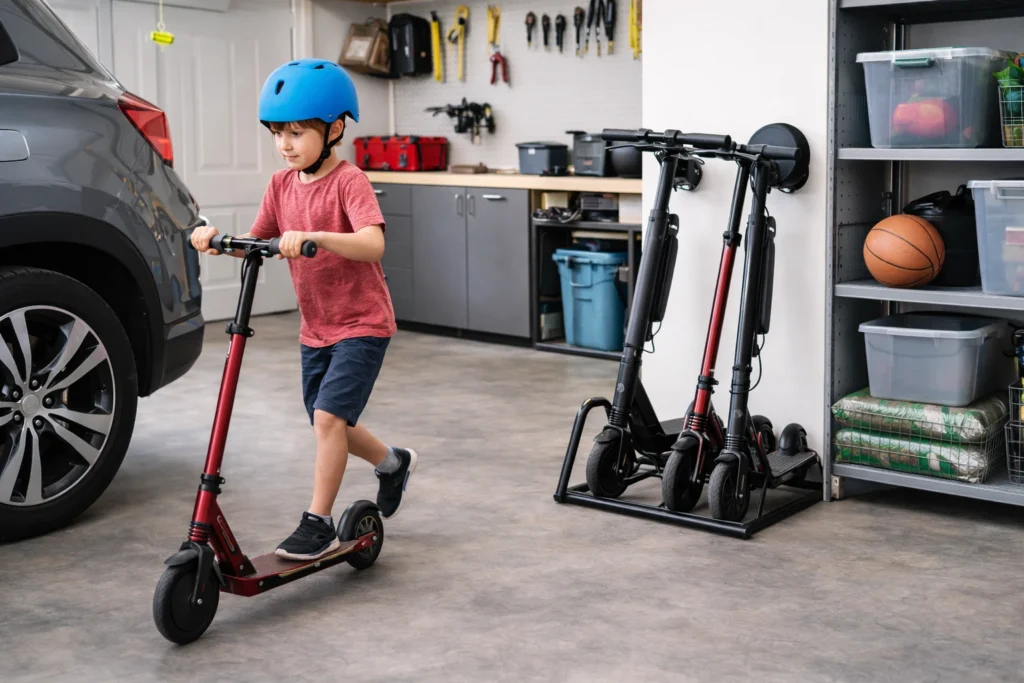
A garage scooter rack is a freestanding storage unit designed to hold one or multiple scooters upright. Most racks sit on the floor and rely on weight distribution rather than wall mounting.
Common designs include:
- Single-slot racks for one scooter
- Multi-scooter racks that line scooters side by side
- Vertical support racks that stabilize scooters by the deck or wheel
Racks are usually made from steel or powder-coated metal, sometimes with rubber or plastic contact points to prevent scratching. Because racks support scooters from below, they naturally handle heavier models better.
Strengths of Garage Scooter Racks
One of the biggest advantages of a rack is stability. Because the weight rests on the floor, racks don’t rely on wall strength or anchors. This makes them especially appealing for electric scooters with heavier frames and battery packs. Racks also shine in multi-scooter households. When several scooters are used daily, racks keep everything upright and accessible without lifting or unhooking.
Another benefit is renter-friendliness. If you can’t drill into walls or concrete, racks offer a solution that doesn’t leave marks behind. They’re also easy for kids to use. Scooters roll in, lock into place, and roll back out without strain.
Limitations of Scooter Racks
The tradeoff for stability is floor space. Even compact racks occupy a footprint. In smaller garages, that space may interfere with parking or walkways.
Racks also lack flexibility once placed. If your garage layout changes, the rack usually needs to move as a whole rather than adjust incrementally. In very tight garages, racks can feel bulky even if they perform well.
What Wall Hooks Are and How They Work
Wall hooks suspend scooters off the floor by mounting directly into studs or masonry. Scooters usually hang by the handlebar stem, deck, or folded frame. Wall hooks range from simple single hooks to adjustable track systems. They’re popular because they make garages look instantly cleaner by reclaiming floor space.
Advantages of Wall Hooks
The biggest advantage is floor space recovery. Scooters stored vertically free up room for vehicles and foot traffic. Hooks also allow custom layouts. You can space scooters exactly where you want them and integrate them alongside bikes or shelves. They’re usually affordable and easy to scale if you add more scooters later. Visually, wall hooks create a neat, organized look.
Downsides of Wall Hooks
Wall hooks demand proper installation. Hooks must be anchored into studs or concrete. Drywall alone isn’t enough, especially for electric scooters. Weight limits matter. A hook suitable for a kick scooter may not safely support a heavier electric model. Daily use can also be inconvenient. Lifting scooters repeatedly becomes tiring, especially for kids or heavier scooters.
Side-by-Side Performance Comparison
In a real garage scooter rack vs wall hooks comparison, the tradeoffs are clear. Racks favor stability and ease of access. Wall hooks favor floor space and visual order. For heavier scooters, racks consistently provide a safer and more forgiving setup.
Choosing Based on Garage Size
Small garages benefit most from wall hooks because floor space is limited. Medium garages can work well with either option, depending on scooter weight and usage frequency. Large garages often favor racks, where ease of use matters more than saving space.
Choosing Based on Scooter Type
Lightweight kick scooters work well with either solution. Heavy electric scooters lean toward racks due to their weight and balance. Foldable scooters adapt well to hooks. Non-folding scooters feel more secure in racks.
Daily Use vs Occasional Storage
Daily riders usually prefer racks because they’re quick and effortless. Occasional riders often prefer wall hooks because scooters stay out of the way most of the time.
Installation and Safety Considerations
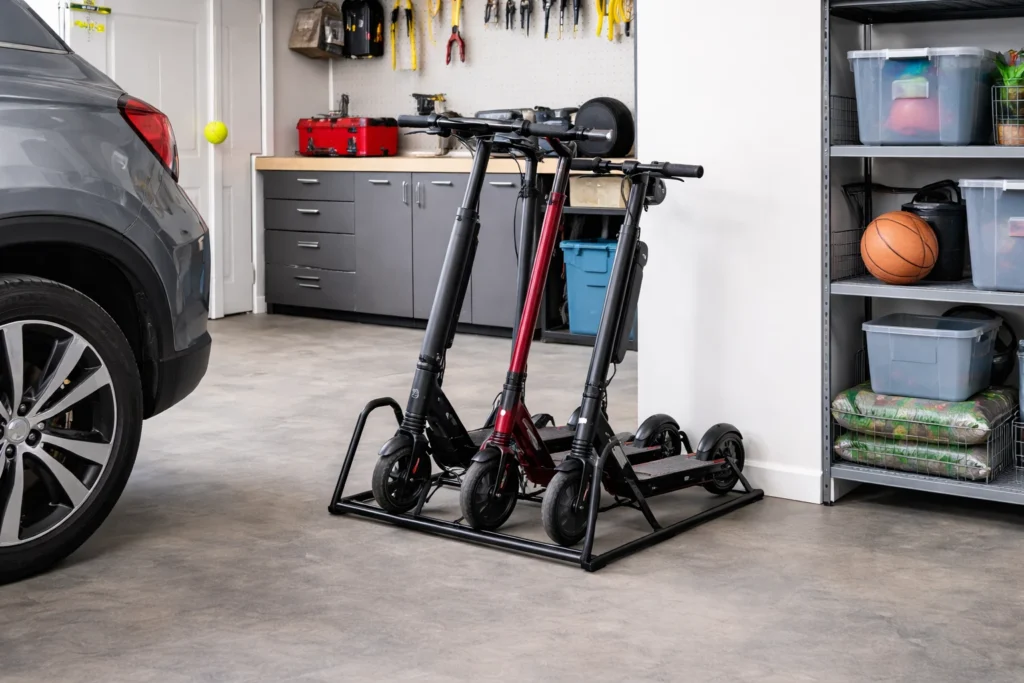
For wall hooks, stud placement and proper anchors are critical. For racks, placement matters just as much. Avoid blocking doors, vehicles, or walkways. Electric scooters should always be stored away from excessive heat and moisture to protect battery health.
Cost and Long-Term Value
Wall hooks typically cost less upfront. Racks cost more but often save frustration and reduce wear over time. The true cost comes from replacing damaged scooters or living with a setup that doesn’t work.
Hybrid Storage: A Smart Compromise
Many garages benefit from combining both options. Wall hooks for lighter scooters, racks for heavier electric models. This approach balances space efficiency with stability.
Final Verdict
In a garage scooter rack vs wall hooks comparison, there’s no single right answer. Choose racks for stability, convenience, and heavy scooters. Choose wall hooks for compact garages and lightweight scooters. The best solution is the one that fits how your garage actually works day to day.
FAQs
Yes, racks are generally better for electric scooters because they support the weight from the floor instead of relying on wall anchors.
They can if not installed into studs or concrete, especially when holding heavier scooters.
Wall hooks save more floor space, making them ideal for small or crowded garages.
Yes, scooter racks are very safe for daily use and reduce the risk of scooters tipping or falling.
Wall hooks can be difficult for kids to use, especially if scooters are heavy or mounted high.
Many scooter racks are designed to hold multiple scooters and work well for families.
It depends on the hook and installation, but many are not rated for heavy electric scooters.
Yes, as long as they’re stored away from heat, moisture, and securely supported.
Yes, hybrid setups are common and work well for mixed scooter types.
Racks typically last longer because they experience less stress and don’t rely on wall integrity.