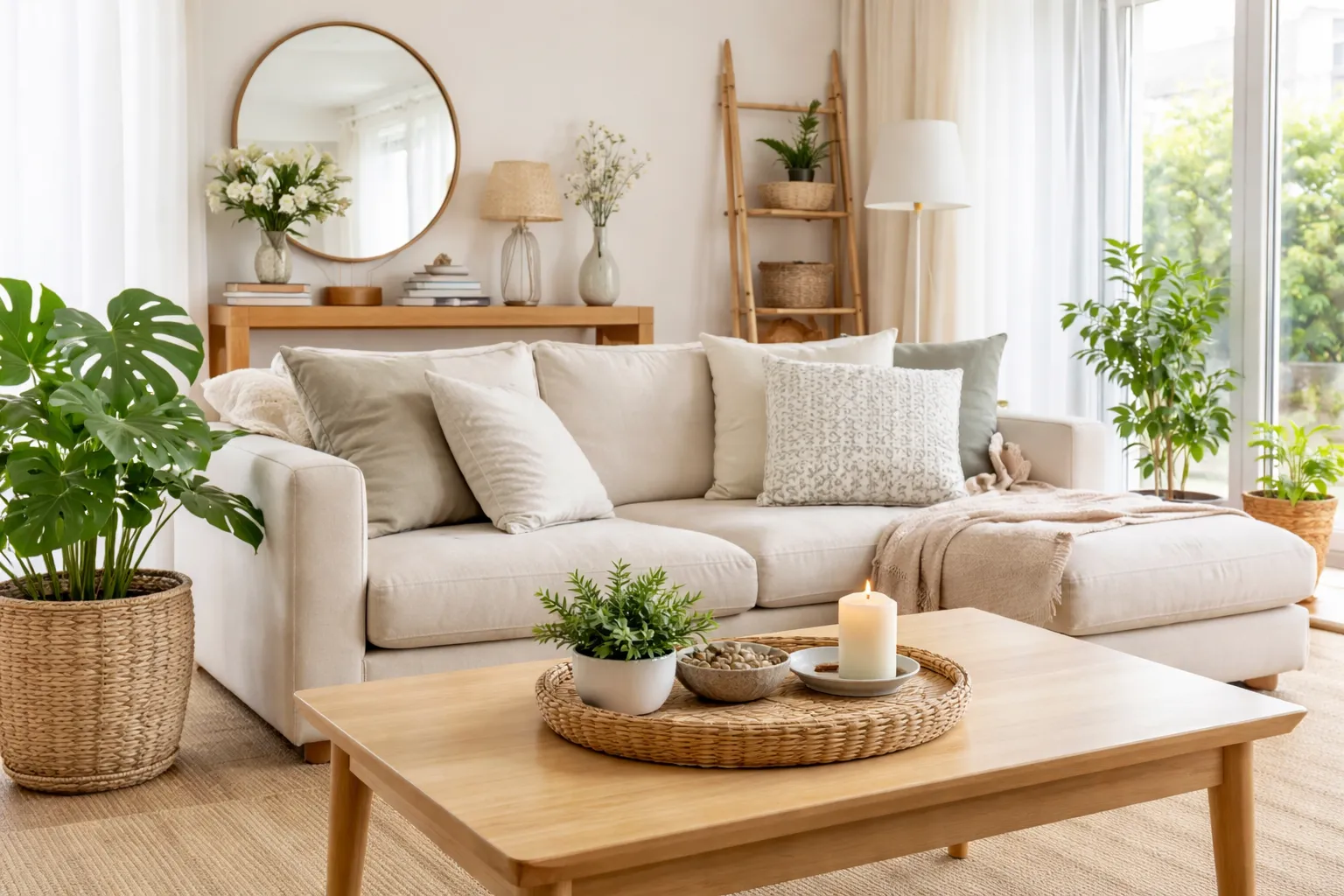
Feng shui tends to seem quite expensive. People hear the phrase and imagine waterfalls in the corner, special bowls of coins, or a dramatic home redo where everything gets replaced at once. Most homes don’t need that. Most homes need the boring kind of help: less friction, fewer visual “nagging” points, and a layout that stops stealing attention all day.
When a home flows well, sleep improves, conflict tends to soften, and decisions feel less mentally heavy. That practical “ease” is closely tied to the idea of prosperity, because fewer obstacles in the environment usually means more capacity for work, relationships, and planning. This guide focuses on low-cost adjustments that can shift the feel of a home without turning it into a showroom of symbolic objects.
You can ask Nebula to help put words to what feels “off” right now and why – maybe the entryway always feels chaotic, the bedroom never fully relaxes, or one room seems to drain energy for no obvious reason. From there, budget feng shui becomes far more practical, because the changes focus on real-life friction rather than decoration.
Start Where Stress Starts
A useful budget approach begins with one question: where does the home regularly create stress?
For many people it’s the doorway area, the chair where clothes pile up, the kitchen counter that never fully clears, the hallway where something always gets bumped. Feng shui talks about stuck energy. In everyday terms, these are the spots that quietly demand mental effort. Just constant, low-level effort. And that adds up.
A good “first sweep” is handling the tiny broken or annoying things that have become normal. A wobbly table leg. A squeaky door. A lamp that makes everything look dim and tired. A drawer that catches every time. These don’t feel spiritual. They feel like life is being mildly irritating for no reason. Fixing them often makes a home feel more supportive almost immediately.
The Entryway Sets the Tone
The front door area matters because it’s the first and last impression of the day. If it’s chaotic, the body reads it as chaos. If it’s clear, the body relaxes.
Budget upgrades can be ridiculously simple. Better light helps – sometimes it’s literally a brighter bulb. Clearing the floor helps even more, because stepping over shoes and bags every day builds irritation fast. A small landing zone for keys and mail is worth the space it takes, even in a tight apartment. It stops the frantic “Where is it?” moment that burns time and mood.
A quick wipe-down of the door and handle also changes the feel. People touch that surface daily. If it looks neglected, the home starts to feel neglected.
Let Rooms Breathe Again
Some rooms feel fine but moving through them feels awkward. That’s a layout issue.
A practical test is walking through the room carrying something bulky. If the body has to twist, squeeze, dodge corners, or constantly step around items, the room is taxing movement all day. The fix is often a small shift: slide a chair a few inches, rotate a side table, pull furniture away from an entry point, tuck cords so they aren’t visually cutting the space in half.
The point isn’t perfection. The point is ease. A room that’s easier to walk through is usually easier to live in.
Light Changes Everything
Feng shui talks a lot about qi, and one of the simplest ways to change how a space moves is light. Dark corners and dim hallways feel heavy, even if the furniture is lovely.
Natural light helps most, but artificial light can do a lot too. One harsh overhead bulb can make a room feel like a waiting room.
A warm lamp creates a feeling of home comfort around itself. If your budget is limited, it is often enough to move the lamps you have, replacing the bulbs with warmer light.
Air, Smell, and the Invisible Mood
A home can look clean and still feel tired. Often it’s the air. Those hold smell and mood. Clean textiles make a space feel lighter. Stale textiles make it feel like yesterday’s stress is still hanging around.
Scent doesn’t need to mean expensive candles. Sometimes it’s as simple as taking out the trash before it becomes a “thing,” cleaning the sink drain, or airing out a coat closet that’s quietly doing too much.
Bedroom Feng Shui for Real Life
The bedroom is where feng shui advice gets dramatic, but the basics do plenty. A laptop open on the bed signals work never ends. Even if a small space forces compromises, it helps to create a bedtime close down. Put the laptop away. Clear the top of the dresser. Give the eyes less to scan.
Under-bed storage is common. It can still be handled thoughtfully. Linens and seasonal clothes tend to feel neutral. Old bills, random cables, half-finished projects tend to feel like unresolved noise. That kind of stuff under the bed often shows up as lighter sleep or a slightly restless mind at night.
The Kitchen and Prosperity Habits
The kitchen is a classic prosperity zone for a reason: it’s tied to daily decisions. When the kitchen is messy, cooking feels harder, and money leaks out through takeout, wasted groceries, and quick fixes that become routine.
A budget reset doesn’t require new containers or a pantry makeover. Start with the stove. A clean, usable stove makes the kitchen feel active, ready, capable. Then the fridge: remove what won’t get eaten, wipe shelves, make the usable food visible. A fridge that’s easy to understand reduces waste and makes simple meals more likely.
That’s prosperity in a very plain sense: less waste, fewer rushed purchases, more intentional choices.
Keep It Moving, Week by Week
Feng shui works better as upkeep than as a one-time performance. A small weekly reset keeps the home from sliding back into heaviness. Clear one surface.
Fix one small annoyance. Remove one item that has turned into permanent clutter. When a home supports those basics, life outside the home tends to run better too.