Winter is unforgiving.
The sun sets early. Shadows stretch longer. Cold air sharpens every detail buyers notice the second they pull up to a home. That’s exactly why how exterior lighting affects first impressions during winter home showings matters more than most sellers realize.
I’ve walked into winter showings where the house itself was beautiful—but the experience started off wrong. Too dark. Too cold. And too uncertain. Buyers hadn’t even touched the front door yet, and the mood was already set.
Lighting does that. Quietly. Instantly. And in winter, it does the heavy lifting that sunshine normally would.
This article breaks down exactly how exterior lighting affects first impressions during winter home showings, from visibility and warmth to safety and seasonal ambiance—and what sellers can do to get it right.
Why Winter Changes the Buyer Mindset
Winter buyers are practical.
They’re cautious.
They’re cold.
When daylight disappears before dinner, exterior lighting becomes the first impression instead of a supporting detail. Buyers aren’t just looking at a house. They’re feeling it.
A dark exterior can feel neglected.
A harsh glare can feel unwelcoming.
A warm, balanced glow? That feels intentional.
And intention builds confidence.
During winter home showings, buyers subconsciously ask:
- Is this home safe to approach?
- Is it cared for?
- Will it feel warm inside?
Lighting answers all three before anyone steps indoors.
Visibility Comes First (Always)
You can’t appreciate what you can’t see.
One of the most overlooked aspects of how exterior lighting affects first impressions during winter home showings is simple clarity. Buyers need to understand the home’s shape, size, and features immediately.
Key visibility priorities:
- The front façade should be evenly lit
- Architectural details should be visible, not washed out
- House numbers must be readable from the street
- Shadows should guide the eye—not confuse it
Floodlights alone don’t solve this. In fact, they often create more problems than they fix by flattening textures and throwing harsh contrasts.
A layered approach works better.
Effective exterior visibility includes:
- Soft wash lighting on the main elevation
- Focused accent lights for columns or entry features
- Low-glare fixtures that don’t blind approaching buyers
Visibility creates orientation. Orientation creates comfort.
Entryway Lighting Sets the Emotional Tone
The front door is the emotional handshake of the home.
In winter, it’s also the moment buyers decide whether the house feels inviting or indifferent. This is where how exterior lighting affects first impressions during winter home showings becomes deeply emotional.
Cool white lighting can feel sterile in cold weather.
Warm-toned lighting suggests comfort—even before the door opens.
Entry lighting should:
- Frame the door, not overpower it
- Eliminate deep shadows near steps and handles
- Create a soft transition from outside to inside
A well-lit entry doesn’t shout. It reassures.
Buyers slow down. They linger. They feel welcome. And those few extra seconds matter more than you think.
Walkway and Driveway Lighting = Trust
Winter buyers are watching their footing. Literally.
I’ve seen buyers hesitate at the edge of a dark walkway. That pause? That’s doubt creeping in. Safety concerns don’t need to be real to influence perception.
Walkway lighting communicates care.
Not flash.
Not drama.
Just thoughtfulness.
Good pathway lighting should:
- Clearly outline walking paths
- Highlight elevation changes or steps
- Avoid glare that reflects off wet or icy surfaces
This isn’t just about safety—it’s about confidence. When buyers feel physically secure approaching a home, they’re more open emotionally once inside.
That’s a huge win during winter showings.
Lighting Signals Maintenance (or the Lack of It)
Buyers read lighting like a report card.
Burnt-out bulbs? Neglect.
Mismatched fixtures? Inconsistency.
Flickering lights? Deferred maintenance.
One of the strongest ways how exterior lighting affects first impressions during winter home showings is through perceived upkeep. Lighting tells buyers whether the home is actively cared for or passively ignored.
Here’s what buyers subconsciously notice:
| Lighting Detail | Buyer Interpretation |
| Even, consistent glow | Well-maintained |
| Broken or missing lights | Deferred upkeep |
| Matching fixtures | Thoughtful design |
| Random bulb colors | Patchwork fixes |
Lighting doesn’t just illuminate the home. It reflects the homeowner’s standards.
Creating Seasonal Ambiance (Without the Chaos)
Winter doesn’t mean lifeless.
But it also doesn’t mean cluttered.
Buyers appreciate seasonal warmth—but only when it feels restrained. Overly personal décor or chaotic lighting patterns can distract from the home itself.
The goal is ambiance, not celebration.
Effective winter ambiance lighting:
- Complements architectural lines
- Uses consistent color temperatures
- Enhances curb appeal without dominating it
Subtlety wins here. Buyers should feel a gentle seasonal lift, not visual noise.
When Holiday Lighting Actually Helps
This is where things get interesting.
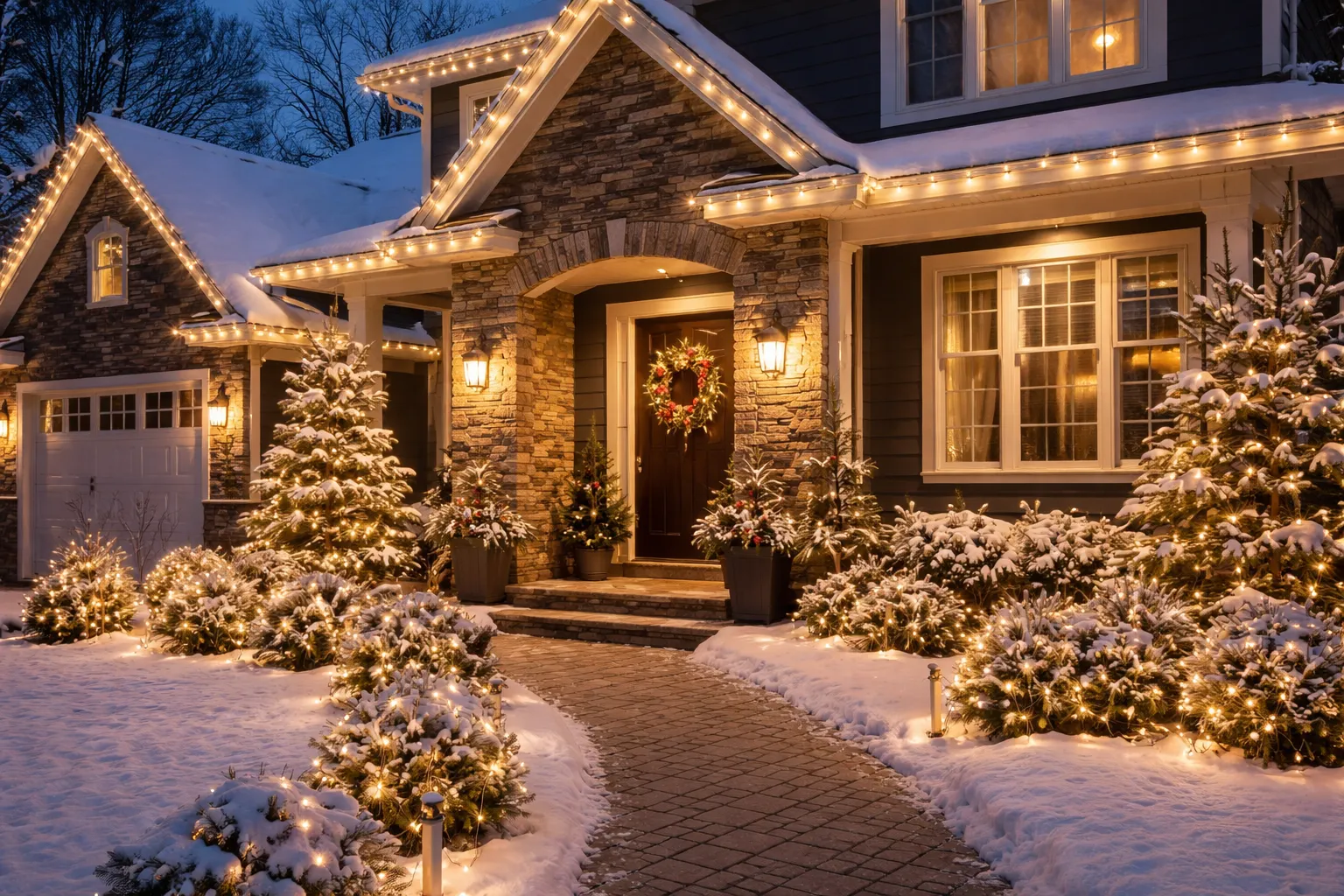
Professionally installed holiday lighting—when done right—can elevate winter curb appeal dramatically. It feels intentional. Clean. Integrated.
That’s a big difference from tangled DIY strands or mismatched colors.
A brief but important point in understanding how exterior lighting affects first impressions during winter home showings is recognizing when seasonal lighting enhances value instead of distracting from it.
Professional installations:
- Follow architectural lines
- Maintain symmetry
- Avoid cluttered focal points
- Blend seamlessly with permanent exterior lighting
This is why sellers in certain markets turn to holiday light installation services in Centerville OH to maintain a polished winter appearance without making the home feel temporary or overdecorated.
When holiday lighting feels architectural rather than festive, buyers see sophistication—not seasonal distraction.
Common Winter Lighting Mistakes That Hurt Showings
Even well-meaning sellers make these errors.
Avoid:
- Relying on a single porch light
- Using overly cool (blue-toned) bulbs
- Mixing too many light styles
- Ignoring side paths or secondary entrances
One mistake can undo multiple upgrades. Lighting needs consistency to work.
Practical Lighting Upgrades That Actually Matter
You don’t need a full overhaul to improve winter showings.
Start here:
High-impact, low-effort improvements:
- Replace all exterior bulbs with matching warm LEDs
- Add path lights to define walkways
- Ensure house numbers are illuminated
- Time lights to turn on before scheduled showings
If the home will be shown frequently after dark, automated timers or smart controls are worth the investment.
Lighting should work even when no one is home.
Why Buyers Feel Before They Analyze
Here’s the truth.
Buyers don’t logically evaluate exterior lighting first. They feel it. And feelings shape decisions faster than facts.
That’s the real lesson in how exterior lighting affects first impressions during winter home showings.
Warm light suggests warmth inside.
Clear paths suggest care.
Balanced illumination suggests quality.
By the time buyers step through the front door, their expectations are already set.
Lighting doesn’t sell the house.
But it absolutely sets the stage.
And in winter, the stage matters more than ever.
FAQs
Shorter daylight hours mean buyers often arrive in low light, making exterior lighting critical for visibility, safety, and curb appeal.
Warm, balanced lighting creates a welcoming feeling, while poor lighting can make a home feel cold or neglected.
Warm-toned, evenly distributed lighting works best, as it highlights features without harsh glare.
Yes, consistent and well-placed lighting signals care and attention, which builds buyer confidence.
The entryway sets the emotional tone and helps buyers feel comfortable approaching the home.
Well-lit walkways increase feelings of safety and encourage buyers to move confidently toward the entrance.
Yes, as long as it’s subtle and cohesive, seasonal lighting can enhance warmth without distracting buyers.
Professional installations look intentional and polished, unlike temporary or cluttered DIY setups.
Avoid burnt-out bulbs, overly cool lighting, and relying on a single light source.
Absolutely—buyers often assume a well-lit exterior means the interior is equally cared for.