Exotic home furniture made from reclaimed wood sits at the intersection of sustainability, artistry, and bold interior design. It is not just furniture. It is history reshaped into function. In a world flooded with flat-pack convenience and fast décor trends, more homeowners are turning toward pieces that feel grounded, storied, and deeply personal. Reclaimed wood, especially when sourced from rare or tropical species, brings character you simply cannot replicate in a factory.
The appeal is immediate. Deep grain patterns. Weathered textures. Natural imperfections that look intentional because they are. Exotic home furniture made from reclaimed wood offers something rare: authenticity. And authenticity never goes out of style.
What Reclaimed Wood Really Means
Reclaimed wood is timber salvaged from old structures and repurposed into new creations. It may come from century-old barns, colonial homes, shipping docks, warehouses, railway sleepers, or even decommissioned boats. Instead of ending up in landfills, the wood is carefully extracted, cleaned, kiln-dried, and transformed into furniture.
Unlike newly harvested timber, reclaimed wood has already lived through decades of environmental stress. It has expanded and contracted. It has hardened. It has developed density and stability that younger wood often lacks. That aging process gives it superior durability in many cases. It also creates visual richness: nail holes, saw marks, patina, and subtle color variations.
If you want a technical overview of reclaimed timber and its reuse process. When exotic species such as teak, mahogany, mango wood, or acacia are reclaimed, the results become even more distinctive. These woods naturally feature dramatic grain patterns and rich tonal depth. Combined with age, the character multiplies.
Why “Exotic” Makes a Difference
The word exotic does not simply refer to geography. It refers to visual impact and craftsmanship influenced by global design traditions. Exotic home furniture made from reclaimed wood often draws inspiration from Southeast Asia, Africa, the Mediterranean, and parts of South America.
Balinese artisans, for example, are known for intricate hand-carving techniques. Moroccan-inspired cabinetry features detailed geometric patterns. African influences may bring bold, sculptural forms. Colonial and coastal designs incorporate grand proportions and ornate silhouettes.
These cultural layers elevate the furniture beyond rustic. They introduce artistry.
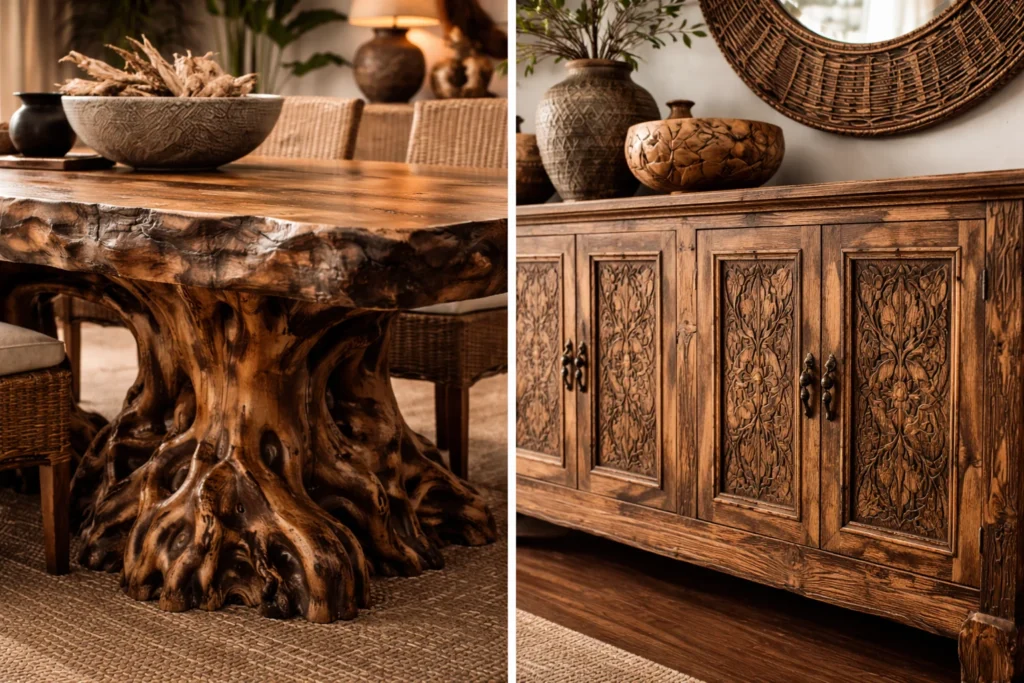
Instead of a plain rectangular table, you might find a live-edge slab supported by hand-carved pedestal legs. Instead of a standard sideboard, you might discover reclaimed teak doors with lattice patterns and antique brass hardware. Every piece feels intentional. Nothing feels mass-produced.
The Environmental Impact Matters
Beyond aesthetics, exotic home furniture made from reclaimed wood carries real environmental value. Deforestation remains a global concern, especially in tropical regions where exotic hardwoods originate. By reclaiming and reusing existing timber, manufacturers reduce pressure on living forests. According to the U.S. Environmental Protection Agency, reducing and reusing materials is a critical part of sustainable materials management and waste reduction strategies.
Repurposing old wood also lowers the demand for energy-intensive milling and processing. Fewer trees are cut. Less waste is generated. Old beams and planks that might otherwise decompose in landfills get new life inside homes. For environmentally conscious homeowners, that matters. Sustainable luxury is no longer a niche concept. It is becoming the standard for thoughtful design.
Statement Pieces That Transform a Room
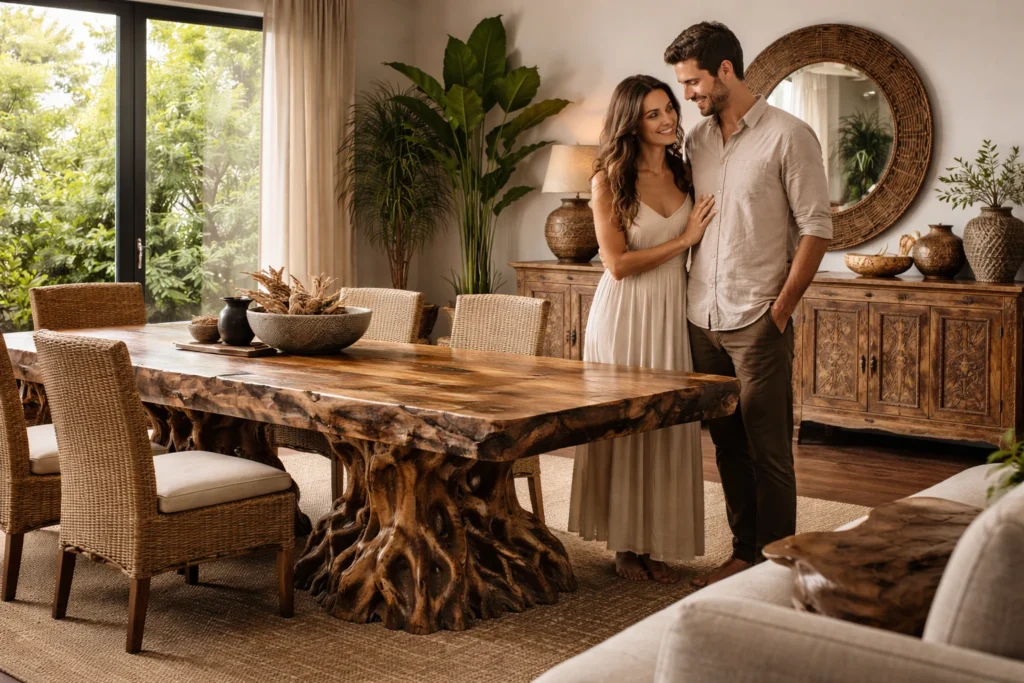
One of the most popular applications of reclaimed exotic wood is the dining table. And not just any table. Oversized, live-edge slabs with natural contours and dramatic grain often become the centerpiece of the home. A reclaimed teak dining table can anchor an entire open-concept space. Its visual weight commands attention. Guests notice immediately. The subtle imperfections become conversation starters. You can feel the density when you rest your hand on the surface.
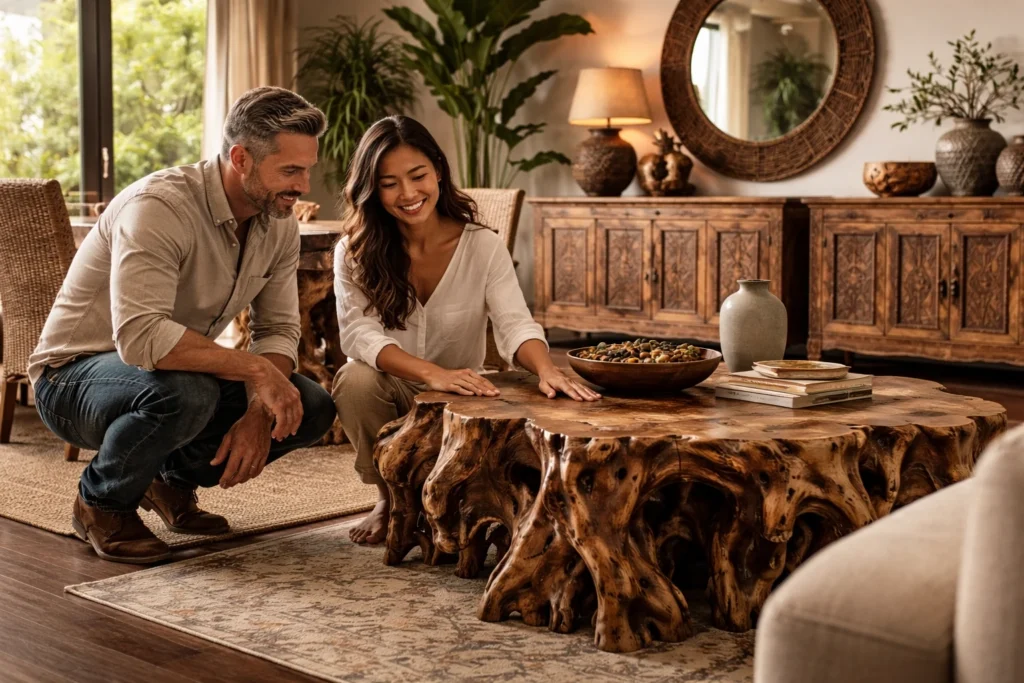
Coffee tables follow closely behind. Root-ball tables, for example, showcase the natural structure of tree roots polished into sculptural bases. Slab-style tops paired with blackened steel frames offer a balance between organic and industrial. Cabinets and sideboards add another dimension. Hand-carved panels, distressed finishes, and antique hardware create storage solutions that feel like heirlooms. They do not blend into the background. They define it. Even beds become works of art. Four-poster frames made from reclaimed mahogany bring grandeur to bedrooms. Platform beds crafted from aged acacia create grounded, minimalist spaces with warmth and texture. Exotic reclaimed wood does not whisper. It speaks.
Blending with Modern Interiors
You might assume that exotic reclaimed furniture only fits rustic homes. Not true. In fact, contrast is where it shines. In modern minimalist interiors dominated by white walls and clean lines, a reclaimed wood console table introduces warmth and visual tension. The raw texture softens sleek surfaces. The natural grain disrupts monotony. Industrial lofts benefit from the combination of reclaimed wood and exposed brick or steel. The materials complement one another. Both feel authentic. Both celebrate imperfection.
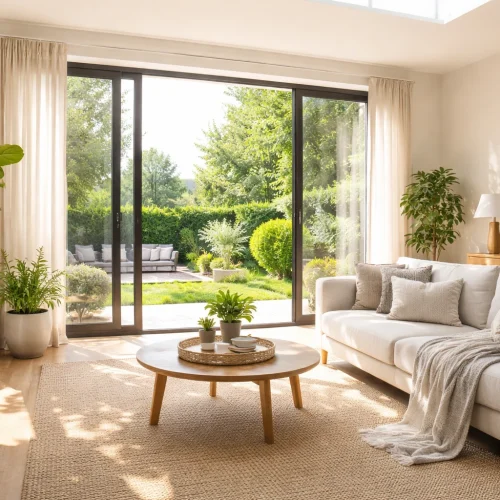
Coastal homes can integrate lighter-toned reclaimed woods paired with linen upholstery and woven textures. Tropical influences blend seamlessly with large windows and indoor plants. Even luxury urban apartments benefit from one bold reclaimed statement piece. It prevents the space from feeling sterile.
Choosing the Right Piece
Selecting exotic home furniture made from reclaimed wood requires careful consideration. These pieces are often heavy. They carry visual weight. Scale matters. First, measure your space accurately. Oversized dining tables or cabinets can overwhelm smaller rooms. Leave enough clearance for comfortable movement.
Second, examine the structural integrity. Quality reclaimed wood furniture should be kiln-dried to remove moisture and prevent warping. Joints should feel secure. Surfaces should be sealed properly. Look closely at the finish. Some pieces maintain a raw, matte texture. Others receive oil treatments or protective sealants. Choose based on lifestyle. If you have children or entertain frequently, you may prefer a more durable finish. Also consider undertones. Reclaimed teak often has warm honey hues. Aged mahogany may lean red or brown. Mango wood can range from golden to deep chocolate. Match these tones with existing flooring and décor.
Maintenance Is Simpler Than You Think
Despite its rugged appearance, reclaimed wood does require care. But it is not complicated. Dust regularly with a soft cloth. Avoid harsh chemical cleaners. Use coasters and placemats to protect surfaces from moisture rings and heat damage. Maintain stable indoor humidity levels to minimize expansion and contraction.
Occasional oil treatments can revive luster, especially for pieces with natural finishes. Minor scratches often blend into the character of the wood rather than standing out. That is part of the charm. In fact, reclaimed furniture tends to age gracefully. Unlike synthetic finishes that chip or peel, natural wood develops deeper patina over time.
The Investment Factor
Let’s address cost. Exotic home furniture made from reclaimed wood is not inexpensive. Hand craftsmanship, sourcing challenges, and import logistics all contribute to higher price points. But cost should be evaluated differently here. These pieces are built to last decades, sometimes generations. They are not trend-based purchases. They do not become outdated every few seasons.
Mass-produced furniture may appear cheaper initially. But frequent replacement adds up. Reclaimed hardwood pieces often outlive multiple interior design cycles. Additionally, resale value tends to remain strong, especially for well-maintained, artisan-crafted items.
Custom Versus Ready-Made
Many buyers consider custom options. Custom exotic reclaimed wood furniture allows precise sizing, finish selection, and detailing. If you have a specific vision or unusual room dimensions, custom may be ideal. However, lead times can be longer. Production may take weeks or months depending on craftsmanship and sourcing. Budget planning becomes essential. Ready-made pieces offer faster availability but less personalization. The choice depends on priorities: convenience or uniqueness.
Emotional Value Beyond Design
Perhaps the most compelling reason people choose exotic home furniture made from reclaimed wood is emotional. There is something deeply satisfying about owning a piece with history. Imagine a dining table crafted from beams that once supported a 19th-century warehouse. Or a cabinet built from reclaimed boat timber that once crossed oceans. That narrative adds depth to everyday life.
Furniture becomes more than functional. It becomes part of your story. Guests notice. They ask questions. Conversations unfold around surfaces that already carry decades of experience.
Final Thoughts
Exotic home furniture made from reclaimed wood offers more than visual appeal. It blends global artistry, environmental responsibility, and long-term durability into tangible form. Each knot, groove, and weathered mark tells a story. Each handcrafted detail reflects human skill. Each piece reduces demand for new timber while preserving old materials.
In a home filled with mass-produced items, one reclaimed exotic piece can change the atmosphere entirely. It grounds the space. It introduces warmth. It adds narrative.
And perhaps most importantly, it endures.
When you choose reclaimed wood, you are not just decorating. You are preserving history. You are investing in craftsmanship. You are making a statement that beauty and sustainability belong together. That is the true power of exotic home furniture made from reclaimed wood.
FAQs
It is high-end furniture crafted from salvaged hardwoods like teak or mahogany, often featuring global design influences and artisan detailing.
Yes, reclaimed wood is often denser and more stable than new timber because it has already aged and adjusted to environmental changes.
It reduces deforestation, repurposes existing materials, and diverts usable wood from landfills.
Yes, when properly treated and kiln-dried, reclaimed exotic hardwoods are safe and structurally sound for indoor use.
Not usually regular dusting, avoiding excess moisture, and occasional oil treatments are typically enough.
Yes, due to craftsmanship, rarity of materials, and sustainable sourcing, but it often lasts much longer.
Look for natural imperfections like nail holes, patina, and varied grain patterns, along with transparent sourcing details.
Properly processed and kiln-dried reclaimed wood eliminates pests and prevents infestation.
Yes, custom pieces offer unique sizing, finishes, and craftsmanship tailored to your space.