Easy DIY painting ideas for beginners at home are all about removing pressure and replacing it with curiosity. You don’t need natural talent, formal training, or a perfectly organized art space to start painting. What you need is a willingness to experiment and the freedom to make imperfect marks without judging yourself too harshly. Painting at home gives you exactly that space.
For beginners, painting isn’t about producing gallery-ready artwork. It’s about learning how color moves, how brushes behave, and how your own creative instincts begin to show up once you stop overthinking every stroke. When you approach painting with that mindset, it becomes less intimidating and far more enjoyable.
Why painting at home works so well for beginners
Painting at home creates a low-stress environment where learning feels natural. There’s no one watching, no deadlines, and no rules beyond the ones you choose to follow. You can paint in short bursts or long sessions, return to unfinished work, or abandon a piece altogether without guilt.
This flexibility matters. Beginners improve faster when they feel relaxed enough to experiment. Home painting also allows you to use everyday spaces and materials, which removes the idea that art requires special permission or expensive tools.
Keeping supplies simple and approachable
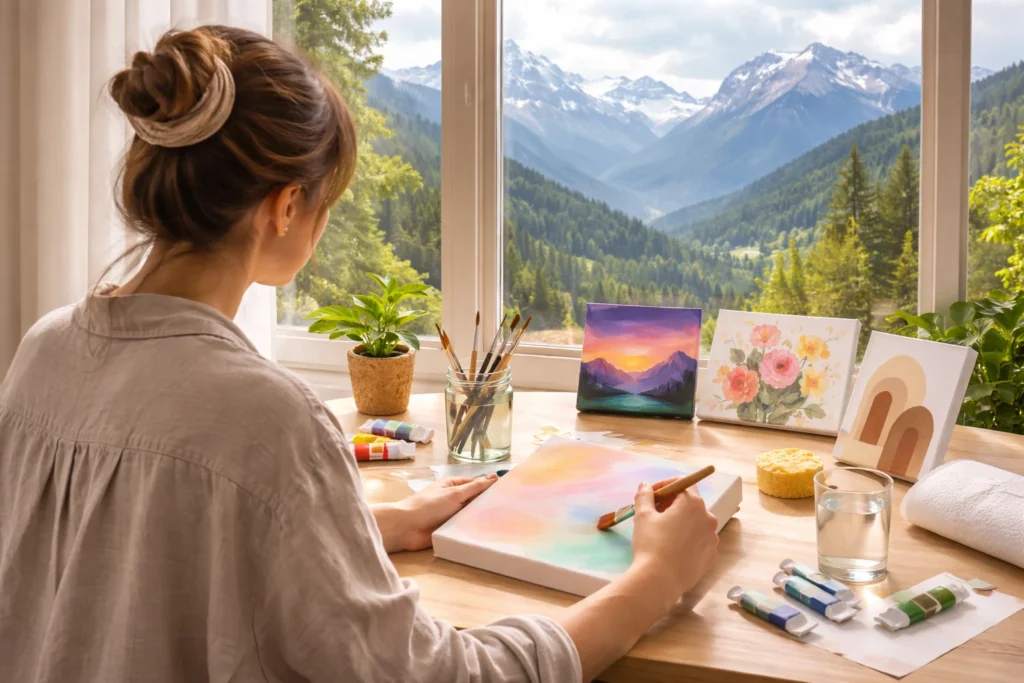
One of the biggest beginner mistakes is buying too many supplies at once. Too much choice can slow you down before you even start.
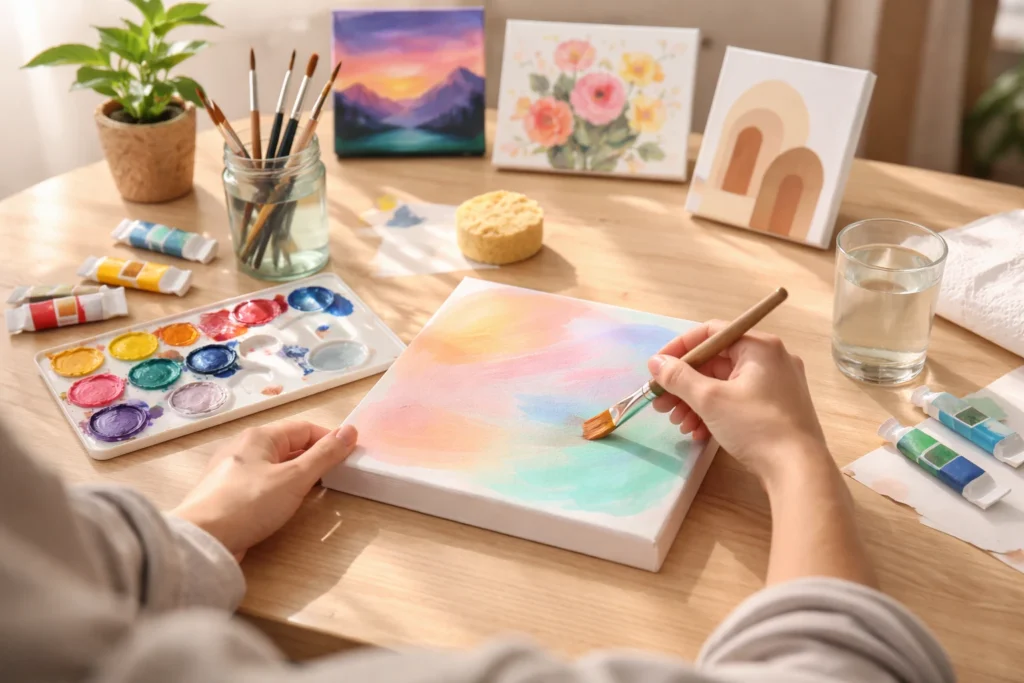
A simple setup works best:
- Acrylic paints in a small color set
- A few basic brushes
- Canvas panels or thick paper
- Water, paper towels, and a simple palette
Acrylic paint is especially beginner-friendly. It dries quickly, layers easily, and cleans up with water. You can paint over mistakes without waiting days, which encourages experimentation instead of hesitation. If you’re curious about why acrylics behave the way they do, this background on the polymer-based composition of acrylic paint offers helpful context.
Learning to trust color without overthinking it
Color often feels intimidating at first, but it doesn’t have to be. Limiting your palette builds confidence faster than trying to use every color at once.
Choose two or three colors and mix variations by adding white or a touch of black. This keeps your painting cohesive and helps you understand how colors interact. Over time, your eye naturally develops a sense of balance without memorizing theory.
Many of these instincts are rooted in perception and visual psychology. Understanding the foundations of chromatic theory can quietly improve how you mix and layer colors.
Abstract painting for complete beginners
Abstract painting is one of the easiest DIY painting ideas for beginners at home because it removes the pressure to create recognizable shapes. There’s no “right” way to do it.
Start by covering the canvas with loose color blocks or layered strokes. Let colors overlap. Use broad motions instead of tiny details. If something doesn’t look right, add another layer instead of stopping. Abstract painting teaches you how paint behaves and how layers interact. It also helps you let go of control, which is often the hardest part for beginners.
Simple landscape paintings with minimal detail
Landscapes don’t need precision to feel complete. In fact, simplified landscapes often look more confident.
Begin with a soft background, such as a sky blended from light to dark. Once it dries, add simple shapes in the foreground. Mountains, hills, or trees can be painted as solid silhouettes rather than detailed forms. This approach creates depth without requiring advanced technique. Even uneven brushstrokes feel intentional when they’re part of a simplified scene.
One-color paintings that build skill quickly
Painting with a single color and its variations is a powerful beginner exercise. By mixing lighter and darker versions of the same color, you create depth without worrying about clashing hues.
You can paint abstract patterns, simple objects, or loose natural forms. Because everything stays within one color family, the painting feels unified even if your brushwork isn’t perfect. This method sharpens your understanding of contrast and value, which are more important than color choice in the long run.
Easy floral paintings without fine detail
Flowers are ideal beginner subjects because they don’t need symmetry or precision to feel expressive.
Instead of outlining petals, use loose shapes and layered color. Tap the brush gently to suggest petals rather than defining them exactly. Add darker tones near the center and lighter highlights toward the edges. Loose floral paintings feel organic and forgiving. They also help you practice layering and brush control without getting stuck in tiny details.
Painting geometric and minimalist designs
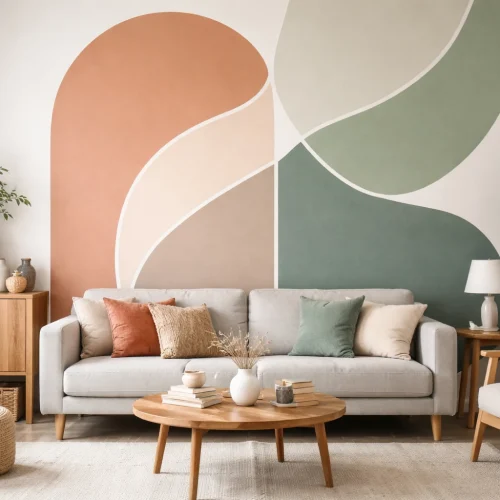
Minimalist designs rely on clean shapes rather than complex technique. Circles, arches, lines, and simple forms are more than enough to create striking artwork.
Using painter’s tape helps create crisp edges and instantly makes your painting look polished. Choose neutral colors or a limited palette for a calm, modern feel. This style suits beginners who enjoy structure but still want creative freedom.
Texture-based painting using everyday tools
You don’t need special tools to create interesting textures. Household items work surprisingly well.
Sponges create soft transitions and organic patterns. Cardboard edges produce sharp lines. Plastic wrap pressed into wet paint creates unexpected texture. Even forks or old brushes can add visual interest. Texture shifts focus away from precision and toward exploration, which makes painting feel playful rather than stressful.
Night sky and galaxy paintings for confidence
Dark backgrounds are very forgiving for beginners. They hide uneven blending and make lighter details stand out naturally.
Start with a deep blue or black base. Blend in subtle color variations while the paint is still damp. Add stars by flicking white paint gently across the canvas. Silhouettes of trees, mountains, or buildings can complete the scene without requiring detail. The contrast does most of the work for you.
Nature-inspired abstract painting
Instead of painting nature realistically, paint the feeling of it. Flowing lines can suggest water. Layered greens can hint at forests. Repeating curves can echo leaves or waves. This approach encourages intuition rather than accuracy. It’s especially relaxing and helps beginners develop a personal style without copying references exactly.
Practicing consistently without burnout
Consistency matters more than intensity. Painting for a short time regularly builds skill faster than occasional long sessions.
Set simple goals. Paint once or twice a week. Focus on one technique per session. Keep finished and unfinished work without judging it too quickly. Progress becomes obvious when you look back after several weeks.
Handling mistakes with confidence
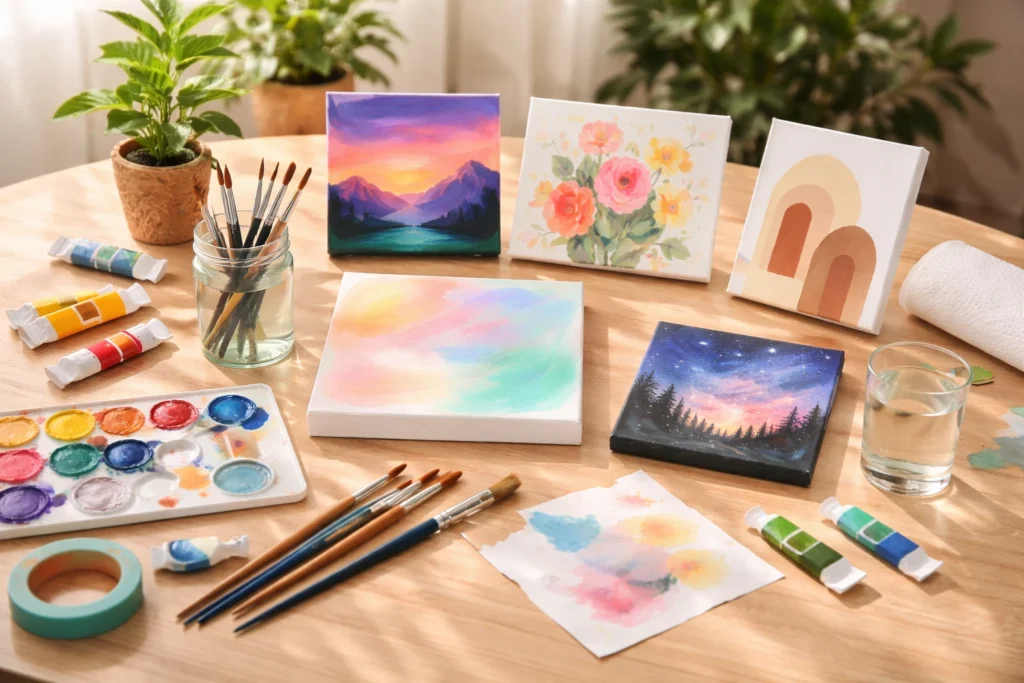
Mistakes are unavoidable and valuable. Acrylic paint allows you to fix almost anything.
If a section looks wrong, let it dry and paint over it. Simplify instead of adding more detail. Sometimes covering a mistake leads to a better result than the original idea. Learning how to recover builds confidence far faster than trying to avoid mistakes altogether.
Turning practice pieces into home decor
Not every painting needs to be perfect to deserve space on your wall. Framing simple pieces or grouping smaller works together adds personality to your home. Seeing your own artwork displayed reinforces the idea that creativity belongs in everyday life, not just studios or galleries.
Staying motivated as a beginner painter
Motivation fades when expectations are unrealistic. Paint because it relaxes you, not because you’re trying to impress anyone. Some days your work will surprise you. Other days it won’t. Both experiences are part of learning. The real progress happens when you keep showing up.
Final thoughts
Easy DIY painting ideas for beginners at home are about permission. Permission to start small. Permission to experiment. Permission to create without needing approval. When you paint regularly and without pressure, skill grows naturally. Blank canvases stop feeling intimidating and start feeling inviting. And over time, painting becomes less about what you produce and more about how it makes you feel while you’re doing it.
FAQs
Acrylic paint is ideal because it dries quickly, is easy to clean up, and works on many surfaces.
No, many beginner-friendly painting styles focus on color, texture, and simple shapes rather than drawing.
Abstract designs, simple landscapes, florals, and color-block paintings are great places to start.
A small table or desk with good lighting is enough for most beginner painting projects.
Let the paint dry and paint over it acrylics are very forgiving for beginners.
No, basic supplies are affordable and you can create many paintings with a small starter set.
Yes, simple and minimalist styles often look polished and work well as home décor.
Start with two or three colors and mix lighter or darker versions to keep things cohesive.
Practicing once or twice a week consistently is more effective than painting occasionally.