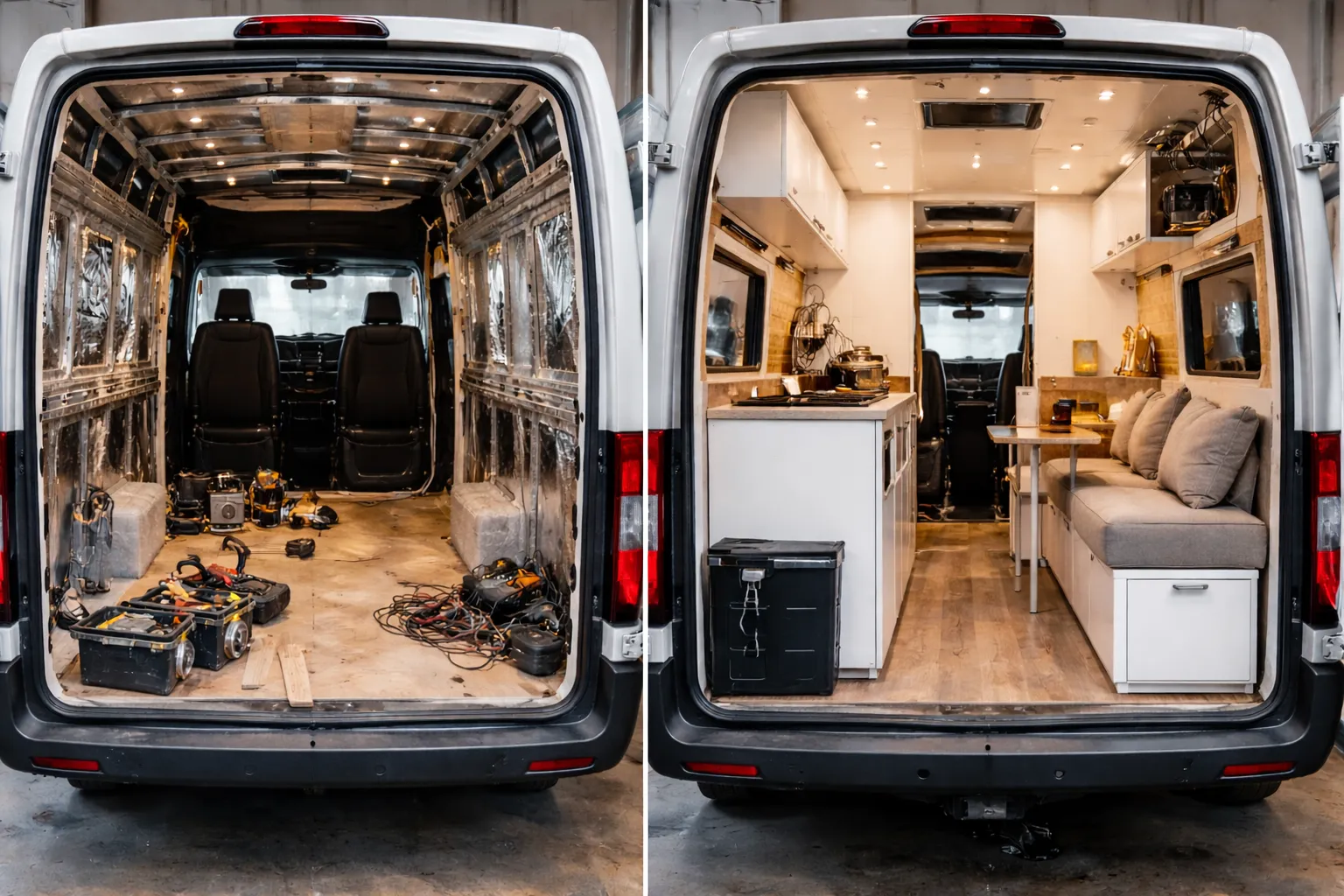
If you spend any time on DIY or home-improvement blogs, van conversions appear again and again. A camper van sits at the intersection of tiny homes, road trips, and personal craftsmanship. For people who enjoy building things themselves, it feels like the ultimate project: a compact house that reflects your style and travels wherever you want to go.
But a van is not a static structure. Unlike a kitchen remodel or a backyard shed, a camper van lives on the highway. It vibrates for hours at a time, experiences constant temperature swings, and must operate safely in rain, heat, snow, altitude, and humidity. Every system inside it is affected by motion and weather.
That reality is why the DIY versus professional debate matters so much in the van world.
This guide breaks down what DIY van conversions do well, where they become risky, what professional builders actually provide beyond labor, and how many people combine both approaches. The goal is not to declare a winner, but to help you choose the path that fits how you plan to travel and live.
Understanding What a Van Conversion Really Is
Before comparing DIY and professional builds, it helps to understand what you are actually building.
A camper van is not just furniture inside a metal box. It is a collection of tightly integrated systems that must work together under movement and stress.
Those systems include:
- Structural modifications to the vehicle shell
- Electrical generation, storage, and distribution
- Plumbing and water management
- Heating, cooling, and ventilation
- Insulation and moisture control
- Weight distribution and load management
- Safety systems and emergency access
In a house, many of these systems can fail slowly without immediate danger. In a van, failures tend to compound quickly. A small water leak can turn into mold. An undersized wire can become a fire risk. Poor ventilation can cause condensation in every wall cavity.
This is the context in which the DIY versus professional decision should be made.
What DIY Van Conversions Do Well
DIY van builds can be incredibly rewarding. For the right person, the process itself is the point, not just the finished van.
Why DIY Appeals to So Many People
DIY conversions often make sense if:
- You enjoy learning new technical skills
- You like solving problems through trial and error
- You have time to iterate and rebuild
- You are building primarily for short trips
- You want a layout that does not exist commercially
Many DIY builders value the sense of ownership that comes from building everything with their own hands. When something breaks, they know exactly how it works and how to fix it.
Strengths of DIY Builds
DIY builders often excel in areas where creativity and personalization matter most.
Common DIY strengths include:
- Highly customized storage solutions
- Creative use of awkward spaces
- Unique layouts that fit specific hobbies
- Budget-friendly finishes with strong visual impact
- Deep understanding of every component in the van
Because DIY builders are not constrained by production efficiency, they can spend hours designing a cabinet or experimenting with materials that a professional shop would never use due to time costs. For many people, the build journey itself becomes part of the van’s story.
The Hidden Costs of DIY Conversions
DIY builds are often discussed in terms of money saved. That is only partially true. While you may save on labor, DIY builds tend to carry hidden costs that are not always obvious at the beginning.
Time as a Cost
Time is the biggest invisible expense in DIY van conversions.
A realistic DIY timeline often includes:
- Weeks of research before buying materials
- Learning electrical, plumbing, and insulation basics
- Rebuilding parts that do not work the first time
- Waiting for replacement parts or tools
- Debugging systems after the first few trips
For someone with flexible schedules, this is enjoyable. For someone trying to hit the road by a specific date, it can become stressful very quickly.
The Cost of Mistakes
Mistakes are part of learning, but in vans they can be expensive.
Common DIY mistakes include:
- Buying components twice after realizing the first choice was wrong
- Damaging the van shell during modifications
- Improper wiring that needs to be redone
- Insulation choices that trap moisture
- Poor fastening methods that loosen over time
These mistakes rarely show up immediately. They often appear months later, when fixing them requires tearing apart finished walls and cabinetry.
Where DIY Builds Start to Get Risky
This is where vans differ most from traditional DIY projects. A camper van is a rolling system. Every part affects the others, and failures can impact safety as well as comfort.
Electrical Systems
Electrical systems are one of the most common DIY pain points.
Risks include:
- Undersized wiring that overheats
- Inadequate circuit protection
- Poor grounding practices
- Battery systems without proper ventilation
- Incorrect inverter installation
Electrical issues are especially dangerous because they are often hidden behind walls and can escalate quickly.
Plumbing and Water Management
Water behaves very differently in a moving vehicle.
Common DIY issues include:
- Leaks behind walls that go unnoticed
- Improper winterization leading to frozen lines
- Poorly secured tanks that shift while driving
- Drainage designs that fail on uneven terrain
A small plumbing mistake can create long-term moisture problems that are difficult to diagnose.
Heating and Ventilation
Heating systems in vans must balance efficiency, safety, and airflow.
DIY heating risks include:
- Inadequate combustion air
- Improper exhaust routing
- Poor ventilation leading to carbon monoxide risk
- Inefficient layouts that waste fuel
Ventilation mistakes often lead to condensation, which damages insulation and wood over time.
Weight and Safety Considerations
One of the least discussed DIY risks is weight distribution.
Problems include:
- Overloading axles
- Uneven side-to-side weight balance
- Poor center-of-gravity planning
- Excessive weight from overbuilt furniture
These issues affect braking, handling, and tire wear, especially during emergency maneuvers.
What Professional Van Builders Actually Provide
Professional builders are often described as expensive, but that description misses what you are actually paying for. A good van builder approaches the project as a system, not a collection of parts.
Systems-Level Design
Professional builders design vans holistically.
That means:
- Electrical loads are calculated before installation
- Wiring is routed for serviceability
- Plumbing is designed for freeze protection
- Ventilation is matched to insulation strategy
- Weight is distributed intentionally
These decisions are based on years of real-world use, not just theory.
Proven Layouts
Professional layouts are rarely accidental.
They are refined through:
- Customer feedback
- Long-term testing
- Repairs on older builds
- Observing how people actually use the space
A layout that looks simple often hides dozens of small decisions that prevent daily friction.
Materials Chosen for Motion
Materials in a van experience constant vibration.
Professional builders select materials based on:
- Resistance to loosening over time
- Temperature stability
- Moisture tolerance
- Long-term durability
This is why professional builds often feel solid years later, even after tens of thousands of miles.
Safety and Compliance
Professional builders are familiar with:
- Automotive safety standards
- Electrical best practices
- Fire prevention strategies
- Emergency egress considerations
These are areas where DIY builders often rely on online advice that may not apply universally.
Support After the Build Is Finished
One of the most overlooked benefits of professional builders is support.
When you work with a builder like The Vansmith, you are not just buying a finished van. You are buying access to people who understand how it was built.
That support often includes:
- Troubleshooting assistance
- Guidance on upgrades
- Warranty on workmanship
- Advice for repairs on the road
For full-time travelers, this support can be invaluable when problems arise far from home.
Cost Comparison: DIY vs Professional Builds
Cost is often the deciding factor, but it should be evaluated honestly.
DIY Cost Structure
DIY costs typically include:
- Van purchase
- Tools and equipment
- Materials and components
- Replacement parts from mistakes
- Your time
While the upfront cash cost may be lower, the total investment can approach professional pricing if mistakes are frequent.
Professional Build Pricing
Professional builds include:
- Design and engineering
- Skilled labor
- Tested systems
- Quality control
- Warranty and support
The price reflects not just materials, but reduced risk and time savings.
The real question is not which is cheaper, but which aligns with your tolerance for uncertainty.
The Hybrid Approach: DIY Plus Professional Help
Many van owners choose a middle path.
This approach preserves creativity while reducing risk.
Common Hybrid Strategies
Popular hybrid choices include:
- Hiring professionals for electrical systems
- Outsourcing heating and ventilation installs
- DIY cabinetry and finishes
- Starting with a professionally built shell
- Upgrading aesthetics after delivery
This allows DIY builders to focus on areas where mistakes are low-risk and creativity shines.
Why Builders Support This Model
Many professional builders welcome hybrid clients because:
- It reduces system liability
- Clients stay involved creatively
- Core safety systems remain intact
- Customization can evolve over time
This approach works especially well for people who enjoy building but want confidence in critical systems.
Long-Term Ownership Considerations
A van build should be evaluated not just on day one, but over years of use.
Maintenance and Repairs
Over time, every van requires maintenance.
Professional builds often:
- Use standardized components
- Include service access points
- Document system layouts
This makes long-term ownership less stressful.
Resale Value
Professionally built vans typically hold value better.
Buyers often trust:
- Known builders
- Documented systems
- Consistent workmanship
DIY vans can sell well, but resale often depends heavily on buyer confidence.
Lifestyle Fit Matters More Than Skill Level
The real question is not whether you can build a van.
It is how you plan to use it.
DIY Often Fits Best If:
- The van is a weekend escape
- You enjoy ongoing projects
- Downtime is acceptable
- You like learning on the road
Professional Builds Often Fit Best If:
- The van is your primary home
- Reliability is critical
- You work remotely full-time
- You want to focus on travel, not repairs
Neither choice is inherently better. They serve different lifestyles.
Final Thoughts: Choosing the Right Path
DIY van conversions can be beautiful, meaningful, and deeply personal. Professional builds offer reliability, safety, and confidence that comes from experience.
The smartest choice is the one that matches:
- Your travel style
- Your risk tolerance
- Your available time
- Your comfort with troubleshooting
- Your long-term plans
A van is not just a project. For many people, it becomes a home. Making thoughtful decisions at the beginning can turn the dream into something sustainable and enjoyable for years to come. When you choose based on how you actually live, rather than how you imagine the build process, you win either way.
FAQs
Not always DIY saves on labor but mistakes, tools, and time can push total costs close to professional pricing.
Electrical, plumbing, heating, and weight distribution errors pose the highest safety and reliability risks.
They offer systems-level design, tested layouts, safety compliance, durable materials, and post-build support.
They can be, but safety depends heavily on technical skill, experience, and proper system integration.
Electrical, heating/ventilation, and sometimes plumbing are commonly outsourced due to safety concerns.
Yes, many owners use a hybrid approach professionals handle critical systems while DIY focuses on finishes.
Professional builds typically hold value better due to buyer trust and documented systems.
Most reputable builders offer warranties on workmanship and ongoing support.
DIY builds often take months due to learning curves, revisions, and sourcing materials.
Professional builds are often better for full-time use where reliability and minimal downtime matter.