Wallpaper gets a lot of attention, but paint is where real flexibility lives. It’s cheaper, easier to change, and far more forgiving if you want to experiment. If you’re looking for easy diy painting ideas for beginners at home, an accent wall is one of the most approachable places to start. With a bit of planning and some patience, you can create an accent wall that looks custom, intentional, and high-end without a single roll of wallpaper.
This guide walks through practical, DIY-friendly accent wall painting ideas that work in real homes. No specialty tools. No complicated finishes that require a pro. Just smart techniques, visual impact, and paint doing what it does best.
Why Paint Beats Wallpaper for Accent Walls
Before getting into ideas, it helps to understand why paint is such a strong option for accent walls.
Paint allows:
- Easy color adjustments if you change your mind
- Cleaner edges and more control over scale and placement
- Fewer long-term commitment issues like peeling, bubbling, or seam failures
- Budget flexibility great results without premium materials
Accent walls also change how depth, balance, and scale are perceived in a space. This idea connects closely to how humans visually interpret environments, a concept explored in phenomenology.
Most importantly, paint lets you customize patterns and finishes to fit your space, not the other way around.
The Single-Color Power Wall
Sometimes the simplest option delivers the biggest impact.
A single bold or deep color on one wall can completely change how a room feels. This works especially well in bedrooms, living rooms, and dining areas where you want a visual anchor.
What makes it work:
- Choose a color at least two shades darker or richer than the surrounding walls
- Use a matte or eggshell finish to avoid glare
- Pick the wall that naturally draws attention behind a bed, sofa, or fireplace
Deep greens, navy blues, charcoal grays, and warm clay tones add depth without overwhelming the space.
Two-Tone Color Blocking
Color blocking uses two paint colors to divide the wall into sections. It’s graphic, modern, and surprisingly easy to DIY with painter’s tape.
Common layouts include:
- Horizontal splits, with the lower half darker and the upper half lighter
- Vertical splits, where one side acts as the accent
- Offset blocks that frame furniture or architectural features
Careful measuring and level lines matter here. Clean geometry keeps the design looking intentional rather than improvised. Color blocking works especially well in home offices, kids’ rooms, entryways, and hallways.
Geometric Painted Patterns
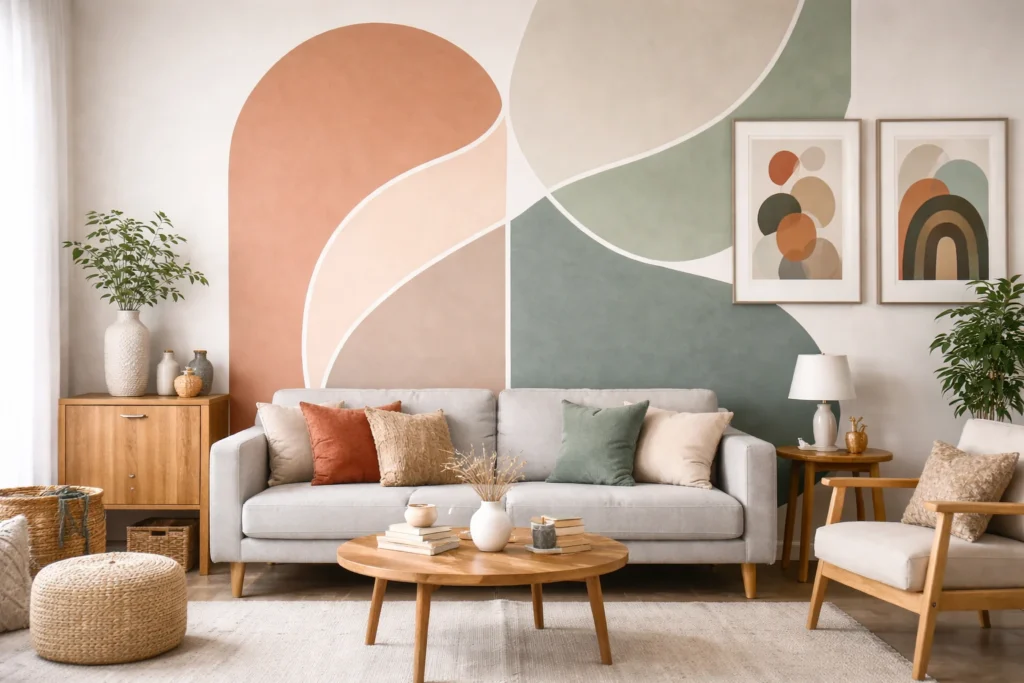
If you like wallpaper’s energy but want more control, geometric paint designs are a strong alternative. Triangles, arches, chevrons, and abstract shapes can all be painted directly on the wall using painter’s tape and patience.
For best results:
- Sketch the design on paper first
- Lightly mark guidelines with pencil and a level
- Limit the palette to two or three colors
- Let each layer fully dry before taping over it
Neutral palettes feel modern and calm. High-contrast colors push the look toward bold and artistic.
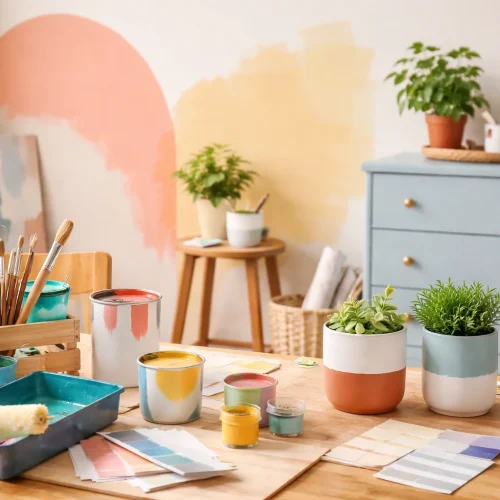
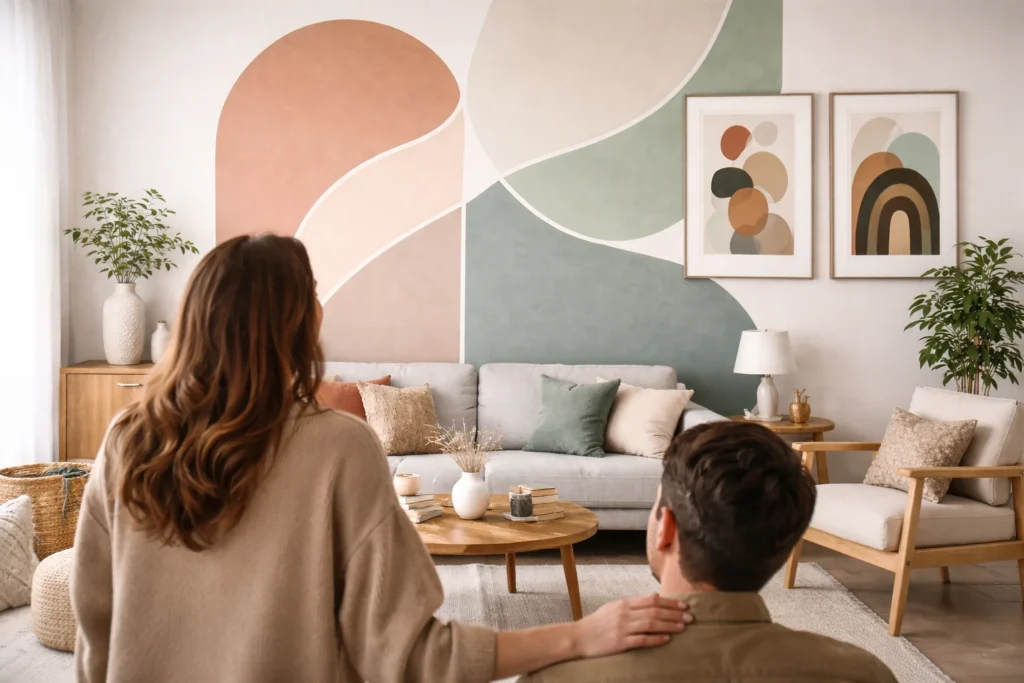
Painted Arches and Organic Shapes
Painted arches soften a space and add architectural interest without construction.
They work especially well:
- Behind beds or nightstands
- Around desks or reading nooks
- Framing artwork or floating shelves
Perfect symmetry isn’t required. Slightly organic curves often look more natural and inviting. Outline shapes carefully, paint slowly, and keep surrounding walls neutral so the form stands out.
Faux Paneling with Paint
You can create the look of wall paneling using paint alone.
By painting thin rectangles or vertical sections, you can mimic:
- Board and batten
- Box molding
- Vertical slat walls
How it works:
- Use painter’s tape to outline panel shapes
- Paint the entire wall one color
- Remove the tape to reveal crisp negative-space lines
Subtle contrast is key. White-on-white or soft gray over beige creates a refined, architectural effect that works well in dining rooms and bedrooms.
Striped Accent Walls
Stripes remain a classic accent wall choice when done thoughtfully.
Vertical stripes:
- Make ceilings appear taller
- Work well in compact rooms
Horizontal stripes:
- Visually widen a space
- Add movement and rhythm
Wider stripes feel more contemporary and less busy than narrow ones. Using two tones of the same color keeps the look cohesive and modern.
Ombre and Gradient Walls
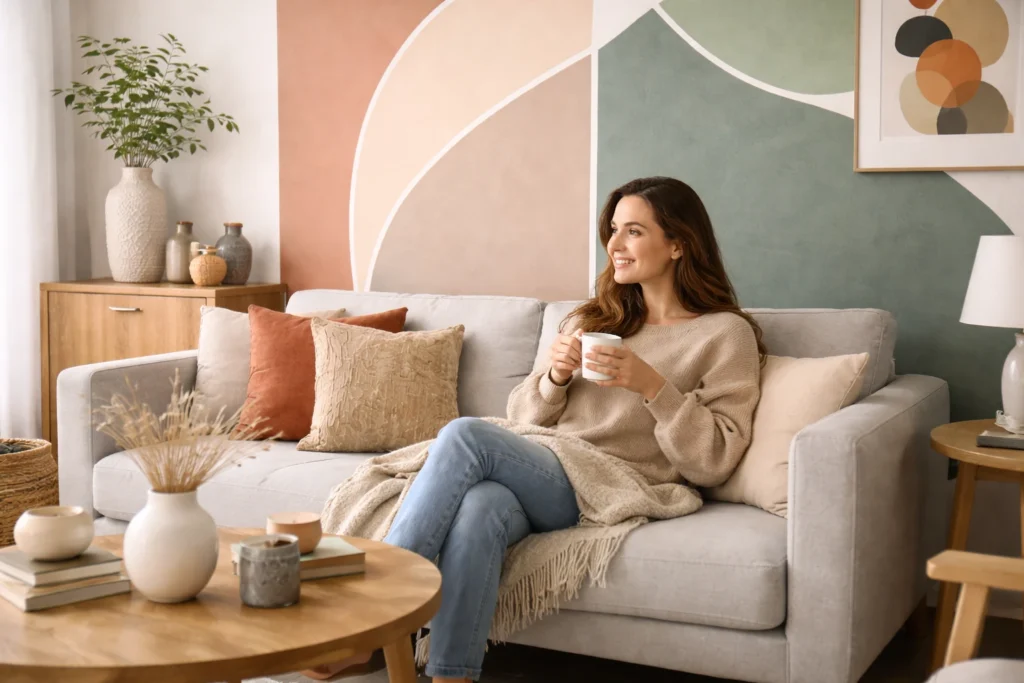
Ombre walls blend one color into another, creating a soft, artistic transition.
They work best when:
- Colors stay within the same family
- The gradient flows from dark to light
- Furniture is minimal on the accent wall
Blend colors while paint is still wet using a dry brush or sponge. Slight variation adds depth and character. Ombre walls are especially effective in bedrooms, nurseries, and creative spaces.
Textured Paint Techniques
Textured paint adds visual depth without adding materials.
DIY-friendly options include:
- Limewash-style effects using layered brush strokes
- Color washing with diluted paint and a cloth
- Soft sponge textures for subtle movement
When applying layered or textured finishes indoors, it’s important to consider ventilation and material safety. The U.S. Environmental Protection Agency provides guidance on maintaining healthy indoor air quality during home improvement projects.
Muted or neutral colors work best here. Texture should enhance the wall, not overpower it.
Chalkboard or Writable Accent Walls
A writable wall adds function without sacrificing design.
Chalkboard or dry-erase paint works well in:
- Kitchens
- Home offices
- Kids’ rooms
Limit the wall’s size or frame it visually so it feels intentional. Pair it with clean trim and minimal decor to keep the look polished.
Tone-on-Tone Accent Walls
Tone-on-tone designs are ideal if bold color feels overwhelming.
This approach uses:
- One color in multiple finishes, like matte and satin
- Slightly different shades of the same hue
Examples include glossy shapes over matte walls or subtle stripes created through finish changes. The effect is understated, sophisticated, and responsive to light throughout the day.
Stenciled Paint Designs
Stencils offer pattern without wallpaper commitment.
Modern stencil styles include:
- Minimal line work
- Repeating organic shapes
- Soft geometric motifs
Use low-tack adhesive and minimal paint on your roller to prevent bleed. Move slowly and maintain even pressure for clean results.
Choosing the Right Wall
Not every wall benefits from being an accent wall.
Strong candidates include:
- Walls without windows or doors
- Walls behind key furniture
- Natural focal points
Avoid walls with too many breaks or visual clutter. Lighting also matters natural and artificial light dramatically affect how paint reads.
Common DIY Mistakes to Avoid
Even good ideas can fall flat with poor execution.
Watch out for:
- Skipping surface prep like patching and sanding
- Using low-quality paint or tape
- Rushing drying times
- Overcomplicating the design
Clean lines and thoughtful restraint almost always win.
Final Thoughts
DIY accent wall painting is one of the most effective ways to transform a room without major cost or commitment. Paint gives you creative freedom, flexibility, and room to experiment. Whether you lean bold with color blocking, subtle with texture, or playful with geometry, the best accent walls feel intentional and balanced. Start with one wall. Take your time. Measure carefully. And remember paint is forgiving. That’s what makes it such a powerful design tool.
FAQs
A single-color accent wall is the easiest option and delivers strong visual impact with minimal tools or experience.
Yes, paint techniques like color blocking, stripes, arches, and faux paneling can replace wallpaper entirely.
The best accent wall is usually the one behind a bed, sofa, or focal point with minimal doors or windows.
Yes, especially when using lighter colors, vertical stripes, or tone-on-tone designs that add depth without crowding the space.
Matte and eggshell finishes are popular because they reduce glare and hide surface imperfections.
They’re DIY-friendly if you plan carefully, measure precisely, and use quality painter’s tape.
Yes, two or three colors work well, but limiting the palette keeps the design balanced and intentional.
Use low-tack painter’s tape, press edges firmly, and apply paint in thin, controlled coats.
Textured paint adds depth and character and is a great wallpaper alternative when kept subtle.
Yes, one of paint’s biggest advantages is that it’s easy to update or reverse compared to wallpaper.