Every homeowner dreams of a lush, beautiful backyard, but the reality of weekend mowing, constant watering, and battling weeds can make that dream feel like a chore. If you live in a climate like the Carolinas where summer heat and water restrictions are common maintaining a traditional lawn can be a relentless battle.
The solution isn’t eliminating grass entirely; it’s choosing a permanent, water-wise foundation that anchors your entire outdoor living space: high-quality artificial turf.
Artificial turf has evolved far beyond the synthetic putting greens of the past. Today’s products offer hyper-realistic texture, superior drainage, and are the ultimate foundation for a low-maintenance, water-wise yard.
Here is a step-by-step guide to designing an outdoor space that stays green year-round, saves you time, and slashes your water bill.
1. Define the Function of Your Water-Wise Zone
Before you pick a turf style, you must define how the space will be used. This determines the necessary durability and drainage features, maximizing your investment.
- The Family/Pet Zone: If you have dogs or kids, you need highly durable, high-drainage turf. Look for antimicrobial infill and specialized pet systems that ensure cleanliness and rapid liquid runoff.
- The Entertainment Zone: This area, often near a patio or outdoor kitchen, prioritizes aesthetics and comfort. A turf with a softer blade and realistic coloring will provide a welcoming, lush carpet feel for barefoot traffic.
- The Decorative/Hard-to-Maintain Zone: Turf is perfect for small, shady side yards or steep slopes where natural grass struggles to grow. Using turf here instantly solves maintenance issues in the most difficult areas of your property.
2. Choose Turf for Climate and Sustainability
One of the biggest benefits of synthetic grass is its contribution to sustainable landscaping, particularly in water conservation.
How Turf is Water-Wise:
- Zero Irrigation: Once installed, turf requires no watering. This is a massive saving, especially during summer drought periods, and immediately cuts your outdoor water consumption by up to 70%.
- Optimized Drainage: Modern turf features porous backings that drain water much more efficiently than compacted soil or clay. In the Carolinas, where clay soil holds moisture, turf installations prevent muddy runoff and pooling, managing storm water effectively.
When selecting your turf, consult with a local professional who understands your regional climate. They can recommend products with UV stabilizers to prevent fading in intense summer sun and specialized backing materials suitable for your native soil composition.
3. Anchor Your Outdoor Living Space with Hardscapes
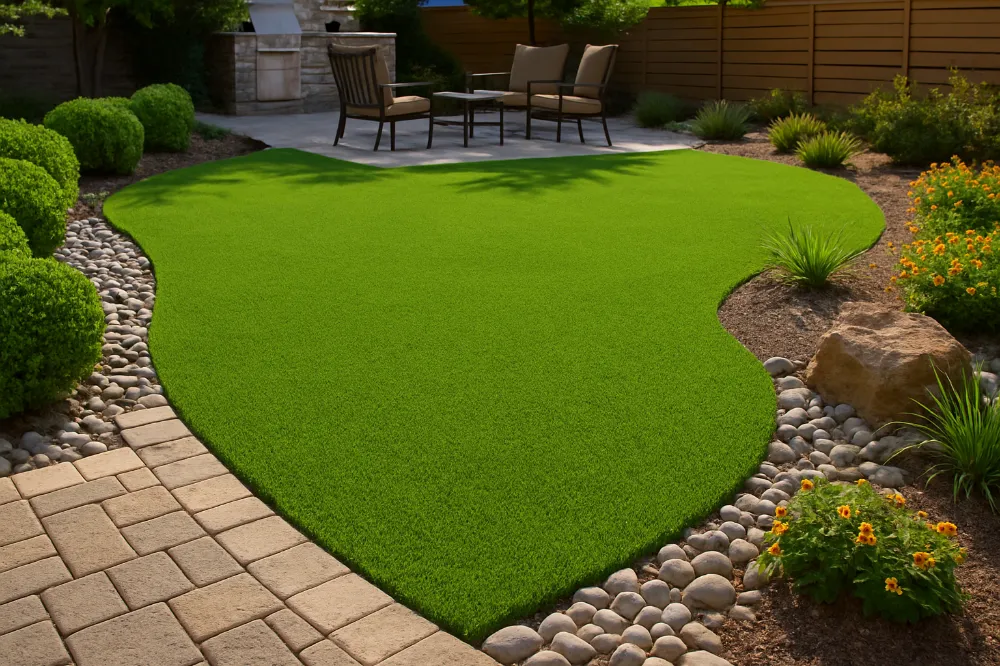
A low-maintenance yard is a balanced yard. Relying solely on one material, even turf, can look unnatural. Pair your turf with strategically placed hardscapes and rock features to create visual interest and further reduce maintenance.
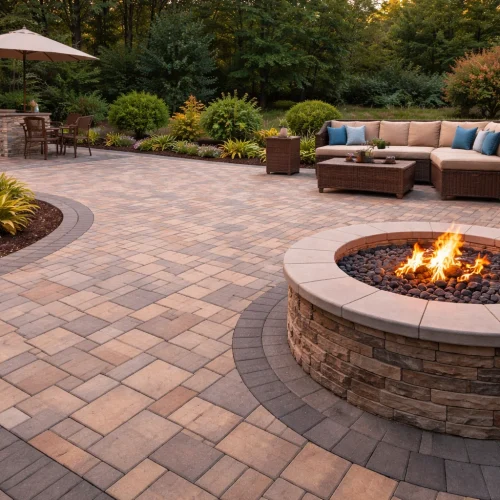
- Paver Pathways: Install stone pavers or a concrete walkway to break up the green space and provide a clear line of travel. The edges of the turf can be secured right against the pavers, eliminating the need to trim or edge grass along hard boundaries.
- Decorative Stone and Gravel: Instead of mulch (which requires refreshing and can wash away), use natural river rock or decorative crushed granite in flower beds or around trees. This provides a permanent, maintenance-free barrier between plants and the turf.
- Integrated Putting Greens: For golf enthusiasts, a synthetic putting green integrated into the landscape is the ultimate low-maintenance feature. It provides a highly functional outdoor activity without adding to the yard work list.
4. Smart Plant Selection for the Edges
While turf covers the main “lawn” area, you still want pops of natural color. Select plants that thrive with minimal water and fit the low-maintenance theme:
| Area | Low-Maintenance Plant Suggestion |
| Borders | Boxwoods, Holly, Dwarf Nandina |
| Color | Lantana, Sedum, Coneflower (Echinacea) |
| Shade | Cast Iron Plant, Hosta, Liriope |
Using these low-water-use plants in beds surrounded by weed-suppressing gravel means you’re only watering specific, contained areas, maximizing your water savings and minimizing your effort.
5. Final Touch: Enjoying Your Permanent Green
The goal of a low-maintenance, water-wise yard is to spend less time working and more time living. Once your artificial turf and hardscapes are properly installed, the maintenance routine is transformed:
- No Mowing, No Fertilizing, No Edging: Free up your weekends instantly.
- Quick Cleaning: Use a leaf blower to remove debris, and occasionally brush against the grain of the turf to refresh the blades’ upright position. For pet areas, a simple hose-down ensures cleanliness.
By choosing high-quality artificial turf as the foundation, you create a beautiful, functional, and durable outdoor living space that is perpetually perfect, regardless of the season or the water forecast.
Author and Company Information
Carolina Turf Systems is a premier turf and landscape provider based in the Charlotte, North Carolina area, specializing in high-quality artificial turf solutions for residential, commercial, and athletic properties across North and South Carolina. The company is dedicated to providing superior, low-maintenance outdoor spaces built on sound technical installation principles. You can learn more about our services at https://carolinaturfsystems.com/.
FAQs
Yes. It requires no mowing, watering, fertilizing, or edging just occasional brushing and debris removal.
Most premium turf lasts 12–20 years depending on usage, climate, and proper installation.
Absolutely. Many products include antimicrobial infill, soft blades, and high-drainage systems ideal for family and pet use.
Turf can warm up in direct sun, but newer products include cooling technology and UV stabilizers to reduce heat retention.
Modern turf features highly porous backing that drains far better than compacted soil, preventing puddles and muddy areas.
Yes. Since it requires zero irrigation, homeowners can reduce outdoor water consumption by up to 70%.
Turf works well in family zones, pet areas, entertainment spaces, shady side yards, steep slopes, and anywhere grass struggles to grow.
Today’s turf offers realistic blade variation, natural color blends, and can be paired with plants, pavers, and stone for a seamless look.
While DIY is possible, professional installation ensures proper grading, drainage, and long-term durability especially in clay-heavy Carolina soils.
Low-water plants like boxwoods, lantana, sedum, coneflower, host, and liriope create natural color without heavy maintenance.