Winter evenings bring a unique set of challenges for families with children. Days grow shorter, temperatures drop, and outdoor surfaces become slippery or uneven. For kids, who are naturally energetic and less cautious about their surroundings, these conditions can quickly turn a normal trip outside into a safety risk. Whether it’s walking up the driveway after school, playing briefly in the yard, or heading out with the family after dark, the exterior of a home needs extra attention during the winter months.
Creating a safer home exterior for kids during winter evenings isn’t about making everything perfect or overbuilt. It’s about reducing common risks, improving visibility, and ensuring that outdoor spaces are predictable and well-maintained. By focusing on lighting, walkways, surfaces, and smart seasonal adjustments, families can significantly lower the chance of slips, trips, and other accidents while still enjoying the winter season.
Why Winter Evenings Are Riskier for Kids
Children experience winter differently than adults. They move faster, pay less attention to environmental hazards, and often have limited awareness of how weather affects surfaces and visibility. Several factors combine during winter evenings to increase risk.
Early darkness reduces visibility long before most families are done with their day. School pickups, extracurricular activities, and family outings often happen after sunset. Icy or wet surfaces form more quickly in shaded areas, especially once temperatures drop in the evening. Snow piles, fallen leaves, or debris can hide uneven ground or steps.
Cold weather also affects reaction time. Heavy jackets, gloves, and boots limit mobility, making it harder for kids to recover if they slip. All of these factors mean that a home exterior that feels safe during summer afternoons may need adjustments for winter nights.
Start With Visibility, Not Decoration
Lighting is one of the most important elements of winter exterior safety, but it’s often approached from an aesthetic angle first. For families with kids, visibility should always come before decoration.
Good lighting helps children see where they’re stepping and helps adults monitor movement outside the home. It also allows drivers, neighbors, and visitors to see kids near driveways, sidewalks, or the street. During winter evenings, lighting should be functional, evenly distributed, and positioned to reduce shadows.
Key areas to prioritize include:
- Walkways leading to and from the house
- Driveways and parking areas
- Steps, stairs, and changes in elevation
- Entry points such as doors, porches, and garages
- Yard edges that border sidewalks or streets
Lighting doesn’t need to be harsh or overly bright. Soft but consistent illumination reduces glare and helps eyes adjust naturally when moving between indoor and outdoor spaces.
Choosing the Right Type of Exterior Lighting
Not all exterior lights perform well in winter conditions. When selecting or evaluating lighting for safety, consider durability, placement, and consistency.
Path lights help define walkways and reduce the risk of stepping off uneven edges. They should be spaced evenly and positioned to illuminate the walking surface, not just the surrounding landscaping.
Motion-activated lights are useful near garages or side yards, but they should not be the only source of light in areas kids use regularly. Sudden changes from darkness to bright light can be disorienting, especially for children.
Wall-mounted lights near doors and steps provide steady illumination and reduce shadows around entry points. These are especially important during winter when steps may be wet or icy.
Low-voltage or LED options are energy-efficient and perform well in cold temperatures. They also offer consistent brightness without excessive heat buildup.
The goal is to eliminate dark zones where hazards can hide, not to turn the yard into a spotlight.
Walkway Safety Goes Beyond Shoveling
Clearing snow is essential, but winter walkway safety requires more than occasional shoveling. Ice can form quickly after sunset due to temperature drops, even on surfaces that were clear earlier in the day.
Regular maintenance should include:
- Prompt removal of snow and slush
- Use of child-safe ice melt products
- Monitoring shaded areas where ice lingers longer
- Checking drainage paths to prevent refreezing
Pay attention to transitions between surfaces. Where a concrete walkway meets a driveway or step, water often collects and freezes first. These spots deserve extra care and lighting.
Textured surfaces or anti-slip strips on steps can provide added traction, especially where kids tend to run or jump.
Managing Driveways and Street Edges
Driveways are high-risk zones during winter evenings. Reduced visibility, icy patches, and vehicle movement all intersect in this space. Kids may not always recognize the danger, especially when snowbanks or darkness limit sightlines.
Improve driveway safety by:
- Keeping edges clearly visible with lighting or reflective markers
- Ensuring snow piles don’t block visibility from the house or street
- Adding lighting that illuminates the entire driveway surface
- Encouraging designated walking paths away from vehicle areas
If kids play outside briefly during winter evenings, establish clear boundaries that keep them away from the driveway and street. Visibility helps enforce these boundaries naturally.
Addressing Yard Hazards Hidden by Winter Conditions
Winter often disguises hazards that are obvious during warmer months. Uneven ground, garden borders, hoses, and decorative elements can disappear under snow or leaves.
Walk through your yard during daylight hours and identify potential problem areas. Ask yourself where a child might run, cut across, or lose balance. Removing or marking hazards before winter sets in reduces surprises later.
Consider temporarily storing items like planters, toys, or tools that could create obstacles. The fewer objects in active areas, the safer the environment becomes when visibility drops.
Entryways and Transitions Matter More in Winter
The moment kids step outside is often when accidents happen. Transition zones between indoors and outdoors deserve special attention.
Entryways should be:
- Well-lit from multiple angles
- Clear of clutter like shoes or sports gear
- Protected from water buildup that can freeze
- Designed to allow kids to pause and adjust to outdoor conditions
Adding mats designed for winter use can reduce slipping, but they should be secured so edges don’t curl or shift.
Using Seasonal Lighting as a Safety Supplement
Seasonal lighting can support safety when it’s used thoughtfully. While decorative lights are not a replacement for functional exterior lighting, they can enhance visibility along rooflines, pathways, and entry points.
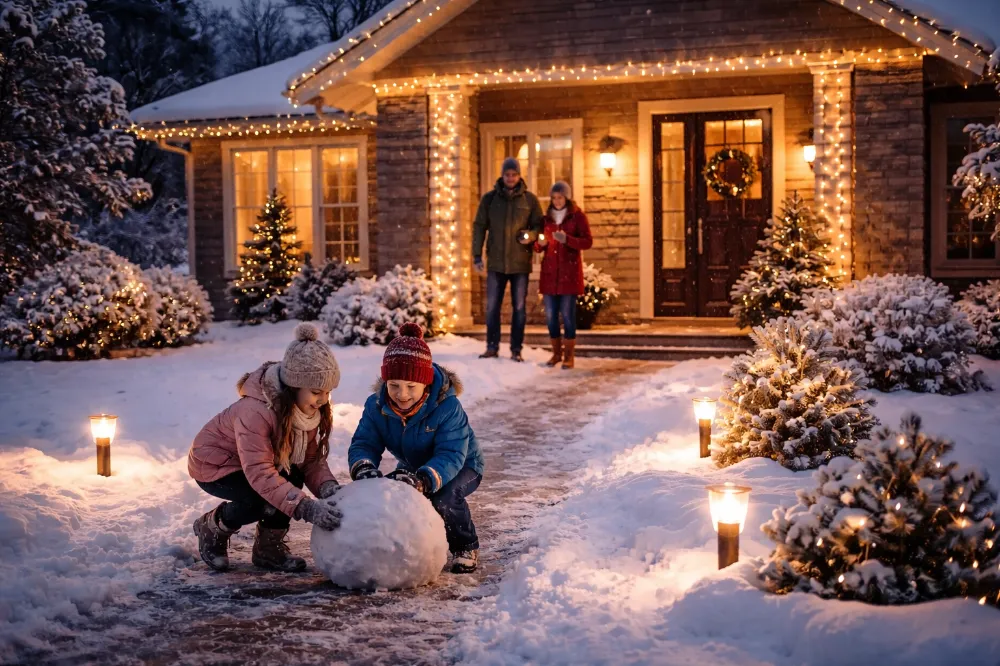
Soft, evenly spaced lights help define the shape of the home and outdoor spaces during dark winter evenings. This can make it easier for kids to orient themselves and for adults to keep an eye on activity.
In some neighborhoods, families choose professional holiday light installation services in Marco Island FL to ensure seasonal lighting is installed safely and complements existing exterior lighting. When done correctly, this type of lighting can improve both visibility and atmosphere without creating glare or hazards.
Reducing Glare and Shadows
More light isn’t always better. Poorly placed lighting can create glare that makes icy surfaces harder to see. Strong contrast between bright and dark areas can also confuse depth perception.
To reduce these issues:
- Use multiple light sources instead of one intense fixture
- Aim lights downward or at walking surfaces
- Avoid placing lights directly at eye level
- Check lighting after installation during actual evening conditions
Walk the exterior paths yourself after dark to see what kids experience. Small adjustments can make a big difference.
Teaching Kids to Navigate Winter Evenings Safely
Physical changes to the home exterior are important, but behavior plays a role too. Teaching kids simple winter safety habits reinforces the environment you’ve created.
Encourage kids to:
- Walk instead of run on icy surfaces
- Use designated paths and entry points
- Wear footwear with good traction
- Let an adult know before going outside after dark
When kids understand why certain areas are lit or restricted, they’re more likely to follow guidelines naturally.
Regular Winter Check-Ins Make a Difference
Winter conditions change constantly. What was safe yesterday may not be safe tonight. Make quick exterior checks part of your evening routine.
Look for:
- Burned-out lights
- New ice formation
- Snow piles shifting or melting
- Obstructed walkways
These short inspections help catch problems before they lead to accidents.
Balancing Safety and Comfort
Creating a safer home exterior during winter evenings doesn’t mean turning your yard into a sterile space. Kids still need room to move, explore, and enjoy the season. The goal is balance.
When visibility is clear, surfaces are maintained, and lighting is thoughtfully designed, outdoor spaces feel welcoming instead of risky. Parents gain peace of mind, and kids gain confidence navigating their surroundings.
A Winter Exterior That Works for the Whole Family
Winter evenings don’t have to be a source of constant worry. With practical adjustments and attention to common risks, families can transform their home exterior into a safer, more functional space for kids.
By focusing first on visibility, maintaining walkways, managing icy surfaces, and using lighting as a safety tool rather than just decoration, you create an environment that supports daily routines even during the darkest months of the year.
Small improvements add up. When kids can see clearly, move confidently, and transition safely between indoors and outdoors, winter evenings become less about hazards and more about enjoying time together—no matter how early the sun sets.
FAQs
Winter brings early darkness, icy surfaces, and reduced visibility, which increases the risk of slips, trips, and accidents for children.
Walkways, driveways, steps, entryways, and areas near the street should be well-lit to help kids see hazards clearly.
Not necessarily; evenly distributed lighting reduces shadows and glare, making icy or uneven surfaces easier to spot.
They should be inspected daily, especially in the evening when temperatures drop and ice can form quickly.
They can help in low-traffic areas, but consistent lighting is better in places kids use regularly to avoid sudden light changes.
Shoes or boots with good traction and non-slip soles help reduce the chance of slipping on icy surfaces.
Yes, when used properly, seasonal lights can improve visibility and help define pathways and edges.
Clear snow promptly, add lighting, mark edges, and keep kids away from areas with vehicle movement.
Uneven ground, garden borders, frozen hoses, and items buried under snow can all cause trips or falls.
With proper lighting, supervision, and clear boundaries, short outdoor activities can still be safe.