is a critical component in modern food processing, especially in meat and poultry production. It ensures that curing or flavoring solutions are mixed accurately and consistently before being used for injection, marination, or tumbling. At the center of this process is the brine tank, which serves as the primary vessel where ingredients are blended into a uniform solution.
Filling the Brine Tank with Water
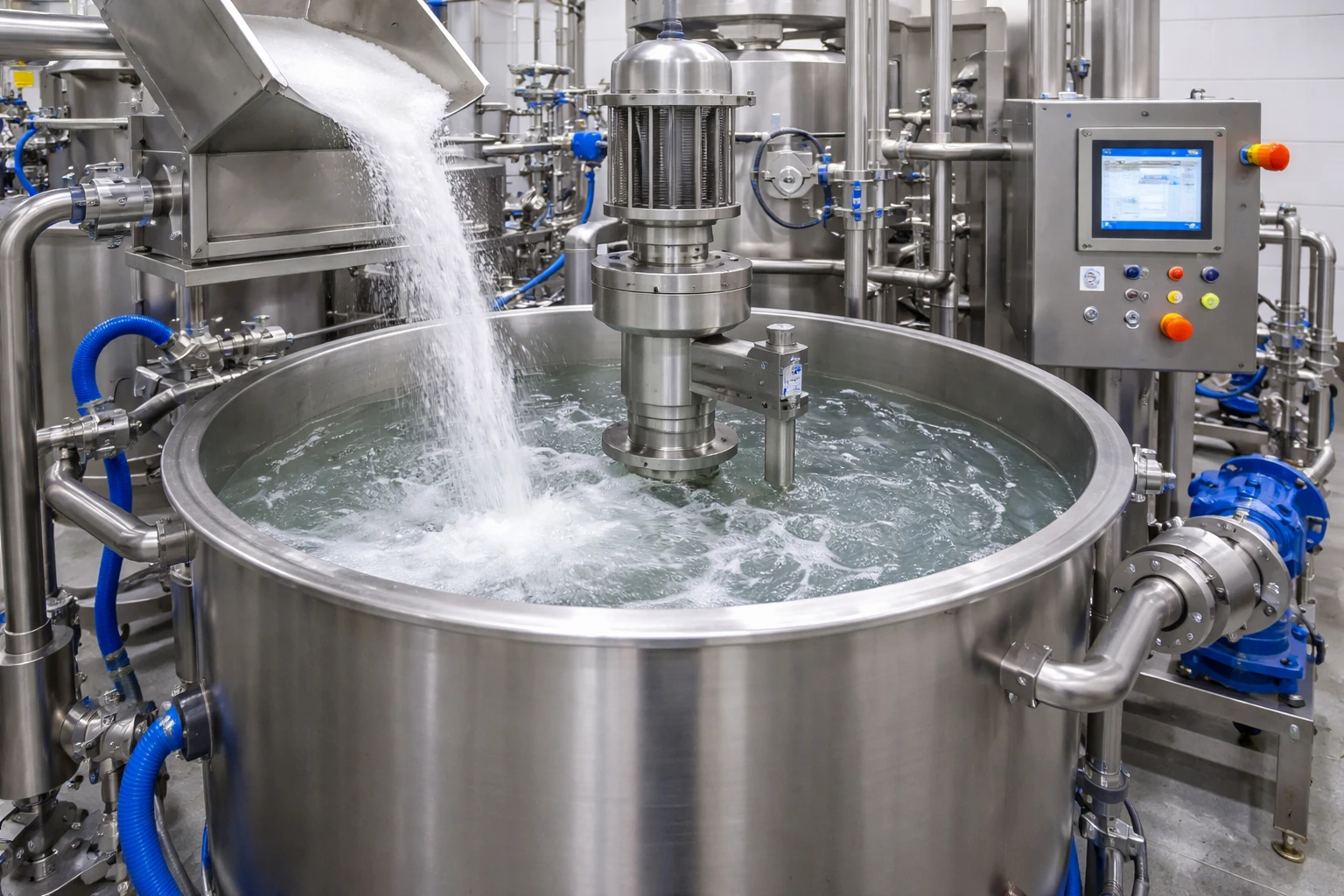
The process begins with the brine tank being filled with water, which acts as the base for the brine solution. In most commercial operations, water is carefully measured to maintain the proper ratio with other ingredients. Processors may also control water temperature to help ingredients dissolve more efficiently. Once the water is added to the brine tank, the mixing system prepares to incorporate the remaining components of the brine formula.
Adding Dry and Liquid Ingredients
Next, dry and liquid ingredients are introduced into the brine tank. These ingredients typically include salt, phosphates, sugar, curing agents, and various flavorings. Each ingredient plays a specific role in the final product. Salt enhances flavor and helps with protein extraction, while phosphates improve moisture retention and texture. Sugar and other seasonings may be added to create specific flavor profiles depending on the product being processed.
The Mixing Process Inside the Brine Tank
After the ingredients are added, the mixing process begins inside the brine tank. Commercial systems use high-powered agitators or high-shear mixers to rapidly dissolve the ingredients and distribute them evenly throughout the solution. The mixing mechanism ensures that powders dissolve completely and prevents clumping or settling. Proper agitation is essential because an inconsistent brine mixture can lead to uneven curing or flavor distribution in the finished product.
Recirculation and Filtration Systems
Many commercial brine mixing systems also include a recirculation pump connected to the brine tank. The pump continuously moves the brine through the system, helping maintain a consistent mixture and preventing heavier ingredients from settling at the bottom. Recirculation also allows the brine to pass through filters that remove any undissolved particles. This step is important because injection equipment used later in the process can become clogged if the brine solution is not properly filtered.
Temperature Control in Brine Mixing
Temperature management is another key function of a commercial brine mixing system. Some systems include cooling features within or around the brine tank to keep the solution at a controlled temperature. Maintaining the correct temperature helps preserve ingredient stability and prevents bacterial growth. It also ensures the brine performs properly when used in downstream processes such as injection or marination.
Transferring the Finished Brine for Processing
Once the ingredients are fully dissolved and the mixture reaches the desired consistency, the brine is ready for use. The finished solution is typically pumped directly from the brine tank to injection systems, tumblers, or marinators used in meat and poultry processing. Because the brine has been thoroughly mixed and filtered, processors can achieve consistent distribution of flavor and curing agents throughout each product.
Benefits of a Commercial Brine Mixing System
Overall, a commercial brine mixing system simplifies what would otherwise be a complex and time-consuming process. By using a properly designed brine tank with agitation, recirculation, and filtration, food processors can produce large volumes of uniform brine quickly and reliably. This consistency helps improve product quality, increase yield, and maintain efficient production in modern food processing operations.
FAQs
A commercial brine mixing system is used in food processing to create uniform curing or flavoring solutions for products like meat and poultry before injection, marination, or tumbling.
The brine tank acts as the main vessel where water and ingredients such as salt, phosphates, and seasonings are blended into a consistent solution.
Proper mixing ensures that all ingredients dissolve evenly, preventing inconsistent flavor, curing, or moisture levels in the finished product.
Typical ingredients include water, salt, phosphates, sugar, curing agents, and flavorings that enhance taste, texture, and moisture retention.
Agitation helps dissolve powders quickly and evenly while preventing ingredients from clumping or settling at the bottom of the tank.
Recirculation pumps continuously move the solution through the system to maintain a consistent mixture and reduce the risk of ingredient separation.
Filtration removes undissolved particles from the solution, helping prevent clogs in injection equipment used later in the processing line.
Maintaining the proper temperature helps ingredients dissolve more effectively and reduces the risk of bacterial growth in the solution.
Once prepared, the brine is typically pumped from the brine tank to equipment such as injectors, tumblers, or marinators for use in food processing.