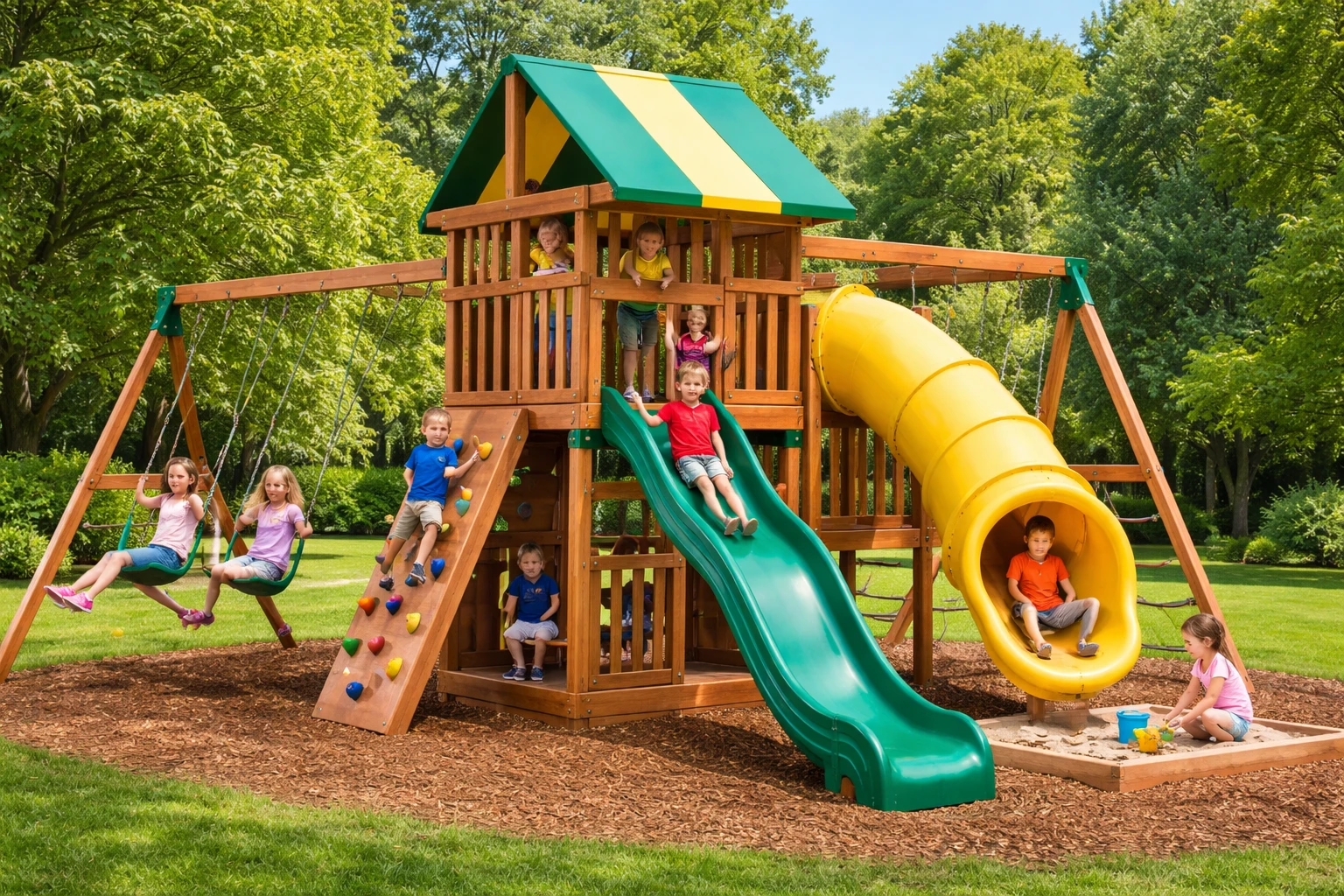
A backyard playset can transform outdoor space into a place where kids stay active and use their imagination. However, parents face dozens of choices in materials, sizes, and features that make the decision harder than it needs to be. The right playset matches the available yard space, fits the children’s ages, and includes safety features that protect kids while they play.
Most families need to think about how much room they have before they look at specific models. A playset that works well in one yard might not fit in another. The best choice considers the space available, the number of children who will use it, and how long the family plans to keep it.
This guide covers the key factors that help parents make a smart choice. It explains how to measure space correctly, what safety standards matter, and how to pick features that match a family’s specific needs. The goal is to find a playset that kids will enjoy for years without regret over the purchase.
Key Factors When Selecting an Outdoor Playset
The right playset depends on several practical considerations that affect both safety and enjoyment. Space availability, child age, material quality, and safety features all play important roles in the decision.
Assessing Your Backyard Space
Measure the yard before shopping for a playset. The structure needs at least six feet of clearance on all sides to meet safety standards. This buffer zone prevents injuries from falls and allows children to move around the equipment freely.
Slope and terrain affect installation options. A flat, level area works best for most playsets. However, yards with slight slopes can still accommodate equipment with proper preparation and leveling.
Check for overhead obstacles such as power lines, tree branches, and roof overhangs. Most playsets need a minimum vertical clearance of about 20 feet. Trees can provide welcome shade but may drop branches or interfere with the structure over time.
Ground surface matters for safety. Grass alone does not provide enough cushion for falls. Parents can buy outdoor playsets here and then add safety surfacing like wood chips, rubber mulch, or playground tiles underneath. These materials absorb impact better than hard surfaces.
Identifying Age-Appropriate Features
Different age groups need different play features. Toddlers (ages 2-5) benefit from lower platforms, gentle slides, and swings with full bucket seats. These features let young children explore without overwhelming them.
School-age children (ages 5-12) can handle taller structures with more complex elements. They enjoy climbing walls, monkey bars, and faster slides. Multiple activity stations keep older kids engaged and active.
Consider the playset’s weight limits and platform heights. Manufacturers provide specific age recommendations based on safety testing. A structure designed for toddlers will not support teenagers safely.
Think about how long the playset will serve the family. Some families choose equipment that grows with their children through adjustable features or expansion options.
Prioritizing Safety Standards
Look for certifications from recognized testing organizations. ASTM International sets safety standards for playground equipment in the United States. Products that meet these standards undergo testing for stability, spacing, and material strength.
Hardware quality affects long-term safety. Stainless steel bolts resist rust better than regular steel. Smooth edges and covered bolt ends prevent scrapes and cuts. All moving parts should have protective guards.
Key Safety Features to Check:
- Enclosed platforms with guardrails
- Proper spacing between rungs and bars (less than 3.5 inches or more than 9 inches)
- Anchoring systems to secure the structure
- Non-slip surfaces on steps and platforms
- Rounded corners and edges
Regular maintenance keeps playsets safe over time. Parents should inspect equipment monthly for loose bolts, splintered wood, or worn components.
Comparing Materials and Durability
Wood playsets offer a natural appearance and solid construction. Cedar and redwood resist rot and insects naturally. Pressure-treated lumber costs less but requires regular sealing to prevent deterioration.
Metal frames provide strength and can last for many years. Powder-coated steel resists rust better than basic paint finishes. However, metal surfaces can become hot in direct sunlight or cold in winter.
Vinyl and plastic components resist weather damage without much maintenance. These materials do not splinter, warp, or rust. They come in various colors that remain bright through years of sun exposure.
Material Comparison:
| Material | Maintenance | Lifespan | Weather Resistance |
| Cedar Wood | Medium | 15-20 years | Good |
| Treated Pine | High | 10-15 years | Fair |
| Metal/Steel | Low | 20+ years | Excellent |
| Vinyl/Plastic | Very Low | 15-20 years | Excellent |
Budget affects material choice, but cheaper options often cost more over time through repairs and replacements. Higher-quality materials require less upkeep and last longer in harsh weather conditions.
Customizing the Playset for Your Family’s Needs
A playset becomes truly valuable once it matches what a family actually needs and can maintain over time. The right combination of features, upkeep requirements, and price point creates a backyard space that works for years to come.
Incorporating Desired Play Features
Different age groups need different types of play equipment. Toddlers benefit from lower platforms, gentle slides, and simple climbing steps. Older children prefer higher decks, challenging rock walls, and faster slides.
Families can select from many add-on features to build the perfect setup. Popular options include:
- Standard belt swings for all ages
- Trapeze bars and gymnastics rings for active kids
- Tube slides or wave slides for variety
- Rock climbing walls with different difficulty levels
- Monkey bars and overhead ladder systems
- Sandbox areas or playhouse spaces
- Telescope accessories and steering wheels
The number of children affects which features make sense. Multiple swings become important for families with three or more kids. A single child might prefer more diverse activity options rather than duplicate stations.
Space constraints also shape feature choices. Compact yards work better with vertical elements like climbing walls. Larger properties can accommodate spread-out designs with multiple towers and longer slide runs.
Considering Maintenance and Upkeep
Material choice directly impacts how much work a playset requires. Wood structures need annual treatment with sealant or stain to prevent rot and splinters. This process takes several hours and must happen every spring or fall.
Metal components resist weather damage but can develop rust in humid climates. Vinyl-coated chains and platforms require minimal care beyond occasional soap and water cleaning. Powder-coated steel frames hold up well with just basic inspections.
Regular safety checks matter regardless of material type. Parents should examine:
- Hardware connections for looseness or corrosion
- Platform surfaces for cracks or sharp edges
- Swing chains for signs of wear
- Anchor points in the ground
Most playsets need tightened bolts once or twice per year. Families short on free time benefit from low-maintenance materials that reduce annual tasks. Those comfortable with basic home improvement can handle wood care without much difficulty.
Balancing Budget and Quality
Quality playsets range from $500 for basic models to $5,000 or more for elaborate designs. Higher prices typically reflect better materials, longer warranties, and more features. However, expensive doesn’t always mean appropriate for every family’s needs.
Cedar and redwood naturally resist decay and cost more than pressure-treated pine. These premium woods last 15-20 years with proper care. Budget-friendly pressure-treated lumber still provides 10-15 years of use.
Smart shoppers focus on structural quality over decorative extras. Thick lumber dimensions (4×4 posts rather than 2×4) and heavy-duty hardware matter more than themed accessories. A simple but sturdy design serves children better than a flashy set that wobbles.
Sales and off-season deals often reduce costs by 20-30 percent. Late summer and early fall bring clearance prices as retailers make room for new inventory. Factory-direct options cut out middleman markups while still offering solid construction.
Conclusion
The right outdoor playset transforms a backyard into a place where children can play, learn, and grow. Parents need to think about available space, safety features, and age-appropriate elements before they make a purchase. A quality playset provides years of active entertainment while it supports physical development and creative play.
The best choice balances budget, durability, and the specific needs of each family. Therefore, careful research helps families select a playset that children will use and enjoy for many years to come.
FAQs
Most playsets require at least six feet of clearance on all sides, plus vertical space free from branches or power lines.
Impact-absorbing materials like rubber mulch, wood chips, or playground tiles provide better protection than grass alone.
Match platform heights, slide types, and swing styles to your child’s age and ability level, following manufacturer guidelines.
Wood offers a natural look and solid feel, while metal and vinyl typically require less maintenance and resist weather damage better.
Depending on materials and maintenance, a well-built playset can last between 10 and 20 years or more.
Look for compliance with ASTM safety standards to ensure the structure meets recognized testing requirements.
A quick visual check weekly and a more thorough inspection monthly helps catch loose bolts, cracks, or worn parts early.
Yes, but the area must be leveled properly to ensure stability and safe use.
Choosing a model that accommodates older age ranges can extend its usefulness, but it should still be safe for younger children.
Higher-priced sets often use stronger materials and better hardware, which can reduce repairs and extend lifespan over time.