The shift towards remote and hybrid work has fundamentally changed how we view our homes. What was once a sanctuary for rest has become a primary place of business for millions. However, many remote workers struggle to maintain focus while working from a kitchen table or guest bedroom. The secret to bridging the gap between residential comfort and professional productivity lies in taking structural cues from top-tier business environments. You do not have to sacrifice the cosy feeling of your home to achieve a highly efficient workspace.
The Psychology Behind a Professional Setup
Your physical environment plays a massive role in your mental state. Working from the sofa might feel relaxing at first, but it often leads to a slump in motivation and poor posture. To truly excel, you need a space that triggers a focused mindset the moment you sit down. The separation of work and leisure is vital for your wellbeing.
Data strongly supports this need for a structured environment. According to a 2023 workplace survey by the Gensler Research Institute, office workers report that they need to spend an ideal 63 percent of their typical workweek in a functional office environment to maximise productivity. While you might not commute to a high-rise building, you can replicate this standard of functional design within your own home to capture those same benefits.
Borrowing from the Best Workplaces
Creating a high-performance workspace does not mean buying a boring grey cubicle partition. Instead, it involves looking at the architectural details that make modern headquarters so effective. The goal is to blend the aesthetic appeal of your home with the streamlined efficiency found in commercial properties.
If you analyse successful corporate office interior design, you will notice a strong emphasis on zoning, high-quality materials, and layouts that encourage a natural flow of movement. You can adapt these concepts by clearly defining your work area. Use a distinct rug, a specific paint colour, or a strategic furniture arrangement to separate your working zone from your living space. When you cross that physical threshold, your brain will automatically recognise that it is time to focus.
Upgrading Your Lighting for Better Focus
One of the most noticeable differences between a standard spare bedroom and a professional workspace is the lighting. High-end businesses invest heavily in lighting solutions that reduce eye strain, keep employees alert, and eliminate harsh shadows. Relying on a dim overhead bulb is a fast track to fatigue.
To achieve a professional atmosphere, you should evaluate your current fixtures. Try to maximise natural daylight by positioning your desk near a window. For darker afternoons, it is wise to swap out outdated bulbs. You can explore fluorescent light alternatives for your home office to find modern LED panels, smart lighting systems, or high-quality desk lamps that mimic the well-balanced illumination of a commercial space. The right lighting choices will completely transform the functionality of your room.
Practical Steps to Transform Your Space
Bringing commercial design trends into your home is achievable without a massive budget. Focus on these core elements:
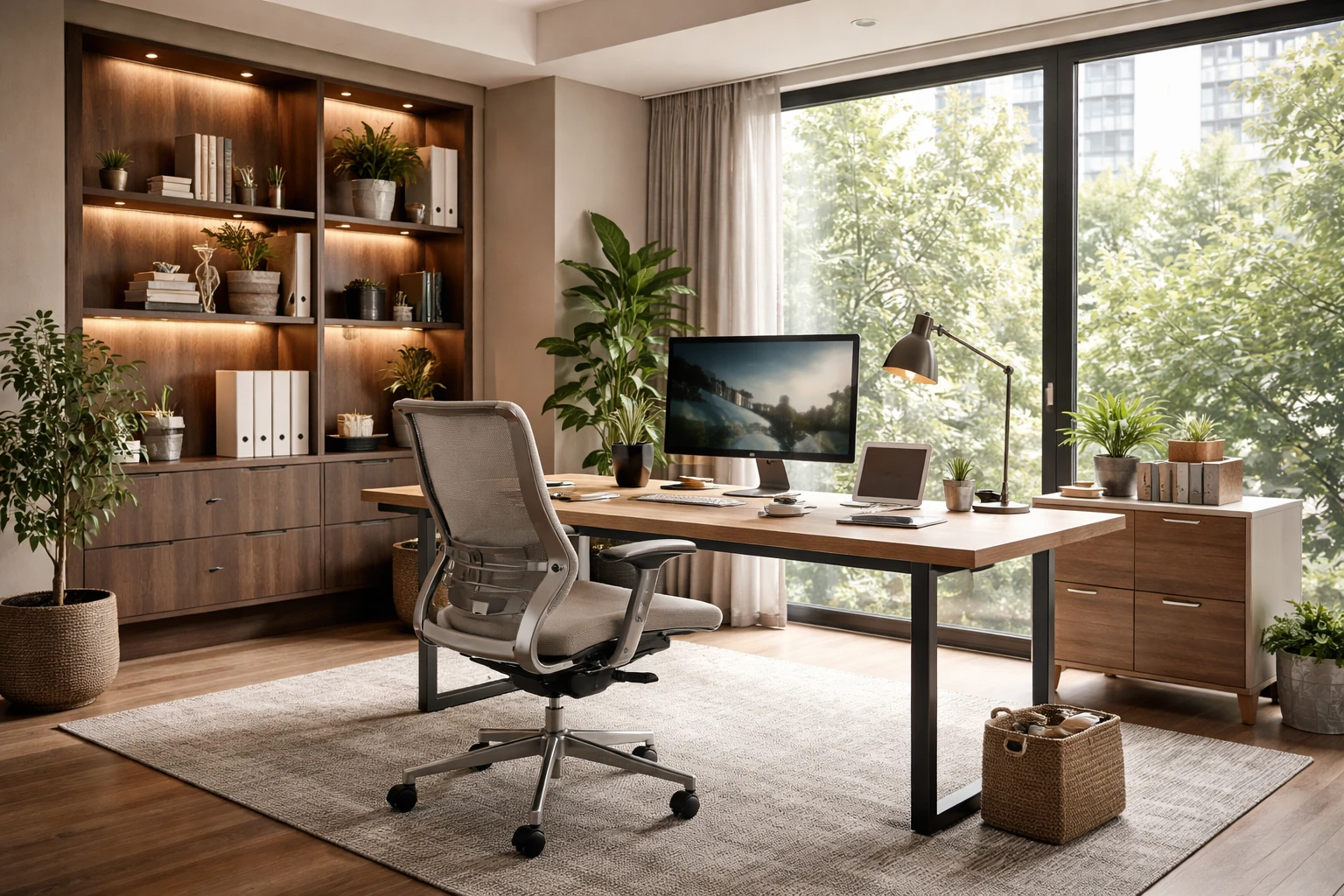
- Invest in ergonomic furniture: Swap a rigid dining chair for an adjustable desk chair with lumbar support. Commercial spaces prioritise ergonomics to prevent strain, and your home setup should do the same.
- Incorporate biophilic design: Add a touch of nature to your surroundings. Potted plants and natural colour palettes are staples in modern workplaces because they naturally reduce stress.
- Optimise your storage: Clutter is the enemy of productivity. Install floating shelves and keep your desk completely clear of non-essential items to mimic the clean lines of a professional suite.
- Upgrade your technology integration: Manage cables with under-desk trays and invest in quality monitor stands. A seamless tech setup prevents daily frustrations.
Crafting Your Ideal Work Environment
Your home office should be a direct reflection of your ambitions. By adopting the principles used in leading commercial environments, you can create a space that actively supports your workflow. Remember to prioritise proper lighting, invest in supportive furniture, and maintain a clutter-free zone. With a few strategic upgrades, you can build a refined workspace that inspires your best work.
FAQs
It helps create a structured environment that boosts focus, productivity, and overall work performance.
No, even a small corner can be transformed effectively with proper zoning, lighting, and furniture choices.
Use visual cues like rugs, paint colors, or furniture placement to clearly define your work zone.
Good lighting reduces eye strain, improves mood, and helps maintain consistent energy levels throughout the day.
A mix of natural light and LED or task lighting that mimics daylight is ideal for productivity.
Yes, ergonomic furniture supports proper posture and prevents long-term physical strain during work hours.
Use smart storage solutions like shelves and organizers while keeping only essential items on your desk.
Biophilic design incorporates natural elements like plants to reduce stress and improve mental clarity.
Absolutely, small upgrades like better lighting, decluttering, and rearranging furniture can make a big difference.
Blend cozy elements like soft textures with structured design choices to create a space that is both inviting and functional.