Boca Raton is one of South Florida’s most desirable communities, and many of its residential properties feature swimming pools as a central part of outdoor living. With pools in use throughout the year, maintaining their condition is an ongoing responsibility, and one of the most important issues to address promptly is a suspected water leak.
Knowing when to call a pool leak detection company in Boca Raton, rather than waiting to see if a problem resolves itself, can mean the difference between a manageable repair and a costly structural overhaul.
Why Pool Leaks Are Common in the Boca Raton Area
South Florida’s geology and climate contribute to a higher-than-average rate of pool leaks in communities like Boca Raton. The region’s limestone-based soil, combined with seasonal rain patterns and the gradual aging of pool infrastructure, creates conditions where leaks can develop in multiple parts of a pool system simultaneously.
Thermal expansion and contraction, driven by the dramatic difference between South Florida’s summer heat and its occasional cool snaps, can also stress plumbing connections and pool shell seams over time, leading to small cracks or fitting failures that allow water to escape.
Reading the Early Warning Signs
The earlier a leak is caught, the easier and less expensive it is to repair. Some of the most reliable early indicators include a consistently dropping water level that can’t be explained by evaporation or splash-out, the need to add water to the pool more than once per week, air bubbles or gurgling sounds coming from the return jets, and the equipment cycling on more frequently than usual.
Physical signs around the pool area are also worth paying attention to. Soft or spongy soil near the pool equipment, unexplained green patches in the lawn (which may indicate a slow underground water leak fertilizing the grass), and fine cracks appearing in the pool deck or coping can all be symptoms of a leak.
The Bucket Test: A Simple First Step
Before calling a professional, many homeowners in Boca Raton find it useful to perform the bucket test as a quick confirmation. Fill a bucket to about an inch below the rim with pool water, place it on a pool step so it’s partially submerged, and mark the water levels both inside the bucket and at the pool’s waterline. After 24 to 48 hours, compare the two measurements.
If the pool water level has dropped significantly more than the water level in the bucket, you likely have a leak. This simple test doesn’t tell you where the leak is, since that requires professional equipment, but it provides clear evidence that one exists.
Situations That Warrant an Immediate Professional Call
While the bucket test is a helpful diagnostic tool, some situations call for skipping the DIY approach entirely and going straight to a professional. If you can see visible cracks in the pool shell, if you’ve discovered that the pool is losing several inches of water per day, if the pool equipment is constantly running or losing prime, or if you’ve already noticed water damage or erosion around the pool area, these are urgent indicators that require prompt expert attention.
Homeowners looking for pool leak detection services in Boca Raton have access to specialists who are experienced in diagnosing the full range of pool leak scenarios common to the area. From shell cracks to underground plumbing failures, a qualified technician can identify the source of a leak without unnecessary guesswork or excavation.
The Hidden Costs of Unaddressed Leaks
Pool leaks that go unaddressed for extended periods tend to compound in their impact. Beyond the immediate cost of wasted water, undetected leaks can wash away the soil that supports the pool shell and surrounding deck, leading to settlement and cracking. Chemicals added to leaking pools are constantly being diluted and lost, driving up the cost of chemical maintenance. And if a leaking pipe is close to the home’s foundation, there’s a risk of broader structural damage.
From a practical standpoint, acting quickly when you suspect a leak is nearly always less expensive than waiting.
Choosing the Right Professional
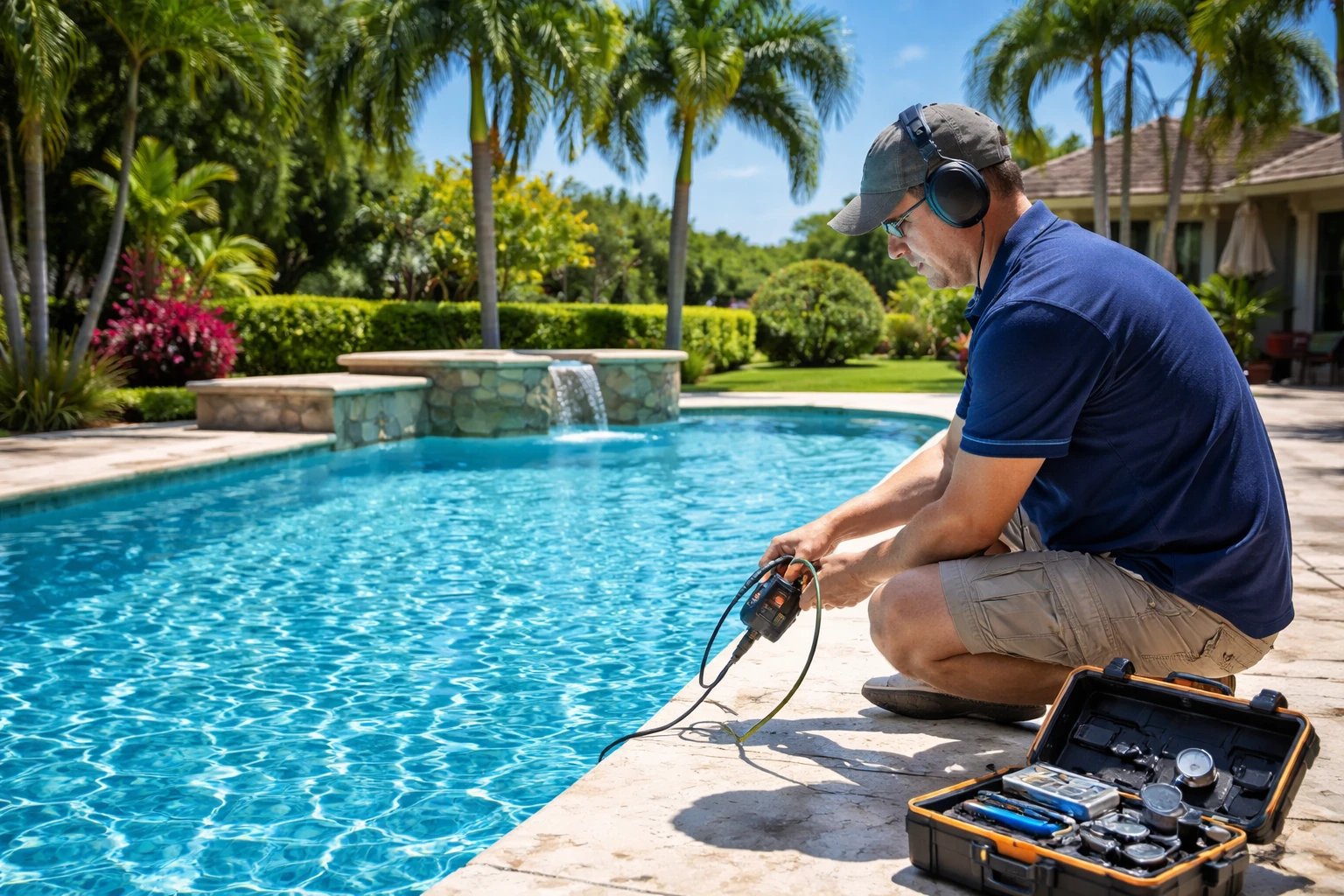
When selecting a pool leak detection service in Boca Raton, look for companies that offer non-invasive diagnostic methods, provide written reports of their findings, and can clearly explain their detection process. Reputable services will not require excavation to locate a leak. They use acoustic and pressure testing technology to pinpoint the problem precisely before any digging begins. You can also check reviews on Google to see experiences from past customers.
Ask for references if possible, and make sure the company has specific experience with the type of pool you own, whether that’s gunite, fiberglass, or vinyl liner. Each pool type has different leak vulnerabilities, and experience with your specific construction type matters.
FAQs
Evaporation typically causes minor water loss, while a leak results in a more noticeable drop—especially if you’re refilling your pool more than once a week. The bucket test can help confirm the difference.
In South Florida, losing about 1/4 to 1/2 inch of water per day due to evaporation is normal. Anything beyond that may indicate a leak.
No, pool leaks do not resolve on their own and typically worsen over time, leading to more expensive repairs if ignored.
Common causes include cracked pool shells, worn plumbing connections, and shifting soil conditions due to the region’s limestone base.
Yes, the bucket test is a simple and effective way to confirm if a leak exists, though it won’t identify the exact location of the problem.
You should call right away if your pool is losing inches of water daily, equipment is malfunctioning, or you notice cracks or soil erosion.
Most professional services use non-invasive methods like acoustic listening and pressure testing, avoiding unnecessary digging.
Costs vary depending on the complexity, but most inspections range from a few hundred dollars, which is far less than major structural repairs.
Yes, if the leak is near your home, escaping water can erode soil and potentially impact your foundation over time.
Yes, gunite, fiberglass, and vinyl liner pools each have different vulnerabilities, so detection methods may vary based on the pool type.