If you’ve ever driven past a house that stopped you in your tracks, chances are it wasn’t just the landscaping or the front door color that caught your eye. It was the surface of the building itself, the material it was clad in, and the way it sat in the light. Choosing a facade material is one of the most rewarding decisions you can make as a homeowner, but also one of the most permanent.
Unlike a coat of paint or a new light fixture, what you put on your exterior walls is going to be there for years, maybe decades. So it’s worth taking a little time to understand what each option actually brings to the table before you commit.
The good news is that the materials available to homeowners today are genuinely beautiful and built to hold up. This guide walks through the best options, what makes each one special, and what to keep in mind before you buy.
Why the material matters more than the color
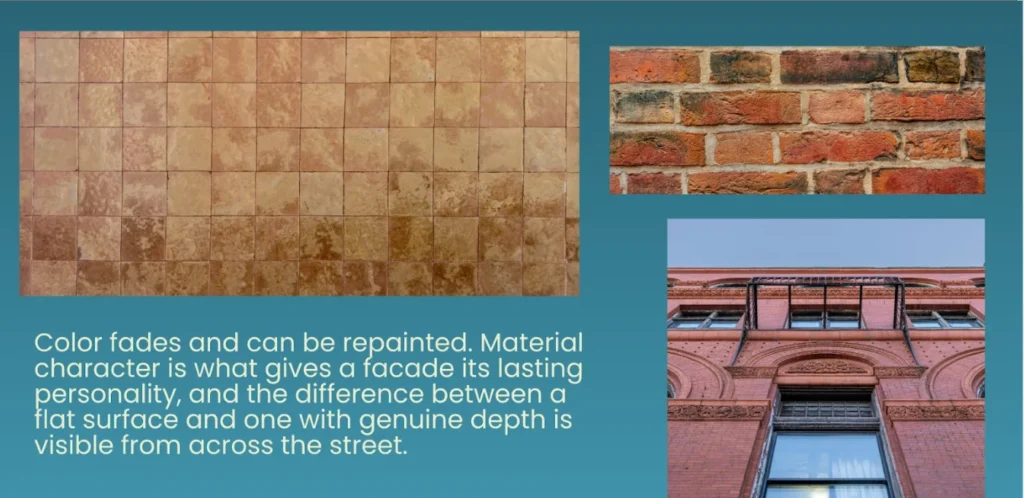
When most homeowners start thinking about their facade, they reach for paint chips. Color matters, of course, but the material underneath the color is what determines how your home looks in five years, ten years, and twenty years.
A smooth render wall might look clean and modern on day one, but over time it tends to show every crack, stain, and patch.
A handcrafted tile surface, by contrast, develops a surface patina that makes it look more interesting with age, not less. The variation that comes from the way it was made, natural differences in tone and texture from one tile to the next, is what gives it that quality you see in European farmhouses and old Mediterranean villages. It looks like it belongs where it is.
The other thing material choice controls is maintenance. Some surfaces need repainting every few years. Others need sealing periodically. And some, once they’re properly installed, largely take care of themselves. Knowing which is which before you commit can save you a lot of time and money down the road.
Cement Tile: Bold Pattern, Serious Staying Power
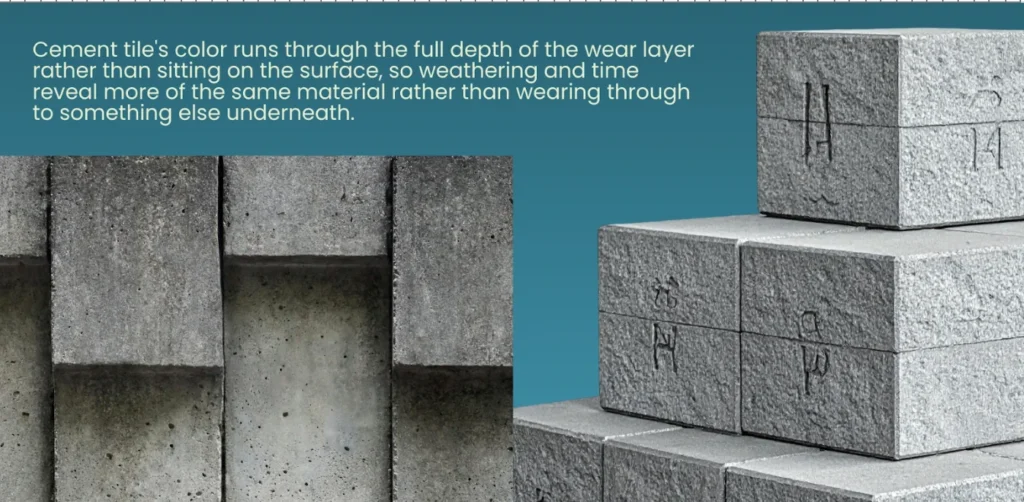
Cement tile is one of those materials that stops people in their tracks. The patterns and colors available are genuinely stunning, from geometric arrangements to encaustic floral motifs, and the matte, mineral surface gives them a quality that no ceramic glaze can quite match.
What makes cement tile special for exterior use is how it’s made.
The color goes all the way through the top layer of the tile using mineral pigments, rather than sitting on the surface as a glaze. That means as the tile weathers over time, it continues to reveal the same color and material rather than wearing through to something plain underneath. It develops a patina that makes it look richer, not worse.
Cement tile does need sealing before installation and at intervals after that, particularly outdoors. But for a feature wall, a garden boundary, or a courtyard surface, it delivers a level of visual impact and artisan quality that very few other materials can.
The range of outdoor wall tiles for home facades by OUTERclé includes handcrafted cement options designed specifically for exterior use, with the UV stability and weather resistance the outdoor environment demands.
Brick Tile: The Classic That Never Runs Out of Charm
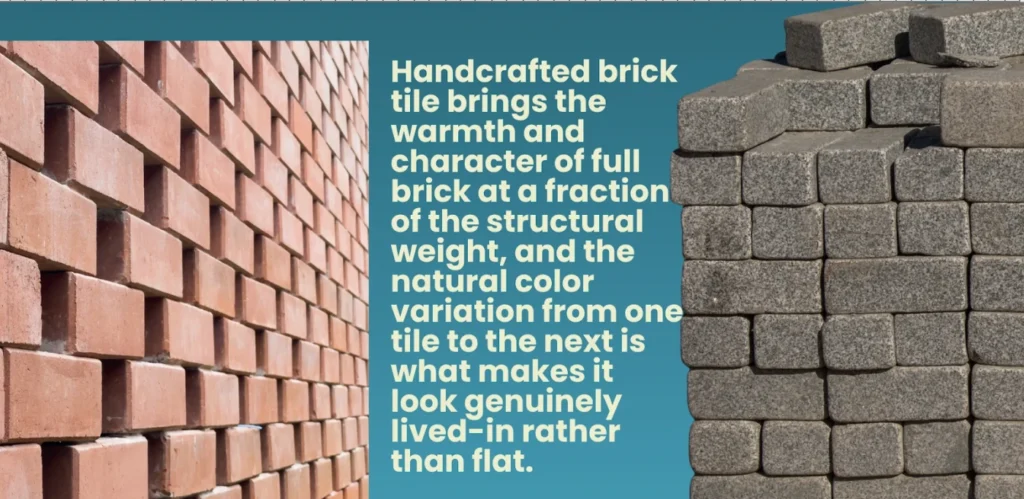
There’s a reason brick has been used on the outside of buildings for thousands of years. It is dense, weatherproof, naturally insulating, and it just looks right on a home. Brick tile brings all of those qualities to modern exteriors without the structural weight of full-thickness masonry, which makes it practical for a wide range of renovation projects. What sets handcrafted brick tile apart from standard machine-made brick veneer is the variation. Each tile is slightly different in tone, texture, and surface character.
When they’re laid together on a wall, that variation creates depth and warmth that a perfectly uniform product simply cannot replicate. It looks like a wall that was built with care rather than installed as a finish. It performs beautifully in almost any climate, ages gracefully, and works with everything from traditional cottages to contemporary homes. If you want an exterior surface that will still look great in twenty years without demanding a lot of attention, brick tile is one of the most reliable choices available.
Terracotta: Earthy, Warm, and Full of Character
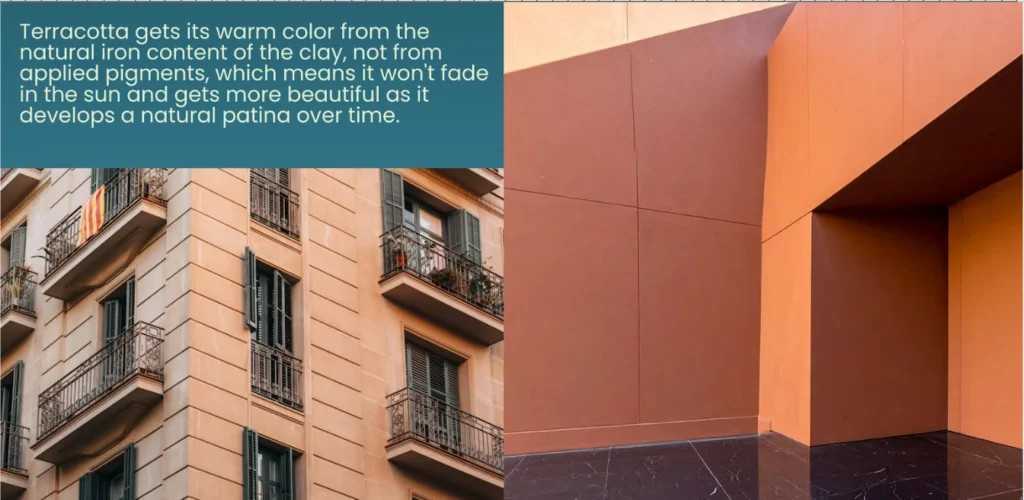
If you love the look of a sun-baked Italian or Spanish home, terracotta is the material that creates that feeling. It’s made from fired clay, and its warm orange, tan, and ochre tones come from the natural minerals in the clay body rather than from any surface treatment. That means the color doesn’t fade the way painted surfaces do. Terracotta has a slightly porous surface that, when properly sealed, allows it to breathe while keeping moisture out.
Over time it develops a natural patina, a subtle deepening and softening of the surface, that makes it feel more alive and connected to its environment rather than looking tired. It’s the kind of material that ages into something you love more as the years go on. It works particularly well on south-facing walls where it can warm up in the sun, and it pairs beautifully with timber, stone, and natural planting. It’s a beautiful option for homes with a Mediterranean, Spanish, or warm-country aesthetic, and increasingly for contemporary homes that want to bring a natural, grounded quality to their exterior.
Natural Stone: The Highest-end Option for Good Reason
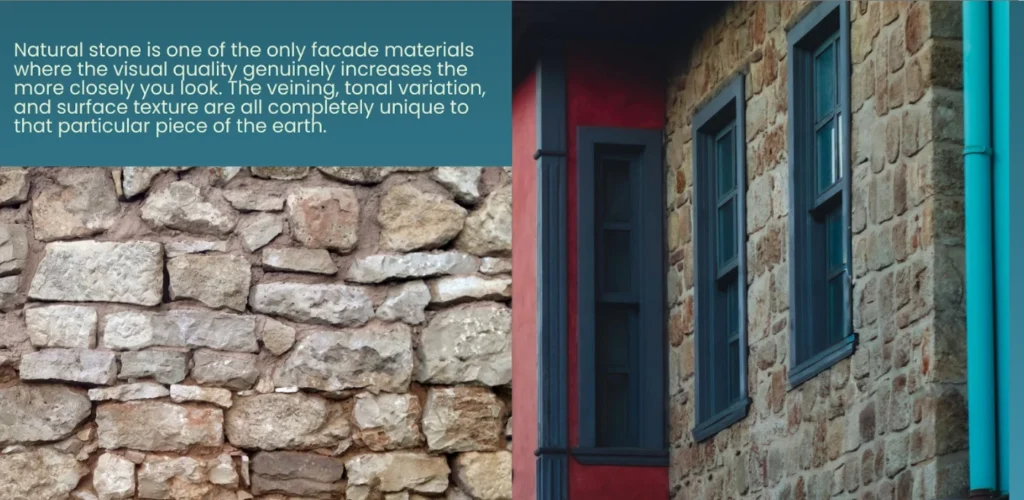
There’s a reason natural stone is at the top of the wish list for so many homeowners. Nothing looks quite as substantial or as timeless. The variation in color, veining, and surface texture is completely unique to each piece, which means no two stone-clad homes look exactly alike.
For exterior facades, options like limestone, sandstone, and slate are particularly popular. Limestone brings a quiet, refined quality in creamy whites and warm greys. Sandstone has a more rustic, earthy character.
Slate is darker and more dramatic, with strong horizontal veining that gives it real architectural presence.
The practical side of natural stone is worth knowing. Honed and rough-textured finishes perform better outdoors than polished ones, because they’re less slippery when wet and show weathering more gracefully.
Stone also pairs naturally with other elements that create a considered exterior, and if you’re thinking about the full picture of your home’s kerb appeal, understanding which outdoor upgrades work together as a system can help you make the most of a stone cladding investment.
Terrazzo Tile: The Designer’s Material, Made for Outside
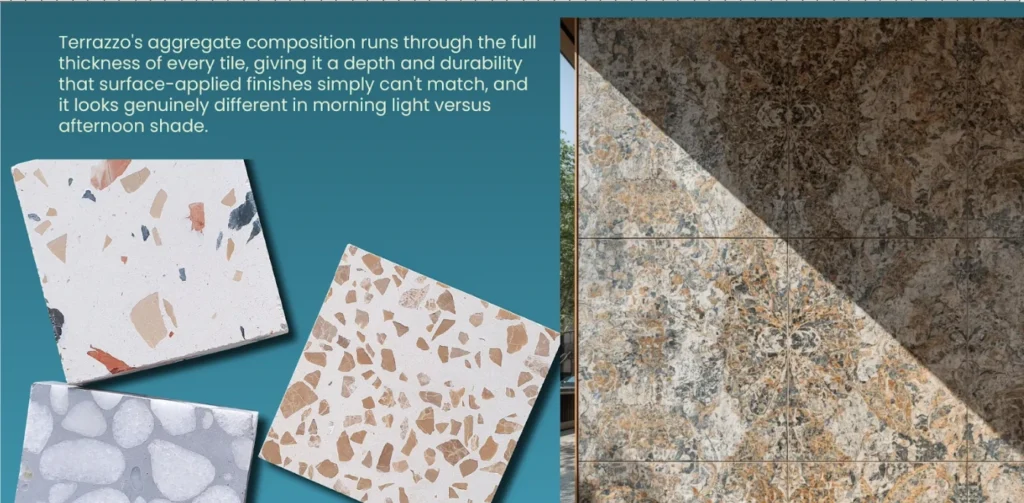
Terrazzo has had a serious comeback in interior design over the last decade, and it’s just as beautiful on the outside of a home as it is in a kitchen or bathroom. It’s made by setting marble chips, quartz, or glass aggregate into a cement or resin base, then polishing or finishing the surface to reveal the pattern inside. For outdoor facades, cement-based terrazzo is the one to reach for, as it handles the heat and cold of outdoor conditions more reliably than resin.
The result is a surface with a satisfying visual complexity: the aggregate catches light differently depending on the angle and time of day, so the facade actually looks slightly different in the morning than it does in the afternoon. It’s the kind of detail that makes a home feel genuinely considered. Terrazzo works particularly well as a feature wall or accent surface on a contemporary home, and it pairs beautifully with smooth render, timber, and steel. If you love the idea of a home that looks like someone made real choices rather than just picking from a catalog, terrazzo delivers that.
A Few Things to Check Before You Choose
- Check your climate first. If your area gets real winter frost, make sure the tile is rated for freeze-thaw conditions. Not every exterior-looking tile is designed for cold-weather exposure.
- Know the sealing requirements. Cement tile, terracotta, and natural stone all need sealing before installation and at intervals afterward. Brick tile is usually lower maintenance by comparison.
- View samples in the actual location. A tile can look completely different on an exterior wall in full sun than it does in a showroom. Test samples on site before making a final decision.
Consider the full exterior palette. Facade materials work alongside roof color, window frames, landscaping, and other architectural details. What looks beautiful on its own may not feel cohesive in context. - Step back before finalizing. Looking at broader curb appeal ideas before locking in one surface can help you make a decision that works with the whole exterior, not just one isolated section.
The Facade is a Decision You Get to Live With Every Day
There’s something really satisfying about getting your home’s exterior right. It’s the first thing you see when you pull into the driveway, the thing your neighbors notice, and the thing that gives your home its identity in the neighbourhood.
The materials in this guide are all genuinely beautiful and genuinely durable. The choice between them comes down to the character you want your home to have, the climate you live in, and the level of ongoing care you’re happy to give. Get that combination right, and you’ll end up with an exterior that makes you smile every time you come home.
FAQs
Natural stone and brick are among the most durable options, often lasting decades with minimal maintenance.
Brick tile typically requires the least upkeep, as it doesn’t need frequent sealing or repainting.
Yes, cement tile works well outdoors when properly sealed and maintained to protect against moisture and stains.
No, terracotta’s color comes from natural clay minerals, so it ages gracefully rather than fading.
Terrazzo and smooth brick tile are great choices for modern designs due to their clean lines and visual texture.
No, but materials like cement tile, terracotta, and natural stone usually require sealing for longevity.
Check if the material is rated for your local conditions, especially freeze-thaw resistance in colder climates.
Yes, natural stone offers unmatched durability, timeless appeal, and can increase property value.
Absolutely, combining materials like stone, wood, or tile can create a more dynamic and custom look.
Most high-quality facade materials last 20–50+ years depending on maintenance and environmental conditions.